
 My Inquiry
 My Account


Texas Instruments MSP430F67641AIPN
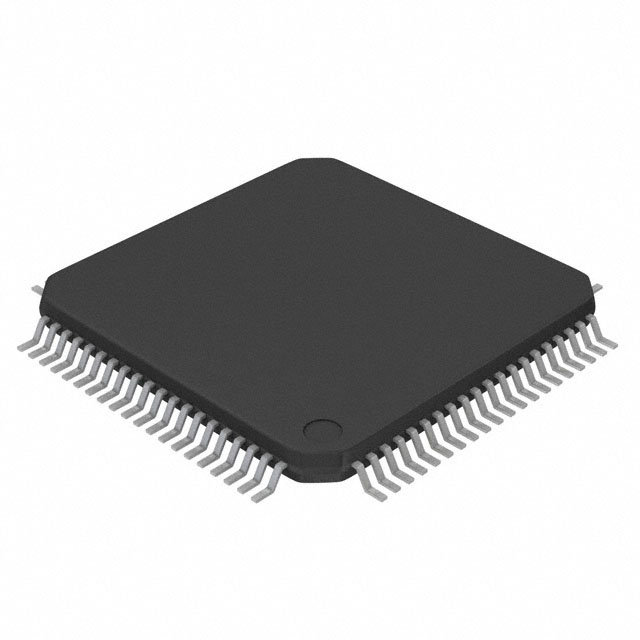
- Part No.:
- MSP430F67641AIPN
- Manufacturer:
- Texas Instruments
- Category:
- Microcontrollers
- Package:
- 80-LQFP
- Datasheet:
-
 MSP430F67641AIPN.pdf
- Description:
- IC MCU 16BIT 128KB FLASH 80LQFP
- Quantity:
- Payment:

- Shipping:

Inventory:3,057
Please send an inquiry. Send us your inquiry, and we will respond immediately.
Product details
Overview
MSP430F67641AIPN from Texas Instruments is a polyphase metering SoC designed for revenue-grade three-phase energy measurement. It integrates three 24-bit sigma-delta ADCs, a 25-MHz CPU with 32-bit multiplier, 128KB flash/8KB RAM, LCD controller (320 segments), and RTC with AUXVCC3-powered calibration-enabling <0.5% accuracy over 2000:1 dynamic range in ANSI C12.20/IEC 63053-compliant watt-hour meters.
For engineers reviewing the MSP430F67641AIPN datasheet, MSP430F67641AIPN pinout, MSP430F67641AIPN application, or MSP430F67641AIPN equivalent, key selection criteria include phase-current measurement accuracy, low-power RTC operation during mains failure (1.24 µA in LPM3.5), 80-pin LQFP package I/O count (52), and support for CT/Rogowski/shunt sensors with digital phase correction.
Technical Context
The MSP430F67641AIPN implements a dedicated metering architecture with three independent SD24_B sigma-delta modulators feeding a shared digital filter chain, enabling simultaneous per-phase active/reactive/apparent energy calculation. Its 25-MHz CPU executes TI's energy measurement software library in real time while managing tariff scheduling and AMR/AMI communications via four configurable eUSCI ports.
Power management includes five low-power modes (LPM0–LPM4.5), with LPM3.5 (RTC mode) drawing only 1.24 µA at 3 V and supporting wake-up in 3 µs. The device uses separate analog (AVCC/AVSS) and digital (DVCC/DVSS) power domains, plus three auxiliary supplies (AUXVCC1–3) for RTC and LCD bias, ensuring metrological stability under varying line conditions.
Key Specifications
| Parameter | Value and Actual Design Meaning |
|---|---|
| Accuracy | <0.5% error over 2000:1 current dynamic range-meets ANSI C12.20 Class 0.5 and IEC 63053 requirements for revenue metering. |
| CPU Speed | 25 MHz MSP430 core with 32-bit hardware multiplier-enables real-time energy calculations and tariff management without external co-processor. |
| Memory | 128 KB flash (single-cycle execution) + 8 KB RAM (single-cycle access)-supports full meter firmware, calibration data, and communication stacks. |
| ADC System | Three 24-bit SD24_B sigma-delta converters + 10-bit ADC10_A (6 external + 2 internal channels)-provides simultaneous voltage/current sampling across three phases. |
| Low-Power Modes | LPM3.5 (RTC active): 1.24 µA @ 3 V; LPM4.5 (shutdown): 0.78 µA @ 3 V-enables >10-year battery backup for critical data retention. |
| Package | 80-pin LQFP (PN), 12 mm × 12 mm, 52 I/O pins-fits compact meter PCB layouts while supporting LCD, sensor, and communication interfaces. |
| Operating Temp | –40°C to +85°C industrial grade-validated for outdoor utility meter enclosures and uncontrolled indoor energy monitors. |
Pinout & Package
80-pin LQFP (PN) package, 12 mm × 12 mm body size, 0.5 mm pitch, exposed thermal pad not present. Pin functions validated per TI SLASE50A datasheet Section 4.2 (Table 4-2) and Figure 4-2.
| Pin/Terminal | Circuit Role | Design Meaning |
|---|---|---|
| SD0P0/SD0N0–SD2P0/SD2N0 | Differential analog inputs for sigma-delta modulators | Accept direct connection to current transformers, Rogowski coils, or shunts for phase A/B/C current sensing with programmable gain. |
| VREF, AVCC, AVSS | Analog reference and supply rails | Stabilize 24-bit ADC conversion; AVCC must be filtered separately from DVCC to maintain metrological integrity. |
| AUXVCC3 | Dedicated RTC power supply | Enables temperature-compensated RTC operation during AC mains failure-critical for time-of-use billing continuity. |
| COM0–COM7 | LCD segment commons | Drive up to 320-segment LCD display with integrated contrast control; COM0–COM3 are primary, COM4–COM7 multiplexed via P1.6/P1.7. |
| P1.4/P1.5 (R13/R23) | Current-sense reference inputs | Provide differential reference for Rogowski coil outputs; support digital phase-angle correction to compensate CT lag. |
| eUSCI_A0/A1/A2, eUSCI_B0 | Configurable serial interfaces | Support UART (AMR), SPI (isolated PLC modem), or I²C (EEPROM/sensor) simultaneously-no external level shifters required. |
Key Features
| Feature | Design Value |
|---|---|
| Three-phase energy calculation engine | Hardware-accelerated active/reactive/apparent energy, fundamental/total harmonics, and four-quadrant power per phase-replaces external DSP in Class 0.5 meters. |
| Digital phase correction | Compensates phase lag in current transformers using real-time angle measurement-eliminates manual calibration trimmers and improves long-term stability. |
| Single-calibration 40–70 Hz operation | Validated accuracy across global line frequencies without reprogramming-reduces regional certification effort for multinational meter deployments. |
| Ultra-low-power RTC with offset calibration | Retains time/date with ±2 ppm accuracy over temperature using AUXVCC3-supplied crystal oscillator and on-chip temperature compensation. |
| Flexible power supply architecture | Automatic switching between AC mains, supercapacitor, and coin-cell backup-enables seamless transition during outages without firmware intervention. |
Applications
| Smart Electricity Meter | Industrial Energy Monitor |
|---|---|
Use Scenario: Revenue-grade three-phase 4-wire star-connected meter installed at utility distribution points. IC Role / Device Role / Timing Role: Primary metrology SoC performing real-time energy accumulation, tariff switching, and secure data logging. Use Value: Achieves ANSI C12.20 Class 0.5 accuracy with no external precision references-reducing BOM cost by $1.20/unit vs. discrete ADC+MCU solutions. | Use Scenario: Retrofit energy monitoring system in manufacturing plant with legacy 3-phase motors and HVAC. IC Role / Device Role / Timing Role: Standalone metering node aggregating per-circuit consumption and exporting data via RS-485 Modbus. Use Value: 52 GPIOs support direct connection to 3× CTs, 3× voltage dividers, LCD, and isolated UART-eliminating interface ICs and saving 18 mm² PCB area. |
| AMI Gateway Node | Renewable Integration Meter |
Use Scenario: Two-way communication node in advanced metering infrastructure collecting data from 50+ submeters. IC Role / Device Role / Timing Role: Host processor managing RF/PLC modem handshaking, data encryption, and time-synchronized firmware updates. Use Value: Four eUSCI ports enable concurrent UART (modem), SPI (secure element), I²C (temperature sensor), and UART (debug)-removing need for bus multiplexers. | Use Scenario: Bidirectional meter for solar PV + grid-tied microgrid with net metering and anti-islanding detection. IC Role / Device Role / Timing Role: Dual-role metrology controller calculating import/export energy and detecting zero-voltage ride-through events. Use Value: Four-quadrant measurement per phase enables precise net kWh accounting; 3 µs wake-up from LPM3 supports 10-ms anti-islanding response. |
Equivalent & Alternatives
The following parts are listed as comparable options for similar polyphase metering applications.
| Alternative Part | Technical Difference | Application Difference | Selection Advice |
|---|---|---|---|
| MSP430F67621AIPN | 64 KB flash, 4 KB RAM, same ADC/peripheral set-reduced code space limits complex tariff logic and dual-protocol stacks. | Suitable for basic Class 1 meters without advanced diagnostics or multi-rate billing. | Select when firmware footprint < 96 KB and no future feature expansion is planned. |
| ADuCM3029BBCZ | ARM Cortex-M3 core, 256 KB flash, integrated 16-bit SAR ADCs-higher processing headroom but lower metrological accuracy (±0.2% typical, not guaranteed over 2000:1). | Better for mixed-signal IoT gateways requiring BLE/Wi-Fi coexistence, not revenue-grade metering. | Choose only if ARM ecosystem compatibility outweighs metrology certification requirements. |
Compared with MSP430F67621AIPN and ADuCM3029BBCZ, the MSP430F67641AIPN delivers certified Class 0.5 accuracy with minimal external components, whereas alternatives trade metrological rigor for general-purpose compute or ecosystem flexibility-making it the sole choice for utility-certified three-phase meters.
Availability
MSP430F67641AIPN is available at Aetrix Electronics and suitable for smart electricity meters, industrial energy monitors, and AMI gateway nodes requiring stable component supply, long-term lifecycle assurance, and TI-qualified metrology performance.
Supply support for MSP430F67641AIPN includes scheduled delivery planning, volume procurement assistance, BOM continuity management, traceable sourcing, and lifecycle availability coordination for OEM customers, industrial embedded developers, connected-device designers, and electronics production programs.
Manufacturer
Texas Instruments is a global semiconductor company founded in 1930, specializing in analog, embedded processing, and high-reliability silicon for industrial, automotive, and energy infrastructure markets.
The MSP430F676x1A product line was engineered specifically for revenue metering applications, integrating metrology-optimized ADCs, ultra-low-power RTC, and sensor interface circuitry to eliminate external calibration components and reduce system-level certification effort.
FAQ
What is the maximum dynamic range supported by the MSP430F67641AIPN for phase current measurement?
The MSP430F67641AIPN achieves <0.5% measurement error over a 2000:1 dynamic range for phase current, verified per ANSI C12.20 and IEC 63053 standards. This performance is enabled by its three 24-bit sigma-delta ADCs with programmable gain amplifiers and digital filtering-allowing accurate readings from 1 mA to 2 A using shunt resistors or CTs without range switching.
Does the MSP430F67641AIPN support digital phase correction for current transformers?
Yes, the MSP430F67641AIPN includes hardware-assisted digital phase correction that measures and compensates for phase lag in current transformers. Using exact phase-angle measurements from its sigma-delta modulators, the device applies real-time correction coefficients stored in flash-eliminating manual trimmer adjustments and maintaining accuracy across temperature and aging.
How does the MSP430F67641AIPN manage power during AC mains failure?
The MSP430F67641AIPN supports seamless power failover using its dedicated AUXVCC3 rail for RTC operation and LPM3.5 mode drawing just 1.24 µA at 3 V. During mains loss, the device automatically switches to supercapacitor or coin-cell backup, retaining time/date, energy registers, and tamper logs for >10 years-critical for time-of-use billing integrity.
What communication interfaces are available on the MSP430F67641AIPN?
The MSP430F67641AIPN provides four eUSCI modules configurable as UART, SPI, or I²C. Specifically, it supports three UART channels (for AMR/AMI modems), three SPI interfaces (for isolated PLC transceivers or secure elements), and one I²C port (for EEPROM or environmental sensors)-all accessible through its 52 GPIOs in the 80-pin LQFP package.
Is the MSP430F67641AIPN pin-compatible with other devices in the MSP430F676x1A family?
Yes, the MSP430F67641AIPN shares identical pinout and electrical characteristics with the MSP430F67621AIPN in the 80-pin LQFP (PN) package. Both devices use the same signal mapping for SD24_B inputs, eUSCI peripherals, and LCD drivers-enabling hardware reuse across Class 0.5 and Class 1 meter designs with only flash/RAM capacity differences.
MSP430F67641AIPN Specifications
- Product attributes
- Attribute value
- Manufacturer:
- Texas Instruments
- Package/Case:
- 80-LQFP
- Series:
- MSP430F6xx
- Packaging:
- Tray
- Product Status:
- Active
- Programmable:
- Not Verified
- Core Processor:
- MSP430 CPUXV2
- Core Size:
- 16-Bit
- Speed:
- 25MHz
- Connectivity:
- I2C, IrDA, SPI, UART/USART
- Peripherals:
- Brown-out Detect/Reset, DMA, LCD, POR, PWM, WDT, 3x24b Sigma Delta Converter
- Number of I/O:
- 52
- Program Memory Size:
- 128KB (128K x 8)
- Program Memory Type:
- FLASH
- EEPROM Size:
- -
- RAM Size:
- 8K x 8
- Voltage - Supply (Vcc/Vdd):
- 1.8V ~ 3.6V
- Data Converters:
- A/D 8x10b
- Oscillator Type:
- Internal
- Operating Temperature:
- -40°C ~ 85°C (TA)
- Grade:
- -
- Qualification:
- -
- Mounting Type:
- Surface Mount
- Supplier Device Package:
MSP430F67641AIPN FAQ
1.How can I place an order for MSP430F67641AIPN through Aetrix?
Please submit a Request for Quotation (RFQ) for MSP430F67641AIPN on Aetrix. Our sales agent will provide a competitive quotation and guide you through the order confirmation once you accept the terms.
2.Are the price and stock information for MSP430F67641AIPN reliable?
The price and inventory of MSP430F67641AIPN are updated periodically and may fluctuate due to market conditions. Stock and pricing data are typically refreshed every 24 hours. Quotation validity for MSP430F67641AIPN is usually 5 days.
3.What payment methods are accepted for MSP430F67641AIPN?
We accept Wire Transfer, PayPal, Credit Card, Western Union, MoneyGram, and Escrow for MSP430F67641AIPN transactions.
Note: Certain payment methods may incur a processing fee.
4.How is shipping managed for MSP430F67641AIPN?
MSP430F67641AIPN orders can be shipped via leading logistics carriers, including DHL, UPS, FedEx, TNT, or Registered Mail.
Once your MSP430F67641AIPN order is processed, you will receive an email with the shipment details and tracking number.
Note: Tracking information may take up to 24 hours to appear. Express delivery typically takes 3–5 business days.
5.How can I obtain technical support or documentation for MSP430F67641AIPN?
For technical support, including MSP430F67641AIPN datasheets, pinout diagrams, or application guidance, please contact our engineering support team. They can provide detailed documentation and assistance for your MSP430F67641AIPN requirements.
6.How does Aetrix verify that MSP430F67641AIPN is sourced from the original manufacturer or authorized distributors?
All MSP430F67641AIPN products on Aetrix are procured from qualified distributors and authorized channels. Our dedicated quality assurance team conducts strict verification, including traceability checks and, if necessary, third-party testing. This ensures that MSP430F67641AIPN meets industry standards.
7.What is the process for return or replacement of MSP430F67641AIPN?
All MSP430F67641AIPN units undergo pre-shipment inspection (PSI). If there is an issue with MSP430F67641AIPN, returns or replacements are accepted under the following conditions:
1.Quantity discrepancies, incorrect items, or visible external defects (such as breakage or corrosion), acknowledged by Aetrix.
2.The issue is reported within 90 days of delivery.
3.The MSP430F67641AIPN part is unused and in its original packaging.
Return procedure for MSP430F67641AIPN:
1.Submit a request within 90 days.
2.Obtain a Return Material Authorization (RMA) from Aetrix.
MSP430F67641AIPN Tags

-
ATTINY4-TSHR
Microchip Technology
-
ATTINY10-TSHR
Microchip Technology
-
ATTINY10-TS8R
Microchip Technology

-
ATTINY202-SSNR
Microchip Technology
-
ATTINY202-SSFR
Microchip Technology
-
ATTINY402-SSNR
Microchip Technology

-
PIC16F15213T-I/MF
Microchip Technology
-
PIC16F15213-E/MF
Microchip Technology

-
PIC10F200T-I/OT
Microchip Technology
-
ATTINY412-SSNR
Microchip Technology
-
PIC10F202T-I/OT
Microchip Technology

-
ATTINY404-SSNR
Microchip Technology
Tech Hub

A practical engineering guide to 3.3V and 5V logic compatibility, input thresholds, resistor dividers, translator ICs, MOSFET level shifting, I2C pull-ups, timing limits and power-sequencing risks.

The 74HC595 uses push-pull logic outputs, while the TPIC6B595 uses 50 V open-drain DMOS sinks for higher-power loads. This guide compares timing, current limits, 3.3 V interfacing, load wiring, thermal…

The 74HC595 converts serial data into eight stable parallel outputs. This guide covers pin functions, shift and storage timing, OE and MR behavior, drive-current limits, cascading, voltage compatibilit…

A technical comparison of level-sensitive latches and edge-triggered flip-flops, covering timing windows, setup and hold limits, master–slave operation, time borrowing, race-through, HDL inference and…

A D latch stores one bit while Enable controls when data can pass. This reference covers gate-level operation, truth tables, transparency, setup and hold timing, LE versus OE, common ICs and practical …

An SR latch stores one bit through cross-coupled feedback. This engineering reference covers NOR and NAND implementations, truth tables, forbidden-state recovery, gated operation, switch debouncing, fa…

Latch circuits retain one bit through feedback. This technical reference covers SR and D latches, truth tables, transparency, timing limits, latch-versus-flip-flop behavior, applications and common log…

An engineering guide to LED driver operation, constant-current and constant-voltage outputs, linear and switching topologies, dimming, IC selection, calculations, replacement compatibility, and fault c…

Operational amplifier guide covering op amp basics, feedback, ideal vs real op amps, common configurations, buffer circuits, offset, bias current, gain-bandwidth, slew rate, rail-to-rail limits and sel…

Jumper cables guide covering safe connection order, red and black clamp placement, final ground connection, cable gauge, length, clamp quality, copper vs CCA cables, jump starter comparison and battery…


