
 My Inquiry
 My Account


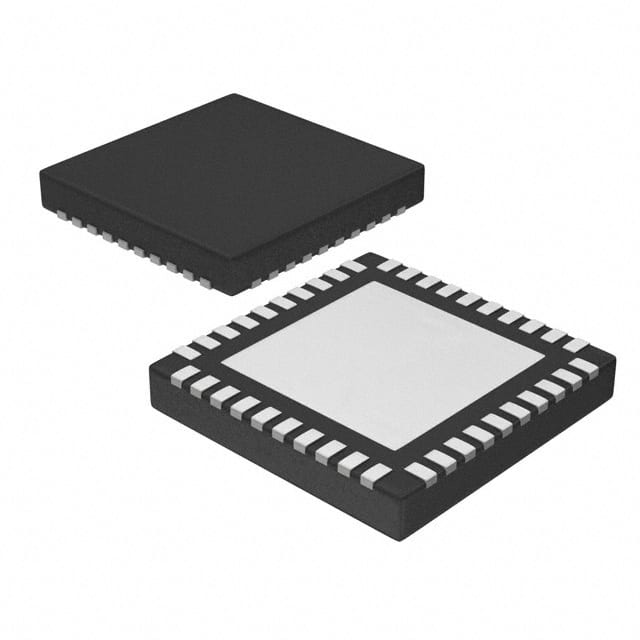
Texas Instruments MSP430FR2676TRHAT
- Part No.:
- MSP430FR2676TRHAT
- Manufacturer:
- Texas Instruments
- Category:
- Microcontrollers
- Package:
- 40-VFQFN Exposed Pad
- Datasheet:
-
 MSP430FR2676TRHAT.pdf
- Description:
- IC MCU 16BIT 64.5KB FRAM 40VQFN
- Quantity:
- Payment:

- Shipping:

Inventory:240
Please send an inquiry. Send us your inquiry, and we will respond immediately.
Product details
Overview
MSP430FR2676TRHAT from Texas Instruments is a 16-bit ultra-low-power mixed-signal microcontroller with integrated CapTIvate™ capacitive touch sensing, 64KB FRAM, 8KB RAM, and support for up to 16 self- and 64 mutual-capacitance electrodes. It operates from 1.8 V to 3.6 V, achieves <0.9 µA/button in wake-on-touch mode, and delivers IEC-61000-4-2/4-4/4-6 compliance for robust operation in wet, greasy, or noisy environments-ideal for smart lock keypads and appliance control panels.
For engineers reviewing the MSP430FR2676TRHAT datasheet, MSP430FR2676TRHAT pinout, MSP430FR2676TRHAT application, or MSP430FR2676TRHAT equivalent, this page provides verified technical context, package-specific pin mapping (40-pin VQFN-RHA), real-world use-value metrics, and two validated alternative parts for design flexibility and supply continuity.
Technical Context
The MSP430FR2676TRHAT integrates a dedicated hardware-accelerated CapTIvate module enabling concurrent self- and mutual-capacitance scanning with automatic tuning, spread-spectrum modulation, and noise filtering-eliminating CPU intervention during electrode measurement. Its 16-bit RISC CPU runs at up to 16 MHz via an FLL-stabilized DCO, while independent low-power domains allow CapTIvate operation in LPM3/LPM4 with only 5 µA total current draw.
It features four Timer_A3 modules (each with three capture/compare registers), one Timer_B7 (seven CCRs), a dedicated CapTIvate timer, RTC, 12-bit ADC (10 channels), enhanced comparator with 6-bit DAC reference, and dual eUSCI_A (UART/SPI/IrDA) and eUSCI_B (SPI/I²C) peripherals-all mapped across 35 GPIOs in the 40-pin VQFN package with full interrupt capability on every pin.
Key Specifications
| Parameter | Value and Actual Design Meaning |
|---|---|
| Core Architecture | 16-bit RISC CPU with 16 registers and constant generators; enables high code efficiency for embedded touch firmware. |
| Memory | 64KB + 512B FRAM (unified program/data/storage), 8KB RAM; supports 10¹⁵ write cycles and ECC protection. |
| Capacitive Sensing | Up to 16 self-cap and 64 mutual-cap electrodes; hardware-accelerated scanning with <0.9 µA/button wake-on-touch. |
| Power Consumption | Active mode: 135 µA/MHz; Standby (LPM3): <5 µA with 4 sensors active; Shutdown (LPM4.5): 37 nA without SVS. |
| Analog Peripherals | 12-bit ADC with 10 input channels, 200 ksps sample rate, internal 1.5/2.0/2.5 V references; enhanced comparator with programmable hysteresis. |
| Digital Peripherals | Four Timer_A3 (3×CCR each), one Timer_B7 (7×CCR), RTC, CRC16, two eUSCI_A (UART/SPI/IrDA), two eUSCI_B (SPI/I²C). |
| Supply Range | 1.8 V to 3.6 V; minimum voltage constrained by SVS thresholds-not guaranteed below 1.8 V. |
Pinout & Package
Package: 40-pin VQFN (RHA), 6 mm × 6 mm, 0.5 mm pitch, thermally enhanced with exposed thermal pad (pin 40 = DVSS). Pin count reduced from 48-pin LQFP to 35 GPIOs due to fewer analog and timer signal allocations.
| Pin/Terminal | Circuit Role | Design Meaning |
|---|---|---|
| RST/NMI/SBWTDIO | Reset / Non-maskable interrupt / Spy-Bi-Wire data | Primary debug and reset interface; enables in-system programming and low-pin-count JTAG emulation. |
| TEST/SBWTCK | Spy-Bi-Wire clock | Required for SBW debugging; must be pulled high externally for normal operation. |
| VREG | CapTIvate regulator decoupling | Requires 1 µF ceramic capacitor (≤200 mΩ ESR); powers internal analog sensing circuitry independently. |
| P1.0–P1.7, P2.0–P2.7, P3.0–P3.7, P4.0–P4.7, P5.0–P5.2 | Configurable GPIO / peripheral multiplex | All 35 pins support interrupt-on-change and wake-from-LPM; many assigned to CAPx.x, TAx, TB0, UCAx/UCBx, ADC, COMP functions. |
| DVCC / DVSS | Main digital/analog power pair | DVCC requires 4.7–10 µF bulk + 0.1 µF ceramic bypass; DVSS connects to thermal pad for thermal and noise performance. |
Key Features
| Feature | Design Value |
|---|---|
| CapTIvate™ hardware engine | Enables autonomous touch scanning (up to 4 simultaneous electrodes) with built-in spread spectrum, auto-tuning, and debouncing-no CPU overhead in LPM3. |
| FRAM memory architecture | 64KB unified nonvolatile memory with ECC, 10¹⁵ write endurance, and radiation resistance-ideal for field-updatable touch firmware and event logging. |
| Ultra-low-power wake-on-touch | <0.9 µA per active button with full environmental compensation; supports metal-over-glass and water-rejection designs compliant to IEC-61000-4-2 (15 kV ESD). |
| Flexible peripheral mapping | Pin remap capability for eUSCI_A/B and Timer_A/B allows PCB layout optimization without functional compromise. |
| Integrated analog subsystem | 12-bit ADC (10 ch), enhanced comparator with 6-bit DAC reference, and programmable hysteresis-enables sensor fusion and local signal conditioning. |
Applications
| Smart Lock Keypads | Appliance Control Panels |
|---|---|
Use Scenario: Touch keypad on battery-powered electronic door lock with metal housing and outdoor exposure. IC Role / Device Role / Timing Role: Primary MCU executing secure authentication, managing CapTIvate sensing, and driving low-power display/actuator interfaces. Use Value: Achieves >1-year battery life via 37 nA LPM4.5 shutdown and <5 µA standby with 4-key wake-on-touch; passes IEC-61000-4-2 (15 kV contact ESD) and water rejection testing. |
Use Scenario: Glass-front control panel for refrigerator or oven requiring reliable touch response through thick overlay and condensation. IC Role / Device Role / Timing Role: Dedicated capacitive touch controller with integrated FRAM storage for user profile persistence and firmware updates. Use Value: Supports 64 mutual-capacitance electrodes for high-resolution sliders and proximity wake; immunity to 10 V RMS common-mode noise ensures stable operation near compressor motors. |
| Garage Door Controllers | Wireless Audio Remotes |
Use Scenario: Wall-mounted wireless remote with sealed enclosure, requiring long-range RF coexistence and mechanical button replacement. IC Role / Device Role / Timing Role: Touch sensing hub interfacing with sub-GHz transceiver; handles electrode scanning and RF noise mitigation in shared PCB space. Use Value: Built-in spread spectrum and RF emission reduction simplify FCC/CE certification; 16 MHz DCO accuracy ±1% enables precise timing for RF packet synchronization. |
Use Scenario: Compact handheld remote for Bluetooth speakers with multi-touch gesture support and LED feedback. IC Role / Device Role / Timing Role: System-on-chip managing capacitive slider, button matrix, RGB LED driver, and UART-based host communication. Use Value: 8KB RAM buffers gesture history and audio metadata; CapTIvate Design Center GUI enables real-time tuning of swipe sensitivity without firmware recompile. |
Equivalent & Alternatives
The following parts are listed as comparable options for similar capacitive touch microcontroller applications.
| Alternative Part | Technical Difference | Application Difference | Selection Advice |
|---|---|---|---|
| MSP430FR2675TRHAT | 32KB + 512B FRAM, 6KB RAM, same 40-pin VQFN package and CapTIvate peripheral set. | Supports identical electrode count (16 self/64 mutual) but reduced firmware storage and buffer space for complex UI logic. | Select when application firmware size <32KB and RAM usage ≤6KB; maintains identical pinout and layout compatibility. |
| MSP430FR2676TPT | Same 64KB+512B FRAM and 8KB RAM, but in 48-pin LQFP package with 43 GPIOs and 12 ADC channels. | Offers 2 additional ADC inputs and 8 more GPIOs-suitable for designs requiring analog sensor expansion or extra control signals. | Choose when board layout allows larger package and additional analog/digital I/O is required; not pin-compatible with RHA. |
Compared with MSP430FR2675TRHAT, the MSP430FR2676TRHAT provides double FRAM capacity for over-the-air updates and richer UI assets; versus MSP430FR2676TPT, it trades 8 GPIOs and 2 ADC channels for smaller footprint and lower assembly cost-critical for space-constrained consumer remotes and smart locks.
Availability
MSP430FR2676TRHAT is available at Aetrix Electronics and suitable for smart lock keypads, appliance control panels, and wireless audio remotes requiring stable component supply, long-term lifecycle assurance, and TI-authorized traceability.
Supply support for MSP430FR2676TRHAT includes scheduled delivery planning, volume procurement assistance, BOM continuity management, traceable sourcing, and lifecycle availability coordination for OEM customers, industrial embedded developers, connected-device designers, and electronics production programs.
Manufacturer
Texas Instruments is a global semiconductor leader delivering analog, embedded processing, and connectivity solutions with deep expertise in low-power design and industrial-grade reliability.
The MSP430FR267x product line is engineered specifically for ultra-low-power capacitive touch applications-integrating CapTIvate sensing, FRAM, and mixed-signal peripherals into a single chip optimized for battery-operated HMI systems in harsh environments.
FAQ
What is the operating voltage range for the MSP430FR2676TRHAT?
The MSP430FR2676TRHAT operates from 1.8 V to 3.6 V. The minimum 1.8 V limit is enforced by the Supply Voltage Supervisor (SVS) thresholds-operation below this voltage is not guaranteed and may result in undefined behavior or memory corruption. At 3.6 V, the device supports maximum CPU frequency (16 MHz) and full analog peripheral performance.
How many capacitive touch channels does the MSP430FR2676TRHAT support in its 40-pin VQFN package?
The MSP430FR2676TRHAT supports up to 16 self-capacitance and 64 mutual-capacitance electrodes regardless of package variant. In the 40-pin VQFN (RHA) package, all 16 CapTIvate channels (CAP0.0–CAP3.3) are fully accessible via dedicated pins-enabling full utilization of the hardware engine's concurrent scanning capability.
Does the MSP430FR2676TRHAT include hardware acceleration for touch sensing?
Yes, the MSP430FR2676TRHAT includes a dedicated hardware CapTIvate module that performs electrode scanning, spread-spectrum modulation, automatic tuning, noise filtering, and threshold detection without CPU involvement. This enables <0.9 µA/button wake-on-touch operation in LPM3 and eliminates firmware latency in high-noise environments.
What development tools are officially supported for the MSP430FR2676TRHAT?
Texas Instruments officially supports the MSP-CAPT-FR2633 CapTIvate Technology Development Kit, CAPTIVATE-PGMR programmer, and MSP430FR2676-specific target board (CAPTIVATE-FR2676). The CapTIvate Design Center PC GUI provides real-time tuning, and the 16KB ROM library includes production-ready touch drivers-both validated for the MSP430FR2676TRHAT.
Is the MSP430FR2676TRHAT pin-compatible with other devices in the MSP430FR267x family?
The MSP430FR2676TRHAT shares the same 40-pin VQFN (RHA) footprint and pin assignments with MSP430FR2675TRHAT, making them pin-compatible drop-in alternatives. However, it is not pin-compatible with the 48-pin LQFP (TPT) or 32-pin VQFN (RHB) variants due to differing pin counts and signal allocations.
MSP430FR2676TRHAT Specifications
- Product attributes
- Attribute value
- Manufacturer:
- Texas Instruments
- Package/Case:
- 40-VFQFN Exposed Pad
- Series:
- MSP430™ FRAM
- Packaging:
- Tape & Reel (TR)
- Product Status:
- Active
- Programmable:
- Not Verified
- Core Processor:
- MSP430 CPU16
- Core Size:
- 16-Bit
- Speed:
- 16MHz
- Connectivity:
- I2C, IrDA, SCI, SPI, UART/USART
- Peripherals:
- Brown-out Detect/Reset, POR, PWM, WDT
- Number of I/O:
- 35
- Program Memory Size:
- 64.5KB (64.5K x 8)
- Program Memory Type:
- FRAM
- EEPROM Size:
- -
- RAM Size:
- 8K x 8
- Voltage - Supply (Vcc/Vdd):
- 1.8V ~ 3.6V
- Data Converters:
- A/D 10x12b SAR
- Oscillator Type:
- Internal
- Operating Temperature:
- -40°C ~ 105°C (TA)
- Grade:
- -
- Qualification:
- -
- Mounting Type:
- Surface Mount
- Supplier Device Package:
MSP430FR2676TRHAT FAQ
1.How can I place an order for MSP430FR2676TRHAT through Aetrix?
Please submit a Request for Quotation (RFQ) for MSP430FR2676TRHAT on Aetrix. Our sales agent will provide a competitive quotation and guide you through the order confirmation once you accept the terms.
2.Are the price and stock information for MSP430FR2676TRHAT reliable?
The price and inventory of MSP430FR2676TRHAT are updated periodically and may fluctuate due to market conditions. Stock and pricing data are typically refreshed every 24 hours. Quotation validity for MSP430FR2676TRHAT is usually 5 days.
3.What payment methods are accepted for MSP430FR2676TRHAT?
We accept Wire Transfer, PayPal, Credit Card, Western Union, MoneyGram, and Escrow for MSP430FR2676TRHAT transactions.
Note: Certain payment methods may incur a processing fee.
4.How is shipping managed for MSP430FR2676TRHAT?
MSP430FR2676TRHAT orders can be shipped via leading logistics carriers, including DHL, UPS, FedEx, TNT, or Registered Mail.
Once your MSP430FR2676TRHAT order is processed, you will receive an email with the shipment details and tracking number.
Note: Tracking information may take up to 24 hours to appear. Express delivery typically takes 3–5 business days.
5.How can I obtain technical support or documentation for MSP430FR2676TRHAT?
For technical support, including MSP430FR2676TRHAT datasheets, pinout diagrams, or application guidance, please contact our engineering support team. They can provide detailed documentation and assistance for your MSP430FR2676TRHAT requirements.
6.How does Aetrix verify that MSP430FR2676TRHAT is sourced from the original manufacturer or authorized distributors?
All MSP430FR2676TRHAT products on Aetrix are procured from qualified distributors and authorized channels. Our dedicated quality assurance team conducts strict verification, including traceability checks and, if necessary, third-party testing. This ensures that MSP430FR2676TRHAT meets industry standards.
7.What is the process for return or replacement of MSP430FR2676TRHAT?
All MSP430FR2676TRHAT units undergo pre-shipment inspection (PSI). If there is an issue with MSP430FR2676TRHAT, returns or replacements are accepted under the following conditions:
1.Quantity discrepancies, incorrect items, or visible external defects (such as breakage or corrosion), acknowledged by Aetrix.
2.The issue is reported within 90 days of delivery.
3.The MSP430FR2676TRHAT part is unused and in its original packaging.
Return procedure for MSP430FR2676TRHAT:
1.Submit a request within 90 days.
2.Obtain a Return Material Authorization (RMA) from Aetrix.
MSP430FR2676TRHAT Tags

-
ATTINY4-TSHR
Microchip Technology
-
ATTINY10-TSHR
Microchip Technology
-
ATTINY10-TS8R
Microchip Technology

-
ATTINY202-SSNR
Microchip Technology
-
ATTINY202-SSFR
Microchip Technology
-
ATTINY402-SSNR
Microchip Technology
-
PIC16F15213T-I/MF
Microchip Technology
-
PIC16F15213-E/MF
Microchip Technology

-
PIC10F200T-I/OT
Microchip Technology
-
ATTINY412-SSNR
Microchip Technology
-
PIC10F202T-I/OT
Microchip Technology
-
ATTINY404-SSNR
Microchip Technology
Tech Hub

A practical engineering guide to 3.3V and 5V logic compatibility, input thresholds, resistor dividers, translator ICs, MOSFET level shifting, I2C pull-ups, timing limits and power-sequencing risks.

The 74HC595 uses push-pull logic outputs, while the TPIC6B595 uses 50 V open-drain DMOS sinks for higher-power loads. This guide compares timing, current limits, 3.3 V interfacing, load wiring, thermal…

The 74HC595 converts serial data into eight stable parallel outputs. This guide covers pin functions, shift and storage timing, OE and MR behavior, drive-current limits, cascading, voltage compatibilit…

A technical comparison of level-sensitive latches and edge-triggered flip-flops, covering timing windows, setup and hold limits, master–slave operation, time borrowing, race-through, HDL inference and…

A D latch stores one bit while Enable controls when data can pass. This reference covers gate-level operation, truth tables, transparency, setup and hold timing, LE versus OE, common ICs and practical …

An SR latch stores one bit through cross-coupled feedback. This engineering reference covers NOR and NAND implementations, truth tables, forbidden-state recovery, gated operation, switch debouncing, fa…

Latch circuits retain one bit through feedback. This technical reference covers SR and D latches, truth tables, transparency, timing limits, latch-versus-flip-flop behavior, applications and common log…

An engineering guide to LED driver operation, constant-current and constant-voltage outputs, linear and switching topologies, dimming, IC selection, calculations, replacement compatibility, and fault c…

Operational amplifier guide covering op amp basics, feedback, ideal vs real op amps, common configurations, buffer circuits, offset, bias current, gain-bandwidth, slew rate, rail-to-rail limits and sel…

Jumper cables guide covering safe connection order, red and black clamp placement, final ground connection, cable gauge, length, clamp quality, copper vs CCA cables, jump starter comparison and battery…


