
 My Inquiry
 My Account


Texas Instruments MSP430FR6920IG56R
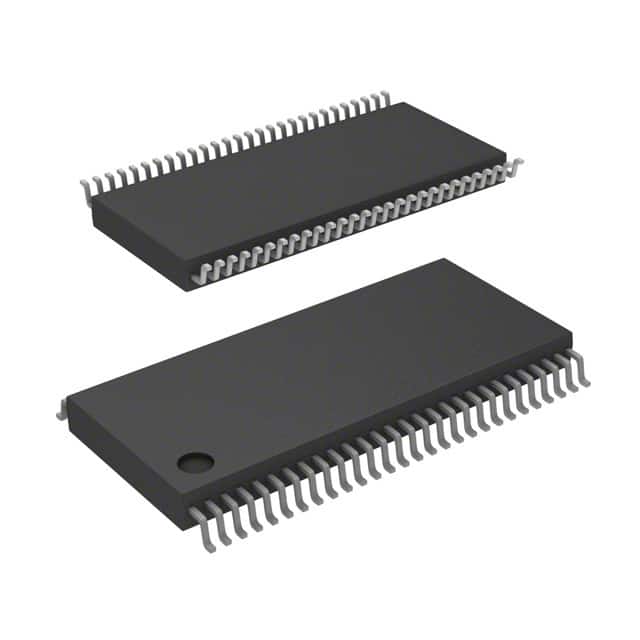
- Part No.:
- MSP430FR6920IG56R
- Manufacturer:
- Texas Instruments
- Category:
- Microcontrollers
- Package:
- 56-TFSOP (0.240", 6.10mm Width)
- Datasheet:
-
 MSP430FR6920IG56R.pdf
- Description:
- IC MCU 16BIT 32KB FRAM 56TSSOP
- Quantity:
- Payment:

- Shipping:

Inventory:2,847
Please send an inquiry. Send us your inquiry, and we will respond immediately.
Product details
Overview
MSP430FR6920IG56R from Texas Instruments is a 16-bit ultra-low-power FRAM microcontroller in 56-pin TSSOP package, featuring 32KB FRAM, 2KB RAM, 12-bit ADC with 8 external channels, integrated 116-segment LCD driver, and real-time clock with calendar. It operates from 1.8 V to 3.6 V and targets battery-powered utility meters and portable sensing applications.
For engineers reviewing the MSP430FR6920IG56R datasheet, MSP430FR6920IG56R pinout, MSP430FR6920IG56R application, or MSP430FR6920IG56R equivalent, key selection criteria include FRAM endurance (10¹⁵ write cycles), LPM3.5 RTC current (0.35 µA), AES-256 encryption support, capacitive touch I/O capability, and UART/I²C/SPI peripheral integration for secure, low-power metering systems.
Technical Context
The MSP430FR6920IG56R implements the MSP430 CPUXV2 core with 16 registers and executes instructions at up to 16 MHz using DCO or LFXT (32 kHz crystal) clock sources. Its memory subsystem integrates unified 32KB FRAM (nonvolatile, fast 125 ns writes) and 2KB SRAM, with MPU-based IP encapsulation and lockable segments for firmware security.
Peripherals include dual eUSCI_A (UART/IrDA/SPI) and dual eUSCI_B (I²C/SPI) modules, five 16-bit timers (TA0–TA3, TB0), 32-bit hardware CRC, 32-bit multiplier, and an RTC with alarm/calendar functions-all operating in ultra-low-power modes including LPM4.5 (0.04 µA shutdown).
Key Specifications
| Parameter | Value and Actual Design Meaning |
|---|---|
| Core Architecture | 16-bit CPUXV2 with 16 registers; enables deterministic real-time control and low-code-footprint firmware. |
| FRAM Capacity | 32 KB unified nonvolatile memory; supports simultaneous read/write, 10¹⁵ write endurance, no erase before write. |
| ADC Resolution | 12-bit SAR ADC with internal reference and sample-and-hold; delivers ±1 LSB INL for precision sensor digitization. |
| LPM3.5 Current | 0.35 µA typical with RTC active; enables multi-year battery life in always-on timekeeping applications. |
| LCD Driver | Integrated 116-segment driver with contrast control; eliminates external display controller in metering UIs. |
| AES Engine | 256-bit AES coprocessor; accelerates secure firmware updates and encrypted data logging without CPU overhead. |
| Package | TSSOP-56 (6.1 mm × 14 mm); compatible with standard surface-mount assembly and space-constrained meter PCBs. |
Pinout & Package
TSSOP-56 package with 6.1 mm × 14 mm body size and 0.5 mm pitch; thermal performance optimized for industrial ambient (–40°C to 85°C) and requires no external heatsink.
| Pin/Terminal | Circuit Role | Design Meaning |
|---|---|---|
| P1.0 | ADC input / RTC clock / DMA trigger | Enables direct connection of external sensors and precise time-synchronized sampling. |
| P6.3 | LCD COM0 output | Drives common electrode for multiplexed LCD segments in heat cost allocators and thermostats. |
| P3.4–P3.7 | eUSCI_A1 SPI master interface | Supports high-speed (up to 10 Mbps) communication with external metrology ICs or secure elements. |
| PJ.4/PJ.5 | LFXT crystal oscillator inputs | Accepts 32.768 kHz crystal for accurate RTC operation; no external load capacitors required per design note. |
| RST/NMI | Reset and non-maskable interrupt | Provides hardware reset initiation and failsafe entry into bootloader or fault-handling routines. |
Key Features
| Feature | Design Value |
|---|---|
| Ferroelectric RAM (FRAM) | 32 KB unified memory with 125 ns write speed and 10¹⁵ endurance-enables frequent logging without wear-out concerns. |
| Capacitive Touch I/O | All GPIO pins support CTSIO without external components-reduces BOM cost and board area in thermostat front panels. |
| Ultra-Low-Power Modes | LPM4.5 draws only 0.04 µA; ideal for tamper-detection circuits that must remain active during main MCU shutdown. |
| Hardware Security | Dedicated 256-bit AES engine + lockable memory segments-meets IEC 62056 and DLMS/COSEM security requirements for smart meters. |
| Integrated LCD Driver | 116-segment drive with programmable bias and contrast-supports custom alphanumeric displays in utility meter housings. |
Applications
| Heat Cost Allocators | Smart Water Meters |
|---|---|
Use Scenario: Installed in residential heating systems to measure radiator heat consumption via temperature differentials and flow rates. IC Role / Device Role / Timing Role: Main system controller executing thermodynamic calculations, storing usage logs in FRAM, and driving segmented LCD display. Use Value: 0.35 µA RTC current enables >10-year battery life; FRAM endurance supports daily 100+ log entries over product lifetime. | Use Scenario: Embedded in ultrasonic water meters to process transducer signals, compute flow volume, and transmit data via LPWAN. IC Role / Device Role / Timing Role: Signal acquisition controller interfacing with ADC and ultrasonic front-end, managing time-stamped data packets. Use Value: 12-bit ADC with internal reference ensures ±0.5% flow accuracy; AES-256 secures firmware updates against tampering. |
| Programmable Thermostats | Portable Medical Monitors |
Use Scenario: Controls HVAC systems via relay outputs while monitoring ambient temperature, humidity, and occupancy via capacitive touch buttons. IC Role / Device Role / Timing Role: Real-time environmental manager with RTC-triggered setpoint adjustments and capacitive user interface. Use Value: All-I/O capacitive touch eliminates mechanical switches; LPM3 standby (0.4 µA) extends battery runtime between replacements. | Use Scenario: Used in handheld pulse oximeters to acquire analog photodiode signals, compute SpO₂ saturation, and store clinical history. IC Role / Device Role / Timing Role: Sensor fusion processor combining ADC, timer-based LED pulsing, and secure patient data storage. Use Value: Unified FRAM allows atomic write of timestamped physiological records; 2KB RAM buffers real-time waveform processing. |
Equivalent & Alternatives
The following parts are listed as comparable options for similar microcontroller applications.
| Alternative Part | Technical Difference | Application Difference | Selection Advice |
|---|---|---|---|
| MSP430FR6922IG56 | 64 KB FRAM (vs. 32 KB), same package and peripherals; includes identical AES-256 and LCD driver. | Preferred where extended firmware partitioning or larger data logging buffers are required. | Select MSP430FR6922IG56 when future-proofing for feature expansion or longer data retention intervals. |
| MSP430FR6820IG56R | No AES-256 engine; otherwise identical FRAM size, LCD, ADC, and power specs; shares same pinout and software compatibility. | Suitable for cost-sensitive, non-secure metering applications lacking regulatory encryption mandates. | Choose MSP430FR6820IG56R when cryptographic acceleration is unnecessary and BOM cost reduction is prioritized. |
Compared with MSP430FR6922IG56, the MSP430FR6920IG56R trades half the FRAM capacity for tighter cost control while retaining full security and display functionality; versus MSP430FR6820IG56R, it adds hardware AES without altering power profile or layout.
Availability
MSP430FR6920IG56R is available at Aetrix Electronics and suitable for utility metering, portable medical devices, and programmable thermostats requiring stable component supply across multi-year production cycles.
Supply support for MSP430FR6920IG56R includes scheduled delivery planning, volume procurement assistance, BOM continuity management, traceable sourcing, and lifecycle availability coordination for OEM customers, industrial embedded developers, connected-device designers, and electronics production programs.
Manufacturer
Texas Instruments is a global semiconductor leader delivering analog, embedded processing, and connectivity solutions for industrial, automotive, and consumer markets.
The MSP430FRxx family targets ultra-low-power sensing and measurement applications, emphasizing FRAM-based reliability, extended battery life, and integrated peripherals for metering and portable instrumentation.
FAQ
What is the maximum operating frequency of the MSP430FR6920IG56R?
The MSP430FR6920IG56R supports a maximum CPU clock frequency of 16 MHz using its factory-trimmed DCO or external HFXT source. In practice, most low-power applications operate at lower frequencies (e.g., 1 MHz in active mode) to balance performance and current draw, with the device maintaining full functionality down to DC.
Does the MSP430FR6920IG56R support hardware AES encryption?
Yes, the MSP430FR6920IG56R includes a dedicated 256-bit AES security coprocessor. This hardware accelerator offloads encryption/decryption tasks from the CPU, enabling secure firmware updates and protected data logging without compromising real-time responsiveness or increasing active-mode current.
What LCD segment count does the MSP430FR6920IG56R support?
The MSP430FR6920IG56R integrates an LCD_C module supporting up to 116 segments in static or 2–4 multiplex configurations. This matches the display requirements of mid-tier utility meters and thermostats, and the driver includes programmable contrast control and charge-pump voltage generation.
Is the MSP430FR6920IG56R pin-compatible with other devices in the FR69xx family?
Yes, the MSP430FR6920IG56R shares identical pinout and electrical characteristics with MSP430FR6922IG56 and MSP430FR6820IG56R in the 56-pin TSSOP (DGG) package. This allows direct substitution within the same footprint when adjusting FRAM size or security features without PCB redesign.
What is the typical RTC current consumption of the MSP430FR6920IG56R in LPM3.5 mode?
The MSP430FR6920IG56R draws 0.35 µA typical current in LPM3.5 mode with the real-time clock running from the 32-kHz LFXT crystal. This ultra-low quiescent current enables decade-long battery operation in applications such as heat cost allocators and wireless sensor nodes requiring precise timekeeping.
MSP430FR6920IG56R Specifications
- Product attributes
- Attribute value
- Manufacturer:
- Texas Instruments
- Package/Case:
- 56-TFSOP (0.240", 6.10mm Width)
- Series:
- MSP430™ FRAM
- Packaging:
- Tape & Reel (TR)
- Product Status:
- Active
- Programmable:
- Not Verified
- Core Processor:
- MSP430 CPUXV2
- Core Size:
- 16-Bit
- Speed:
- 16MHz
- Connectivity:
- I2C, IrDA, SCI, SPI, UART/USART
- Peripherals:
- Brown-out Detect/Reset, DMA, LCD, POR, PWM, WDT
- Number of I/O:
- 46
- Program Memory Size:
- 32KB (32K x 8)
- Program Memory Type:
- FRAM
- EEPROM Size:
- -
- RAM Size:
- 2K x 8
- Voltage - Supply (Vcc/Vdd):
- 1.8V ~ 3.6V
- Data Converters:
- A/D 8x12b
- Oscillator Type:
- Internal
- Operating Temperature:
- -40°C ~ 85°C (TA)
- Grade:
- -
- Qualification:
- -
- Mounting Type:
- Surface Mount
- Supplier Device Package:
MSP430FR6920IG56R FAQ
1.How can I place an order for MSP430FR6920IG56R through Aetrix?
Please submit a Request for Quotation (RFQ) for MSP430FR6920IG56R on Aetrix. Our sales agent will provide a competitive quotation and guide you through the order confirmation once you accept the terms.
2.Are the price and stock information for MSP430FR6920IG56R reliable?
The price and inventory of MSP430FR6920IG56R are updated periodically and may fluctuate due to market conditions. Stock and pricing data are typically refreshed every 24 hours. Quotation validity for MSP430FR6920IG56R is usually 5 days.
3.What payment methods are accepted for MSP430FR6920IG56R?
We accept Wire Transfer, PayPal, Credit Card, Western Union, MoneyGram, and Escrow for MSP430FR6920IG56R transactions.
Note: Certain payment methods may incur a processing fee.
4.How is shipping managed for MSP430FR6920IG56R?
MSP430FR6920IG56R orders can be shipped via leading logistics carriers, including DHL, UPS, FedEx, TNT, or Registered Mail.
Once your MSP430FR6920IG56R order is processed, you will receive an email with the shipment details and tracking number.
Note: Tracking information may take up to 24 hours to appear. Express delivery typically takes 3–5 business days.
5.How can I obtain technical support or documentation for MSP430FR6920IG56R?
For technical support, including MSP430FR6920IG56R datasheets, pinout diagrams, or application guidance, please contact our engineering support team. They can provide detailed documentation and assistance for your MSP430FR6920IG56R requirements.
6.How does Aetrix verify that MSP430FR6920IG56R is sourced from the original manufacturer or authorized distributors?
All MSP430FR6920IG56R products on Aetrix are procured from qualified distributors and authorized channels. Our dedicated quality assurance team conducts strict verification, including traceability checks and, if necessary, third-party testing. This ensures that MSP430FR6920IG56R meets industry standards.
7.What is the process for return or replacement of MSP430FR6920IG56R?
All MSP430FR6920IG56R units undergo pre-shipment inspection (PSI). If there is an issue with MSP430FR6920IG56R, returns or replacements are accepted under the following conditions:
1.Quantity discrepancies, incorrect items, or visible external defects (such as breakage or corrosion), acknowledged by Aetrix.
2.The issue is reported within 90 days of delivery.
3.The MSP430FR6920IG56R part is unused and in its original packaging.
Return procedure for MSP430FR6920IG56R:
1.Submit a request within 90 days.
2.Obtain a Return Material Authorization (RMA) from Aetrix.
MSP430FR6920IG56R Tags

-
ATTINY4-TSHR
Microchip Technology
-
ATTINY10-TSHR
Microchip Technology
-
ATTINY10-TS8R
Microchip Technology

-
ATTINY202-SSNR
Microchip Technology
-
ATTINY202-SSFR
Microchip Technology
-
ATTINY402-SSNR
Microchip Technology

-
PIC16F15213T-I/MF
Microchip Technology
-
PIC16F15213-E/MF
Microchip Technology

-
PIC10F200T-I/OT
Microchip Technology
-
ATTINY412-SSNR
Microchip Technology
-
PIC10F202T-I/OT
Microchip Technology

-
ATTINY404-SSNR
Microchip Technology
Tech Hub

A practical engineering guide to 3.3V and 5V logic compatibility, input thresholds, resistor dividers, translator ICs, MOSFET level shifting, I2C pull-ups, timing limits and power-sequencing risks.

The 74HC595 uses push-pull logic outputs, while the TPIC6B595 uses 50 V open-drain DMOS sinks for higher-power loads. This guide compares timing, current limits, 3.3 V interfacing, load wiring, thermal…

The 74HC595 converts serial data into eight stable parallel outputs. This guide covers pin functions, shift and storage timing, OE and MR behavior, drive-current limits, cascading, voltage compatibilit…

A technical comparison of level-sensitive latches and edge-triggered flip-flops, covering timing windows, setup and hold limits, master–slave operation, time borrowing, race-through, HDL inference and…

A D latch stores one bit while Enable controls when data can pass. This reference covers gate-level operation, truth tables, transparency, setup and hold timing, LE versus OE, common ICs and practical …

An SR latch stores one bit through cross-coupled feedback. This engineering reference covers NOR and NAND implementations, truth tables, forbidden-state recovery, gated operation, switch debouncing, fa…

Latch circuits retain one bit through feedback. This technical reference covers SR and D latches, truth tables, transparency, timing limits, latch-versus-flip-flop behavior, applications and common log…

An engineering guide to LED driver operation, constant-current and constant-voltage outputs, linear and switching topologies, dimming, IC selection, calculations, replacement compatibility, and fault c…

Operational amplifier guide covering op amp basics, feedback, ideal vs real op amps, common configurations, buffer circuits, offset, bias current, gain-bandwidth, slew rate, rail-to-rail limits and sel…

Jumper cables guide covering safe connection order, red and black clamp placement, final ground connection, cable gauge, length, clamp quality, copper vs CCA cables, jump starter comparison and battery…


