
 My Inquiry
 My Account


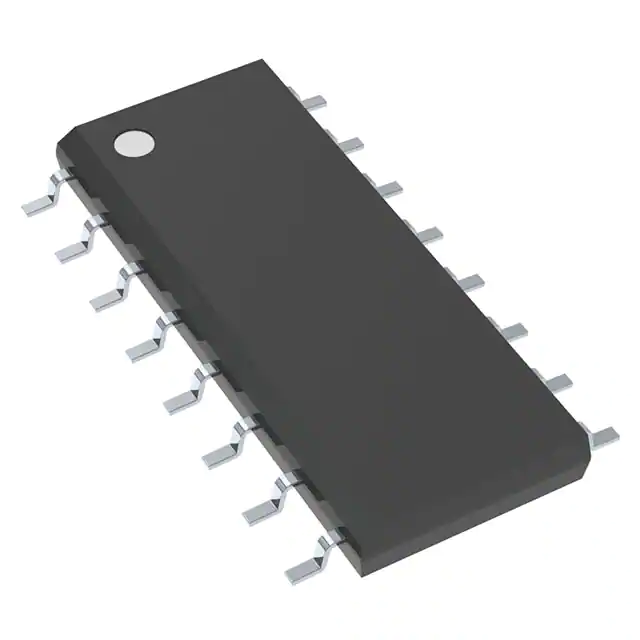
NXP Semiconductors N74F521D,623
- Part No.:
- N74F521D,623
- Manufacturer:
- NXP Semiconductors
- Category:
- Comparators
- Package:
- 20-SOIC (0.295", 7.50mm Width)
- Datasheet:
-
 N74F521D,623.pdf
- Description:
- IC COMPARATOR IDENTITY 8BIT 20SO
- Quantity:
- Payment:

- Shipping:

Inventory:2,960
Please send an inquiry. Send us your inquiry, and we will respond immediately.
Product details
Overview
N74F521D,623 from NXP Semiconductors (formerly Philips Semiconductors) is an 8-bit identity comparator IC that performs bit-for-bit equality comparison between two parallel 8-bit words and asserts a low-active QA=B output when matched. It features 7.0 ns typical propagation delay, 24 mA typical supply current at VCC = 5 V, and operates across 0°C to +70°C. It is used in address decoding, bus arbitration, and memory-mapped I/O validation circuits.
For engineers reviewing the N74F521D,623 datasheet, N74F521D,623 pinout, N74F521D,623 application, or N74F521D,623 equivalent, key selection considerations include its active-low expandable enable (IA=B), TTL-compatible input/output levels, 20-pin SO package, and ripple/parallel expansion capability for wider word comparisons.
Technical Context
The N74F521D,623 implements a combinatorial identity comparison function using fast F-series TTL logic. Its internal architecture evaluates all eight A/B bit pairs simultaneously and gates the result with the IA=B expansion input, enabling cascaded multi-byte comparisons without external logic.
It supports both ripple expansion (daisy-chained QA=B outputs) and parallel expansion (shared IA=B line), allowing flexible scaling to 16-, 24-, or 32-bit comparisons. The device requires no clock or control sequencing - operation is fully asynchronous and level-sensitive.
Key Specifications
| Parameter | Value and Actual Design Meaning |
|---|---|
| Function | 8-bit identity comparator with active-Low QA=B output |
| Propagation Delay | 7.0 ns typical (A/B inputs to QA=B); enables sub-10 ns address match detection |
| Supply Voltage | 4.5 V to 5.5 V - compatible with standard 5 V TTL systems |
| Input Loading | 1.0 FAST unit load per input - interfaces directly with 74F/74AS outputs without fanout buffers |
| Output Drive | 20 mA sink capability on QA=B - drives multiple TTL inputs or LED indicators directly |
| Operating Temp | 0°C to +70°C - suitable for commercial-grade embedded control and instrumentation |
Pinout & Package
Package: 20-lead plastic small outline (SO20), body width 7.5 mm, SOT163-1 footprint - surface-mount compatible with standard reflow profiles.
| Pin/Terminal | Circuit Role | Design Meaning |
|---|---|---|
| 1 (IA=B) | Expansion/Enable input | Active-Low cascading input; ties to QA=B of prior stage or pulled high for standalone use |
| 2–9, 11–18 (A0–A7, B0–B7) | Data inputs | Two independent 8-bit parallel word inputs; A0/B0 to A7/B7 arranged in interleaved order for layout symmetry |
| 10 (GND) | Ground | Logic and power reference plane; must be low-inductance connection for noise immunity |
| 20 (VCC) | Supply | +5 V power rail; requires local 0.1 µF ceramic decoupling adjacent to pin |
| 19 (QA=B) | Identity output | Active-Low open-collector–like output; sinks up to 20 mA; requires external pull-up for logic-high state |
Key Features
| Feature | Design Value |
|---|---|
| Expandable word length | Supports 16-bit+ comparisons via ripple or parallel expansion - eliminates need for custom logic or microcontroller intervention |
| 6.5 ns typical compare time | Enables real-time address matching in high-speed bus systems with ≤10 ns timing budgets |
| TTL-compatible I/O | Direct interface with 74F, 74AS, and legacy 74LS families without level-shifting components |
| Low-power F-series logic | 24 mA typical ICC at 5 V - reduces thermal load vs. older 74LS comparators (e.g., 74LS688) |
Applications
| Memory Address Decoding | Bus Arbitration Logic |
|---|---|
Use Scenario: Detecting CPU access to specific memory-mapped peripheral registers within a 64 KB address space. IC Role / Device Role / Timing Role: Identity comparator verifying exact match between address bus bits A0–A7 and fixed decode pattern. Use Value: Enables zero-wait-state peripheral selection with deterministic 7 ns latency - critical for real-time interrupt response. | Use Scenario: Resolving contention among multiple DMA controllers sharing a common data bus. IC Role / Device Role / Timing Role: Comparing requestor ID fields to grant bus ownership only when no higher-priority master is active. Use Value: Provides hardware-level arbitration without software overhead or clock-domain synchronization delays. |
| ROM Checksum Validation | I/O Port Configuration Matching |
Use Scenario: Verifying integrity of boot ROM contents during system power-on self-test by comparing stored checksum against computed value. IC Role / Device Role / Timing Role: Parallel comparison of 8-bit checksum byte against expected value stored in latch or PROM. Use Value: Completes validation in one cycle with no CPU involvement - accelerates boot sequence by ~15 µs vs. software polling. | Use Scenario: Enabling/disabling specific I/O port functions based on configuration register settings in industrial PLC modules. IC Role / Device Role / Timing Role: Matching port mode bits (e.g., input/output direction, pull-up enable) against predefined configuration patterns. Use Value: Allows dynamic reconfiguration of peripheral interfaces with hardware-level response time <10 ns. |
Equivalent & Alternatives
The following parts are listed as comparable options for similar identity comparator applications.
| Alternative Part | Technical Difference | Application Difference | Selection Advice |
|---|---|---|---|
| SN74F688N | Same 8-bit identity function but with active-High A=B output and different pinout (20-pin DIP only) | Requires inverted logic handling in downstream circuitry; not pin-compatible with N74F521D,623 | Select when active-High assertion simplifies system-level logic or when DIP packaging is required |
| 74ACT521M | CMOS version with 5 V tolerance, lower ICC (4 µA typ), but slower propagation (9 ns typ) and different input thresholds | Higher noise margin and rail-to-rail swing, but incompatible with TTL-level fanout requirements | Select for mixed-voltage systems needing 5 V tolerant CMOS inputs and reduced static power |
Compared with SN74F688N and 74ACT521M, the N74F521D,623 offers optimal balance of speed, TTL compatibility, and SO-package suitability for space-constrained commercial designs - especially where active-Low assertion and ripple expansion are required.
Availability
N74F521D,623 is available at Aetrix Electronics and suitable for memory decoding, bus arbitration, ROM validation, and I/O configuration matching requiring stable component supply and long-term industrial availability.
Supply support for N74F521D,623 includes scheduled delivery planning, volume procurement assistance, BOM continuity management, traceable sourcing, and lifecycle availability coordination for OEM customers, industrial embedded developers, connected-device designers, and electronics production programs.
Manufacturer
NXP Semiconductors is a global semiconductor company formed from the spin-off of Philips Semiconductors in 2006, specializing in secure connectivity solutions and automotive, industrial, and IoT applications.
The 74F logic family - including the N74F521D,623 - was designed for high-speed commercial-grade digital systems requiring reliable TTL-compatible performance with improved power-speed trade-offs over earlier 74LS series.
FAQ
What is the primary function of the N74F521D,623?
The N74F521D,623 is an 8-bit identity comparator that outputs a low signal (QA=B) when all corresponding bits of two 8-bit input words (A0–A7 and B0–B7) match exactly. It uses TTL-compatible logic levels and supports expansion for wider comparisons. Its core role is deterministic, zero-latency equality detection in digital control and addressing circuits.
Does the N74F521D,623 require a clock signal to operate?
No, the N74F521D,623 is a purely combinatorial device with no internal clock or sequential elements. It responds asynchronously to changes on its A/B inputs or IA=B enable line, producing QA=B output within 7.0 ns typical propagation delay. This makes it suitable for real-time, cycle-critical applications like address decoding and bus arbitration.
How is the N74F521D,623 expanded for comparing more than 8 bits?
The N74F521D,623 supports two expansion modes: ripple expansion connects QA=B of one device to IA=B of the next, propagating match status serially; parallel expansion ties all IA=B inputs together and ORs QA=B outputs externally. Both methods preserve the 7 ns per-stage delay and maintain full 8-bit parallel evaluation per device.
What is the recommended pull-up configuration for the QA=B output of the N74F521D,623?
The QA=B output of the N74F521D,623 is a totem-pole output capable of sinking 20 mA but not sourcing current. A pull-up resistor to VCC (typically 1–4.7 kΩ) is required to establish a valid HIGH logic level. For driving multiple TTL inputs, a 1 kΩ pull-up ensures VIH compliance while limiting current to ~5 mA per stage in cascaded configurations.
Is the N74F521D,623 compatible with modern 3.3 V logic systems?
The N74F521D,623 is specified for 4.5–5.5 V operation and TTL input thresholds (VIH = 2.0 V min, VIL = 0.8 V max). While it may function with 3.3 V inputs in some cases, it is not guaranteed - VIH exceeds 3.3 V × 0.7 = 2.31 V, risking marginal HIGH recognition. Use level translators or select 74ACT/74LVC alternatives for native 3.3 V compatibility.
N74F521D,623 Specifications
- Product attributes
- Attribute value
- Manufacturer:
- NXP Semiconductors
- Series:
- 74F
- Package/Case:
- 20-SOIC (0.295", 7.50mm Width)
- Packaging:
- Tape & Reel (TR)
- Product Status:
- Obsolete
- Type:
- Identity Comparator
- Number of Bits:
- 8
- Output:
- Active Low
- Output Function:
- A=B
- Voltage - Supply:
- 4.5V ~ 5.5V
- Current - Output High, Low:
- 1mA, 20mA
- Max Propagation Delay @ V, Max CL:
- 9.5ns @ 5V, 50pF
- Current - Quiescent (Iq):
- -
- Operating Temperature:
- 0°C ~ 70°C
- Grade:
- -
- Qualification:
- -
- Supplier Device Package:
- 20-SO
- Mounting Type:
- Surface Mount
N74F521D,623 FAQ
1.How can I place an order for N74F521D,623 through Aetrix?
Please submit a Request for Quotation (RFQ) for N74F521D,623 on Aetrix. Our sales agent will provide a competitive quotation and guide you through the order confirmation once you accept the terms.
2.Are the price and stock information for N74F521D,623 reliable?
The price and inventory of N74F521D,623 are updated periodically and may fluctuate due to market conditions. Stock and pricing data are typically refreshed every 24 hours. Quotation validity for N74F521D,623 is usually 5 days.
3.What payment methods are accepted for N74F521D,623?
We accept Wire Transfer, PayPal, Credit Card, Western Union, MoneyGram, and Escrow for N74F521D,623 transactions.
Note: Certain payment methods may incur a processing fee.
4.How is shipping managed for N74F521D,623?
N74F521D,623 orders can be shipped via leading logistics carriers, including DHL, UPS, FedEx, TNT, or Registered Mail.
Once your N74F521D,623 order is processed, you will receive an email with the shipment details and tracking number.
Note: Tracking information may take up to 24 hours to appear. Express delivery typically takes 3–5 business days.
5.How can I obtain technical support or documentation for N74F521D,623?
For technical support, including N74F521D,623 datasheets, pinout diagrams, or application guidance, please contact our engineering support team. They can provide detailed documentation and assistance for your N74F521D,623 requirements.
6.How does Aetrix verify that N74F521D,623 is sourced from the original manufacturer or authorized distributors?
All N74F521D,623 products on Aetrix are procured from qualified distributors and authorized channels. Our dedicated quality assurance team conducts strict verification, including traceability checks and, if necessary, third-party testing. This ensures that N74F521D,623 meets industry standards.
7.What is the process for return or replacement of N74F521D,623?
All N74F521D,623 units undergo pre-shipment inspection (PSI). If there is an issue with N74F521D,623, returns or replacements are accepted under the following conditions:
1.Quantity discrepancies, incorrect items, or visible external defects (such as breakage or corrosion), acknowledged by Aetrix.
2.The issue is reported within 90 days of delivery.
3.The N74F521D,623 part is unused and in its original packaging.
Return procedure for N74F521D,623:
1.Submit a request within 90 days.
2.Obtain a Return Material Authorization (RMA) from Aetrix.
N74F521D,623 Tags
-
SN74HC688PWR
Texas Instruments
-
74HC85PW,118
Nexperia USA Inc.
-
74HC688D,653
Nexperia USA Inc.
-
SN74F521DWR
Texas Instruments
-
CD74HCT688M96
Texas Instruments
-
SN74F521N
Texas Instruments
-
CD4585BE
Texas Instruments
-
SN74HC688DWR
Texas Instruments
-
SN74LS85DR
Texas Instruments
-
CD74HC85E
Texas Instruments
-
MC14585BDR2G
onsemi
-
SN74HC688N
Texas Instruments
Tech Hub

A practical engineering guide to 3.3V and 5V logic compatibility, input thresholds, resistor dividers, translator ICs, MOSFET level shifting, I2C pull-ups, timing limits and power-sequencing risks.

The 74HC595 uses push-pull logic outputs, while the TPIC6B595 uses 50 V open-drain DMOS sinks for higher-power loads. This guide compares timing, current limits, 3.3 V interfacing, load wiring, thermal…

The 74HC595 converts serial data into eight stable parallel outputs. This guide covers pin functions, shift and storage timing, OE and MR behavior, drive-current limits, cascading, voltage compatibilit…

A technical comparison of level-sensitive latches and edge-triggered flip-flops, covering timing windows, setup and hold limits, master–slave operation, time borrowing, race-through, HDL inference and…

A D latch stores one bit while Enable controls when data can pass. This reference covers gate-level operation, truth tables, transparency, setup and hold timing, LE versus OE, common ICs and practical …

An SR latch stores one bit through cross-coupled feedback. This engineering reference covers NOR and NAND implementations, truth tables, forbidden-state recovery, gated operation, switch debouncing, fa…

Latch circuits retain one bit through feedback. This technical reference covers SR and D latches, truth tables, transparency, timing limits, latch-versus-flip-flop behavior, applications and common log…

An engineering guide to LED driver operation, constant-current and constant-voltage outputs, linear and switching topologies, dimming, IC selection, calculations, replacement compatibility, and fault c…

Operational amplifier guide covering op amp basics, feedback, ideal vs real op amps, common configurations, buffer circuits, offset, bias current, gain-bandwidth, slew rate, rail-to-rail limits and sel…

Jumper cables guide covering safe connection order, red and black clamp placement, final ground connection, cable gauge, length, clamp quality, copper vs CCA cables, jump starter comparison and battery…


