
 My Inquiry
 My Account


NXP Semiconductors N74F786N,602
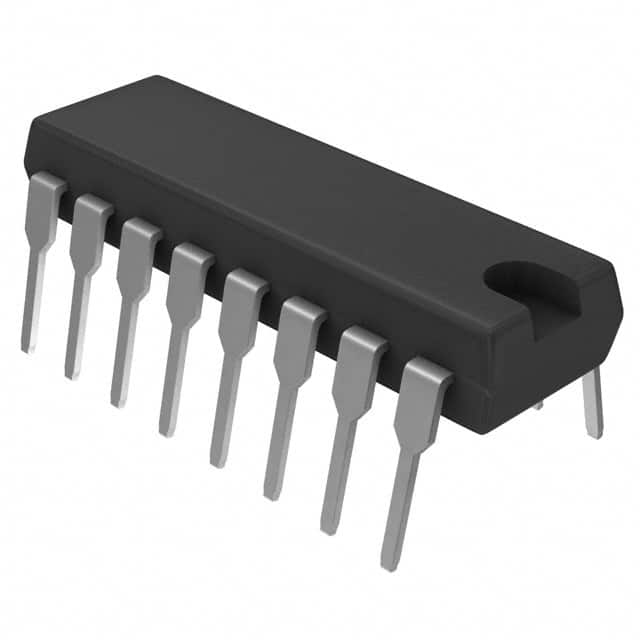
- Part No.:
- N74F786N,602
- Manufacturer:
- NXP Semiconductors
- Category:
- Specialty Logic
- Package:
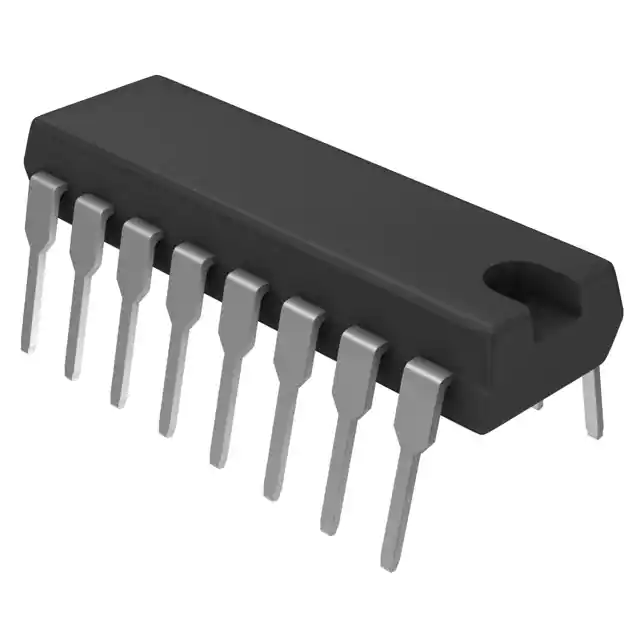
- 16-DIP (0.300", 7.62mm)
- Datasheet:
-
 N74F786N,602.pdf
- Description:
- IC ASYNC BUS ARBITER 16-DIP
- Quantity:
- Payment:

- Shipping:

Inventory:2,891
Please send an inquiry. Send us your inquiry, and we will respond immediately.
Product details
Overview
N74F786N,602 from Philips Semiconductors is a 4-bit asynchronous bus arbiter IC in 16-pin plastic DIP (SOT38-4) packaging, operating at 5V ±10%, with 6.6ns typical propagation delay (BRn to BGn), metastable-free outputs, and industrial temperature range support (–40°C to +85°C). It resolves contention among four active-low bus request inputs using first-come-first-served priority and drives four active-low grant outputs under common enable control.
For engineers reviewing the N74F786N,602 datasheet, N74F786N,602 pinout, N74F786N,602 application, or N74F786N,602 equivalent, key selection considerations include its asynchronous arbitration logic, guaranteed metastability immunity, EN-controlled output enable, integrated 4-input AND gate, and compatibility with TTL/FAST logic families in real-time multi-master bus systems.
Technical Context
The N74F786N,602 implements fully asynchronous arbitration without internal clocks-priority is assigned dynamically as BR0–BR3 inputs assert low, with no fixed hierarchy. Its internal latching structure ensures metastable-free BGn outputs even during simultaneous request assertion, though tPHL may increase under such conditions.
It integrates a standalone 4-input AND gate (pins A–D → YOUT) usable independently of arbitration logic. All outputs (BG0–BG3, YOUT) drive 24mA low / 3mA high per FAST unit load, and EN input enables/disables all BGn outputs simultaneously while maintaining arbitration state.
Key Specifications
| Parameter | Value and Actual Design Meaning |
|---|---|
| Function | 4-bit asynchronous bus arbiter with first-come-first-served priority |
| VCC Range | 4.5 V to 5.5 V - compatible with standard 5V TTL/FAST supply rails |
| tPHL (BRn → BGn) | Typ. 4.5 ns, Max. 10.5 ns @ –40°C to +85°C - defines worst-case grant latency in industrial environments |
| IOL / IOH | 24 mA / –3 mA - supports direct interface to multiple TTL loads without buffers |
| Input Type | Active-low BR0–BR3 and EN; unused BRn inputs must be tied high to prevent floating |
| Metastability Handling | Guaranteed metastable-free outputs - eliminates need for external synchronizers in multi-clock-domain systems |
| AND Gate | Independent 4-input AND (A–D → YOUT) with same timing and drive strength as arbiter outputs |
Pinout & Package
Package: 16-pin plastic dual in-line package (DIP), SOT38-4, 300 mil width, through-hole mounting.
| Pin/Terminal | Circuit Role | Design Meaning |
|---|---|---|
| 1, 2, 3, 15 | A, B, C, D | Inputs to integrated 4-input AND gate - usable as independent combinational logic |
| 4–7 | BR0–BR3 | Active-low bus request inputs - arbitration priority determined by assertion timing, not pin number |
| 8 | GND | Ground reference - must be low-impedance connection for stable metastability immunity |
| 9 | EN | Active-low common enable - disables all BG0–BG3 outputs when high, preserving internal state |
| 10–13 | BG3–BG0 | Active-low bus grant outputs - BGn corresponds to BRn; only one active at a time under normal operation |
| 14 | YOUT | Output of integrated AND gate - electrically identical to BGn outputs in drive capability and timing |
| 16 | VCC | +5V power supply - requires local 0.1 µF ceramic decoupling adjacent to pin |
Key Features
| Feature | Design Value |
|---|---|
| First-come-first-served arbitration | Eliminates fixed-priority conflicts and starvation in dynamic multi-master bus systems |
| Metastable-free outputs | Removes requirement for external synchronization circuits when interfacing asynchronous request sources |
| Integrated 4-input AND gate | Reduces board space and component count by combining arbitration and glue logic in single package |
| Common EN-controlled output enable | Allows system-level bus grant gating without disrupting internal arbitration queue state |
| Industrial temperature range support | Enables deployment in automotive engine control units, industrial PLC backplanes, and telecom line cards |
Applications
| Multi-Master Microprocessor Bus | Real-Time Industrial Controller |
|---|---|
Use Scenario: Two or more microprocessors share a common data/address bus in an embedded control system with strict timing deadlines. IC Role / Device Role / Timing Role: N74F786N,602 arbitrates bus ownership requests from each CPU's BRn line and asserts corresponding BGn to grant access. Use Value: Prevents bus contention and guarantees deterministic response within ≤10.5 ns (max tPHL), enabling sub-microsecond arbitration cycles. | Use Scenario: Programmable Logic Controllers (PLCs) use distributed I/O modules that asynchronously request access to a shared backplane bus. IC Role / Device Role / Timing Role: N74F786N,602 serves as the central arbiter on the backplane, resolving up to four module requests with no clock dependency. Use Value: Metastable-free operation ensures reliable grant signaling across temperature extremes (–40°C to +85°C), eliminating intermittent lockups in factory-floor environments. |
| Legacy TTL System Expansion | Distributed Test Equipment Interface |
Use Scenario: Adding new peripheral controllers to an existing 74F-based system without redesigning the bus control logic. IC Role / Device Role / Timing Role: N74F786N,602 replaces discrete gate-based arbitration with a single-package solution matching 74F timing and drive levels. Use Value: Pin-compatible integration with legacy 74F logic reduces redesign effort; 24mA sink capability drives multiple 74F inputs directly. | Use Scenario: Modular test instruments require coordinated access to a shared GPIB or parallel bus for calibration data exchange. IC Role / Device Role / Timing Role: N74F786N,602 manages concurrent bus requests from up to four instrument modules using active-low handshake signals. Use Value: Integrated AND gate (A–D → YOUT) generates system-ready status from module readiness signals, reducing external logic count by one IC. |
Equivalent & Alternatives
The following parts are listed as comparable options for similar bus arbitration applications.
| Alternative Part | Technical Difference | Application Difference | Selection Advice |
|---|---|---|---|
| SN74F786N | Same function, timing, and pinout; manufactured by Texas Instruments under second-source agreement with Philips | No functional difference; TI version qualified to same military-grade screening standards in select lots | Select SN74F786N when requiring TI's extended product longevity program or MIL-PRF-38535 traceability |
| 74ACT786PC | Advanced CMOS version: 3.3V/5V tolerant, lower ICC (20mA typ), but higher tPHL (12ns max) and no industrial temp grade | Limited to commercial-temperature systems; unsuitable for automotive or industrial ambient conditions | Choose 74ACT786PC only for new 3.3V-centric designs where power reduction outweighs timing and temperature trade-offs |
Compared with SN74F786N and 74ACT786PC, the N74F786N,602 offers guaranteed industrial temperature operation and proven metastability immunity at the cost of higher supply current-making it the sole choice for legacy-replacement and harsh-environment arbitration where reliability trumps power efficiency.
Availability
N74F786N,602 is available at Aetrix Electronics and suitable for multi-master microprocessor buses, industrial PLC backplanes, legacy TTL system expansions, and distributed test equipment interfaces requiring stable component supply over extended production lifecycles.
Supply support for N74F786N,602 includes scheduled delivery planning, volume procurement assistance, BOM continuity management, traceable sourcing, and lifecycle availability coordination for OEM customers, industrial embedded developers, connected-device designers, and electronics production programs.
Manufacturer
Philips Semiconductors (now NXP Semiconductors) was a pioneering European semiconductor manufacturer known for industry-standard logic families and automotive ICs.
The 74F786 belongs to Philips' FAST TTL logic family, designed specifically for high-speed, metastability-immune bus arbitration in real-time embedded systems where deterministic response and multi-clock-domain interoperability are critical.
FAQ
What is the maximum operating temperature range supported by the N74F786N,602?
The N74F786N,602 supports an industrial temperature range of –40°C to +85°C, as confirmed in the Philips Semiconductor Product Specification dated February 14, 1991. This rating applies to the N74F786N variant (plastic DIP), which matches the N74F786N,602 ordering code. Operation outside this range may impair functionality or reliability.
Does the N74F786N,602 require external clocking or synchronization circuitry?
No, the N74F786N,602 operates asynchronously and requires no external clock. Its arbitration logic responds directly to edge transitions on BR0–BR3 inputs, and its metastable-free design eliminates the need for external synchronizers-even when request signals originate from unrelated clock domains. This behavior is explicitly guaranteed in the Functional Description section of the datasheet.
Can unused bus request inputs (BR0–BR3) be left floating on the N74F786N,602?
No-unused BRn inputs on the N74F786N,602 must be tied high (to VCC via pull-up or direct connection) as stated in the PIN DESCRIPTION table. Floating inputs risk indeterminate logic states, unintended arbitration triggers, and increased susceptibility to noise-induced glitches, compromising the guaranteed metastability immunity.
What is the purpose of the YOUT pin on the N74F786N,602?
The YOUT pin on the N74F786N,602 is the output of the integrated 4-input AND gate formed by inputs A, B, C, and D. It functions independently of the arbitration logic, providing combinational logic capability with identical electrical characteristics (24mA sink, 3mA source, 6.6ns typical delay) as the BGn outputs-enabling consolidation of glue logic and arbitration in one IC.
How does the EN pin affect arbitration state retention in the N74F786N,602?
When EN is high, all BG0–BG3 outputs are forced high, but the internal arbitration queue retains its state-including pending requests and priority order. Upon EN returning low, arbitration resumes immediately from the preserved state without reinitialization or loss of queued requests, as documented in the Functional Description section of the N74F786N,602 datasheet.
N74F786N,602 Specifications
- Product attributes
- Attribute value
- Manufacturer:
- NXP Semiconductors
- Series:
- 74F
- Package/Case:
- 16-DIP (0.300", 7.62mm)
- Packaging:
- Tube
- Product Status:
- Obsolete
- Logic Type:
- Bus Arbiter
- Supply Voltage:
- 4.5V ~ 5.5V
- Number of Bits:
- 4
- Operating Temperature:
- 0°C ~ 70°C
- Grade:
- -
- Qualification:
- -
- Mounting Type:
- Through Hole
- Supplier Device Package:
- 16-DIP
N74F786N,602 FAQ
1.How can I place an order for N74F786N,602 through Aetrix?
Please submit a Request for Quotation (RFQ) for N74F786N,602 on Aetrix. Our sales agent will provide a competitive quotation and guide you through the order confirmation once you accept the terms.
2.Are the price and stock information for N74F786N,602 reliable?
The price and inventory of N74F786N,602 are updated periodically and may fluctuate due to market conditions. Stock and pricing data are typically refreshed every 24 hours. Quotation validity for N74F786N,602 is usually 5 days.
3.What payment methods are accepted for N74F786N,602?
We accept Wire Transfer, PayPal, Credit Card, Western Union, MoneyGram, and Escrow for N74F786N,602 transactions.
Note: Certain payment methods may incur a processing fee.
4.How is shipping managed for N74F786N,602?
N74F786N,602 orders can be shipped via leading logistics carriers, including DHL, UPS, FedEx, TNT, or Registered Mail.
Once your N74F786N,602 order is processed, you will receive an email with the shipment details and tracking number.
Note: Tracking information may take up to 24 hours to appear. Express delivery typically takes 3–5 business days.
5.How can I obtain technical support or documentation for N74F786N,602?
For technical support, including N74F786N,602 datasheets, pinout diagrams, or application guidance, please contact our engineering support team. They can provide detailed documentation and assistance for your N74F786N,602 requirements.
6.How does Aetrix verify that N74F786N,602 is sourced from the original manufacturer or authorized distributors?
All N74F786N,602 products on Aetrix are procured from qualified distributors and authorized channels. Our dedicated quality assurance team conducts strict verification, including traceability checks and, if necessary, third-party testing. This ensures that N74F786N,602 meets industry standards.
7.What is the process for return or replacement of N74F786N,602?
All N74F786N,602 units undergo pre-shipment inspection (PSI). If there is an issue with N74F786N,602, returns or replacements are accepted under the following conditions:
1.Quantity discrepancies, incorrect items, or visible external defects (such as breakage or corrosion), acknowledged by Aetrix.
2.The issue is reported within 90 days of delivery.
3.The N74F786N,602 part is unused and in its original packaging.
Return procedure for N74F786N,602:
1.Submit a request within 90 days.
2.Obtain a Return Material Authorization (RMA) from Aetrix.
N74F786N,602 Tags
-
MC14490DWR2G
onsemi
-
SY58600UMG-TR
Microchip Technology
-
MC100EP16DTR2G
onsemi
-
MC100EP16MNR4G
onsemi
-
74LVC1GX04GW,125
Nexperia USA Inc.
-
CD4007UBE
Texas Instruments
-
NXS0104PWJ
Nexperia USA Inc.
-
CD74HC283M96
Texas Instruments
-
SN74LVC1GX04DCKR
Texas Instruments
-
SN74F283N
Texas Instruments
-
SN74LVC1404DCTR
Texas Instruments

-
SN74LVC1GX04DBVR
Texas Instruments
Tech Hub

A practical engineering guide to 3.3V and 5V logic compatibility, input thresholds, resistor dividers, translator ICs, MOSFET level shifting, I2C pull-ups, timing limits and power-sequencing risks.

The 74HC595 uses push-pull logic outputs, while the TPIC6B595 uses 50 V open-drain DMOS sinks for higher-power loads. This guide compares timing, current limits, 3.3 V interfacing, load wiring, thermal…

The 74HC595 converts serial data into eight stable parallel outputs. This guide covers pin functions, shift and storage timing, OE and MR behavior, drive-current limits, cascading, voltage compatibilit…

A technical comparison of level-sensitive latches and edge-triggered flip-flops, covering timing windows, setup and hold limits, master–slave operation, time borrowing, race-through, HDL inference and…

A D latch stores one bit while Enable controls when data can pass. This reference covers gate-level operation, truth tables, transparency, setup and hold timing, LE versus OE, common ICs and practical …

An SR latch stores one bit through cross-coupled feedback. This engineering reference covers NOR and NAND implementations, truth tables, forbidden-state recovery, gated operation, switch debouncing, fa…

Latch circuits retain one bit through feedback. This technical reference covers SR and D latches, truth tables, transparency, timing limits, latch-versus-flip-flop behavior, applications and common log…

An engineering guide to LED driver operation, constant-current and constant-voltage outputs, linear and switching topologies, dimming, IC selection, calculations, replacement compatibility, and fault c…

Operational amplifier guide covering op amp basics, feedback, ideal vs real op amps, common configurations, buffer circuits, offset, bias current, gain-bandwidth, slew rate, rail-to-rail limits and sel…

Jumper cables guide covering safe connection order, red and black clamp placement, final ground connection, cable gauge, length, clamp quality, copper vs CCA cables, jump starter comparison and battery…


