
 My Inquiry
 My Account


Nexperia USA Inc. NBM7100ABQX

- Part No.:
- NBM7100ABQX
- Manufacturer:
- Nexperia USA Inc.
- Category:
- Specialized ICs
- Package:
- -
- Datasheet:
-
 NBM7100ABQX.pdf
- Description:
- Coin cell battery life booster
- Quantity:
- Payment:

- Shipping:

Inventory:2,959
Please send an inquiry. Send us your inquiry, and we will respond immediately.
Product details
Overview
NBM7100ABQX from Nexperia is a coin cell battery life booster IC that extends operational lifetime of 3 V LiMnO₂ primary batteries in ultra-low-power IoT sensor nodes by decoupling burst load demands from the battery via dual-stage DC-DC conversion and adaptive energy learning. It delivers >200 mA pulsed output at programmable 1.8–3.6 V on VDH, maintains <±1% load regulation, achieves up to 93% peak conversion efficiency, and operates across −40 °C to +85 °C in wireless asset tracking systems.
For engineers reviewing the NBM7100ABQX datasheet, NBM7100ABQX pinout, NBM7100ABQX application, or NBM7100ABQX equivalent, this page provides verified technical context for integrating the device into battery-constrained designs requiring high pulse current capability without voltage sag, precise low-quiescent operation, and I²C-configurable output settings.
Technical Context
The NBM7100ABQX implements a two-stage architecture: first-stage constant-current charging of an external storage capacitor (CAP) from the battery (VBT), followed by second-stage regulated boost conversion to VDH using stored energy - isolating the battery from pulse loads. Its proprietary learning algorithm monitors repetitive load cycles and minimizes residual charge in CAP to maximize usable energy extraction.
It supports I²C interface (NBM7100A variant), features integrated fuel gauge, programmable battery load current (2–16 mA), ultra-low 20 nA standby current, and dual regulated outputs: VDH (programmable, high-pulse) and VDP (permanent, low-noise). The RDY pin signals early warning before output droop.
Key Specifications
| Parameter | Value and Actual Design Meaning |
|---|---|
| Output voltage range (VDH) | 1.8 V to 3.6 V, digitally programmable in 100 mV steps - enables direct compatibility with common MCU I/O rails. |
| Pulse output current | >200 mA at VDH - sustains RF transmission bursts (e.g., BLE, LoRaWAN) without battery voltage collapse. |
| Standby current | 20 nA typical - preserves multi-year battery life in intermittently active sensor nodes. |
| Peak conversion efficiency | 93% - minimizes energy loss during capacitor charging and VDH delivery under dynamic load. |
| Battery input range | 2.4 V to 3.6 V - matches nominal and depleted voltage window of CR2032 and similar LiMnO₂ cells. |
| Operating temperature | −40 °C to +85 °C - validated for industrial and outdoor environmental deployment. |
| Interface | I²C (SCL/SDA), with START, ADR, and RDY pins - enables microcontroller-based configuration and status monitoring. |
Pinout & Package
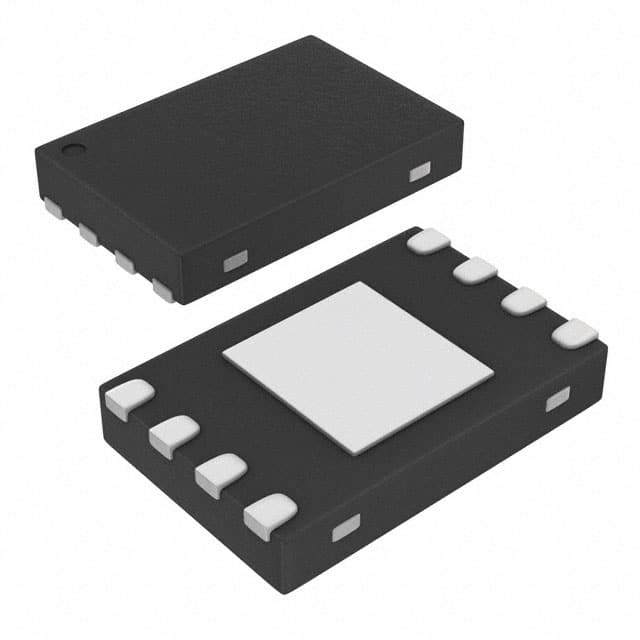
Package: DHVQFN16 (SOT763-1), 2.5 mm × 3.5 mm × 0.85 mm, lead-free, thermal-enhanced quad flat no-lead with exposed pad (connected to VSS).
| Pin | Circuit Role | Design Meaning |
|---|---|---|
| VBT (7) | Battery supply input | Connects directly to LiMnO₂ coin cell; powers internal circuitry and feeds first-stage charger. |
| CAP (10) | Energy storage capacitor node | External 4.7–470 µF capacitor stores energy transferred from VBT; critical for pulse delivery timing and capacity utilization. |
| LX1 (13), LX2 (11) | Inductor connection points | Interface with external 15 µH coupled inductor; forms resonant tank for second-stage boost conversion to VDH. |
| VDH (14) | Regulated high-pulse output | Delivers programmable 1.8–3.6 V with >200 mA capability; powers RF transceivers or sensors during active bursts. |
| VDP (15) | Permanent low-noise output | Provides stable, unregulated ~3.0 V supply (20–30 Ω output impedance) for always-on logic or RTC circuits. |
| RDY (3) | Status output | Open-drain signal pulses 2.6–6.5 µs before VDH droop - triggers MCU to reduce load or enter sleep prior to brown-out. |
| SCL (16), SDA (1) | I²C serial interface | Supports configuration of VDH voltage, battery current, auto-start mode, and read-back of fuel gauge and system status. |
| START (5), ADR (4) | Control and addressing | START initiates manual conversion cycle; ADR sets I²C slave address (0x20–0x27) for multi-device bus operation. |
Key Features
| Feature | Design Value |
|---|---|
| Adaptive energy learning algorithm | Minimizes residual charge in CAP across repeated load cycles, extending effective battery capacity by up to 30% vs fixed-charge schemes. |
| Programmable battery load current | 2 mA to 16 mA in 8 discrete steps - balances battery longevity against recharge speed for varying pulse duty cycles. |
| Integrated fuel gauge | Reports real-time stored energy level in CAP and estimated remaining battery life - enables predictive power management in firmware. |
| Ultra-low 20 nA standby current | Reduces annual self-discharge to <0.18 mAh - preserves >95% of CR2032 capacity over 10 years in deep-sleep states. |
| Early-warning RDY output | 2.6–6.5 µs pulse alerts MCU before VDH regulation loss - allows deterministic response to avoid system reset or data corruption. |
Applications
| Asset Tracking | Smart Metering |
|---|---|
|
Use Scenario: GPS-enabled Bluetooth tag reporting location every 6 hours in cold-chain logistics. IC Role / Device Role / Timing Role: Battery life booster managing 300 ms BLE advertising bursts while maintaining 3.3 V rail for MCU and GNSS module. Use Value: Enables 7+ year operation on single CR2032 by eliminating voltage dip-induced brown-outs during RF transmit. |
Use Scenario: Wireless water meter transmitting hourly consumption data via NB-IoT in municipal infrastructure. IC Role / Device Role / Timing Role: Energy buffer supplying 180 mA NB-IoT transmit pulses while isolating alkaline AA cells from transient loads. Use Value: Extends battery life from 3 to >10 years by preventing premature cut-off due to pulse-induced voltage sag. |
| Electronic Shelf Label | Wearable Health Monitor |
|
Use Scenario: E-paper display updating price tags every 4 hours in retail environments with ambient temperatures down to −20 °C. IC Role / Device Role / Timing Role: Dual-output regulator delivering stable 3.0 V to display driver (VDP) and 2.4 V to microcontroller (VDH) during update bursts. Use Value: Ensures reliable e-ink refresh at low temperature where battery internal resistance rises sharply. |
Use Scenario: Disposable glucose sensor patch transmitting readings every 5 minutes via BLE to smartphone. IC Role / Device Role / Timing Role: Adaptive power manager optimizing CAP charge rate based on measured glucose event frequency and duration. Use Value: Increases functional lifetime per CR2016 cell by 2.3× compared to direct battery-to-load architectures. |
Equivalent & Alternatives
The following parts are listed as comparable options for similar battery life extension applications.
| Alternative Part | Technical Difference | Application Difference | Selection Advice |
|---|---|---|---|
| MAX17048 | Fuel gauge-only IC with no DC-DC boosting; requires external regulator for pulse loads. | Cannot replace NBM7100ABQX in burst-current scenarios - lacks integrated energy storage and dual-stage conversion. | Select only if system already includes high-efficiency boost converter and only fuel gauging is needed. |
| Texas Instruments BQ25504 | Energy harvester-focused buck-boost with 350 nA quiescent current; no adaptive learning or I²C-programmable VDH. | Designed for solar/thermal harvesting, not primary battery optimization; lacks RDY early-warning and CAP learning. | Prefer for ambient-powered systems; unsuitable for coin-cell IoT where adaptive battery modeling is critical. |
Compared with MAX17048 and BQ25504, the NBM7100ABQX uniquely combines programmable VDH regulation, adaptive CAP charge optimization, and early-warning RDY signaling - making it the only solution capable of extending CR2032 life beyond 7 years in BLE/NB-IoT sensor nodes with sub-1% duty cycle.
Availability
NBM7100ABQX is available at Aetrix Electronics and suitable for asset tracking, smart metering, electronic shelf label, and wearable health monitor applications requiring stable component supply and long-term lifecycle support.
Supply support for NBM7100ABQX includes scheduled delivery planning, volume procurement assistance, BOM continuity management, traceable sourcing, and lifecycle availability coordination for OEM customers, industrial embedded developers, connected-device designers, and electronics production programs.
Manufacturer
Nexperia is a global semiconductor expert focused on essential efficiency technologies, delivering high-performance, reliable components for automotive, industrial, and consumer markets.
The NBM7100 series belongs to Nexperia's battery energy management product line, engineered specifically to overcome voltage sag and capacity loss in primary-battery-powered IoT edge devices with intermittent high-current demands.
FAQ
What is the function of the RDY pin?
The RDY pin is an open-drain status output that pulses for 2.6–6.5 µs when the internal storage capacitor (CAP) voltage drops below the threshold required to sustain regulated VDH output. This early-warning signal allows the host MCU to initiate load reduction or enter low-power mode before brown-out occurs, preventing system reset or data loss during RF transmission or sensor sampling.
Can NBM7100ABQX operate with alkaline or silver-oxide batteries?
No - the NBM7100ABQX is specifically optimized for 3 V lithium manganese dioxide (LiMnO₂) coin cells such as CR2032. Its POR threshold (1.3–2.7 V), charge current profile (2–16 mA), and VBT input range (2.4–3.6 V) are calibrated for LiMnO₂ discharge characteristics. Alkaline and silver-oxide cells exhibit different voltage curves, internal resistance, and end-of-life behavior, which may cause premature shutdown or inefficient energy extraction.
How does the adaptive learning algorithm improve battery life?
The algorithm observes the timing and amplitude of repetitive load pulses, then dynamically adjusts the first-stage charge current to minimize residual voltage on the external storage capacitor (CAP) after each discharge cycle. By reducing wasted energy left in CAP, more total charge is extracted from the battery - increasing usable capacity by up to 30% versus fixed-charge schemes, especially in applications with predictable burst intervals like hourly metering or periodic BLE beacons.
What external components are mandatory for basic operation?
Mandatory components include: one 15 µH coupled inductor (LX1/LX2), one 4.7–470 µF storage capacitor (CAP), one 22 µF output capacitor on VDH, one 1 µF bypass capacitor on VBT, and one 1 µF capacitor on VDP. Optional but recommended: 10 µF capacitor on VDP and 1 µF capacitor on VDHS for enhanced stability. All capacitors must be X7R ceramic rated for ≥10 V.
NBM7100ABQX Specifications
- Product attributes
- Attribute value
- Manufacturer:
- Nexperia USA Inc.
- Series:
- -
- Package/Case:
- -
- Packaging:
- Tape & Reel (TR)
- Product Status:
- Active
- Programmable:
- -
- Type:
- -
- Applications:
- -
- Mounting Type:
- -
- Supplier Device Package:
- -
- Grade:
- -
- Qualification:
- -
NBM7100ABQX FAQ
1.How can I place an order for NBM7100ABQX through Aetrix?
Please submit a Request for Quotation (RFQ) for NBM7100ABQX on Aetrix. Our sales agent will provide a competitive quotation and guide you through the order confirmation once you accept the terms.
2.Are the price and stock information for NBM7100ABQX reliable?
The price and inventory of NBM7100ABQX are updated periodically and may fluctuate due to market conditions. Stock and pricing data are typically refreshed every 24 hours. Quotation validity for NBM7100ABQX is usually 5 days.
3.What payment methods are accepted for NBM7100ABQX?
We accept Wire Transfer, PayPal, Credit Card, Western Union, MoneyGram, and Escrow for NBM7100ABQX transactions.
Note: Certain payment methods may incur a processing fee.
4.How is shipping managed for NBM7100ABQX?
NBM7100ABQX orders can be shipped via leading logistics carriers, including DHL, UPS, FedEx, TNT, or Registered Mail.
Once your NBM7100ABQX order is processed, you will receive an email with the shipment details and tracking number.
Note: Tracking information may take up to 24 hours to appear. Express delivery typically takes 3–5 business days.
5.How can I obtain technical support or documentation for NBM7100ABQX?
For technical support, including NBM7100ABQX datasheets, pinout diagrams, or application guidance, please contact our engineering support team. They can provide detailed documentation and assistance for your NBM7100ABQX requirements.
6.How does Aetrix verify that NBM7100ABQX is sourced from the original manufacturer or authorized distributors?
All NBM7100ABQX products on Aetrix are procured from qualified distributors and authorized channels. Our dedicated quality assurance team conducts strict verification, including traceability checks and, if necessary, third-party testing. This ensures that NBM7100ABQX meets industry standards.
7.What is the process for return or replacement of NBM7100ABQX?
All NBM7100ABQX units undergo pre-shipment inspection (PSI). If there is an issue with NBM7100ABQX, returns or replacements are accepted under the following conditions:
1.Quantity discrepancies, incorrect items, or visible external defects (such as breakage or corrosion), acknowledged by Aetrix.
2.The issue is reported within 90 days of delivery.
3.The NBM7100ABQX part is unused and in its original packaging.
Return procedure for NBM7100ABQX:
1.Submit a request within 90 days.
2.Obtain a Return Material Authorization (RMA) from Aetrix.
NBM7100ABQX Tags
-
CAP200DG-TL
Power Integrations
-
ATSHA204A-MAHDA-T
Microchip Technology

-
ATSHA204A-SSHDA-T
Microchip Technology
-
ATSHA204A-STUCZ-T
Microchip Technology
-
ATECC608B-MAHDA-T
Microchip Technology
-
ATECC608B-MAHCZ-S
Microchip Technology

-
ATECC608B-SSHDA-T
Microchip Technology
-
ATECC608B-MAHDA-S
Microchip Technology
-
ATECC608A-MAHDA-S
Microchip Technology
-
ATECC608B-MAVDA-T
Microchip Technology

-
ATECC608A-SSHDA-T
Microchip Technology
-
ATECC508A-MAHDA-T
Microchip Technology
Tech Hub

Jumper cables guide covering safe connection order, red and black clamp placement, final ground connection, cable gauge, length, clamp quality, copper vs CCA cables, jump starter comparison and battery…

LDO regulator guide covering low dropout voltage, power dissipation, thermal design, PSRR, output noise, capacitor stability, adjustable LDO circuits, LDO vs buck converter and datasheet selection chec…

Conditional Access Module guide covering CAM meaning, CI/CI+ interface, smart card authorization, DVB security workflow, TV and set-top box compatibility, internal electronics, ESD protection, connecto…

Guide to electronic component obsolescence covering EOL risk, PCN/PDN notices, last-time buy planning, replacement options, form-fit-function validation, counterfeit risk and BOM lifecycle management.

18650 battery guide covering lithium-ion cell basics, 3.6V/3.7V voltage, 4.2V charging, mAh and Wh capacity, protected cells, chargers, BMS, series-parallel packs, holders, welding and sourcing checks.…

Hall effect sensor guide covering working principle, linear and digital sensors, Arduino circuits, current sensing, speed detection, automotive applications, A3144 examples, signal filtering and datash…

Product Change Notification guide for electronic components, covering PCN meaning, PCN vs PDN/EOL, common change types, risk levels, form-fit-function review, engineering validation, BOM control, LTB/L…

A practical guide to blend door actuators, covering HVAC function, symptoms, location, AC and heater issues, reset and calibration, replacement cost, electrical diagnosis, compatibility checks, and rep…

Engineering guide to Raspberry Pi alternatives, covering chip-level differences, Orange Pi, ROCK, Jetson, Banana Pi, NanoPi, Compute Module, Pico, GPIO, camera, HAT compatibility, and replacement risks…

Engineering guide to dynamic load response testing for high-current buck converters, covering load step setup, slew rate, Vcore undershoot, overshoot, recovery time, probe location, output capacitors a…


