
 My Inquiry
 My Account


Texas Instruments NE567V
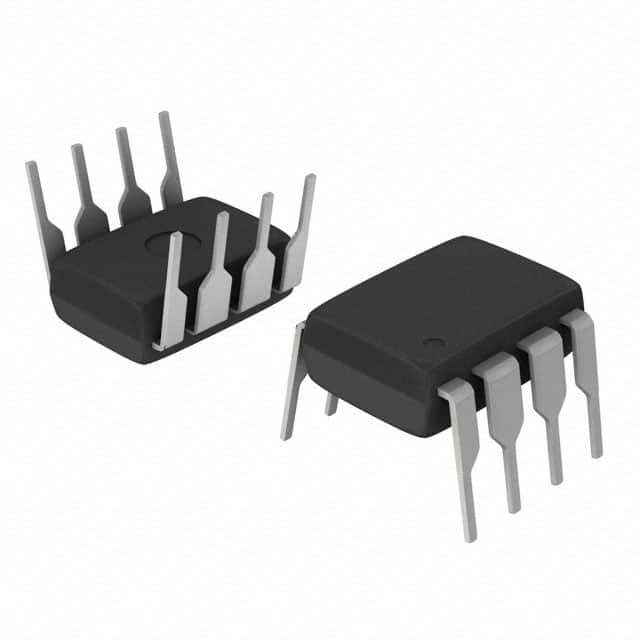
- Part No.:
- NE567V
- Manufacturer:
- Texas Instruments
- Category:
- Telecom
- Package:
- 8-DIP (0.300", 7.62mm)
- Datasheet:
-
 NE567V.pdf
- Description:
- IC TELECOM INTERFACE 8DIP
- Quantity:
- Payment:

- Shipping:

Inventory:2,816
Please send an inquiry. Send us your inquiry, and we will respond immediately.
Product details
Overview
NE567V from Texas Instruments (formerly National Semiconductor) is a tone decoder IC that provides a saturated ground-switching output when an input signal falls within its user-adjustable bandpass. It features center frequency tuning from 0.01 Hz to 500 kHz, bandwidth adjustment up to 14% of center frequency, and 100 mA logic-compatible sinking output - used in touch-tone decoding, ultrasonic remote controls, and FSK demodulation circuits.
For engineers reviewing the NE567V datasheet, NE567V pinout, NE567V application, or NE567V equivalent, key selection considerations include center frequency stability (±35 ppm/°C), supply voltage range (4.75–9 V), output saturation voltage (≤0.6 V at 100 mA), detection bandwidth skew (≤2% of fo), and thermal derating requirements for TO-5 metal can packaging.
Technical Context
The NE567V implements a phase-locked loop (PLL)-based tone detection architecture with independent I/Q detector stages driven by a voltage-controlled oscillator (VCO). Center frequency is set by external R and C on Pins 5 and 6, while bandwidth is controlled via capacitor values on Pins 2 and 3.
It operates as a narrowband filter-demodulator with high out-of-band rejection (>6 dB signal-to-noise ratio), immunity to false triggering, and temperature-stable center frequency drift (±0.1%/°C bandwidth variation). Output activation requires input signal ≥20 mVrms at fo, with leakage current <25 µA when inactive.
Key Specifications
| Parameter | Value and Actual Design Meaning |
|---|---|
| Center Frequency Range | 0.01 Hz to 500 kHz - externally set via R5/C6; enables ultra-low-frequency monitoring or audio-band tone detection. |
| Detection Bandwidth | Up to 14% of fo - adjustable via C2/C3; supports precise selectivity for DTMF or FSK channel separation. |
| Output Sink Current | 100 mA - directly drives relays, LEDs, or logic inputs without external buffering. |
| Supply Voltage Range | 4.75 V to 9 V - compatible with 5 V and 9 V systems; quiescent current 6–10 mA. |
| Center Frequency Stability | ±35 ppm/°C - ensures reliable decoding across industrial temperature range (−55°C to +125°C for H-grade). |
| Input Sensitivity | 20 mVrms minimum - sufficient for low-level audio or ultrasonic transducer outputs. |
| Output Saturation Voltage | ≤0.6 V at 100 mA - guarantees clean TTL/CMOS-compatible low-state under full load. |
Pinout & Package
NE567V is supplied in a metal can (TO-5) package per NS Package Number H08C, with 8 leads in circular configuration. Pin 1 is identified by a tab or dot; orientation follows standard top-view metal-can layout.
| Pin/Terminal | Circuit Role | Design Meaning |
|---|---|---|
| Pin 1 (NC) | No Connection | Unused internal node; must be left floating or tied to GND per layout best practice. |
| Pin 2 (Filter) | Bandwidth Control Input | Connects to C2; sets detection bandwidth via RC time constant with internal transconductance. |
| Pin 3 (Input) | Signal Input | AC-coupled input node; accepts 20–200 mVrms signals; internal 20 kΩ impedance. |
| Pin 4 (GND) | Ground Reference | Primary return path for VCO, detector, and output stage; requires low-impedance PCB connection. |
| Pin 5 (Timing Res) | VCO Timing Resistor | Connects external resistor (R5) to set VCO free-running frequency; determines center frequency fo. |
| Pin 6 (Timing Cap) | VCO Timing Capacitor | Connects external capacitor (C6); completes RC timing network with Pin 5 for fo accuracy. |
| Pin 7 (V+) | Positive Supply | DC power input (4.75–9 V); bypass with 0.1 µF ceramic capacitor near pin for noise immunity. |
| Pin 8 (Output) | Open-Collector Output | Sinks up to 100 mA to GND when tone detected; requires external pull-up for logic-high level. |
Key Features
| Feature | Design Value |
|---|---|
| Adjustable center frequency | Set precisely from 0.01 Hz to 500 kHz using two external components - eliminates need for multiple fixed-frequency ICs. |
| Programmable detection bandwidth | 0–14% of center frequency via dual capacitors - enables optimization for DTMF (narrow) or wideband FSK (broad) applications. |
| High noise immunity | 6 dB minimum out-of-band signal rejection and −6 dB input-to-noise ratio - suppresses false triggers in electrically noisy environments. |
| Temperature-stable operation | ±0.1%/°C bandwidth drift and ±35 ppm/°C center frequency drift - maintains decode accuracy over −55°C to +125°C. |
| Logic-compatible output stage | 100 mA sink capability with ≤0.6 V saturation - interfaces directly with microcontroller GPIOs, optocouplers, or relay drivers. |
Applications
| Touch-Tone Decoding | Ultrasonic Remote Control |
|---|---|
Use Scenario: Detecting dual-tone multi-frequency (DTMF) signals from telephone handsets or keypad interfaces. IC Role / Device Role / Timing Role: Tone decoder providing logic-level output upon valid tone pair detection. Use Value: Eliminates need for microcontroller-based FFT or digital filtering; reduces BOM cost and firmware complexity. |
Use Scenario: Receiving modulated ultrasonic carrier (e.g., 40 kHz) from handheld remotes in home automation systems. IC Role / Device Role / Timing Role: Bandpass filter and demodulator extracting command data from amplitude-modulated carrier. Use Value: Provides robust, analog-domain detection immune to RF interference and ambient audio noise. |
| Carrier-Current Remote Control | Frequency Monitoring System |
Use Scenario: Decoding control tones injected onto AC power lines for lighting or appliance control. IC Role / Device Role / Timing Role: Selective tone detector rejecting line harmonics and switching noise. Use Value: Enables reliable communication over noisy 50/60 Hz mains without digital protocol overhead. |
Use Scenario: Monitoring generator or motor output frequency for over/under-speed alarms in industrial equipment. IC Role / Device Role / Timing Role: Precision oscillator comparator detecting deviation from nominal frequency setpoint. Use Value: Delivers analog go/no-go output without ADC or software timing loops - improves system response time. |
Equivalent & Alternatives
The following parts are listed as comparable options for similar tone decoder applications.
| Alternative Part | Technical Difference | Application Difference | Selection Advice |
|---|---|---|---|
| LM567CM | SOIC-8 package; 0°C to +70°C operating range; identical electrical specs except reduced temp range and higher thermal resistance (160°C/W). | Preferred for surface-mount consumer designs where board space and reflow compatibility matter more than extended temperature operation. | Select LM567CM only if ambient temperature stays within commercial range and PCB layout supports SOIC footprint. |
| NE567D | DIP-8 package; same metal-can die but molded plastic body; 0°C to +70°C rating; slightly higher output rise time (150 ns vs. 120 ns typical for H-grade). | Suitable for prototyping and through-hole production where manual assembly or socketing is required. | Choose NE567D when mechanical robustness and ease of hand-soldering outweigh need for military-grade temperature performance. |
Compared with LM567CM and NE567D, the NE567V offers the widest temperature range (−55°C to +125°C) and lowest thermal resistance (45°C/W junction-to-case), making it the only option qualified for under-hood automotive or industrial control cabinet deployment.
Availability
NE567V is available at Aetrix Electronics and suitable for touch-tone decoding, ultrasonic remote control, and carrier-current remote control applications requiring stable component supply across extended temperature ranges and long product lifecycles.
Supply support for NE567V includes scheduled delivery planning, volume procurement assistance, BOM continuity management, traceable sourcing, and lifecycle availability coordination for OEM customers, industrial embedded developers, connected-device designers, and electronics production programs.
Manufacturer
Texas Instruments acquired National Semiconductor in 2011 and maintains legacy product support, including datasheets, application notes, and cross-reference guidance for discontinued parts like NE567V.
The NE567V belongs to National's classic analog timing and signal conditioning IC family, designed specifically for low-cost, high-reliability tone detection in telecom, industrial control, and remote sensing systems.
FAQ
What is the operating temperature range of the NE567V?
The NE567V is rated for −55°C to +125°C, matching the LM567H specification. This extended range is enabled by its metal can (TO-5) package and internal die design, making it suitable for under-hood automotive, industrial control cabinets, and outdoor equipment where ambient temperatures exceed commercial-grade limits. The NE567V datasheet confirms this range under Absolute Maximum Ratings and Operating Temperature Range tables.
Can the NE567V decode DTMF tones reliably?
Yes, the NE567V can decode DTMF tones when configured with appropriate external components: two units per DTMF pair (one for low-band, one for high-band), each tuned to specific frequencies (e.g., 697 Hz, 770 Hz, 852 Hz, 941 Hz, 1209 Hz, 1336 Hz, 1477 Hz, 1633 Hz). Its 0–14% bandwidth adjustability allows precise windowing around each tone, and its high out-of-band rejection prevents false detection from harmonic content.
What is the maximum supply voltage for the NE567V?
The NE567V has an absolute maximum supply voltage of 9 V on Pin 7 (V+), with recommended operating range from 4.75 V to 9 V. Exceeding 9 V risks permanent damage, as confirmed in the Absolute Maximum Ratings table. At 9 V, quiescent current rises to ~10 mA and activated current to ~15 mA - both remain within safe thermal limits for the TO-5 package when ambient temperature is controlled.
Does the NE567V require external passive components to function?
Yes, the NE567V requires at minimum three external components: a resistor on Pin 5 (timing resistor), a capacitor on Pin 6 (timing capacitor) to set center frequency, and a capacitor on Pin 2 (bandwidth capacitor) to set detection bandwidth. Additional components - such as input coupling capacitor, output pull-up resistor, and supply bypass capacitor - are strongly recommended for stable operation per the Typical Applications section of the NE567V datasheet.
Is the NE567V still in production or obsolete?
The NE567V is marked obsolete by Texas Instruments, with last-time-buy status confirmed in the October 2011 discontinuation notice. However, Aetrix Electronics maintains legacy inventory and offers traceable, tested stock for ongoing industrial and military programs. TI does not manufacture new units, but the NE567V remains supported via archived documentation and application guidance.
NE567V Specifications
- Product attributes
- Attribute value
- Manufacturer:
- Texas Instruments
- Series:
- -
- Package/Case:
- 8-DIP (0.300", 7.62mm)
- Packaging:
- Tube
- Product Status:
- Obsolete
- Function:
- Tone Decoder
- Interface:
- -
- Number of Circuits:
- 1
- Voltage - Supply:
- 4.75V ~ 9V
- Current - Supply:
- 6mA
- Power (Watts):
- -
- Operating Temperature:
- 0°C ~ 70°C
- Grade:
- -
- Qualification:
- -
- Mounting Type:
- Through Hole
- Supplier Device Package:
- 8-PDIP
NE567V FAQ
1.How can I place an order for NE567V through Aetrix?
Please submit a Request for Quotation (RFQ) for NE567V on Aetrix. Our sales agent will provide a competitive quotation and guide you through the order confirmation once you accept the terms.
2.Are the price and stock information for NE567V reliable?
The price and inventory of NE567V are updated periodically and may fluctuate due to market conditions. Stock and pricing data are typically refreshed every 24 hours. Quotation validity for NE567V is usually 5 days.
3.What payment methods are accepted for NE567V?
We accept Wire Transfer, PayPal, Credit Card, Western Union, MoneyGram, and Escrow for NE567V transactions.
Note: Certain payment methods may incur a processing fee.
4.How is shipping managed for NE567V?
NE567V orders can be shipped via leading logistics carriers, including DHL, UPS, FedEx, TNT, or Registered Mail.
Once your NE567V order is processed, you will receive an email with the shipment details and tracking number.
Note: Tracking information may take up to 24 hours to appear. Express delivery typically takes 3–5 business days.
5.How can I obtain technical support or documentation for NE567V?
For technical support, including NE567V datasheets, pinout diagrams, or application guidance, please contact our engineering support team. They can provide detailed documentation and assistance for your NE567V requirements.
6.How does Aetrix verify that NE567V is sourced from the original manufacturer or authorized distributors?
All NE567V products on Aetrix are procured from qualified distributors and authorized channels. Our dedicated quality assurance team conducts strict verification, including traceability checks and, if necessary, third-party testing. This ensures that NE567V meets industry standards.
7.What is the process for return or replacement of NE567V?
All NE567V units undergo pre-shipment inspection (PSI). If there is an issue with NE567V, returns or replacements are accepted under the following conditions:
1.Quantity discrepancies, incorrect items, or visible external defects (such as breakage or corrosion), acknowledged by Aetrix.
2.The issue is reported within 90 days of delivery.
3.The NE567V part is unused and in its original packaging.
Return procedure for NE567V:
1.Submit a request within 90 days.
2.Obtain a Return Material Authorization (RMA) from Aetrix.
NE567V Tags

-
LMC567CMX/NOPB
Texas Instruments
-
LM567CMX/NOPB
Texas Instruments
-
LM567CM/NOPB
Texas Instruments
-
VSC8531XMW-02
Microchip Technology
-
VSC8531XMW-05
Microchip Technology

-
GPY115C0VI
MaxLinear, Inc.
-
SI32185-A-FMR
Skyworks Solutions Inc.
-
VSC8541XMV-05
Microchip Technology
-
SI32178-B-FM1R
Skyworks Solutions Inc.
-
GPY215C0VI
MaxLinear, Inc.
-
CPC7514ZTR
Littelfuse Inc.
-
VSC8502XML-03
Microchip Technology
Tech Hub

A practical engineering guide to 3.3V and 5V logic compatibility, input thresholds, resistor dividers, translator ICs, MOSFET level shifting, I2C pull-ups, timing limits and power-sequencing risks.

The 74HC595 uses push-pull logic outputs, while the TPIC6B595 uses 50 V open-drain DMOS sinks for higher-power loads. This guide compares timing, current limits, 3.3 V interfacing, load wiring, thermal…

The 74HC595 converts serial data into eight stable parallel outputs. This guide covers pin functions, shift and storage timing, OE and MR behavior, drive-current limits, cascading, voltage compatibilit…

A technical comparison of level-sensitive latches and edge-triggered flip-flops, covering timing windows, setup and hold limits, master–slave operation, time borrowing, race-through, HDL inference and…

A D latch stores one bit while Enable controls when data can pass. This reference covers gate-level operation, truth tables, transparency, setup and hold timing, LE versus OE, common ICs and practical …

An SR latch stores one bit through cross-coupled feedback. This engineering reference covers NOR and NAND implementations, truth tables, forbidden-state recovery, gated operation, switch debouncing, fa…

Latch circuits retain one bit through feedback. This technical reference covers SR and D latches, truth tables, transparency, timing limits, latch-versus-flip-flop behavior, applications and common log…

An engineering guide to LED driver operation, constant-current and constant-voltage outputs, linear and switching topologies, dimming, IC selection, calculations, replacement compatibility, and fault c…

Operational amplifier guide covering op amp basics, feedback, ideal vs real op amps, common configurations, buffer circuits, offset, bias current, gain-bandwidth, slew rate, rail-to-rail limits and sel…

Jumper cables guide covering safe connection order, red and black clamp placement, final ground connection, cable gauge, length, clamp quality, copper vs CCA cables, jump starter comparison and battery…


