
 My Inquiry
 My Account


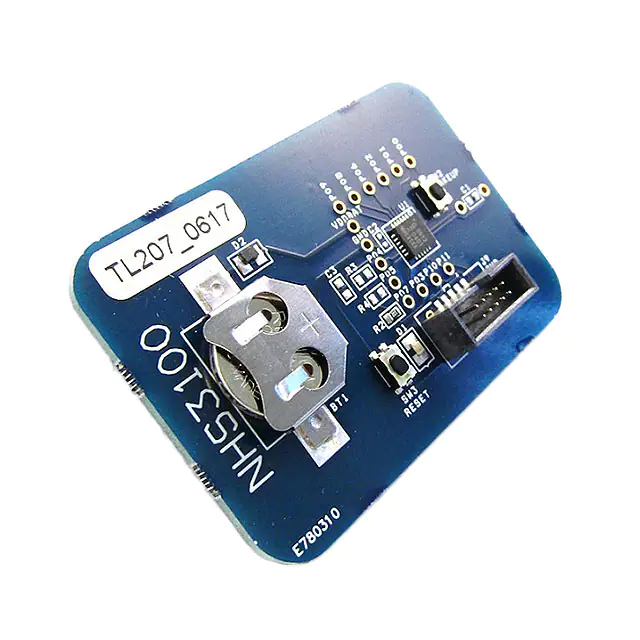
NXP Semiconductors NHS3100TEMOADKUL
- Part No.:
- NHS3100TEMOADKUL
- Manufacturer:
- NXP Semiconductors
- Category:
- RF, RFID, Wireless Evaluation Boards
- Package:
- Datasheet:
-
 NHS3100TEMOADKUL.pdf
- Description:
- NHS3100 STARTEK KIT
- Quantity:
- Payment:

- Shipping:

Inventory:3,353
Please send an inquiry. Send us your inquiry, and we will respond immediately.
Product details
Overview
NHS3100TEMOADKUL from NXP Semiconductors is an NFC-enabled, ultra-low-power Arm Cortex-M0+ temperature monitoring IC with integrated ±0.3 °C (0–45 °C) sensor, 32 kB flash, 8 kB SRAM, and dual power capability (1.72–3.6 V battery or NFC field). It supports cold-chain validation and single-layer foil implementations in disposable sensing tags.
For engineers reviewing the NHS3100TEMOADKUL datasheet, NHS3100TEMOADKUL pinout, NHS3100TEMOADKUL application, or NHS3100TEMOADKUL equivalent, key selection criteria include NFC-powered operation, deep power-down mode (<50 nA), software-configurable GPIOs, I²C/NFC interface coexistence, and certified NFC Forum Type 2 compliance (ID 58516).
Technical Context
The NHS3100TEMOADKUL integrates an Arm Cortex-M0+ core running at up to 8 MHz with nested vectored interrupt controller (NVIC), serial wire debug (SWD), and system tick timer. Its memory subsystem includes 32 kB flash, 4 kB EEPROM (320 B write-protected), and 8 kB SRAM mapped across AHB/APB buses.
Power architecture features dual-source selection (VDDBAT or NFC rectifier), two LDOs (1.2 V/1.6 V), and five operational modes - Active, Sleep, Deep-sleep, Deep power-down, and Battery-off - with <50 nA current draw in battery-off mode at 3.0 V. Temperature sensing uses a calibrated on-die sensor with ±0.3 °C accuracy over 0–45 °C.
Key Specifications
| Parameter | Value and Actual Design Meaning |
|---|---|
| CPU Core | Arm Cortex-M0+ @ up to 8 MHz; enables firmware-customizable temperature logging and NFC command handling |
| Temperature Accuracy | ±0.3 °C (0–45 °C); ensures reliable cold-chain validation without external calibration |
| Memory | 32 kB flash + 8 kB SRAM + 4 kB EEPROM; supports standalone data logging and secure configuration storage |
| Power Modes | Five modes including Battery-off (<50 nA); extends shelf life and enables event-triggered wake-up via NFC or WAKEUP pin |
| NFC Interface | ISO/IEC 14443 Type A, NFC Forum Type 2 certified (ID 58516); allows contactless readout and configuration without battery |
| I²C Interface | Fast-mode (400 kbit/s), multi-address recognition; enables connection to external sensors or host controllers |
| Supply Range | 1.72 V to 3.6 V battery or NFC-field powered; supports flexible deployment in passive and active tag designs |
Pinout & Package
Package: HVQFN24 (SOT616-3), 4 × 4 × 0.85 mm, thermal-enhanced no-lead quad flat package. Pin functions are software-configurable via IOCON registers; 12-bit GPIO port with individual direction/function control per bit.
| Pin/Terminal | Circuit Role | Design Meaning |
|---|---|---|
| VDDBAT (Pin 7) | Positive supply input | Accepts 1.72–3.6 V battery; powers internal LDOs when selected over NFC source |
| VSS (Pin 8, 19, 20, 21, 22, 23) | Ground reference | Multiple ground pads required for low-impedance return and ESD robustness |
| LA / LB (Pins 19, 20) | NFC antenna terminals | Differential RF interface for ISO 14443 Type A coupling; requires external loop antenna |
| PIO0_0/WAKEUP (Pin 1) | Deep power-down wake-up input | Pulled LOW ≥100 μs to exit deep power-down; must be HIGH before entry |
| RESETN (Pin 9) | Active-low reset input | Resets peripherals and CPU; weak pull-up to highest available voltage (VDDBAT or NFC) |
| PIO0_4/SCL & PIO0_5/SDA (Pins 11, 12) | I²C bus interface | Open-drain, no internal pull-up/pull-down; supports fast-mode (400 kbit/s) communication |
Key Features
| Feature | Design Value |
|---|---|
| Ultra-low-power operation | <50 nA in battery-off mode enables >10-year shelf life in unpowered state |
| Software-defined GPIO | All 12 PIO0 pins configurable as GPIO, timer outputs, SPI/I²C, SWD, or clock functions via IOCON registers |
| NFC + battery dual-power support | Automatic source selection between VDDBAT and NFC field; seamless switchover during operation |
| Integrated temperature sensor | Calibrated on-die sensor with ±0.3 °C accuracy (0–45 °C); eliminates external sensor BOM and calibration |
| NFC Forum certification | Certified Type 2 device (ID 58516); guarantees interoperability with standard NFC readers and smartphones |
Applications
| Pharmaceutical Cold Chain Monitoring | Disposable Food Safety Tags |
|---|---|
|
Use Scenario: Real-time temperature logging during vaccine transport from manufacturer to clinic, with NFC readout at checkpoints. IC Role / Device Role / Timing Role: Standalone temperature logger with NFC-triggered data retrieval and battery-off storage between readings. Use Value: Eliminates need for external microcontroller or battery management circuitry; certified NFC compatibility ensures smartphone-readability at distribution hubs. |
Use Scenario: Single-use label on perishable food packaging that records time-above-threshold events during transit and retail display. IC Role / Device Role / Timing Role: Autonomous sensor node with RTC-based timestamping and deep-sleep between measurements. Use Value: Enables cost-effective, foil-based implementation with <50 nA battery-off current - extending usable shelf life beyond 2 years. |
| Industrial Equipment Health Tags | Smart Medical Device Labels |
|
Use Scenario: Attachment to HVAC components or sterilization equipment to log exposure to out-of-spec temperatures during maintenance cycles. IC Role / Device Role / Timing Role: Event-driven monitor using WAKEUP pin or NFC field detection to initiate measurement and store in EEPROM. Use Value: High-current GPIO drivers (20 mA sink) allow direct LED alert activation; I²C interface supports optional external humidity sensor expansion. |
Use Scenario: Tamper-evident label on infusion pumps or diagnostic devices that logs temperature excursions during storage and verifies integrity before clinical use. IC Role / Device Role / Timing Role: Secure, serialized sensor node with unique device ID and write-protected EEPROM for audit-trail storage. Use Value: 320 bytes of write-protected EEPROM ensure immutable cold-chain history; NFC readout provides instant verification without opening packaging. |
Equivalent & Alternatives
The following parts are listed as comparable options for similar temperature-monitoring NFC tag applications.
| Alternative Part | Technical Difference | Application Difference | Selection Advice |
|---|---|---|---|
| ST25DV64K | EEPROM-based NFC tag with integrated temperature sensor (±1.5 °C), no MCU, no programmable logic | Limited to basic read-only logging; no firmware customization, no RTC, no I²C expansion | Select when only passive NFC readout and minimal functionality are required; lower cost but no processing autonomy |
| ATSHA204A + ATtiny412 | Discrete secure element + ultra-low-power MCU; requires external temperature sensor and NFC frontend | Higher BOM count and layout complexity; enables custom crypto and sensor fusion but lacks integrated NFC antenna interface | Select when cryptographic authentication or multi-sensor fusion is mandatory; NHS3100TEMOADKUL reduces component count by 4+ parts |
Compared with ST25DV64K and ATSHA204A+ATtiny412, NHS3100TEMOADKUL uniquely combines certified NFC, Arm Cortex-M0+ programmability, calibrated temperature sensing, and <50 nA battery-off current in a single HVQFN24 package - eliminating discrete NFC frontend, MCU, sensor, and power management ICs.
Availability
NHS3100TEMOADKUL is available at Aetrix Electronics and suitable for pharmaceutical cold chain monitoring, disposable food safety tags, industrial equipment health logging, and smart medical device labels requiring stable component supply and long-term lifecycle support.
Supply support for NHS3100TEMOADKUL includes scheduled delivery planning, volume procurement assistance, BOM continuity management, traceable sourcing, and lifecycle availability coordination for OEM customers, industrial embedded developers, connected-device designers, and electronics production programs.
Manufacturer
NXP Semiconductors is a global semiconductor leader specializing in secure connectivity solutions for automotive, industrial, and IoT applications, with headquarters in Eindhoven, Netherlands.
The NHS3100TEMOADKUL belongs to NXP's NTAG SmartSensor family, designed specifically for NFC-enabled, battery-constrained temperature monitoring in disposable and maintenance-free sensing applications.
FAQ
What power sources does the NHS3100TEMOADKUL support?
The NHS3100TEMOADKUL supports dual power sources: a 1.72–3.6 V external battery connected to VDDBAT, and energy harvested from an NFC field via LA/LB antenna terminals. An automatic source selector prioritizes VDDBAT when both are present, and enables seamless switchover if one source fails. In passive NFC mode, it operates entirely without battery.
How accurate is the integrated temperature sensor in NHS3100TEMOADKUL?
The NHS3100TEMOADKUL features a factory-calibrated on-die temperature sensor with ±0.3 °C absolute accuracy over 0–45 °C, ±0.5 °C from −40 °C to 0 °C, and ±0.5 °C from +45 °C to +85 °C. This performance is specified and tested per the NHS3100 datasheet Rev. 8.03 and enables reliable cold-chain validation without external calibration.
Does NHS3100TEMOADKUL require external components for NFC operation?
Yes - NHS3100TEMOADKUL requires an external NFC antenna (typically a printed copper loop) connected to LA and LB terminals. No external matching network is needed due to integrated tuning; however, a 100 nF capacitor may be added to a high-drive GPIO pad for enhanced NFC field coupling in passive mode.
Can NHS3100TEMOADKUL operate without firmware programming?
No - NHS3100TEMOADKUL ships unprogrammed. It requires user firmware loaded via Arm SWD (using SWCLK/SWDIO pins) to define temperature logging intervals, NFC data structure, wake-up triggers, and I/O behavior. The Arm Cortex-M0+ core does not execute factory-default application code.
Is NHS3100TEMOADKUL pin-compatible with other NHS3100 variants?
Yes - NHS3100TEMOADKUL uses the HVQFN24 (SOT616-3) package and shares identical pinout and electrical characteristics with the base NHS3100 variant. It is not pin-compatible with NHS3100UK (WLCSP25) or NHS3100W8 (bumped die), which have different ball/bump layouts and mechanical footprints.
NHS3100TEMOADKUL Specifications
- Product attributes
- Attribute value
- Manufacturer:
- NXP Semiconductors
- Series:
- -
- Packaging:
- Bulk
- Product Status:
- Active
- Type:
- RFID Reader
- Frequency:
- 13.56MHz
- Contents:
- Board(s)
- Utilized IC / Part:
- NHS3100
NHS3100TEMOADKUL FAQ
1.How can I place an order for NHS3100TEMOADKUL through Aetrix?
Please submit a Request for Quotation (RFQ) for NHS3100TEMOADKUL on Aetrix. Our sales agent will provide a competitive quotation and guide you through the order confirmation once you accept the terms.
2.Are the price and stock information for NHS3100TEMOADKUL reliable?
The price and inventory of NHS3100TEMOADKUL are updated periodically and may fluctuate due to market conditions. Stock and pricing data are typically refreshed every 24 hours. Quotation validity for NHS3100TEMOADKUL is usually 5 days.
3.What payment methods are accepted for NHS3100TEMOADKUL?
We accept Wire Transfer, PayPal, Credit Card, Western Union, MoneyGram, and Escrow for NHS3100TEMOADKUL transactions.
Note: Certain payment methods may incur a processing fee.
4.How is shipping managed for NHS3100TEMOADKUL?
NHS3100TEMOADKUL orders can be shipped via leading logistics carriers, including DHL, UPS, FedEx, TNT, or Registered Mail.
Once your NHS3100TEMOADKUL order is processed, you will receive an email with the shipment details and tracking number.
Note: Tracking information may take up to 24 hours to appear. Express delivery typically takes 3–5 business days.
5.How can I obtain technical support or documentation for NHS3100TEMOADKUL?
For technical support, including NHS3100TEMOADKUL datasheets, pinout diagrams, or application guidance, please contact our engineering support team. They can provide detailed documentation and assistance for your NHS3100TEMOADKUL requirements.
6.How does Aetrix verify that NHS3100TEMOADKUL is sourced from the original manufacturer or authorized distributors?
All NHS3100TEMOADKUL products on Aetrix are procured from qualified distributors and authorized channels. Our dedicated quality assurance team conducts strict verification, including traceability checks and, if necessary, third-party testing. This ensures that NHS3100TEMOADKUL meets industry standards.
7.What is the process for return or replacement of NHS3100TEMOADKUL?
All NHS3100TEMOADKUL units undergo pre-shipment inspection (PSI). If there is an issue with NHS3100TEMOADKUL, returns or replacements are accepted under the following conditions:
1.Quantity discrepancies, incorrect items, or visible external defects (such as breakage or corrosion), acknowledged by Aetrix.
2.The issue is reported within 90 days of delivery.
3.The NHS3100TEMOADKUL part is unused and in its original packaging.
Return procedure for NHS3100TEMOADKUL:
1.Submit a request within 90 days.
2.Obtain a Return Material Authorization (RMA) from Aetrix.
NHS3100TEMOADKUL Tags
-
113991054
Seeed Technology Co., Ltd
-
SC0918
Raspberry Pi

-
113991114
Seeed Technology Co., Ltd
-
ESP32-C6-DEVKITM-1-N4
Espressif Systems
-
ESP32-DEVKITM-1
Espressif Systems
-
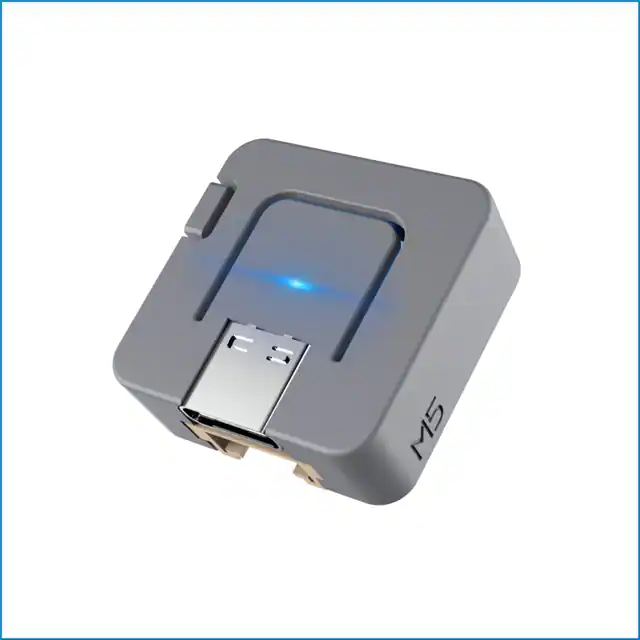
C008
M5Stack Technology Co., Ltd.
-
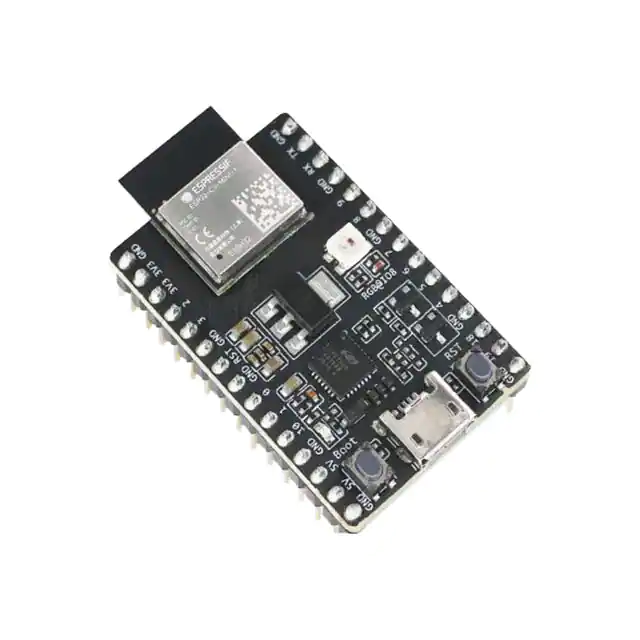
ESP32-C3-DEVKITC-02
Espressif Systems
-
ESP32-C6-DEVKITC-1-N8
Espressif Systems
-
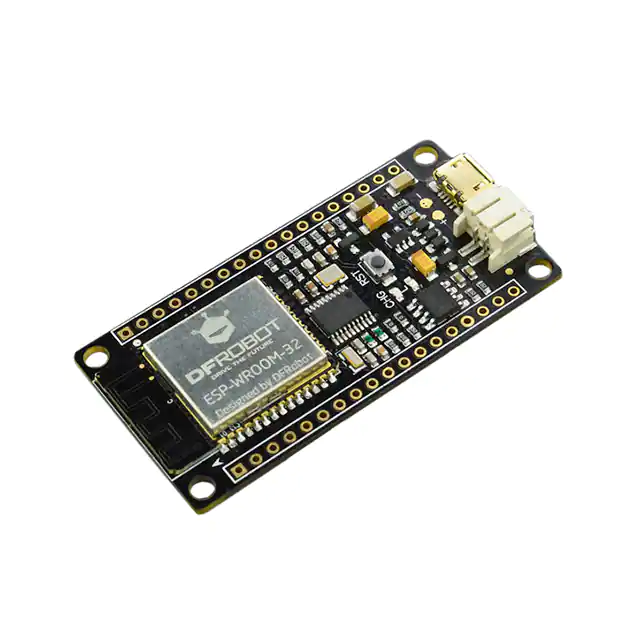
DFR0478
DFRobot
-
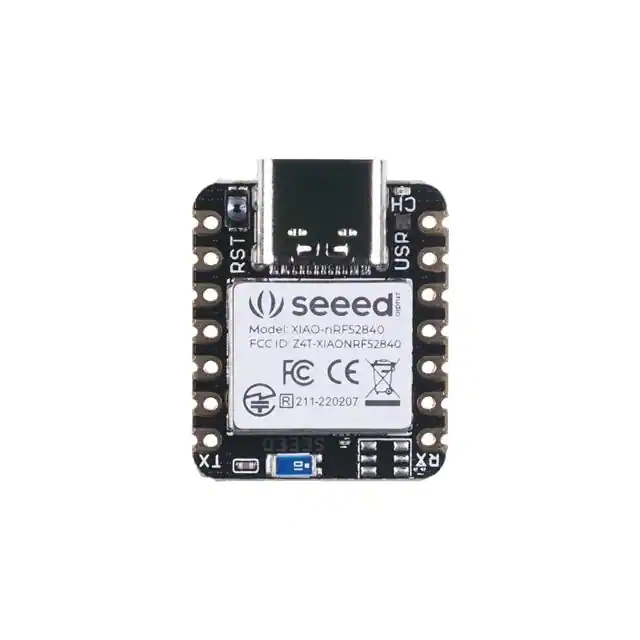
102010448
Seeed Technology Co., Ltd
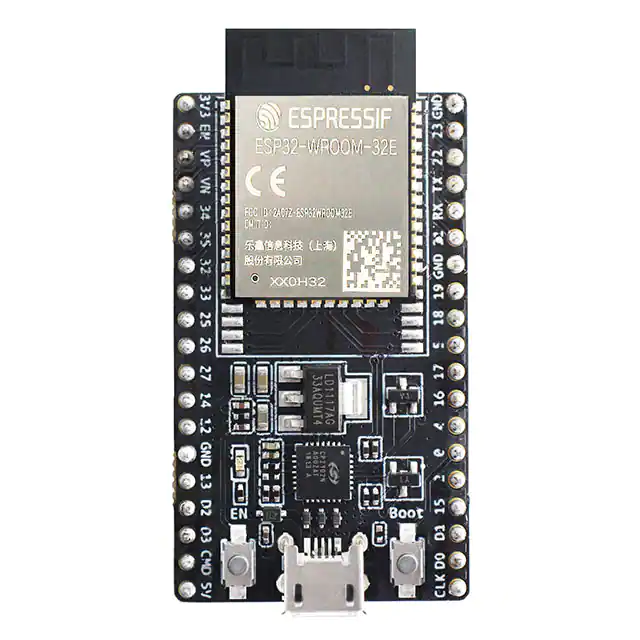
-
ESP32-DEVKITC-32E
Espressif Systems
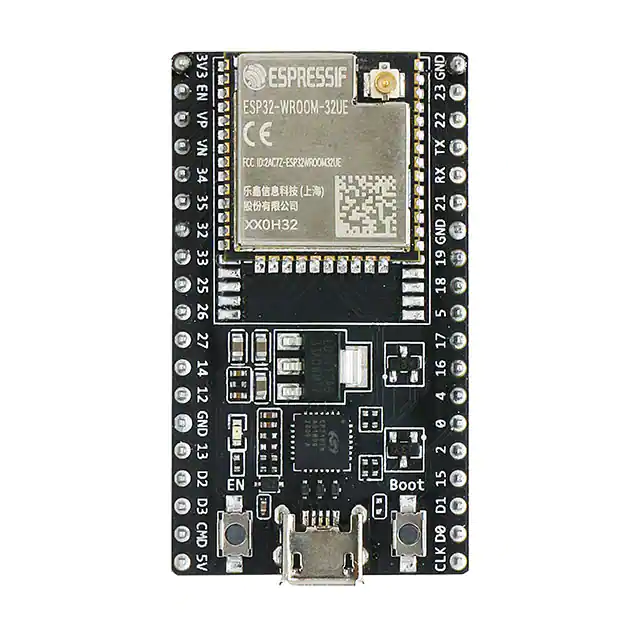
-
ESP32-DEVKITC-32UE
Espressif Systems
Tech Hub

A practical engineering guide to 3.3V and 5V logic compatibility, input thresholds, resistor dividers, translator ICs, MOSFET level shifting, I2C pull-ups, timing limits and power-sequencing risks.

The 74HC595 uses push-pull logic outputs, while the TPIC6B595 uses 50 V open-drain DMOS sinks for higher-power loads. This guide compares timing, current limits, 3.3 V interfacing, load wiring, thermal…

The 74HC595 converts serial data into eight stable parallel outputs. This guide covers pin functions, shift and storage timing, OE and MR behavior, drive-current limits, cascading, voltage compatibilit…

A technical comparison of level-sensitive latches and edge-triggered flip-flops, covering timing windows, setup and hold limits, master–slave operation, time borrowing, race-through, HDL inference and…

A D latch stores one bit while Enable controls when data can pass. This reference covers gate-level operation, truth tables, transparency, setup and hold timing, LE versus OE, common ICs and practical …

An SR latch stores one bit through cross-coupled feedback. This engineering reference covers NOR and NAND implementations, truth tables, forbidden-state recovery, gated operation, switch debouncing, fa…

Latch circuits retain one bit through feedback. This technical reference covers SR and D latches, truth tables, transparency, timing limits, latch-versus-flip-flop behavior, applications and common log…

An engineering guide to LED driver operation, constant-current and constant-voltage outputs, linear and switching topologies, dimming, IC selection, calculations, replacement compatibility, and fault c…

Operational amplifier guide covering op amp basics, feedback, ideal vs real op amps, common configurations, buffer circuits, offset, bias current, gain-bandwidth, slew rate, rail-to-rail limits and sel…

Jumper cables guide covering safe connection order, red and black clamp placement, final ground connection, cable gauge, length, clamp quality, copper vs CCA cables, jump starter comparison and battery…


