
 My Inquiry
 My Account


Nexperia USA Inc. NXT4556UPZ
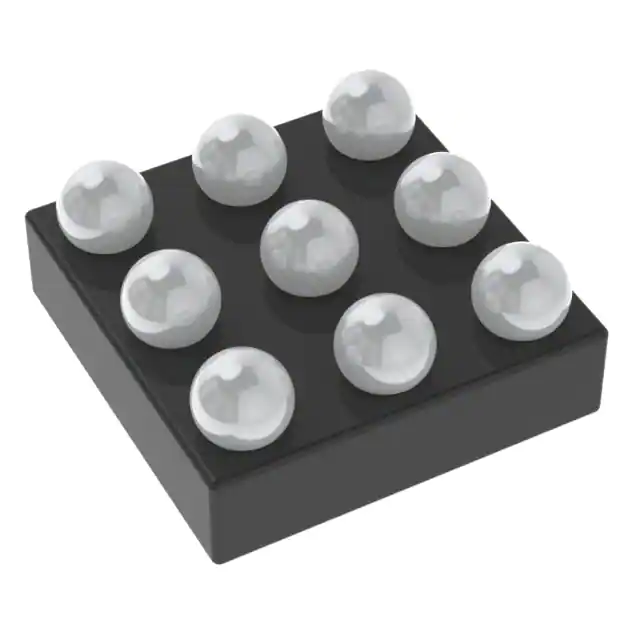
- Part No.:
- NXT4556UPZ
- Manufacturer:
- Nexperia USA Inc.
- Category:
- Translators, Level Shifters
- Package:
- Datasheet:
-
 NXT4556UPZ.pdf
- Description:
- IC TRANSLTR BIDIRECTIONAL 9WLCSP
- Quantity:
- Payment:

- Shipping:

Inventory:4,301
Please send an inquiry. Send us your inquiry, and we will respond immediately.
Product details
Overview
NXT4556UPZ from Nexperia is a dedicated SIM card interface level translator IC that provides bidirectional voltage translation between 1.08 V–1.98 V host microcontrollers and 1.62 V–3.3 V SIM/eSIM cards. It integrates three independent level-shifting channels (I/O, RST, CLK), supports ISO-7816-3-compliant shutdown sequencing, delivers <1 μA shutdown current, and operates across –40 °C to +85 °C in mobile and wireless modem applications.
For engineers reviewing the NXT4556UPZ datasheet, NXT4556UPZ pinout, NXT4556UPZ application, or NXT4556UPZ equivalent, key selection criteria include its WLCSP9 package with 0.35 mm pitch, integrated EMI filters on all SIM-side outputs, AC-coupled UVLO with Vdis(UVLO_AC) ≈ 0.86×VCC_SIM, and support for open-drain and push-pull I/O drive modes up to 5 Mbps data rate.
Technical Context
The NXT4556UPZ implements an auto-direction-sensing bidirectional I/O channel using dual one-shot-controlled PMOS pull-ups and NMOS drivers, eliminating external direction control signals. Its RST and CLK paths are unidirectional high-speed translators with <12 ns propagation delay at 1.8 V/3.0 V supplies.
Shutdown behavior follows ISO-7816-3: upon VCC_SIM falling below Vdis(UVLO_AC), RST_SIM is pulled low first, followed by CLK_SIM and IO_SIM within 4 μs (typical), using internal 400 Ω pull-down resistors - all without host intervention.
Key Specifications
| Parameter | Value and Actual Design Meaning |
|---|---|
| Supply Range (Host) | 1.08 V to 1.98 V - enables direct interfacing with modern ultra-low-voltage application processors and modems. |
| Supply Range (SIM) | 1.62 V to 3.3 V - covers full ISO-7816 SIM voltage classes (Class A/B/C) and eSIM requirements. |
| Shutdown Current | <1 μA - minimizes battery drain during SIM card removal or power-off in portable devices. |
| Propagation Delay | 7–20 ns - ensures timing compliance for 5 MHz clock and 800 kbps open-drain I/O in Class-B/C SIM systems. |
| Vdis(UVLO_AC) | 0.86×VCC_SIM - fast AC-triggered shutdown prevents SIM corruption during hot-swap or brownout events. |
| ESD Protection (SIM pins) | ±8 kV contact / ±15 kV air (IEC61000-4-2 Level 4) - meets stringent mobile handset ESD robustness standards. |
| Package | WLCSP9 (SOT8027-1), 1.06 × 1.06 × 0.43 mm, 0.35 mm pitch - enables ultra-compact PCB layout in space-constrained SIM trays. |
Pinout & Package
Package: Wafer Level Chip-Scale Package (WLCSP9), SOT8027-1, 9-bump array, 1.06 mm × 1.06 mm × 0.43 mm body, 0.35 mm pitch, bottom-side bump configuration with pin 1 indicator in lower-left corner beneath marking "z6".
| Pin/Terminal | Circuit Role | Design Meaning |
|---|---|---|
| A1 (RST_HOST) | Input | Host-side reset signal input; accepts 1.08–1.98 V logic levels; drives RST_SIM with level translation. |
| A2 (VCC_HOST) | Power | Host-side supply rail; powers CLK_HOST, RST_HOST, IO_HOST interfaces; requires local 0.1 µF decoupling. |
| A3 (RST_SIM) | Output | SIM-side reset output; actively driven LOW during shutdown per ISO-7816-3 sequence. |
| B1 (CLK_HOST) | Input | Host clock input; translated to CLK_SIM with <12 ns delay; supports up to 25 MHz push-pull operation. |
| B2 (GND) | Ground | Common reference for both host and SIM sides; critical for ESD performance and signal integrity. |
| B3 (CLK_SIM) | Output | SIM clock output; includes integrated 44 Ω series resistor and EMI filter for RF noise suppression. |
| C1 (IO_HOST) | I/O | Bidirectional host data port; supports push-pull and open-drain drivers; auto-direction sensing enabled. |
| C2 (VCC_SIM) | Power | SIM-side supply rail; range 1.62–3.3 V; triggers UVLO-based shutdown when falling below 0.86×VCC_SIM. |
| C3 (IO_SIM) | I/O | Bidirectional SIM data port; requires open-drain SIM driver; features 44 Ω series resistor and 10 pF capacitance. |
Key Features
| Feature | Design Value |
|---|---|
| Auto-direction I/O channel | Eliminates external direction control logic by detecting first falling edge on either IO_HOST or IO_SIM to determine data flow path. |
| ISO-7816-3 shutdown sequence | Guarantees RST_SIM → CLK_SIM → IO_SIM deactivation order within 4 μs (typical) to prevent SIM data corruption during hot swap. |
| Integrated EMI filters | 44 Ω series resistance on RST_SIM, CLK_SIM, and IO_SIM suppresses higher harmonics of digital signals, reducing RF interference in cellular bands. |
| No external pull-up resistors required | On-chip 2.8–7.3 kΩ pull-ups on both IO_HOST and IO_SIM eliminate BOM cost and board area for discrete resistors. |
| Robust ESD protection | IEC61000-4-2 Level 4 (±8 kV contact / ±15 kV air) on all SIM-side pins protects against user-handling discharge without host-side stress. |
Applications
| Mobile Handsets | Wireless Modems |
|---|---|
Use Scenario: Dual-SIM smartphone with application processor operating at 1.2 V and SIM cards requiring 1.8 V or 3.0 V supply. IC Role / Device Role / Timing Role: Voltage-level translator bridging host SoC GPIOs and SIM card contacts; manages clock, reset, and bidirectional data with automatic direction detection. Use Value: Enables direct interface without discrete level shifters or voltage regulators, reducing component count and PCB footprint while ensuring ISO-7816-3 compliance during SIM insertion/removal. | Use Scenario: LTE Cat-M1/NB-IoT module integrating embedded SIM (eSIM) with host MCU running at 1.8 V. IC Role / Device Role / Timing Role: Bidirectional I/O translator supporting 800 kbps open-drain communication and 5 MHz clock delivery to eSIM; initiates controlled shutdown on VCC_SIM dropout. Use Value: Guarantees reliable eSIM initialization and power-cycle recovery in battery-powered IoT gateways, meeting ETSI and IMT-2000 interface requirements. |
| SIM Card Terminals | Industrial M2M Routers |
Use Scenario: Portable payment terminal with removable physical SIM card and 1.08 V host controller. IC Role / Device Role / Timing Role: Level-shifting interface providing RST, CLK, and I/O translation; activates fast shutdown (Vdis(UVLO_AC)) when SIM is ejected. Use Value: Prevents SIM data corruption during hot-swap by executing deterministic 4 μs shutdown sequence, satisfying PCI PTS and EMVCo certification prerequisites. | Use Scenario: Ruggedized industrial router with dual SIM slots and wide-temperature operation (–40 °C to +85 °C). IC Role / Device Role / Timing Role: Temperature-stable SIM interface IC with integrated EMI filtering on all SIM-side outputs to maintain cellular link integrity in electrically noisy environments. Use Value: Reduces conducted emissions from SIM interface traces, easing EMC compliance testing for EN 55032 Class B without additional ferrites or shielding. |
Equivalent & Alternatives
The following parts are listed as comparable options for similar SIM card interface level translation applications.
| Alternative Part | Technical Difference | Application Difference | Selection Advice |
|---|---|---|---|
| MAX14430ETE+ | Supports only 1.8 V/3.0 V fixed SIM voltages; lacks AC-triggered UVLO and auto-direction I/O; uses TQFN-16 package (3 mm × 3 mm). | Requires external direction control and pull-ups; no ISO-7816-3 shutdown sequence; limited to fixed-voltage SIMs. | Select when legacy fixed-voltage SIM support suffices and board space allows larger package. |
| TXS0102DCUR | General-purpose 2-channel bidirectional translator; no SIM-specific features (no RST/CLK channels, no shutdown logic, no EMI filters). | Not compliant with ISO-7816-3; cannot replace NXT4556UPZ in certified SIM designs without additional circuitry. | Use only for non-certified prototyping where SIM interface timing and shutdown behavior are not required. |
Compared with MAX14430ETE+ and TXS0102DCUR, the NXT4556UPZ uniquely integrates SIM-specific functions - including AC-UVLO-triggered shutdown, auto-direction I/O, and EMI-filtered outputs - in a 1.06 mm × 1.06 mm WLCSP, making it the only drop-in solution for production-grade, space-constrained, ISO-compliant SIM interfaces.
Availability
NXT4556UPZ is available at Aetrix Electronics and suitable for mobile handsets, wireless modems, SIM card terminals, and industrial M2M routers requiring stable component supply, long-term lifecycle assurance, and RoHS/Dark Green compliance.
Supply support for NXT4556UPZ includes scheduled delivery planning, volume procurement assistance, BOM continuity management, traceable sourcing, and lifecycle availability coordination for OEM customers, industrial embedded developers, connected-device designers, and electronics production programs.
Manufacturer
Nexperia is a global semiconductor expert delivering high-performance, reliable, and efficient logic, discrete, and MOSFET solutions optimized for automotive, industrial, and mobile markets.
The NXT4556UPZ belongs to Nexperia's SIM interface translator product line, engineered specifically to simplify and harden SIM/eSIM connectivity in battery-powered, space-constrained, and ESD-sensitive wireless devices.
FAQ
What is the minimum VCC_SIM voltage required to maintain normal operation?
The NXT4556UPZ remains active until VCC_SIM falls below Ven(UVLO), specified at 0.85 V (min) for VCC_HOST = 1.8 V. Operation is guaranteed across 1.62 V to 3.3 V, and the device enters shutdown only when VCC_SIM drops below Vdis(UVLO_AC) ≈ 0.86×VCC_SIM - a slope-dependent threshold designed to avoid false triggers during slow power ramps.
Does the NXT4556UPZ require external pull-up resistors on the IO_HOST or IO_SIM lines?
No. The NXT4556UPZ integrates internal pull-up resistors of 2.8–6 kΩ on IO_HOST and 3.3–7.3 kΩ on IO_SIM, eliminating the need for external components. These values are optimized for standard SIM I/O loading and ensure proper HIGH-state biasing during idle and transition periods without compromising speed or EMI performance.
How does the auto-direction sensing work on the I/O channel?
The I/O channel detects the first falling edge on either IO_HOST or IO_SIM and immediately grants output control to the opposite side via one-shot-activated PMOS pull-ups and NMOS drivers. Direction changes occur seamlessly when both nodes are HIGH, with no external control signal needed - enabling true bidirectional communication in open-drain or push-pull configurations without timing overhead.
Can the NXT4556UPZ support 25 MHz clock operation on the CLK channel?
Yes. The CLK channel supports up to 25 MHz push-pull operation with typical propagation delay of 7–12 ns (depending on supply voltage), meeting timing requirements for high-speed SIM Class-C interfaces. This capability is validated under recommended operating conditions (VCC_HOST = 1.2 V/1.8 V, VCC_SIM = 1.8 V/3.0 V) and includes integrated 44 Ω series resistance and EMI filtering to preserve signal integrity.
NXT4556UPZ Specifications
- Product attributes
- Attribute value
- Manufacturer:
- Nexperia USA Inc.
- Series:
- -
- Package/Case:
- Packaging:
- Tape & Reel (TR)
- Product Status:
- Obsolete
- Translator Type:
- Voltage Level
- Channel Type:
- Bidirectional
- Number of Circuits:
- 1
- Channels per Circuit:
- 3
- Voltage - VCCA:
- 1.65 V ~ 3.6 V
- Voltage - VCCB:
- 1.2 V ~ 3.6 V
- Input Signal:
- -
- Output Signal:
- -
- Output Type:
- Non-Inverted
- Data Rate:
- 5Mbps
- Operating Temperature:
- -40°C ~ 85°C (TA)
- Grade:
- -
- Qualification:
- -
- Features:
- -
- Mounting Type:
- Surface Mount
- Supplier Device Package:
- 9-WFBGA, CSPBGA
NXT4556UPZ FAQ
1.How can I place an order for NXT4556UPZ through Aetrix?
Please submit a Request for Quotation (RFQ) for NXT4556UPZ on Aetrix. Our sales agent will provide a competitive quotation and guide you through the order confirmation once you accept the terms.
2.Are the price and stock information for NXT4556UPZ reliable?
The price and inventory of NXT4556UPZ are updated periodically and may fluctuate due to market conditions. Stock and pricing data are typically refreshed every 24 hours. Quotation validity for NXT4556UPZ is usually 5 days.
3.What payment methods are accepted for NXT4556UPZ?
We accept Wire Transfer, PayPal, Credit Card, Western Union, MoneyGram, and Escrow for NXT4556UPZ transactions.
Note: Certain payment methods may incur a processing fee.
4.How is shipping managed for NXT4556UPZ?
NXT4556UPZ orders can be shipped via leading logistics carriers, including DHL, UPS, FedEx, TNT, or Registered Mail.
Once your NXT4556UPZ order is processed, you will receive an email with the shipment details and tracking number.
Note: Tracking information may take up to 24 hours to appear. Express delivery typically takes 3–5 business days.
5.How can I obtain technical support or documentation for NXT4556UPZ?
For technical support, including NXT4556UPZ datasheets, pinout diagrams, or application guidance, please contact our engineering support team. They can provide detailed documentation and assistance for your NXT4556UPZ requirements.
6.How does Aetrix verify that NXT4556UPZ is sourced from the original manufacturer or authorized distributors?
All NXT4556UPZ products on Aetrix are procured from qualified distributors and authorized channels. Our dedicated quality assurance team conducts strict verification, including traceability checks and, if necessary, third-party testing. This ensures that NXT4556UPZ meets industry standards.
7.What is the process for return or replacement of NXT4556UPZ?
All NXT4556UPZ units undergo pre-shipment inspection (PSI). If there is an issue with NXT4556UPZ, returns or replacements are accepted under the following conditions:
1.Quantity discrepancies, incorrect items, or visible external defects (such as breakage or corrosion), acknowledged by Aetrix.
2.The issue is reported within 90 days of delivery.
3.The NXT4556UPZ part is unused and in its original packaging.
Return procedure for NXT4556UPZ:
1.Submit a request within 90 days.
2.Obtain a Return Material Authorization (RMA) from Aetrix.
NXT4556UPZ Tags
-
74LVC1T45GW,125
Nexperia USA Inc.
-
74LVCH2T45DC,125
Nexperia USA Inc.

-
SN74LVC1T45DBVR
Texas Instruments
-
SN74LVC1T45DRLR
Texas Instruments
-
SN74LVC1T45DPKR
Texas Instruments
-
SN74LVC2T45DCTR
Texas Instruments
-
74LVC2T45GT,115
Nexperia USA Inc.
-
SN74LVC1T45YZPR
Texas Instruments
-
LSF0102DCUR
Texas Instruments
-
SN74LVC1T45DCKR
Texas Instruments
-
TXS0102DCTR
Texas Instruments
-
FXLP34P5X
onsemi
Tech Hub

An engineering guide to LED driver operation, constant-current and constant-voltage outputs, linear and switching topologies, dimming, IC selection, calculations, replacement compatibility, and fault c…

Operational amplifier guide covering op amp basics, feedback, ideal vs real op amps, common configurations, buffer circuits, offset, bias current, gain-bandwidth, slew rate, rail-to-rail limits and sel…

Jumper cables guide covering safe connection order, red and black clamp placement, final ground connection, cable gauge, length, clamp quality, copper vs CCA cables, jump starter comparison and battery…

LDO regulator guide covering low dropout voltage, power dissipation, thermal design, PSRR, output noise, capacitor stability, adjustable LDO circuits, LDO vs buck converter and datasheet selection chec…

Conditional Access Module guide covering CAM meaning, CI/CI+ interface, smart card authorization, DVB security workflow, TV and set-top box compatibility, internal electronics, ESD protection, connecto…

Guide to electronic component obsolescence covering EOL risk, PCN/PDN notices, last-time buy planning, replacement options, form-fit-function validation, counterfeit risk and BOM lifecycle management.

18650 battery guide covering lithium-ion cell basics, 3.6V/3.7V voltage, 4.2V charging, mAh and Wh capacity, protected cells, chargers, BMS, series-parallel packs, holders, welding and sourcing checks.…

Hall effect sensor guide covering working principle, linear and digital sensors, Arduino circuits, current sensing, speed detection, automotive applications, A3144 examples, signal filtering and datash…

Product Change Notification guide for electronic components, covering PCN meaning, PCN vs PDN/EOL, common change types, risk levels, form-fit-function review, engineering validation, BOM control, LTB/L…

A practical guide to blend door actuators, covering HVAC function, symptoms, location, AC and heater issues, reset and calibration, replacement cost, electrical diagnosis, compatibility checks, and rep…


