
 My Inquiry
 My Account


NXP Semiconductors OM15021Z
- Part No.:
- OM15021Z
- Manufacturer:
- NXP Semiconductors
- Category:
- RF, RFID, Wireless Evaluation Boards
- Package:
- Datasheet:
-
 OM15021Z.pdf
- Description:
- JN5179 USB DONGLE FOR ZIGBEE
- Quantity:
- Payment:

- Shipping:

Inventory:2,914
Please send an inquiry. Send us your inquiry, and we will respond immediately.
Product details
Overview
OM15021Z from NXP Semiconductors is a JN517x-series IEEE 802.15.4 wireless microcontroller with ARM Cortex-M3 core, 256 kB Flash/32 kB RAM/4 kB EEPROM, integrated 2.4 GHz transceiver (−96 dBm sensitivity, +10 dBm max TX), and ultra-low-power operation (12.7 mA RX, 0.6 µA sleep timer) - designed for ZigBee 3.0 and Thread-based smart lighting and home automation nodes.
For engineers reviewing the OM15021Z datasheet, OM15021Z pinout, OM15021Z application, or OM15021Z equivalent, key selection considerations include its HVQFN40 package, antenna diversity support, 128-bit AES hardware security, 6-channel 10-bit ADC with internal temperature sensor, and dual UART/SPI/I²C peripheral set optimized for battery-powered IoT edge devices.
Technical Context
The OM15021Z integrates an ARM Cortex-M3 CPU running at up to 32 MHz with unified memory architecture, IEEE 802.15.4 MAC accelerator (CRC, auto-ACK, address check), and dedicated 128-bit AES-CCM security coprocessor compliant with IEEE 802.15.4-2006. Its radio subsystem includes O-QPSK modulation, programmable TX power (3–10 dBm), and automatic receive antenna diversity based on energy detection.
On-chip peripherals include fail-safe I²C-bus (open-drain DIO4/DIO5), dual SPI master/slave ports (2 chip selects), two UARTs (one with RTS/CTS), six PWM timers plus two general-purpose timers, 18 digital I/Os, and a 10-bit ADC with autonomous multi-channel sampling - all managed via Integrated Peripherals API to abstract low-level register access.
Key Specifications
| Parameter | Value and Actual Design Meaning |
|---|---|
| CPU Core | ARM Cortex-M3, 32-bit, up to 32 MHz - enables concurrent execution of ZigBee/Thread stack and application logic without external processor |
| Memory | 256 kB Flash / 32 kB RAM / 4 kB EEPROM - supports OTA firmware updates and persistent network state storage |
| Radio Performance | −96 dBm sensitivity, +10 dBm max TX output, 106 dB link budget - ensures robust 2.4 GHz mesh connectivity in dense indoor environments |
| Power Consumption | 12.7 mA RX current, 0.6 µA sleep timer mode, 100 nA deep sleep - enables >10-year coin-cell battery life in always-on sensor nodes |
| Analog Peripherals | 6-input 10-bit ADC, internal temperature sensor, analog comparator - enables direct monitoring of thermal and environmental conditions |
| Digital Interfaces | 2×UART (1 with flow control), 2×SPI (master/slave), I²C-bus (fail-safe, open-drain), 18 DIO - eliminates need for level shifters or bus buffers in lighting control designs |
| Security | Hardware 128-bit AES-CCM engine - offloads encryption/authentication from CPU, meeting ZigBee PRO and Thread security requirements |
Pinout & Package
OM15021Z is housed in a 6 × 6 mm HVQFN40 package (SOT618-8), lead-free and RoHS compliant, with exposed die paddle (VSSA) for thermal management. Pin pitch is 0.5 mm.
| Pin/Terminal | Circuit Role | Design Meaning |
|---|---|---|
| RF_IO | RF antenna interface | Single-ended 50 Ω RF port requiring only 2 inductors and capacitor for microstrip matching - simplifies PCB layout for certified 2.4 GHz operation |
| DIO4, DIO5 | I²C-bus SCL/SDA | True open-drain pins with built-in glitch filter - enable robust communication with standard I²C sensors without external pull-ups in noisy lighting environments |
| XTAL_IN / XTAL_OUT | 32 MHz crystal oscillator | Drive external crystal for system clock generation; internal divider produces 16 MHz system clock - ensures timing accuracy for IEEE 802.15.4 symbol timing |
| VDDA / VDDD / VB_DIG / VB_RF1 / VB_RF2 / VB_SYNTH / VB_VCO | Power supply domains | Separate analog/digital/RF/synthesis regulator outputs - allow independent decoupling (100 nF ceramic each) to suppress cross-domain noise coupling |
| RESET_N | Active-low reset input | Pulled up internally; assertion resets CPU, peripherals, and radio - provides reliable cold start and recovery from brownout events |
Key Features
| Feature | Design Value |
|---|---|
| Integrated IEEE 802.15.4 transceiver | Eliminates external RF front-end, reducing BOM count and enabling compact PCB designs for embedded lighting modules |
| Antenna diversity with auto-RX switching | Improves packet reception reliability in multipath-rich home environments without requiring dual antennas or manual tuning |
| Fail-safe I²C-bus interface | Prevents bus lock-up during voltage transients - critical for stable communication with LED drivers and ambient light sensors |
| OTA firmware upgrade capability | Enables field updates of ZigBee/Thread stacks and application code without physical access or programming fixtures |
| 100 nA deep sleep with external wake-up | Allows motion-triggered or scheduled wake-up from ultra-low-power state - essential for battery-powered occupancy sensors |
Applications
| Smart Lighting Control Node | ZigBee/Thread Border Router |
|---|---|
Use Scenario: Wireless dimmable LED driver module mounted inside recessed ceiling fixture, powered by CR2032 coin cell. IC Role / Device Role / Timing Role: OM15021Z serves as full-stack coordinator node - executing ZigBee Light Link profile, managing group commands, and sampling onboard temperature sensor for thermal derating. Use Value: 12.7 mA RX current and 0.6 µA sleep timer enable >7-year battery life while maintaining mesh network presence and responding to group broadcast commands within 15 ms. | Use Scenario: Wall-mounted gateway bridging ZigBee lighting network to Ethernet/Wi-Fi, powered by 5 V USB adapter. IC Role / Device Role / Timing Role: OM15021Z operates as Thread border router - handling 6LoWPAN header compression, IPv6 forwarding, and secure key exchange with end devices. Use Value: Dual UART with hardware flow control (RTS/CTS) enables reliable serial tunneling to host MCU, while 256 kB Flash stores multiple network stacks (ZigBee PRO + Thread 1.1) and TLS certificate store. |
| Commercial Occupancy Sensor | Self-Powered Smart Switch |
Use Scenario: Battery-powered PIR + ambient light sensor node installed in office ceiling, reporting occupancy status every 30 s. IC Role / Device Role / Timing Role: OM15021Z acts as sensor hub - reading ADC channels, applying motion-detection algorithm, and transmitting encrypted reports via ZigBee Green Power. Use Value: 100 nA deep sleep current with wake-up from DIO interrupt allows >10-year operation; internal temperature sensor compensates PIR drift across −40 °C to +125 °C ambient range. | Use Scenario: Mechanical light switch harvesting energy from button press to power wireless transmission. IC Role / Device Role / Timing Role: OM15021Z functions as energy-harvesting endpoint - capturing mechanical pulse, charging supercapacitor, and transmitting single-frame ZigBee GP command upon actuation. Use Value: Ultra-fast wake-up (<50 µs) from deep sleep and sub-100 µs radio turn-on time ensure reliable transmission before harvested energy depletes - validated per ZigBee Green Power specification. |
Equivalent & Alternatives
The following parts are listed as comparable options for similar wireless microcontroller applications.
| Alternative Part | Technical Difference | Application Difference | Selection Advice |
|---|---|---|---|
| JN5169 | ARM Cortex-M0 core, 128 kB Flash, no integrated PA, −95 dBm sensitivity | Limited to short-range, lower-complexity ZigBee HA networks; lacks antenna diversity and AES hardware acceleration | Choose for cost-sensitive, line-powered lighting controls where range and security are secondary |
| CC2652R | ARM Cortex-M4F core, 352 kB Flash, Bluetooth 5.1 + IEEE 802.15.4 dual-mode, −101 dBm sensitivity | Supports Bluetooth provisioning and concurrent multi-protocol operation; requires external crypto library for ZigBee stack | Choose when Bluetooth mobile commissioning or future protocol flexibility is required - adds software complexity but extends ecosystem compatibility |
Compared with JN5169, OM15021Z delivers higher RF link budget (+1 dB), hardware AES, and antenna diversity for robust mesh resilience; compared with CC2652R, it offers simpler ZigBee/Thread stack integration and lower active current in pure 802.15.4 mode, reducing firmware validation scope for lighting OEMs.
Availability
OM15021Z is available at Aetrix Electronics and suitable for smart lighting control nodes, ZigBee/Thread border routers, commercial occupancy sensors, self-powered switches, and energy-harvesting IoT endpoints requiring stable component supply and long-term lifecycle assurance.
Supply support for OM15021Z includes scheduled delivery planning, volume procurement assistance, BOM continuity management, traceable sourcing, and lifecycle availability coordination for OEM customers, industrial embedded developers, connected-device designers, and electronics production programs.
Manufacturer
NXP Semiconductors is a global semiconductor leader focused on secure connectivity solutions for automotive, industrial, and IoT markets, with expertise in wireless SoCs and embedded security.
The JN517x product line was engineered specifically for ultra-low-power, standards-compliant mesh networking in battery-operated smart home and commercial lighting systems - integrating radio, MCU, memory, and peripherals into a single die to minimize system-level design effort.
FAQ
What wireless protocols does OM15021Z natively support?
OM15021Z natively supports IEEE 802.15.4-2006 PHY/MAC layer operation and is qualified for ZigBee PRO, ZigBee 3.0, and Thread 1.1 protocol stacks. Its hardware MAC accelerator handles CRC generation, auto-ACK, address filtering, and frame timing - enabling deterministic low-latency packet processing without CPU intervention. The OM15021Z does not support Bluetooth, Wi-Fi, or proprietary 2.4 GHz protocols out-of-the-box.
Does OM15021Z require external flash memory for OTA firmware updates?
No, OM15021Z does not require external flash memory for OTA firmware updates. Its 256 kB embedded Flash includes dedicated boot region and user application space, enabling full stack and application image updates over-the-air using NXP's JN-AN-1205 reference implementation. The OM15021Z's Flash endurance is rated for 100 k write cycles, sufficient for field upgrades throughout typical product lifetime.
How is antenna diversity implemented on OM15021Z?
OM15021Z implements antenna diversity using automatic receive switching based on real-time energy detection across two RF paths (RFRX and ADE/ADO signals). The radio subsystem evaluates received signal strength on both paths and selects the optimal antenna within <10 µs - no software intervention required. This feature is enabled by default in NXP's ZigBee stack and improves packet reception rate by up to 40% in multipath environments, directly enhancing mesh reliability for OM15021Z-based lighting networks.
What debug interfaces are available on OM15021Z?
OM15021Z supports Serial Wire Debug (SWD) and 4-pin JTAG interfaces for development and production programming. SWD uses DIO17 (SWCK) and DIO18 (SWD) pins with optional TRACESWV (DIO9) and TRACECLK (DIO8) for real-time trace. JTAG uses dedicated pins (TCK, TMS, TDI, TDO) multiplexed with DIO17, DIO18, DIO15, and DIO9. Both interfaces support up to 8 breakpoints and 4 watchpoints, and are accessible via standard NXP LPC-Link2 or SEGGER J-Link debug probes - fully supported in MCUXpresso IDE for OM15021Z firmware development.
Can OM15021Z operate from a 2.0 V to 3.6 V supply across its full temperature range?
Yes, OM15021Z is specified to operate from 2.0 V to 3.6 V supply voltage across the full industrial temperature range of −40 °C to +125 °C. Its internal regulators (VB_DIG, VB_RF1/2, VB_SYNTH, VB_VCO) maintain stable 1.8 V domains regardless of input voltage variation, and the supply voltage monitor includes 8 programmable thresholds for brownout detection and graceful shutdown. This wide input range enables direct coin-cell (2.0–3.0 V), alkaline (2.4–3.6 V), or regulated 3.3 V operation - all validated in OM15021Z reference designs.
OM15021Z Specifications
- Product attributes
- Attribute value
- Manufacturer:
- NXP Semiconductors
- Series:
- -
- Packaging:
- Bulk
- Product Status:
- Obsolete
- Type:
- Transceiver; 802.15.4 (Thread, Zigbee®)
- Frequency:
- 2.4GHz
- Contents:
- Board(s)
- Utilized IC / Part:
- JN5179
OM15021Z FAQ
1.How can I place an order for OM15021Z through Aetrix?
Please submit a Request for Quotation (RFQ) for OM15021Z on Aetrix. Our sales agent will provide a competitive quotation and guide you through the order confirmation once you accept the terms.
2.Are the price and stock information for OM15021Z reliable?
The price and inventory of OM15021Z are updated periodically and may fluctuate due to market conditions. Stock and pricing data are typically refreshed every 24 hours. Quotation validity for OM15021Z is usually 5 days.
3.What payment methods are accepted for OM15021Z?
We accept Wire Transfer, PayPal, Credit Card, Western Union, MoneyGram, and Escrow for OM15021Z transactions.
Note: Certain payment methods may incur a processing fee.
4.How is shipping managed for OM15021Z?
OM15021Z orders can be shipped via leading logistics carriers, including DHL, UPS, FedEx, TNT, or Registered Mail.
Once your OM15021Z order is processed, you will receive an email with the shipment details and tracking number.
Note: Tracking information may take up to 24 hours to appear. Express delivery typically takes 3–5 business days.
5.How can I obtain technical support or documentation for OM15021Z?
For technical support, including OM15021Z datasheets, pinout diagrams, or application guidance, please contact our engineering support team. They can provide detailed documentation and assistance for your OM15021Z requirements.
6.How does Aetrix verify that OM15021Z is sourced from the original manufacturer or authorized distributors?
All OM15021Z products on Aetrix are procured from qualified distributors and authorized channels. Our dedicated quality assurance team conducts strict verification, including traceability checks and, if necessary, third-party testing. This ensures that OM15021Z meets industry standards.
7.What is the process for return or replacement of OM15021Z?
All OM15021Z units undergo pre-shipment inspection (PSI). If there is an issue with OM15021Z, returns or replacements are accepted under the following conditions:
1.Quantity discrepancies, incorrect items, or visible external defects (such as breakage or corrosion), acknowledged by Aetrix.
2.The issue is reported within 90 days of delivery.
3.The OM15021Z part is unused and in its original packaging.
Return procedure for OM15021Z:
1.Submit a request within 90 days.
2.Obtain a Return Material Authorization (RMA) from Aetrix.
OM15021Z Tags
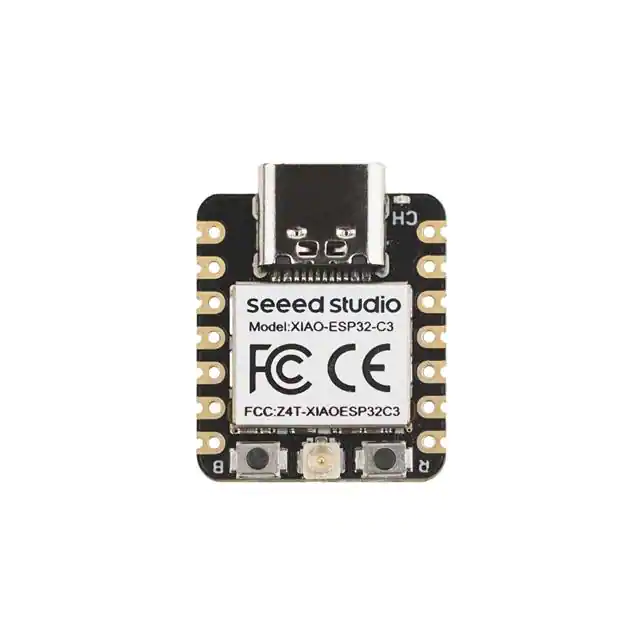
-
113991054
Seeed Technology Co., Ltd
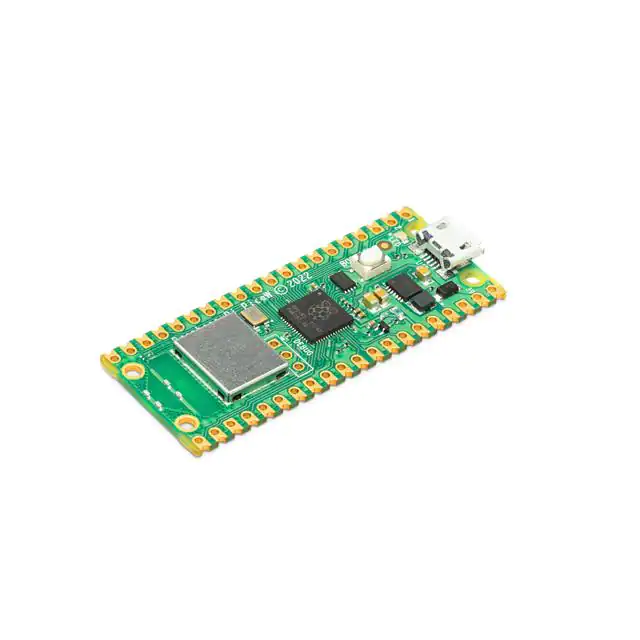
-
SC0918
Raspberry Pi

-
113991114
Seeed Technology Co., Ltd
-
ESP32-C6-DEVKITM-1-N4
Espressif Systems
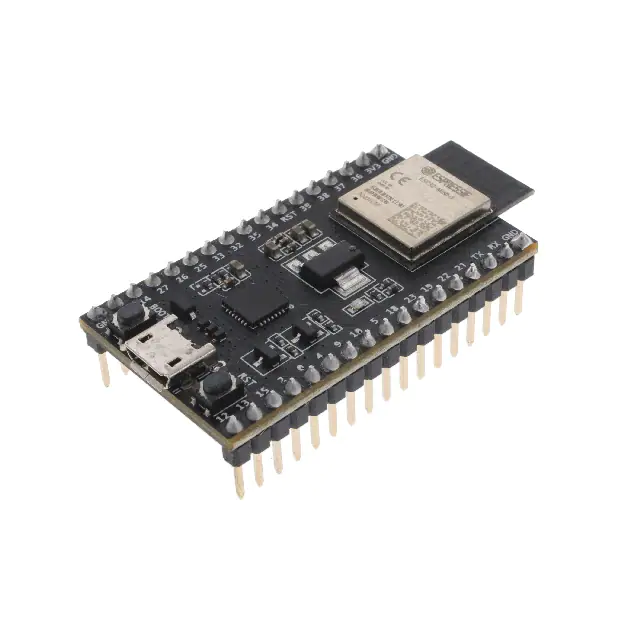
-
ESP32-DEVKITM-1
Espressif Systems
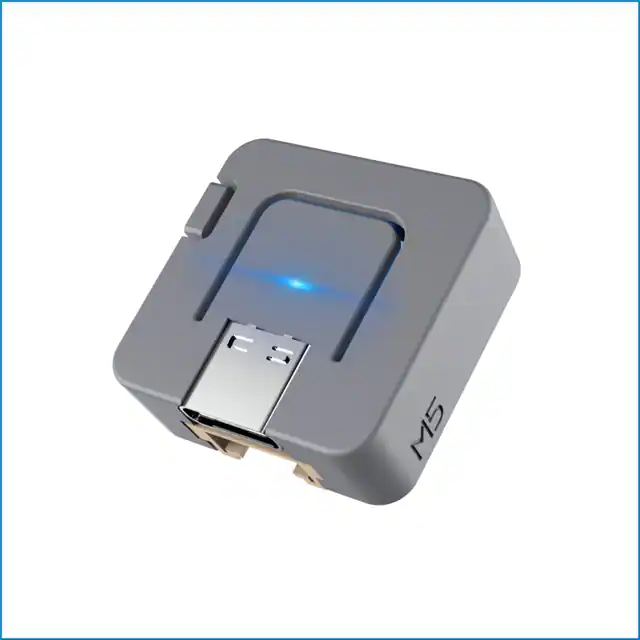
-
C008
M5Stack Technology Co., Ltd.
-
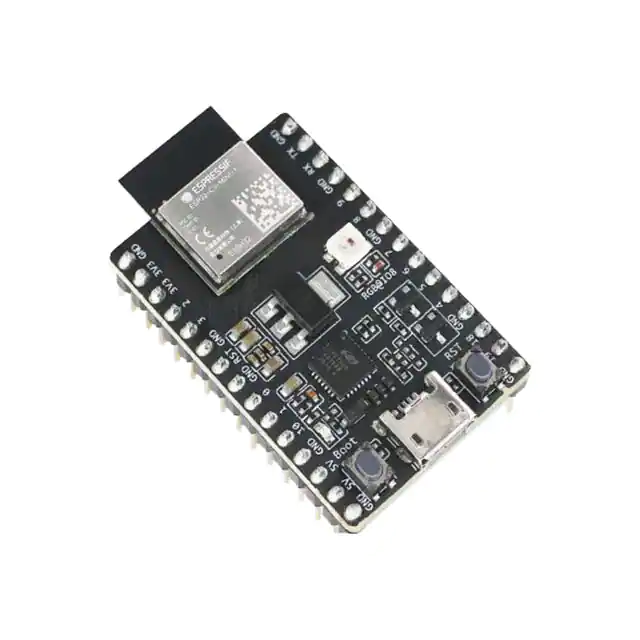
ESP32-C3-DEVKITC-02
Espressif Systems
-
ESP32-C6-DEVKITC-1-N8
Espressif Systems
-
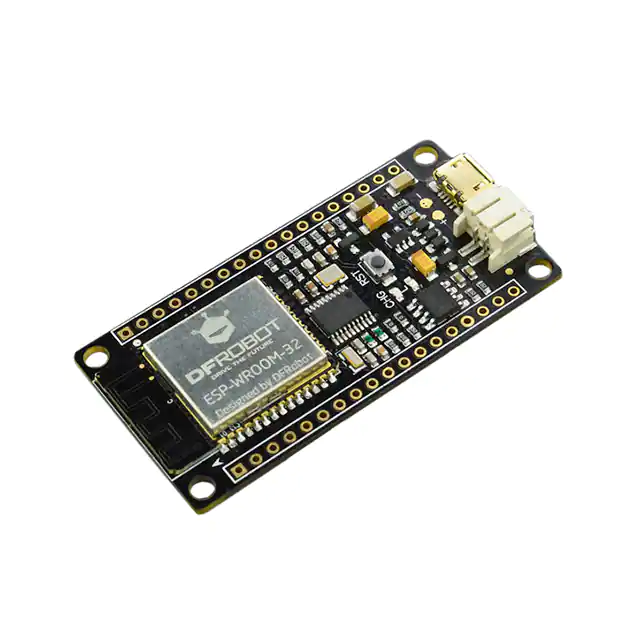
DFR0478
DFRobot
-
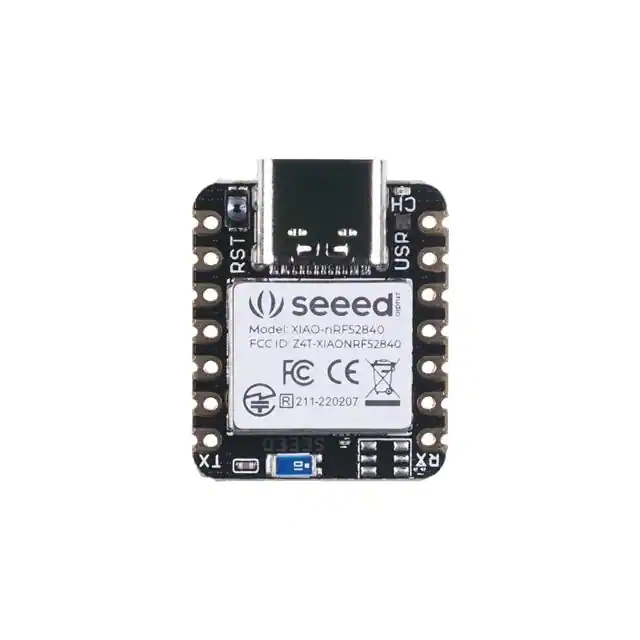
102010448
Seeed Technology Co., Ltd
-
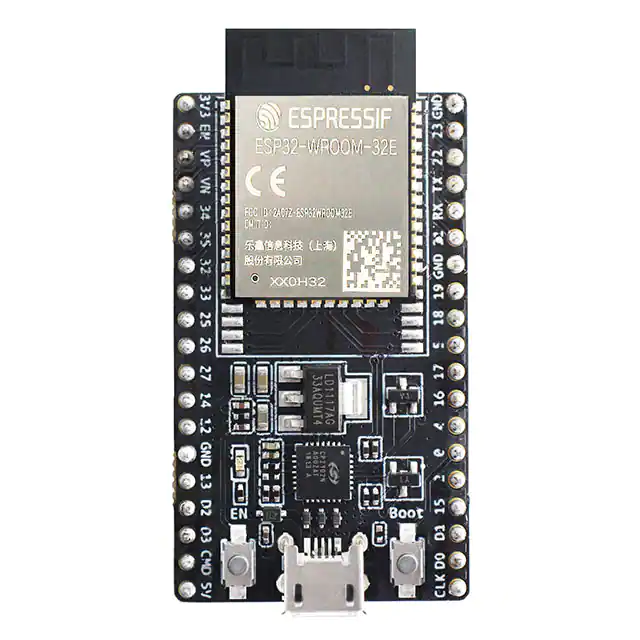
ESP32-DEVKITC-32E
Espressif Systems
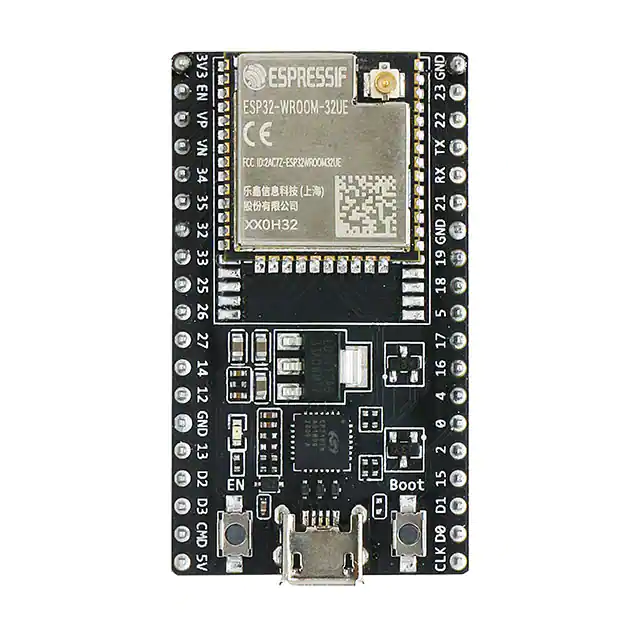
-
ESP32-DEVKITC-32UE
Espressif Systems
Tech Hub

A practical engineering guide to 3.3V and 5V logic compatibility, input thresholds, resistor dividers, translator ICs, MOSFET level shifting, I2C pull-ups, timing limits and power-sequencing risks.

The 74HC595 uses push-pull logic outputs, while the TPIC6B595 uses 50 V open-drain DMOS sinks for higher-power loads. This guide compares timing, current limits, 3.3 V interfacing, load wiring, thermal…

The 74HC595 converts serial data into eight stable parallel outputs. This guide covers pin functions, shift and storage timing, OE and MR behavior, drive-current limits, cascading, voltage compatibilit…

A technical comparison of level-sensitive latches and edge-triggered flip-flops, covering timing windows, setup and hold limits, master–slave operation, time borrowing, race-through, HDL inference and…

A D latch stores one bit while Enable controls when data can pass. This reference covers gate-level operation, truth tables, transparency, setup and hold timing, LE versus OE, common ICs and practical …

An SR latch stores one bit through cross-coupled feedback. This engineering reference covers NOR and NAND implementations, truth tables, forbidden-state recovery, gated operation, switch debouncing, fa…

Latch circuits retain one bit through feedback. This technical reference covers SR and D latches, truth tables, transparency, timing limits, latch-versus-flip-flop behavior, applications and common log…

An engineering guide to LED driver operation, constant-current and constant-voltage outputs, linear and switching topologies, dimming, IC selection, calculations, replacement compatibility, and fault c…

Operational amplifier guide covering op amp basics, feedback, ideal vs real op amps, common configurations, buffer circuits, offset, bias current, gain-bandwidth, slew rate, rail-to-rail limits and sel…

Jumper cables guide covering safe connection order, red and black clamp placement, final ground connection, cable gauge, length, clamp quality, copper vs CCA cables, jump starter comparison and battery…


