
 My Inquiry
 My Account


NXP Semiconductors OM5569/NT322ERM
- Part No.:
- OM5569/NT322ERM
- Manufacturer:
- NXP Semiconductors
- Category:
- RF, RFID, Wireless Evaluation Boards
- Package:
- Datasheet:
-
 OM5569/NT322ERM.pdf
- Description:
- NTAG 12C PLUS EXPL KIT PLUS USB
- Quantity:
- Payment:

- Shipping:

Inventory:3,251
Please send an inquiry. Send us your inquiry, and we will respond immediately.
Product details
Overview
OM5569/NT322ERM from NXP Semiconductors is a second-generation connected NFC tag integrating passive ISO/IEC 14443A-compliant NFC and active I²C interfaces, featuring 888-byte EEPROM user memory, 64-byte SRAM pass-through buffer, and ECC-based originality signature - enabling tap-and-go configuration in smart home sensors and wearable infotainment devices.
For engineers reviewing the OM5569/NT322ERM datasheet, OM5569/NT322ERM pinout, OM5569/NT322ERM application, or OM5569/NT322ERM equivalent, key selection considerations include field-detection wake-up capability, dual-interface memory access control via 32-bit password, energy harvesting output for MCU power, and Type 2 Tag compliance with 106 kbit/s NFC data rate.
Technical Context
The OM5569/NT322ERM implements a dual-interface architecture where NFC and I²C share access to non-volatile EEPROM memory under configurable arbitration, supported by a dedicated 64-byte SRAM buffer for zero-latency handoff. It supports standard (100 kHz) and fast (400 kHz) I²C modes and complies fully with ISO/IEC 14443A Parts 2 & 3 and NFC Forum Type 2 Tag specifications.
Security is enforced through per-interface 32-bit password protection, lock-bit memory segmentation, and an ECC-based 32-byte originality signature for anti-cloning. Power management includes a configurable field-detection output and energy harvesting capable of powering external microcontrollers from the NFC field.
Key Specifications
| Parameter | Value and Actual Design Meaning |
|---|---|
| NFC Interface | ISO/IEC 14443A Part 2&3 and NFC Forum Type 2 Tag compliant; enables interoperability with all NFC smartphones and readers. |
| User Memory Size | 888 bytes EEPROM; sufficient for firmware metadata, device credentials, and multi-application configuration data storage. |
| I²C Speed | 100 kHz / 400 kHz modes; supports low-power sensor interfacing and high-speed host communication without protocol translation. |
| SRAM Buffer | 64-byte dedicated SRAM; eliminates EEPROM write latency during NFC–I²C data handoff and enables FAST READ/WRITE command execution. |
| Energy Harvesting | Capable of powering external MCUs up to 3.6 V; removes need for local battery in ultra-low-power IoT nodes. |
| Operating Temp | −40 °C to +105 °C; validated for deployment in smart meters, fitness equipment, and automotive-adjacent consumer electronics. |
| Security Signature | ECC-based 32-byte originality signature; provides software-verifiable authentication against counterfeit tags without hardware crypto accelerators. |
Pinout & Package
OM5569/NT322ERM is packaged in XQFN8 (1.6 × 1.6 × 0.5 mm), optimized for space-constrained embedded designs. Pinout reflects dual-interface operation with dedicated NFC antenna pads and I²C signal lines.
| Pin/Terminal | Circuit Role | Design Meaning |
|---|---|---|
| VDD | I²C supply input | Accepts 1.67–3.6 V; powers internal logic and enables energy harvesting regulation path. |
| GND | Ground reference | Common return for both I²C and NFC circuitry; critical for stable field coupling and noise immunity. |
| SCL | I²C clock line | Open-drain, supports standard/fast mode timing; requires external pull-up resistor. |
| SDA | I²C data line | Open-drain, bidirectional; shares arbitration with NFC interface via internal memory controller. |
| ANT1 / ANT2 | NFC antenna terminals | Differential RF port; connects directly to printed loop antenna (typical 50 pF resonance capacitance). |
| FD | Field detection output | Active-high digital signal triggered on NFC field presence; used for MCU wake-up and synchronization. |
| EH | Energy harvesting output | Regulated DC output derived from NFC field; powers external peripherals up to 3.6 V / 5 mA. |
| NC | No connect | Internally unconnected; must be left floating or tied to GND per layout guidelines. |
Key Features
| Feature | Design Value |
|---|---|
| Pass-through SRAM buffer | 64-byte dedicated RAM enables concurrent NFC read/write and I²C host access without memory contention or EEPROM wear. |
| Configurable field detection | Digital FD pin delivers deterministic wake-up signal within 10 µs of NFC field onset, minimizing system standby current. |
| 32-bit password access control | Independent password policies per interface allow segmented memory access - e.g., open NFC read + locked I²C write for secure provisioning. |
| ECC originality signature | 32-byte signature generated from chip-specific private key; verified in <10 ms by host MCU using standard NIST P-256 library. |
| Energy harvesting output | EH pin delivers regulated 2.8–3.6 V at up to 5 mA; eliminates need for separate LDO in battery-free accessories like smart labels or headsets. |
Applications
| Smart Home Sensor Node | Fitness Equipment Pairing |
|---|---|
Use Scenario: Tap-to-configure temperature/humidity sensor in HVAC duct or lighting control panel. IC Role / Device Role / Timing Role: NFC tag stores calibration data and network credentials; I²C interface feeds real-time sensor readings to host MCU. Use Value: Eliminates manual BLE pairing; enables field reconfiguration without opening enclosure or connecting debug tools. | Use Scenario: Tap smartphone to treadmill or bike trainer to auto-load workout profile and sync Bluetooth settings. IC Role / Device Role / Timing Role: Stores device-specific firmware version and user preferences; I²C updates parameters during active session. Use Value: Reduces setup time from >60 seconds to <2 seconds; avoids misconfiguration due to manual entry errors. |
| Smart Printer Cartridge | Electronic Shelf Label (ESL) |
Use Scenario: Authenticate OEM ink cartridge and load print-head alignment data upon insertion. IC Role / Device Role / Timing Role: Acts as secure identity token and non-volatile parameter store; NFC reads serial number, I²C writes usage counters. Use Value: Prevents counterfeit cartridge use; enables dynamic ink-level reporting without battery-powered ESL infrastructure. | Use Scenario: Update price and promotion data on retail shelf display via NFC-enabled handheld device. IC Role / Device Role / Timing Role: Stores localized pricing tables and firmware patches; I²C transfers updated content to display driver IC. Use Value: Enables offline update capability without constant wireless connectivity; supports >10,000 write cycles across 20-year data retention. |
Equivalent & Alternatives
The following parts are listed as comparable options for similar connected NFC tag applications.
| Alternative Part | Technical Difference | Application Difference | Selection Advice |
|---|---|---|---|
| NT3H2211W0FHKH | 1.912-byte user memory; same XQFN8 package; adds 128-byte OTP for secure keys. | Better suited for multi-tenant access control systems requiring larger credential storage. | Select when >1 kB EEPROM and OTP-based key storage are required; not drop-in due to different memory map. |
| ST25DV02K-IER | I²C + NFC Type 5 (ISO15693); 2-kbyte EEPROM; no energy harvesting; different field-detection behavior. | Preferred for industrial RFID readers with longer-range requirements (>50 cm), not smartphone-tap use cases. | Choose only if ISO15693 compatibility and extended read range outweigh loss of energy harvesting and NFC Forum Type 2 interoperability. |
Compared with NT3H2211W0FHKH and ST25DV02K-IER, OM5569/NT322ERM delivers optimal balance of size (1.6 × 1.6 mm), energy harvesting capability, and NFC Forum Type 2 compliance - making it the lowest-BOM solution for smartphone-initiated, battery-free configuration in consumer edge devices.
Availability
OM5569/NT322ERM is available at Aetrix Electronics and suitable for smart home sensor nodes, wearable infotainment accessories, and electronic shelf labels requiring stable component supply, long-term lifecycle support, and consistent parametric performance across production batches.
Supply support for OM5569/NT322ERM includes scheduled delivery planning, volume procurement assistance, BOM continuity management, traceable sourcing, and lifecycle availability coordination for OEM customers, industrial embedded developers, connected-device designers, and electronics production programs.
Manufacturer
NXP Semiconductors is a global semiconductor company headquartered in Eindhoven, Netherlands, specializing in secure connectivity solutions for automotive, industrial, and consumer markets.
The NTAG I²C plus product line was designed specifically to enable cost-sensitive, space-constrained NFC integration in battery-free or energy-harvesting IoT endpoints - prioritizing interoperability, security, and minimal BoM overhead over raw memory capacity.
FAQ
What is the primary function of OM5569/NT322ERM in an embedded system?
The OM5569/NT322ERM serves as a dual-interface connected NFC tag that bridges contactless interaction (via NFC) and wired host control (via I²C). It enables smartphone-initiated configuration, secure authentication, and energy harvesting in compact consumer and IoT devices. Its role is to eliminate manual setup, reduce BoM count, and provide tamper-resistant identity - all while operating without a local power source. The OM5569/NT322ERM integrates seamlessly into systems where tap-and-go usability and ultra-low-power operation are mandatory.
Does OM5569/NT322ERM support both NFC and I²C simultaneously?
Yes, OM5569/NT322ERM supports concurrent NFC and I²C operation through hardware-managed arbitration and a dedicated 64-byte SRAM buffer. This allows NFC-initiated data reads/writes and I²C-hosted parameter updates to occur without conflict or memory corruption. The OM5569/NT322ERM uses internal logic to prioritize access and maintain coherency - for example, allowing FAST WRITE commands over NFC while the host MCU reads status registers via I²C. No external arbitration circuitry is required.
What is the maximum current available from the OM5569/NT322ERM energy harvesting output?
The OM5569/NT322ERM EH pin delivers up to 5 mA at regulated 2.8–3.6 V when powered by a standard 13.56 MHz NFC field (≥1.5 A/m magnetic field strength). Output current depends on antenna coupling efficiency and field strength; typical sustained load is 2–3 mA for low-power MCUs like ARM Cortex-M0+. The OM5569/NT322ERM datasheet specifies this capability under "Energy Harvesting Characteristics" and validates operation down to −40 °C ambient.
How does the ECC originality signature in OM5569/NT322ERM work?
The OM5569/NT322ERM embeds a chip-specific ECC private key used to generate a 32-byte originality signature on demand. Host software computes a challenge-response hash using NIST P-256 elliptic curve arithmetic and verifies authenticity in under 10 ms. No external crypto module is needed - the OM5569/NT322ERM performs signature generation internally. This mechanism protects against cloning and ensures only genuine NXP tags operate in certified accessories.
Can OM5569/NT322ERM be used without an external microcontroller?
Yes, OM5569/NT322ERM operates autonomously as a passive NFC tag: it responds to NFC readers, stores data in EEPROM, and executes FAST READ/WRITE commands without any host. However, its full value - including energy harvesting, field-detection wake-up, and dual-interface coordination - is realized when paired with an external MCU via I²C. The OM5569/NT322ERM itself contains no programmable processor or firmware; it is a fixed-function secure memory and interface bridge.
OM5569/NT322ERM Specifications
- Product attributes
- Attribute value
- Manufacturer:
- NXP Semiconductors
- Series:
- -
- Packaging:
- Box
- Product Status:
- Obsolete
- Type:
- Near Field Communication (NFC)
- Frequency:
- 13.56MHz
- Contents:
- Board(s)
- Utilized IC / Part:
- NT3H1101
OM5569/NT322ERM FAQ
1.How can I place an order for OM5569/NT322ERM through Aetrix?
Please submit a Request for Quotation (RFQ) for OM5569/NT322ERM on Aetrix. Our sales agent will provide a competitive quotation and guide you through the order confirmation once you accept the terms.
2.Are the price and stock information for OM5569/NT322ERM reliable?
The price and inventory of OM5569/NT322ERM are updated periodically and may fluctuate due to market conditions. Stock and pricing data are typically refreshed every 24 hours. Quotation validity for OM5569/NT322ERM is usually 5 days.
3.What payment methods are accepted for OM5569/NT322ERM?
We accept Wire Transfer, PayPal, Credit Card, Western Union, MoneyGram, and Escrow for OM5569/NT322ERM transactions.
Note: Certain payment methods may incur a processing fee.
4.How is shipping managed for OM5569/NT322ERM?
OM5569/NT322ERM orders can be shipped via leading logistics carriers, including DHL, UPS, FedEx, TNT, or Registered Mail.
Once your OM5569/NT322ERM order is processed, you will receive an email with the shipment details and tracking number.
Note: Tracking information may take up to 24 hours to appear. Express delivery typically takes 3–5 business days.
5.How can I obtain technical support or documentation for OM5569/NT322ERM?
For technical support, including OM5569/NT322ERM datasheets, pinout diagrams, or application guidance, please contact our engineering support team. They can provide detailed documentation and assistance for your OM5569/NT322ERM requirements.
6.How does Aetrix verify that OM5569/NT322ERM is sourced from the original manufacturer or authorized distributors?
All OM5569/NT322ERM products on Aetrix are procured from qualified distributors and authorized channels. Our dedicated quality assurance team conducts strict verification, including traceability checks and, if necessary, third-party testing. This ensures that OM5569/NT322ERM meets industry standards.
7.What is the process for return or replacement of OM5569/NT322ERM?
All OM5569/NT322ERM units undergo pre-shipment inspection (PSI). If there is an issue with OM5569/NT322ERM, returns or replacements are accepted under the following conditions:
1.Quantity discrepancies, incorrect items, or visible external defects (such as breakage or corrosion), acknowledged by Aetrix.
2.The issue is reported within 90 days of delivery.
3.The OM5569/NT322ERM part is unused and in its original packaging.
Return procedure for OM5569/NT322ERM:
1.Submit a request within 90 days.
2.Obtain a Return Material Authorization (RMA) from Aetrix.
OM5569/NT322ERM Tags
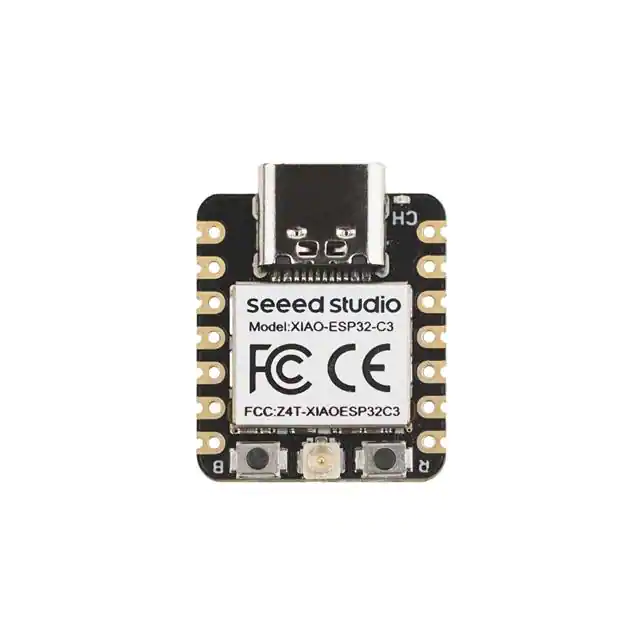
-
113991054
Seeed Technology Co., Ltd
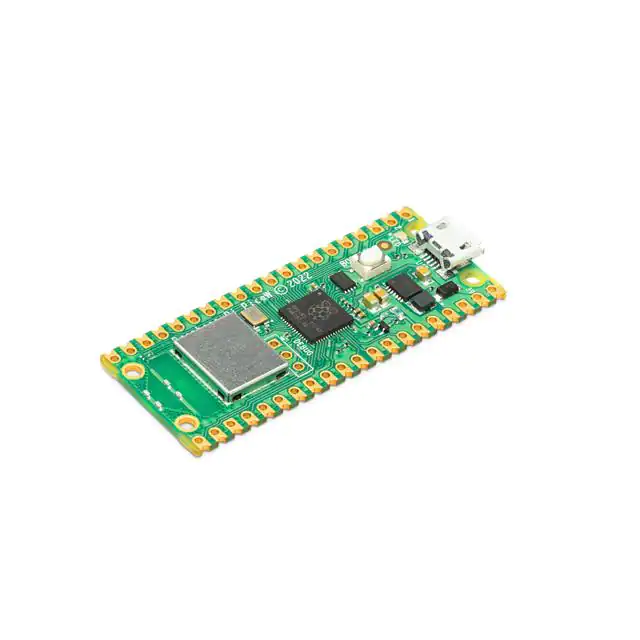
-
SC0918
Raspberry Pi

-
113991114
Seeed Technology Co., Ltd
-
ESP32-C6-DEVKITM-1-N4
Espressif Systems
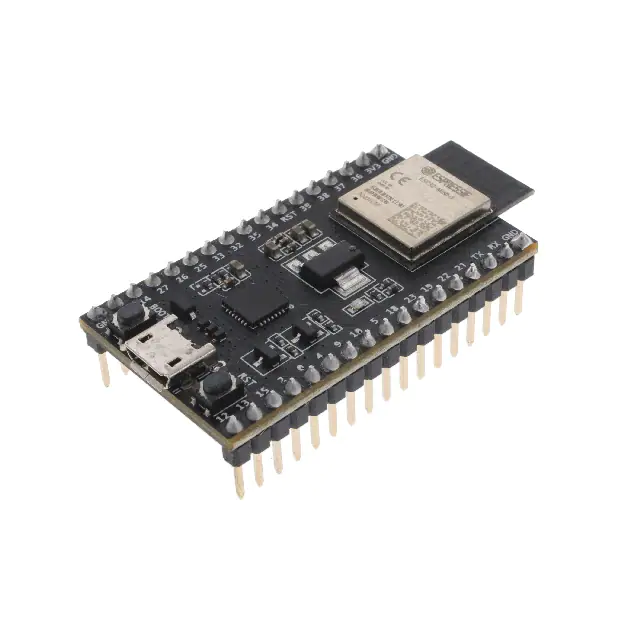
-
ESP32-DEVKITM-1
Espressif Systems
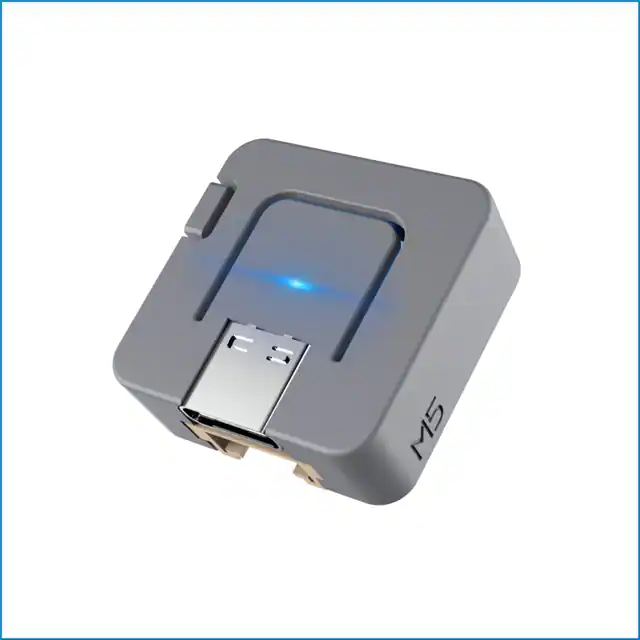
-
C008
M5Stack Technology Co., Ltd.
-
ESP32-C3-DEVKITC-02
Espressif Systems
-
ESP32-C6-DEVKITC-1-N8
Espressif Systems
-
DFR0478
DFRobot
-
102010448
Seeed Technology Co., Ltd
-
ESP32-DEVKITC-32E
Espressif Systems
-
ESP32-DEVKITC-32UE
Espressif Systems
Tech Hub

A practical engineering guide to 3.3V and 5V logic compatibility, input thresholds, resistor dividers, translator ICs, MOSFET level shifting, I2C pull-ups, timing limits and power-sequencing risks.

The 74HC595 uses push-pull logic outputs, while the TPIC6B595 uses 50 V open-drain DMOS sinks for higher-power loads. This guide compares timing, current limits, 3.3 V interfacing, load wiring, thermal…

The 74HC595 converts serial data into eight stable parallel outputs. This guide covers pin functions, shift and storage timing, OE and MR behavior, drive-current limits, cascading, voltage compatibilit…

A technical comparison of level-sensitive latches and edge-triggered flip-flops, covering timing windows, setup and hold limits, master–slave operation, time borrowing, race-through, HDL inference and…

A D latch stores one bit while Enable controls when data can pass. This reference covers gate-level operation, truth tables, transparency, setup and hold timing, LE versus OE, common ICs and practical …

An SR latch stores one bit through cross-coupled feedback. This engineering reference covers NOR and NAND implementations, truth tables, forbidden-state recovery, gated operation, switch debouncing, fa…

Latch circuits retain one bit through feedback. This technical reference covers SR and D latches, truth tables, transparency, timing limits, latch-versus-flip-flop behavior, applications and common log…

An engineering guide to LED driver operation, constant-current and constant-voltage outputs, linear and switching topologies, dimming, IC selection, calculations, replacement compatibility, and fault c…

Operational amplifier guide covering op amp basics, feedback, ideal vs real op amps, common configurations, buffer circuits, offset, bias current, gain-bandwidth, slew rate, rail-to-rail limits and sel…

Jumper cables guide covering safe connection order, red and black clamp placement, final ground connection, cable gauge, length, clamp quality, copper vs CCA cables, jump starter comparison and battery…


