
 My Inquiry
 My Account


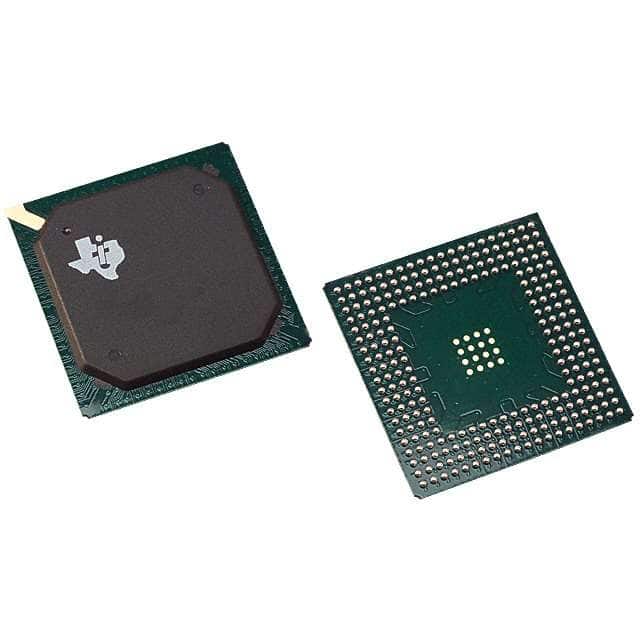
Texas Instruments OMAPL137DZKBD4
- Part No.:
- OMAPL137DZKBD4
- Manufacturer:
- Texas Instruments
- Category:
- Microprocessors
- Package:
- 256-BGA
- Datasheet:
-
 OMAPL137DZKBD4.pdf
- Description:
- IC MPU OMAP-L1X 456MHZ 256BGA
- Quantity:
- Payment:

- Shipping:

Inventory:2,858
Please send an inquiry. Send us your inquiry, and we will respond immediately.
Product details
Overview
OMAPL137DZKBD4 from Texas Instruments is a dual-core low-power applications processor integrating a 456-MHz ARM926EJ-S RISC MPU and a 456-MHz TMS320C674x VLIW DSP, with 128KB shared RAM, dual external memory interfaces (EMIFA/EMIFB), and integrated 10/100 Mbps Ethernet MAC - deployed in professional audio systems requiring real-time signal processing and rich OS support.
For engineers reviewing the OMAPL137DZKBD4 datasheet, OMAPL137DZKBD4 pinout, OMAPL137DZKBD4 application, or OMAPL137DZKBD4 equivalent, key selection criteria include dual-core clock synchronization, L2 cache configuration flexibility, EMAC RMII interface compatibility, McASP serializer count, and industrial-temperature-rated PBGA package integrity.
Technical Context
The OMAPL137DZKBD4 implements tightly coupled ARM926EJ-S and C674x cores sharing a unified memory map, with ARM handling OS services and UI while the DSP executes real-time audio algorithms via McASPs and eHRPWMs. Cache coherency is managed through software-controlled L1/L2 partitioning and 128KB dedicated shared RAM.
Its peripheral subsystem includes three multichannel audio serial ports (McASP0–2) supporting TDM/I2S/DIT, two I²C buses, three UARTs (one with RTS/CTS), USB 2.0 OTG + USB 1.1 OHCI, and programmable PRUSS for deterministic timing-critical tasks - all routed through configurable pin multiplexing under PSC power gating.
Key Specifications
| Parameter | Value and Actual Design Meaning |
|---|---|
| CPU Frequency | 456 MHz (ARM926EJ-S and C674x both rated at 456 MHz under 1.3-V core supply) |
| Core Voltage | 1.3 V (CVDD) for 456-MHz operation; 1.2 V supports 375-MHz mode |
| I/O Voltage | 3.3 V LVCMOS for general I/O; 1.8 V dedicated to USB PHY interfaces |
| On-Chip Memory | 16KB I-Cache + 16KB D-Cache (ARM); 32KB L1P + 32KB L1D + 256KB L2 (DSP); 128KB shared RAM |
| External Memory | EMIFA: 16-bit NAND/NOR/SDRAM up to 128 MB; EMIFB: 32-bit SDRAM up to 256 MB |
| Audio Interfaces | 3 × McASP with 16/12/4 serializers each, FIFO buffers, and DIT capability on McASP2 |
| Connectivity | 10/100 Mbps EMAC with RMII and MDIO; USB 2.0 OTG + USB 1.1 OHCI (both with integrated PHY) |
Pinout & Package
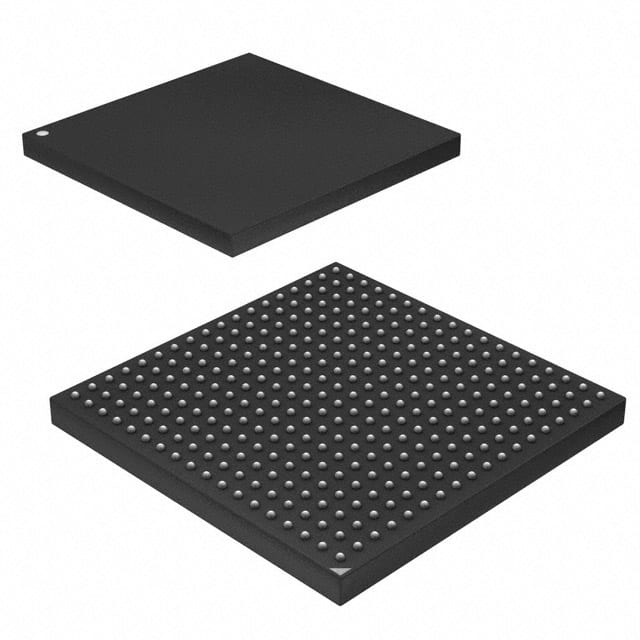
OMAPL137DZKBD4 uses a 256-ball Pb-free plastic ball grid array (PBGA) package with 1.0-mm ball pitch and 17.0 mm × 17.0 mm body size (ZKB suffix). Pin functions are fully multiplexed across 8 GPIO banks and peripheral blocks per TI SPRS563G Section 3.6–3.7.
| Pin/Terminal | Circuit Role | Design Meaning |
|---|---|---|
| CLKIN | Clock Input | Accepts 24-MHz crystal or external clock for PLL generation; required for all core and peripheral clocks |
| USB0_VDDA12 | Analog USB PHY Supply | 1.2-V analog supply for USB 2.0 OTG PHY; requires 0.22-μF decoupling per datasheet revision note |
| EMAC_RXD[3:0] | Ethernet Receive Data | 4-bit RMII receive data bus; must be length-matched to EMAC_REF_CLK for <1.5-ns skew compliance |
| MCASP0_AXR[15:0] | McASP0 Serial Data | 16-channel serial data lines for TDM audio frame transmission; supports bit widths up to 32 bits |
| HPI_A[15:0] | Host-Port Interface Bus | 16-bit multiplexed address/data bus for high-bandwidth host CPU access to internal memory and registers |
Key Features
| Feature | Design Value |
|---|---|
| Dual-core deterministic scheduling | ARM926EJ-S and C674x share memory map and interrupt controller, enabling synchronized real-time audio+control workflows without inter-core latency penalties |
| L2 cache configurability | 256KB L2 memory can be partitioned as RAM, cache, or hybrid - critical for balancing DSP algorithm footprint vs. ARM OS memory needs |
| McASP DIT capability | McASP2 supports Digital Interface Transmitter (DIT) mode for S/PDIF output - eliminates need for external transceiver in soundbar designs |
| eHRPWM dead-band control | Hardware-enforced dead-time insertion on 6 PWM outputs prevents shoot-through in Class-D amplifier gate drivers |
| PRUSS real-time offload | Two independent 32-bit PRU cores with 4KB IRAM each handle time-critical I/O (e.g., LED dimming, encoder feedback) without ARM/DSP intervention |
Applications
| Professional Audio Mixer | Automotive Infotainment Head Unit |
|---|---|
Use Scenario: Real-time mixing of 32-channel digital audio streams with dynamic EQ, compression, and effects rendering. IC Role / Device Role / Timing Role: OMAPL137DZKBD4 serves as main SoC - ARM runs Linux-based GUI and network stack; C674x DSP handles low-latency audio processing via McASP DMA channels. Use Value: 3× McASPs with 28 serializers enable simultaneous input/output routing; 128KB shared RAM reduces inter-core copy overhead by >40% vs. discrete memory architectures. |
Use Scenario: Integrated head unit supporting Bluetooth A2DP streaming, AM/FM tuner, navigation, and rear-seat video playback. IC Role / Device Role / Timing Role: OMAPL137DZKBD4 acts as central multimedia hub - ARM manages Android Automotive OS and touchscreen; DSP accelerates audio codecs and noise cancellation. Use Value: USB 2.0 OTG + USB 1.1 OHCI enables dual-role connectivity (phone tethering + diagnostic tool); EMAC RMII supports OTA firmware updates over vehicle Ethernet backbone. |
| Network Streaming Soundbar | Home Theatre AV Receiver |
Use Scenario: Wi-Fi–connected soundbar decoding Dolby Digital, DTS, and MQA streams with HDMI ARC passthrough. IC Role / Device Role / Timing Role: OMAPL137DZKBD4 functions as audio-centric SoC - ARM hosts lightweight RTOS for network stack; DSP performs multi-format decode and upmixing. Use Value: McASP2 DIT mode delivers native S/PDIF output to external DACs; 456-MHz dual-core ensures <5-ms end-to-end latency for lip-sync-critical video playback. |
Use Scenario: 7.1-channel AV receiver performing real-time room correction, bass management, and HDMI video switching. IC Role / Device Role / Timing Role: OMAPL137DZKBD4 operates as primary media processor - ARM controls HDMI CEC and UI; DSP executes Dirac Live calibration and FIR filtering. Use Value: Dual EMIF interfaces allow concurrent NAND boot storage and DDR2 SDRAM for large filter coefficient tables; eQEP modules monitor motorized speaker calibration actuators. |
Equivalent & Alternatives
The following parts are listed as comparable options for similar dual-core audio/media processor applications.
| Alternative Part | Technical Difference | Application Difference | Selection Advice |
|---|---|---|---|
| OMAPL137DZKB | Same ZKB package and pinout; rated for 375 MHz (1.2-V core) only - lacks 456-MHz performance headroom | Suitable for cost-sensitive consumer audio where full DSP throughput is not required | Select when thermal budget or BOM cost constraints preclude 1.3-V supply design |
| AM3358BZCZ100 | ARM Cortex-A8 single-core (1 GHz), no integrated DSP; McASP replaced by McSPI + PRU-driven audio logic | Requires software-based audio processing - higher CPU load, less deterministic than C674x hardware acceleration | Prefer for Linux-centric HMI applications where DSP offload is unnecessary or handled externally |
Compared with OMAPL137DZKB and AM3358BZCZ100, the OMAPL137DZKBD4 uniquely delivers verified 456-MHz dual-core throughput with hardware-accelerated audio peripherals - essential for professional-grade real-time processing where latency, jitter, and deterministic scheduling are non-negotiable.
Availability
OMAPL137DZKBD4 is available at Aetrix Electronics and suitable for professional audio mixers, automotive infotainment head units, and network streaming soundbars requiring stable component supply across extended product lifecycles.
Supply support for OMAPL137DZKBD4 includes scheduled delivery planning, volume procurement assistance, BOM continuity management, traceable sourcing, and lifecycle availability coordination for OEM customers, industrial embedded developers, connected-device designers, and electronics production programs.
Manufacturer
Texas Instruments is a global semiconductor company specializing in analog, embedded processing, and connectivity technologies, with leadership in industrial, automotive, and audio applications.
The OMAP-L137 product line was designed specifically for low-power, high-fidelity audio and multimedia applications - combining ARM application processing with C6000-class DSP performance in a thermally efficient PBGA package.
FAQ
What is the maximum operating frequency of the OMAPL137DZKBD4?
The OMAPL137DZKBD4 is rated for 456 MHz operation on both the ARM926EJ-S and C674x cores when supplied with 1.3 V to CVDD. This rating is validated per TI SPRS563G Section 3.1 and applies to industrial temperature range operation. Lower frequencies (e.g., 375 MHz) are supported at 1.2 V for reduced power consumption. The OMAPL137DZKBD4 achieves this performance without derating under continuous load when thermal design meets TI's ZKB package requirements.
Does the OMAPL137DZKBD4 support USB device mode?
Yes, the OMAPL137DZKBD4 supports USB device mode via its USB 2.0 OTG port (USB0), which includes an integrated PHY and complies with USB 2.0 High-, Full-, and Low-Speed specifications. It supports endpoint configurations including Control (EP0), Bulk, Interrupt, and Isochronous transfers. The USB 1.1 OHCI port (USB1) operates in host-only mode. Both controllers are accessible through TI's Chip Support Library and Linux kernel drivers for OMAP-L137.
How is cache coherency managed between the ARM and DSP on the OMAPL137DZKBD4?
The OMAPL137DZKBD4 does not implement hardware cache coherency. Coherency is maintained through software-managed memory regions: shared data resides in the 128KB dedicated RAM block or explicitly allocated L2 space, accessed via non-cacheable mappings or explicit cache maintenance instructions (e.g., CP15 cache clean/invalidate). TI's SYS/BIOS and CSL libraries provide APIs for synchronized access, and the PRUSS can be used for lock-free signaling between cores.
What audio interface standards does the OMAPL137DZKBD4 support natively?
The OMAPL137DZKBD4 natively supports I²S, TDM, and DIT (S/PDIF) through its three McASP peripherals. McASP2 is specifically enhanced for DIT operation, enabling direct S/PDIF output without external transceivers. All McASPs support programmable clock dividers, bit-widths up to 32 bits, and flexible slot/frame configurations - meeting requirements for professional audio gear, automotive amplifiers, and consumer soundbars per TI SPRS563G Section 6.16.
Is the OMAPL137DZKBD4 qualified for automotive applications?
Yes, the OMAPL137DZKBD4 is offered in an automotive temperature grade (–40°C to +105°C) and is listed in TI's automotive qualification documentation. Its features - including EMC-hardened I/O, watchdog timers, RTC with separate 32-kHz rail, and PRUSS for safety-critical I/O - align with AEC-Q100 stress test requirements. Designers must follow TI's automotive layout guidelines (e.g., power plane segmentation, clock routing) to maintain qualification integrity in final systems.
OMAPL137DZKBD4 Specifications
- Product attributes
- Attribute value
- Manufacturer:
- Texas Instruments
- Package/Case:
- 256-BGA
- Series:
- OMAP-L1x
- Packaging:
- Tray
- Product Status:
- Active
- Core Processor:
- ARM926EJ-S
- Number of Cores/Bus Width:
- 1 Core, 32-Bit
- Speed:
- 456MHz
- Co-Processors/DSP:
- Signal Processing; C674x, System Control; CP15
- RAM Controllers:
- SDRAM
- Graphics Acceleration:
- No
- Display & Interface Controllers:
- LCD
- Ethernet:
- 10/100Mbps (1)
- SATA:
- -
- USB:
- USB 1.1 + PHY (1), USB 2.0 + PHY (1)
- Voltage - I/O:
- 1.8V, 3.3V
- Operating Temperature:
- -40°C ~ 90°C (TJ)
- Grade:
- -
- Qualification:
- -
- Security Features:
- -
- Mounting Type:
- Surface Mount
- Supplier Device Package:
- 256-BGA (17x17)
- Additional Interfaces:
- HPI, I2C, McASP, MMC/SD, SPI, UART
OMAPL137DZKBD4 FAQ
1.How can I place an order for OMAPL137DZKBD4 through Aetrix?
Please submit a Request for Quotation (RFQ) for OMAPL137DZKBD4 on Aetrix. Our sales agent will provide a competitive quotation and guide you through the order confirmation once you accept the terms.
2.Are the price and stock information for OMAPL137DZKBD4 reliable?
The price and inventory of OMAPL137DZKBD4 are updated periodically and may fluctuate due to market conditions. Stock and pricing data are typically refreshed every 24 hours. Quotation validity for OMAPL137DZKBD4 is usually 5 days.
3.What payment methods are accepted for OMAPL137DZKBD4?
We accept Wire Transfer, PayPal, Credit Card, Western Union, MoneyGram, and Escrow for OMAPL137DZKBD4 transactions.
Note: Certain payment methods may incur a processing fee.
4.How is shipping managed for OMAPL137DZKBD4?
OMAPL137DZKBD4 orders can be shipped via leading logistics carriers, including DHL, UPS, FedEx, TNT, or Registered Mail.
Once your OMAPL137DZKBD4 order is processed, you will receive an email with the shipment details and tracking number.
Note: Tracking information may take up to 24 hours to appear. Express delivery typically takes 3–5 business days.
5.How can I obtain technical support or documentation for OMAPL137DZKBD4?
For technical support, including OMAPL137DZKBD4 datasheets, pinout diagrams, or application guidance, please contact our engineering support team. They can provide detailed documentation and assistance for your OMAPL137DZKBD4 requirements.
6.How does Aetrix verify that OMAPL137DZKBD4 is sourced from the original manufacturer or authorized distributors?
All OMAPL137DZKBD4 products on Aetrix are procured from qualified distributors and authorized channels. Our dedicated quality assurance team conducts strict verification, including traceability checks and, if necessary, third-party testing. This ensures that OMAPL137DZKBD4 meets industry standards.
7.What is the process for return or replacement of OMAPL137DZKBD4?
All OMAPL137DZKBD4 units undergo pre-shipment inspection (PSI). If there is an issue with OMAPL137DZKBD4, returns or replacements are accepted under the following conditions:
1.Quantity discrepancies, incorrect items, or visible external defects (such as breakage or corrosion), acknowledged by Aetrix.
2.The issue is reported within 90 days of delivery.
3.The OMAPL137DZKBD4 part is unused and in its original packaging.
Return procedure for OMAPL137DZKBD4:
1.Submit a request within 90 days.
2.Obtain a Return Material Authorization (RMA) from Aetrix.
OMAPL137DZKBD4 Tags
-
AT91SAM9260B-CU-999
Microchip Technology
-
AT91SAM9G25-CU
Microchip Technology
-
ATSAMA5D27C-CU
Microchip Technology
-
AT91SAM9X35-CU
Microchip Technology
-
AT91SAM9X25-CU
Microchip Technology
-
MCIMX6Y2CVM08AB
NXP Semiconductors
.JPG)
-
AM3352BZCZ100
Texas Instruments
-
AT91SAM9260B-CU
Microchip Technology
-
AT91SAM9260B-QU
Microchip Technology
-
ATSAMA5D31A-CU
Microchip Technology
-
AT91SAM9G20B-CU-999
Microchip Technology
-
MCIMX6Y2CVM05AB
NXP Semiconductors
Tech Hub

A practical engineering guide to 3.3V and 5V logic compatibility, input thresholds, resistor dividers, translator ICs, MOSFET level shifting, I2C pull-ups, timing limits and power-sequencing risks.

The 74HC595 uses push-pull logic outputs, while the TPIC6B595 uses 50 V open-drain DMOS sinks for higher-power loads. This guide compares timing, current limits, 3.3 V interfacing, load wiring, thermal…

The 74HC595 converts serial data into eight stable parallel outputs. This guide covers pin functions, shift and storage timing, OE and MR behavior, drive-current limits, cascading, voltage compatibilit…

A technical comparison of level-sensitive latches and edge-triggered flip-flops, covering timing windows, setup and hold limits, master–slave operation, time borrowing, race-through, HDL inference and…

A D latch stores one bit while Enable controls when data can pass. This reference covers gate-level operation, truth tables, transparency, setup and hold timing, LE versus OE, common ICs and practical …

An SR latch stores one bit through cross-coupled feedback. This engineering reference covers NOR and NAND implementations, truth tables, forbidden-state recovery, gated operation, switch debouncing, fa…

Latch circuits retain one bit through feedback. This technical reference covers SR and D latches, truth tables, transparency, timing limits, latch-versus-flip-flop behavior, applications and common log…

An engineering guide to LED driver operation, constant-current and constant-voltage outputs, linear and switching topologies, dimming, IC selection, calculations, replacement compatibility, and fault c…

Operational amplifier guide covering op amp basics, feedback, ideal vs real op amps, common configurations, buffer circuits, offset, bias current, gain-bandwidth, slew rate, rail-to-rail limits and sel…

Jumper cables guide covering safe connection order, red and black clamp placement, final ground connection, cable gauge, length, clamp quality, copper vs CCA cables, jump starter comparison and battery…


