
 My Inquiry
 My Account


Texas Instruments ONET4201LDRGET
- Part No.:
- ONET4201LDRGET
- Manufacturer:
- Texas Instruments
- Category:
- Laser Drivers
- Package:
- 24-VFQFN Exposed Pad
- Datasheet:
-
 ONET4201LDRGET.pdf
- Description:
- IC LASER DRVR 4.25GB 3.6V 24VQFN
- Quantity:
- Payment:

- Shipping:

Inventory:2,237
Please send an inquiry. Send us your inquiry, and we will respond immediately.
Product details
Overview
ONET4201LDRGET from Texas Instruments is a 155-Mbps to 4.25-Gbps CML-input laser driver IC for fiber-optic transmitters, delivering programmable bias current (1–100 mA) and modulation current (5–85 mA) with integrated APC, fault detection, and temperature-compensated modulation. It operates from a single 3.3-V supply and drives laser diodes in SONET/SDH, Fibre Channel, and optical data links.
For engineers reviewing the ONET4201LDRGET datasheet, ONET4201LDRGET pinout, ONET4201LDRGET application, or ONET4201LDRGET equivalent, this device supports high-speed optical transmitter design requiring precise bias/modulation control, photodiode monitoring, active 20-Ω back-termination, and robust fault handling across –40°C to 85°C.
Technical Context
The ONET4201LDRGET integrates a high-speed CML input buffer with on-chip 50-Ω termination and a current-mode modulator optimized for 20-Ω differential loads. Its data path delivers sub-75-ps rise/fall times and <0.9 psRMS random jitter at 4.25 Gbps with K28.5 pattern.
The bias and control block implements closed-loop automatic power control (APC) using photodiode feedback, programmable via external resistors on APCSET and IBMAX pins, plus temperature compensation of modulation current via MODTC with ±630 ppm/°C baseline and up to ±8300 ppm/°C with external resistor tuning.
Key Specifications
| Parameter | Value and Actual Design Meaning |
|---|---|
| Data Rate | 155 Mbps to 4.25 Gbps - supports OC-3 to OC-48 and 1×/2×/4× Fibre Channel rates. |
| Bias Current Range | 1 mA to 100 mA - set by resistor on IBMAX pin; enables laser threshold and aging compensation. |
| Modulation Current Range | 5 mA to 85 mA - set by MODSET/MODTC resistors; provides adjustable eye opening and extinction ratio. |
| Supply Voltage | 3.0 V to 3.6 V - single 3.3-V ±10% rail; low-voltage operation reduces power and EMI. |
| Operating Temperature | –40°C to +85°C - qualified for industrial and telecom infrastructure environments. |
| Rise/Fall Time | 55 ps to 75 ps - ensures clean signal integrity at 4.25 Gbps with minimal deterministic jitter. |
| Random Jitter | 0.6 psRMS to 0.9 psRMS - meets stringent SONET/SDH jitter compliance requirements. |
Pinout & Package
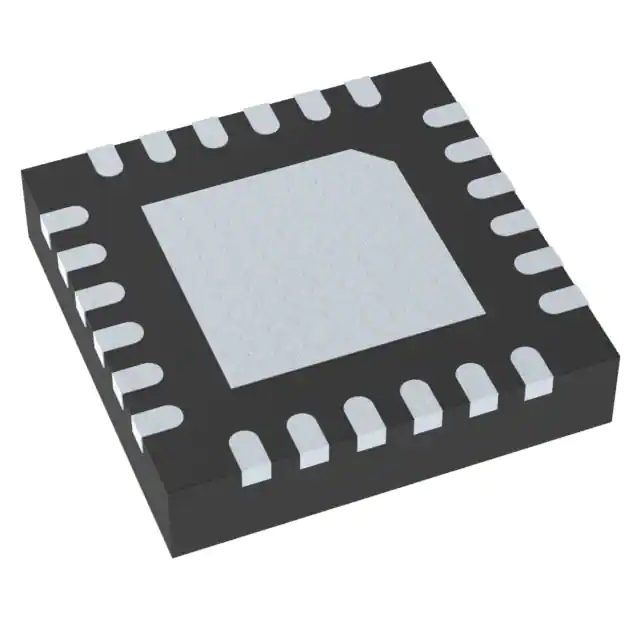
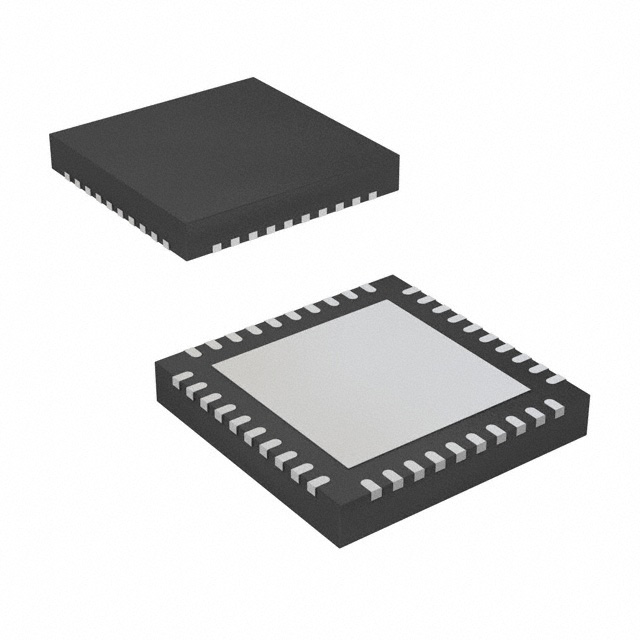
ONET4201LDRGET is housed in a thermally enhanced 4-mm × 4-mm, 24-pin QFN package with exposed thermal pad (EP), 0.5-mm pitch, and RoHS-compliant finish. Thermal resistance θJA ≈ 38 K/W requires solid ground connection to EP for junction temperature control below 115°C.
| Pin/Terminal | Circuit Role | Design Meaning |
|---|---|---|
| VCC (Pins 2,5,14,17) | Power Supply Input | 3.3-V main supply; multiple pins reduce IR drop and improve decoupling stability. |
| GND (Pins 1,6,18,EP) | Ground Reference | Low-inductance return path; exposed pad must be soldered to PCB ground plane for thermal and EMI performance. |
| DIN+, DIN– (Pins 3,4) | CML Data Input | Differential CML-compatible interface with internal 50-Ω termination to VCC; AC-coupling supported. |
| MOD+, MOD– (Pins 15,16) | Laser Modulation Output | Differential current outputs driving laser cathode/anode; optimized for 20-Ω transmission line with active back-termination. |
| BIAS (Pin 13) | Laser Bias Current Sink | Sinks programmable DC bias current to laser cathode; monitored at MONB with 1/68 gain. |
| PD (Pin 19) | Photodiode Input | Connects to laser back-facet photodiode anode for APC feedback; sinks up to 5 mA. |
| APCSET (Pin 23) | APC Reference Setting | Resistor-to-GND sets photodiode reference current; enables closed-loop optical power regulation. |
| DISABLE (Pin 24) | Global Enable/Disable | LVTTL input that shuts down bias and modulation currents within 5 μs; resets fault latch when toggled. |
| SDOWN (Pin 9) | Fault Flag Output | Open-drain LVTTL output indicating hard or soft fault condition per FLTMODE setting. |
Key Features
| Feature | Design Value |
|---|---|
| Integrated Automatic Power Control (APC) | Enables stable optical output over temperature and laser lifetime using photodiode feedback and programmable reference. |
| Temperature-Compensated Modulation Current | Adjustable via MODTC pin (±630 to ±8300 ppm/°C) to maintain consistent extinction ratio across –40°C to +85°C. |
| Active 20-Ω Back-Termination | Minimizes reflection-induced jitter on MOD+/MOD– outputs, critical for 4.25-Gbps eye integrity. |
| Dual Fault Detection Modes | Hard-fault (latched shutdown) or soft-fault (flag-only) selected via FLTMODE pin; supports system-level fault recovery strategies. |
| Bias and Photodiode Current Monitoring | MONB (1/68 IBIAS) and MONP (1× IPD) provide real-time analog monitor outputs for closed-loop calibration and diagnostics. |
Applications
| SONET/SDH Optical Line Cards | Fibre Channel Transceivers |
|---|---|
|
Use Scenario: OC-48 (2.488 Gbps) line interface in metro/core transport equipment with hot-plug SFP modules. IC Role / Device Role / Timing Role: Laser driver providing bias and modulation current with APC to maintain constant average optical power under varying temperature and aging conditions. Use Value: Ensures BER <10−12 over full temperature range and 10-year laser lifetime without manual recalibration. |
Use Scenario: 4× Fibre Channel (4.25 Gbps) short-reach optical transceiver in storage area network switches. IC Role / Device Role / Timing Role: High-speed CML-input laser driver with sub-75-ps edge rates and <0.9 psRMS jitter for compliant eye diagrams. Use Value: Meets FC-PI-3 jitter mask requirements while enabling compact 24-pin QFN layout with minimal external components. |
| Digital Cross-Connect Systems | Optical Data Links for Industrial Ethernet |
|
Use Scenario: Reconfigurable optical add-drop multiplexer (ROADM) with dynamic channel power leveling. IC Role / Device Role / Timing Role: Programmable laser driver supporting rapid bias/modulation reconfiguration via resistor networks and APC loop adaptation. Use Value: Enables per-channel optical power adjustment within 80 μs initialization time, supporting hitless reconfiguration. |
Use Scenario: Ruggedized 1.0625-Gbps optical link in factory automation PLCs operating at 85°C ambient. IC Role / Device Role / Timing Role: Industrial-grade laser driver with extended temperature qualification and fault-tolerant monitoring (MONB/MONP). Use Value: Provides continuous photodiode and bias current telemetry for predictive maintenance and laser end-of-life detection. |
Equivalent & Alternatives
The following parts are listed as comparable options for similar laser driver applications.
| Alternative Part | Technical Difference | Application Difference | Selection Advice |
|---|---|---|---|
| MAX3736AETE+T | Lower max data rate (3.2 Gbps); no integrated APC; uses external DAC for modulation current control. | Suitable for cost-sensitive 2.5G Ethernet but lacks closed-loop optical power stability for SONET/SDH. | Select when APC is implemented externally or not required; verify thermal derating above 70°C. |
| LMH6522RTVX/NOPB | DC-coupled current-output driver (no CML input); no APC or photodiode monitoring; higher supply voltage (5 V). | Used in legacy analog optical links; requires external CML-to-CMOS translator and separate APC circuitry. | Choose only for retrofit designs where existing 5-V infrastructure and discrete APC cannot be modified. |
Compared with MAX3736AETE+T and LMH6522RTVX/NOPB, ONET4201LDRGET uniquely integrates CML input, APC, photodiode monitoring, and temperature-compensated modulation in a single 4-mm QFN-reducing BOM count by ≥7 components and eliminating calibration drift in telecom-grade optical modules.
Availability
ONET4201LDRGET is available at Aetrix Electronics and suitable for SONET/SDH transmission systems, Fibre Channel optical modules, and industrial optical data links requiring stable component supply, long-term lifecycle support, and traceable sourcing for production programs.
Supply support for ONET4201LDRGET includes scheduled delivery planning, volume procurement assistance, BOM continuity management, traceable sourcing, and lifecycle availability coordination for OEM customers, industrial embedded developers, connected-device designers, and electronics production programs.
Manufacturer
Texas Instruments is a global semiconductor leader specializing in analog, embedded processing, and connectivity technologies, with decades of leadership in high-speed optical interface solutions.
ONET4201LDRGET belongs to TI's ONET family of laser drivers designed specifically for multi-rate fiber-optic transmitters in telecom, datacom, and industrial optical infrastructure-emphasizing integration, jitter performance, and robust APC functionality.
FAQ
What is the maximum data rate supported by the ONET4201LDRGET?
The ONET4201LDRGET supports data rates from 155 Mbps up to 4.25 Gbps, covering OC-3 through OC-48 SONET/SDH, 1×/2×/4× Fibre Channel, and 1.0625-Gbps industrial Ethernet. At 4.25 Gbps, it maintains <0.9 psRMS random jitter and meets FC-PI-3 and GR-253-CORE eye mask requirements. The ONET4201LDRGET achieves this with its optimized CML input buffer and active 20-Ω back-termination on MOD+/MOD– outputs.
How does the automatic power control (APC) function in the ONET4201LDRGET?
The ONET4201LDRGET implements APC using photodiode current (IPD) feedback through the PD pin. A resistor on APCSET sets the reference current; the internal loop compares IPD to this reference and adjusts bias current via the BIAS pin to maintain constant average optical power. Closed-loop operation requires external resistors on APCSET and IBMAX, and capacitor CAPC (200 nF recommended) stabilizes loop bandwidth. The ONET4201LDRGET's APC compensates for laser threshold drift over temperature and lifetime without external microcontroller intervention.
What are the key thermal requirements for reliable operation of the ONET4201LDRGET?
The ONET4201LDRGET requires a thermal resistance θJA ≤38 K/W to keep junction temperature below 115°C at 85°C ambient. This is achieved by soldering the exposed die pad (EP) directly to a large, low-thermal-resistance PCB ground plane with ≥6 thermal vias. The ONET4201LDRGET datasheet specifies minimum copper area and via count; insufficient thermal design causes bias current drift and premature APC loop instability. Operation beyond 85°C ambient is not characterized and voids warranty.
Can the ONET4201LDRGET drive both AC-coupled and DC-coupled laser diodes?
Yes, the ONET4201LDRGET supports both AC- and DC-coupled laser configurations. For DC coupling, connect MOD+ to laser cathode and MOD– to laser anode (via VCC); for AC coupling, use external capacitors on MOD+/MOD– with proper DC biasing. In both cases, the maximum modulation current remains 85 mA, and active 20-Ω back-termination applies. The ONET4201LDRGET's output stage is designed to handle either topology without performance degradation, provided layout avoids vias on MOD+/MOD– traces as specified in the datasheet.
What fault detection modes does the ONET4201LDRGET support, and how do they differ?
The ONET4201LDRGET offers two fault modes selected by the FLTMODE pin: hard-fault (FLTMODE = low) latches SDOWN high and disables bias/modulation until DISABLE or VCC is toggled; soft-fault (FLTMODE = high) asserts SDOWN high but keeps bias/modulation active, clearing automatically when the fault condition ends. Hard-fault prevents laser damage during shorts or end-of-life failure; soft-fault enables graceful degradation in systems requiring continuous operation. The ONET4201LDRGET monitors MONB, MONP, and all I/O pins for shorts to VCC/GND per Table 1 in the datasheet.
ONET4201LDRGET Specifications
- Product attributes
- Attribute value
- Manufacturer:
- Texas Instruments
- Series:
- -
- Package/Case:
- 24-VFQFN Exposed Pad
- Packaging:
- Tape & Reel (TR)
- Product Status:
- Last Time Buy
- Type:
- Laser Diode Driver (Fiber Optic)
- Data Rate:
- 4.25Gbps
- Number of Channels:
- 1
- Voltage - Supply:
- 3V ~ 3.6V
- Current - Supply:
- 55 mA
- Current - Modulation:
- 85mA
- Current - Bias:
- 100 mA
- Operating Temperature:
- -40°C ~ 85°C
- Grade:
- -
- Qualification:
- -
- Supplier Device Package:
- 24-VQFN (4x4)
- Mounting Type:
- Surface Mount
ONET4201LDRGET FAQ
1.How can I place an order for ONET4201LDRGET through Aetrix?
Please submit a Request for Quotation (RFQ) for ONET4201LDRGET on Aetrix. Our sales agent will provide a competitive quotation and guide you through the order confirmation once you accept the terms.
2.Are the price and stock information for ONET4201LDRGET reliable?
The price and inventory of ONET4201LDRGET are updated periodically and may fluctuate due to market conditions. Stock and pricing data are typically refreshed every 24 hours. Quotation validity for ONET4201LDRGET is usually 5 days.
3.What payment methods are accepted for ONET4201LDRGET?
We accept Wire Transfer, PayPal, Credit Card, Western Union, MoneyGram, and Escrow for ONET4201LDRGET transactions.
Note: Certain payment methods may incur a processing fee.
4.How is shipping managed for ONET4201LDRGET?
ONET4201LDRGET orders can be shipped via leading logistics carriers, including DHL, UPS, FedEx, TNT, or Registered Mail.
Once your ONET4201LDRGET order is processed, you will receive an email with the shipment details and tracking number.
Note: Tracking information may take up to 24 hours to appear. Express delivery typically takes 3–5 business days.
5.How can I obtain technical support or documentation for ONET4201LDRGET?
For technical support, including ONET4201LDRGET datasheets, pinout diagrams, or application guidance, please contact our engineering support team. They can provide detailed documentation and assistance for your ONET4201LDRGET requirements.
6.How does Aetrix verify that ONET4201LDRGET is sourced from the original manufacturer or authorized distributors?
All ONET4201LDRGET products on Aetrix are procured from qualified distributors and authorized channels. Our dedicated quality assurance team conducts strict verification, including traceability checks and, if necessary, third-party testing. This ensures that ONET4201LDRGET meets industry standards.
7.What is the process for return or replacement of ONET4201LDRGET?
All ONET4201LDRGET units undergo pre-shipment inspection (PSI). If there is an issue with ONET4201LDRGET, returns or replacements are accepted under the following conditions:
1.Quantity discrepancies, incorrect items, or visible external defects (such as breakage or corrosion), acknowledged by Aetrix.
2.The issue is reported within 90 days of delivery.
3.The ONET4201LDRGET part is unused and in its original packaging.
Return procedure for ONET4201LDRGET:
1.Submit a request within 90 days.
2.Obtain a Return Material Authorization (RMA) from Aetrix.
ONET4201LDRGET Tags
-
EPC21701
EPC
-
EPC21601
EPC
-
MAX3799ETJ+T
Analog Devices Inc./Maxim Integrated
-
AD9665ACPZ-REEL7
Analog Devices Inc.
-
MAX3740AETG+T
Analog Devices Inc./Maxim Integrated
-
MAX3795ETG+
Analog Devices Inc./Maxim Integrated

-
EPC21603
EPC
-
ONET8501VRGPT
Texas Instruments
-
MAX3738ETG+T
Analog Devices Inc./Maxim Integrated
-
SY88022ALMG-TR
Microchip Technology
-
ISL78365ARZ-T7A
Renesas
-
EPC21603ENGRT
EPC
Tech Hub

A practical engineering guide to 3.3V and 5V logic compatibility, input thresholds, resistor dividers, translator ICs, MOSFET level shifting, I2C pull-ups, timing limits and power-sequencing risks.

The 74HC595 uses push-pull logic outputs, while the TPIC6B595 uses 50 V open-drain DMOS sinks for higher-power loads. This guide compares timing, current limits, 3.3 V interfacing, load wiring, thermal…

The 74HC595 converts serial data into eight stable parallel outputs. This guide covers pin functions, shift and storage timing, OE and MR behavior, drive-current limits, cascading, voltage compatibilit…

A technical comparison of level-sensitive latches and edge-triggered flip-flops, covering timing windows, setup and hold limits, master–slave operation, time borrowing, race-through, HDL inference and…

A D latch stores one bit while Enable controls when data can pass. This reference covers gate-level operation, truth tables, transparency, setup and hold timing, LE versus OE, common ICs and practical …

An SR latch stores one bit through cross-coupled feedback. This engineering reference covers NOR and NAND implementations, truth tables, forbidden-state recovery, gated operation, switch debouncing, fa…

Latch circuits retain one bit through feedback. This technical reference covers SR and D latches, truth tables, transparency, timing limits, latch-versus-flip-flop behavior, applications and common log…

An engineering guide to LED driver operation, constant-current and constant-voltage outputs, linear and switching topologies, dimming, IC selection, calculations, replacement compatibility, and fault c…

Operational amplifier guide covering op amp basics, feedback, ideal vs real op amps, common configurations, buffer circuits, offset, bias current, gain-bandwidth, slew rate, rail-to-rail limits and sel…

Jumper cables guide covering safe connection order, red and black clamp placement, final ground connection, cable gauge, length, clamp quality, copper vs CCA cables, jump starter comparison and battery…


