
 My Inquiry
 My Account


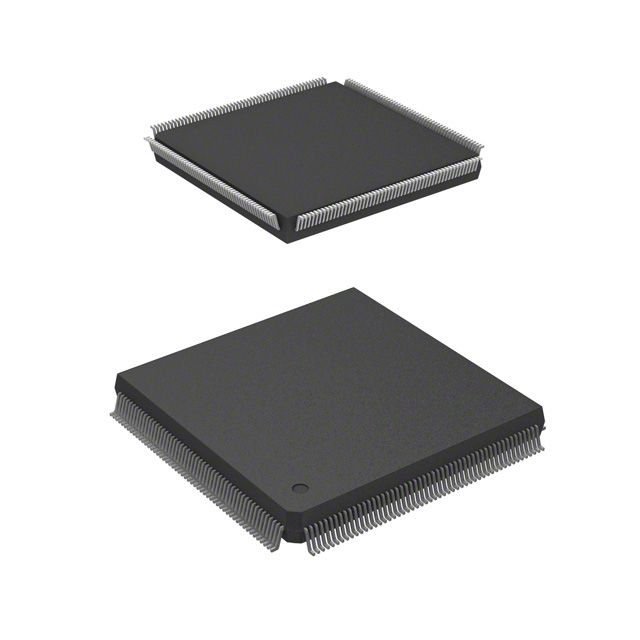
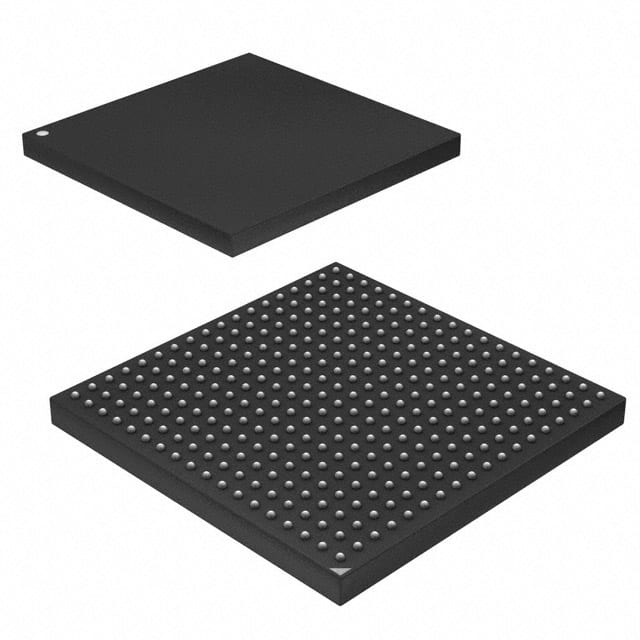
NXP Semiconductors P1022NSE2HFB
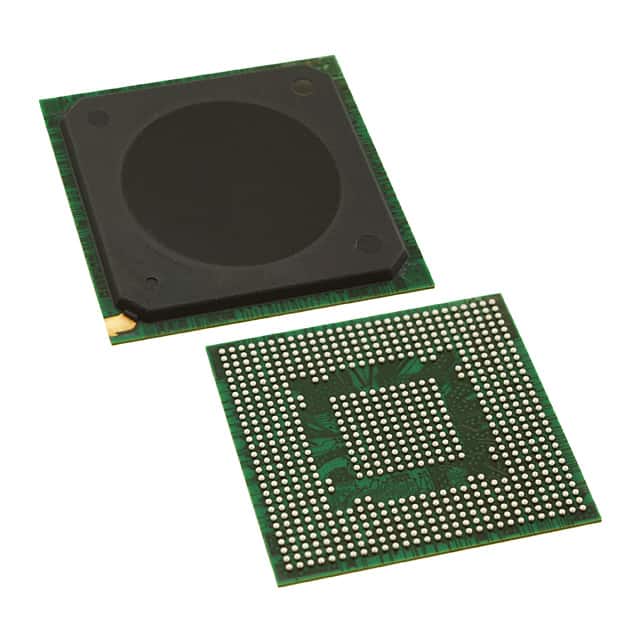
- Part No.:
- P1022NSE2HFB
- Manufacturer:
- NXP Semiconductors
- Category:
- Microprocessors
- Package:
- 689-BBGA Exposed Pad
- Datasheet:
-
 P1022NSE2HFB.pdf
- Description:
- IC MPU QORIQ P1 1.055GHZ PBGA689
- Quantity:
- Payment:

- Shipping:

Inventory:1,121
Please send an inquiry. Send us your inquiry, and we will respond immediately.
Product details
Overview
P1022NSE2HFB from NXP Semiconductors (formerly Freescale) is a dual-core Power Architecture® e500v2 communications processor designed for embedded IP networking and media processing systems. It integrates 2 × 32 KB L1 I/D caches, 256 KB L2 cache with ECC, DDR2/DDR3 memory controller, dual 1 Gbps Ethernet (eTSEC), and triple PCI Express interfaces. Used in enterprise routers, industrial gateways, and secure storage controllers requiring deterministic real-time throughput.
For engineers reviewing the P1022NSE2HFB datasheet, P1022NSE2HFB pinout, P1022NSE2HFB application, or P1022NSE2HFB equivalent, key selection criteria include its 689-pin TEPBGA package, 600–1055 MHz core frequency range, IEEE 1588 support, TCP/IP offload capability, and optional integrated security engine for IPsec/SSL acceleration.
Technical Context
The P1022NSE2HFB implements two coherent e500v2 cores with 36-bit physical addressing, double-precision floating-point units, and Signal Processing Engine (SPE) APU. Its on-chip coherency module enables cache-coherent multiprocessing, while the 64-bit DDR2/DDR3 memory controller supports ECC and up to 1333 MT/s data rates.
High-speed interconnects are managed via six SerDes lanes multiplexed across three PCI Express (x4 + x1 + x1), two SATA, and two SGMII interfaces. The virtualized enhanced three-speed Ethernet controllers (eTSEC) provide lossless flow control, RGMII/SGMII PHY support, and hardware-accelerated TCP/UDP/IP classification.
Key Specifications
| Parameter | Value and Actual Design Meaning |
|---|---|
| Core Architecture | Dual e500v2 Power Architecture cores with SPE APU and 36-bit physical addressing |
| Core Frequency | 600–1055 MHz - enables scalable performance tuning for thermal/power-constrained designs |
| L2 Cache | 256 KB with ECC - configurable as SRAM or stashing memory for real-time deterministic access |
| Memory Interface | 64-bit DDR2/DDR3 SDRAM controller with ECC - supports up to 1333 MT/s for high-bandwidth packet buffering |
| Ethernet Controllers | 2 × eTSEC with IEEE 1588, RGMII/SGMII, and TCP/IP offload - reduces host CPU load in time-sensitive networking |
| PCI Express | Three interfaces: one x4 + two x1 - provides flexible expansion for network accelerators or storage controllers |
| Security Engine | Optional integrated crypto engine supporting AES/3DES/RSA/ECC/SHA - enables single-pass IPsec/SSL processing without external ASIC |
Pinout & Package
Package: 689-pin TEPBGA (27 mm × 27 mm, 1.0 mm pitch), RoHS-compliant, rated for extended temperature operation (–40°C to +105°C).
| Pin/Terminal | Circuit Role | Design Meaning |
|---|---|---|
| DDR_CLK, DDR_DQS | DDR2/DDR3 clock and strobe | Source-synchronous timing signals for reliable high-speed memory interface at up to 1333 MT/s |
| RGMII_TXD[3:0], RXD[3:0] | Gigabit Ethernet data bus | Reduced-GMII interface supporting 1 Gbps full-duplex with 1.8 V I/O voltage |
| PCIE_REFCLK, PCIE_RX/TX | PCI Express reference clock and differential lanes | Supports Gen1 signaling; x4 lane uses dedicated REFCLK, x1 lanes share SerDes PLL |
| SATA_TXP/N, SATA_RXP/N | SATA 3 Gbps differential pairs | Compliant with SATA 2.0 specification; supports hot-plug and native command queuing |
| USB_DP/DM | USB 2.0 differential data pair | ULPI interface for external PHY - eliminates need for internal transceiver, reducing BOM cost |
| SD_CMD, SD_CLK, SD_DAT[3:0] | Secure Digital host interface | Supports SD/MMC cards up to UHS-I speeds; includes CRC and command timeout detection |
Key Features
| Feature | Design Value |
|---|---|
| Dual e500v2 Cores with Coherency Module | Enables symmetric multiprocessing (SMP) OS support (e.g., Linux, VxWorks) without external cache coherency logic |
| Virtualized eTSEC with TCP/IP Offload | Reduces CPU utilization by >40% in packet forwarding workloads via hardware classification and checksum generation |
| Packet-Lossless Deep Sleep Mode | Shuts down major logic blocks while preserving packet buffers and wake-on-LAN state - critical for always-on edge gateways |
| Field-Proven Security Acceleration Engine | Delivers 1.2 Gbps IPsec throughput with AES-128-CBC and SHA-1 - validated in carrier-grade CPE deployments |
| Low-Cost PCB Optimization | Pinout designed for 6-layer board routing - avoids blind/buried vias and reduces manufacturing cost by ~18% vs. comparable processors |
Applications
| Enterprise Networking | Industrial Gateway |
|---|---|
Use Scenario: Layer 3 routing and firewall functions in compact branch office routers. IC Role / Device Role / Timing Role: Control-plane processor managing routing tables, ACLs, and QoS policies with deterministic interrupt latency. Use Value: Dual-core SMP allows concurrent routing stack execution and deep packet inspection without performance degradation. | Use Scenario: Protocol translation between Modbus TCP, EtherNet/IP, and OPC UA in factory automation nodes. IC Role / Device Role / Timing Role: Real-time protocol gateway with IEEE 1588 timestamping for synchronized I/O event correlation. Use Value: Hardware-accelerated eTSEC ensures sub-50 µs timestamp jitter for motion control synchronization. |
| Secure Storage Controller | Media Processing Appliance |
Use Scenario: NAS appliance performing RAID 5/6 parity calculation and encrypted file sharing. IC Role / Device Role / Timing Role: Host processor with XOR acceleration and optional crypto engine handling encryption before disk write. Use Value: Integrated XOR engine delivers 2.1 GB/s parity compute throughput - eliminates need for discrete RAID ASIC. | Use Scenario: IPTV set-top box transcoding H.264 video streams and rendering UI via LCD interface. IC Role / Device Role / Timing Role: Application processor running Linux with DIU-based display output and I2S audio playback. Use Value: 1280×1024@60 Hz LCD controller and 192 kHz I2S support enable premium AV experience without external graphics/audio chips. |
Equivalent & Alternatives
The following parts are listed as comparable options for similar communications processor applications.
| Alternative Part | Technical Difference | Application Difference | Selection Advice |
|---|---|---|---|
| MPC8548E | Single e500 core, no integrated security engine, older DDR2-only memory controller | Limited to legacy control-plane tasks without crypto or dual-core parallelism | Choose when cost sensitivity outweighs performance/security requirements and DDR3 support is unnecessary |
| LS1023A | ARM Cortex-A7 dual-core, no Power Architecture, lacks eTSEC and IEEE 1588 hardware support | Better suited for Linux-based IoT gateways than deterministic time-critical networking | Prefer for new ARM-ecosystem designs requiring long-term software maintainability over legacy PowerQUICC compatibility |
Compared with MPC8548E and LS1023A, the P1022NSE2HFB uniquely combines Power Architecture dual-core determinism, hardware IEEE 1588 timestamping, and integrated crypto acceleration - making it irreplaceable in time-sensitive, secure, and legacy-compatible embedded networking platforms.
Availability
P1022NSE2HFB is available at Aetrix Electronics and suitable for enterprise networking, industrial gateway, and secure storage controller applications requiring stable component supply and long lifecycle support.
Supply support for P1022NSE2HFB includes scheduled delivery planning, volume procurement assistance, BOM continuity management, traceable sourcing, and lifecycle availability coordination for OEM customers, industrial embedded developers, connected-device designers, and electronics production programs.
Manufacturer
NXP Semiconductors is a global semiconductor company formed from the spin-off of Freescale Semiconductor and Philips' semiconductor division, specializing in secure connectivity solutions for automotive, industrial, and IoT markets.
The P1022NSE2HFB belongs to the QorIQ P1 Series communications processors, engineered specifically for energy-efficient, high-throughput embedded networking and media processing where deterministic real-time response and hardware-accelerated security are mandatory.
FAQ
What is the maximum DDR3 data rate supported by the P1022NSE2HFB?
The P1022NSE2HFB supports DDR3 memory up to 1333 MT/s using its 64-bit DDR2/DDR3 SDRAM controller with ECC. This bandwidth enables sustained packet buffering and large-scale routing table lookups without memory bottlenecks. The controller also supports DDR2-800, providing backward compatibility for cost-optimized designs. P1022NSE2HFB's memory subsystem is validated for JEDEC-compliant modules with on-die termination and fly-by topology.
Does the P1022NSE2HFB include hardware support for IEEE 1588 Precision Time Protocol?
Yes, the P1022NSE2HFB includes full hardware support for IEEE 1588-2008 (PTPv2) in both its dual eTSEC controllers. Each eTSEC provides timestamping accuracy within ±50 ns for ingress/egress packets, programmable PTP message filtering, and hardware-assisted correction for link delay asymmetry. This makes P1022NSE2HFB suitable for industrial automation and telecom synchronization where sub-microsecond timing is required.
Is the security engine in the P1022NSE2HFB optional or integrated into all variants?
The security acceleration engine in the P1022NSE2HFB is an optional silicon feature - present only in versions ordered with the "SEC" suffix (e.g., P1022NSE2HFB). Non-SEC variants omit the crypto block but retain identical pinout and software compatibility. P1022NSE2HFB specifically includes the engine, enabling single-pass IPsec, SSL, and SRTP processing at line rate without external co-processors.
What power management modes does the P1022NSE2HFB support for fanless operation?
The P1022NSE2HFB supports multiple low-power states including doze, nap, jog (dynamic frequency scaling), and packet-lossless deep sleep. In deep sleep mode, power is removed from cores, caches, and most peripherals while retaining DDR self-refresh and wake-event detection on LAN, USB, GPIO, or timers. This enables fanless operation in ambient temperatures up to +105°C, verified per JEDEC JESD51-2 thermal standards for the 689-pin TEPBGA package.
Can the P1022NSE2HFB boot directly from NAND flash using its eLBC interface?
Yes, the P1022NSE2HFB supports NAND flash boot via its Enhanced Local Bus Controller (eLBC), which includes hardware ECC generation/checking, bad-block management, and ready/busy polling. The ROM-based boot code initializes the eLBC, configures NAND timing parameters, and loads the initial bootloader (e.g., U-Boot) into L2 cache before executing. This eliminates dependency on external boot PROMs and simplifies BOM for cost-sensitive networking appliances.
P1022NSE2HFB Specifications
- Product attributes
- Attribute value
- Manufacturer:
- NXP Semiconductors
- Package/Case:
- 689-BBGA Exposed Pad
- Series:
- QorIQ P1
- Packaging:
- Bulk
- Product Status:
- Obsolete
- Core Processor:
- PowerPC e500v2
- Number of Cores/Bus Width:
- 2 Core, 32-Bit
- Speed:
- 1.055GHz
- Co-Processors/DSP:
- Security; SEC
- RAM Controllers:
- DDR2, DDR3
- Graphics Acceleration:
- No
- Display & Interface Controllers:
- LCD
- Ethernet:
- 10/100/1000Mbps (2)
- SATA:
- SATA 3Gbps (2)
- USB:
- USB 2.0 + PHY (2)
- Voltage - I/O:
- -
- Operating Temperature:
- 0°C ~ 105°C (TA)
- Grade:
- -
- Qualification:
- -
- Security Features:
- Cryptography, Random Number Generator
- Mounting Type:
- Surface Mount
- Supplier Device Package:
- 689-TEPBGA II (31x31)
- Additional Interfaces:
- DUART, I2C, I2S, MMC/SD, SPI
P1022NSE2HFB FAQ
1.How can I place an order for P1022NSE2HFB through Aetrix?
Please submit a Request for Quotation (RFQ) for P1022NSE2HFB on Aetrix. Our sales agent will provide a competitive quotation and guide you through the order confirmation once you accept the terms.
2.Are the price and stock information for P1022NSE2HFB reliable?
The price and inventory of P1022NSE2HFB are updated periodically and may fluctuate due to market conditions. Stock and pricing data are typically refreshed every 24 hours. Quotation validity for P1022NSE2HFB is usually 5 days.
3.What payment methods are accepted for P1022NSE2HFB?
We accept Wire Transfer, PayPal, Credit Card, Western Union, MoneyGram, and Escrow for P1022NSE2HFB transactions.
Note: Certain payment methods may incur a processing fee.
4.How is shipping managed for P1022NSE2HFB?
P1022NSE2HFB orders can be shipped via leading logistics carriers, including DHL, UPS, FedEx, TNT, or Registered Mail.
Once your P1022NSE2HFB order is processed, you will receive an email with the shipment details and tracking number.
Note: Tracking information may take up to 24 hours to appear. Express delivery typically takes 3–5 business days.
5.How can I obtain technical support or documentation for P1022NSE2HFB?
For technical support, including P1022NSE2HFB datasheets, pinout diagrams, or application guidance, please contact our engineering support team. They can provide detailed documentation and assistance for your P1022NSE2HFB requirements.
6.How does Aetrix verify that P1022NSE2HFB is sourced from the original manufacturer or authorized distributors?
All P1022NSE2HFB products on Aetrix are procured from qualified distributors and authorized channels. Our dedicated quality assurance team conducts strict verification, including traceability checks and, if necessary, third-party testing. This ensures that P1022NSE2HFB meets industry standards.
7.What is the process for return or replacement of P1022NSE2HFB?
All P1022NSE2HFB units undergo pre-shipment inspection (PSI). If there is an issue with P1022NSE2HFB, returns or replacements are accepted under the following conditions:
1.Quantity discrepancies, incorrect items, or visible external defects (such as breakage or corrosion), acknowledged by Aetrix.
2.The issue is reported within 90 days of delivery.
3.The P1022NSE2HFB part is unused and in its original packaging.
Return procedure for P1022NSE2HFB:
1.Submit a request within 90 days.
2.Obtain a Return Material Authorization (RMA) from Aetrix.
P1022NSE2HFB Tags
-
AT91SAM9260B-CU-999
Microchip Technology
-
AT91SAM9G25-CU
Microchip Technology
-
ATSAMA5D27C-CU
Microchip Technology
-
AT91SAM9X35-CU
Microchip Technology
-
AT91SAM9X25-CU
Microchip Technology
-
MCIMX6Y2CVM08AB
NXP Semiconductors
.JPG)
-
AM3352BZCZ100
Texas Instruments
-
AT91SAM9260B-CU
Microchip Technology
-
AT91SAM9260B-QU
Microchip Technology
-
ATSAMA5D31A-CU
Microchip Technology
-
AT91SAM9G20B-CU-999
Microchip Technology
-
MCIMX6Y2CVM05AB
NXP Semiconductors
Tech Hub

A practical engineering guide to 3.3V and 5V logic compatibility, input thresholds, resistor dividers, translator ICs, MOSFET level shifting, I2C pull-ups, timing limits and power-sequencing risks.

The 74HC595 uses push-pull logic outputs, while the TPIC6B595 uses 50 V open-drain DMOS sinks for higher-power loads. This guide compares timing, current limits, 3.3 V interfacing, load wiring, thermal…

The 74HC595 converts serial data into eight stable parallel outputs. This guide covers pin functions, shift and storage timing, OE and MR behavior, drive-current limits, cascading, voltage compatibilit…

A technical comparison of level-sensitive latches and edge-triggered flip-flops, covering timing windows, setup and hold limits, master–slave operation, time borrowing, race-through, HDL inference and…

A D latch stores one bit while Enable controls when data can pass. This reference covers gate-level operation, truth tables, transparency, setup and hold timing, LE versus OE, common ICs and practical …

An SR latch stores one bit through cross-coupled feedback. This engineering reference covers NOR and NAND implementations, truth tables, forbidden-state recovery, gated operation, switch debouncing, fa…

Latch circuits retain one bit through feedback. This technical reference covers SR and D latches, truth tables, transparency, timing limits, latch-versus-flip-flop behavior, applications and common log…

An engineering guide to LED driver operation, constant-current and constant-voltage outputs, linear and switching topologies, dimming, IC selection, calculations, replacement compatibility, and fault c…

Operational amplifier guide covering op amp basics, feedback, ideal vs real op amps, common configurations, buffer circuits, offset, bias current, gain-bandwidth, slew rate, rail-to-rail limits and sel…

Jumper cables guide covering safe connection order, red and black clamp placement, final ground connection, cable gauge, length, clamp quality, copper vs CCA cables, jump starter comparison and battery…


