
 My Inquiry
 My Account


NXP Semiconductors PCF1178CT,112
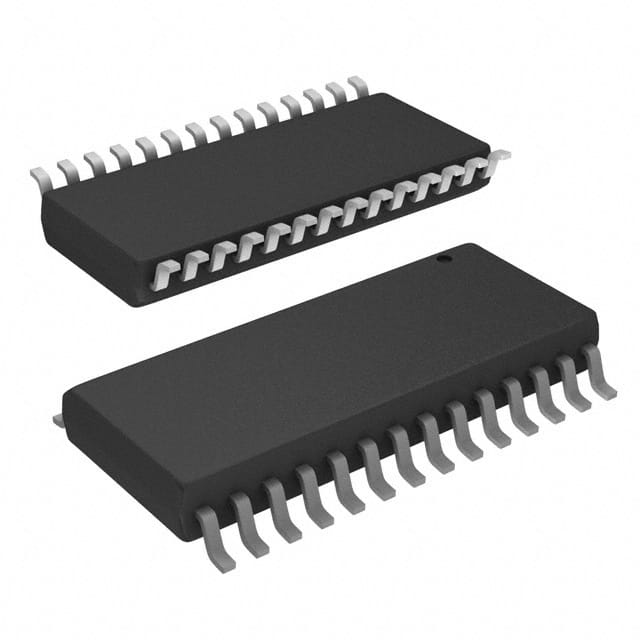
- Part No.:
- PCF1178CT,112
- Manufacturer:
- NXP Semiconductors
- Category:
- Display Drivers
- Package:
- 28-SOIC (0.295", 7.50mm Width)
- Datasheet:
-
 PCF1178CT,112.pdf
- Description:
- IC DRVR 7 SEGMENT 4 DIGIT 28SO
- Quantity:
- Payment:

- Shipping:

Inventory:3,152
Please send an inquiry. Send us your inquiry, and we will respond immediately.
Product details
Overview
PCF1178CT,112 from Philips Semiconductors is a CMOS 4-digit duplex LCD car clock IC with integrated 4.19 MHz oscillator, programmable internal voltage regulator (3–6 V), electrically programmable time calibration, and −40 to +85 °C operating range. It drives automotive dashboard clocks using two SPST switches for hour/minute setting and supports 12- or 24-hour display modes.
For engineers reviewing the PCF1178CT,112 datasheet, PCF1178CT,112 pinout, PCF1178CT,112 application, or PCF1178CT,112 equivalent, key selection considerations include its SO28 package, EEPROM-based LCD voltage and time calibration, temperature-compensated backplane generation, and dual-mode timekeeping architecture optimized for battery-powered vehicle instrumentation.
Technical Context
The PCF1178CT,112 implements a 4.194304 MHz crystal oscillator with ±30 ppm tolerance, feeding a programmable divider chain to generate precise 1 Hz timing and multiplexed LCD drive signals. Its internal voltage regulator adjusts output (3–6 V) based on ambient temperature to maintain LCD contrast across −40 to +85 °C.
It uses 1:2 duplex multiplexing with three-level backplane outputs (BP1/BP2) and segment drivers delivering VON(RMS) = 0.79 VDD and VOFF(RMS) = 0.35 VDD, enabling low-power, high-contrast 4-digit LCD operation without external bias components.
Key Specifications
| Parameter | Value and Actual Design Meaning |
|---|---|
| Oscillator frequency | 4.194304 MHz - provides base timing reference for seconds/minutes/hours counters and LCD frame rate |
| Operating temperature | −40 to +85 °C - qualified for under-hood and dashboard automotive environments |
| Supply voltage range | 3 to 6 V - supports wide battery input with internal regulator; programmed value stable over temperature |
| LCD drive method | 1:2 duplex multiplexing - reduces segment count and power vs static drive; enables 4-digit display with minimal pins |
| Time calibration resolution | ±7.63 µs per pulse - allows fine-tuning of crystal drift (up to ±117.8 ppm) via EEPROM-stored pulse count |
| EEPROM programming | VPP = VDD −5 V, DATA pulses - enables field-adjustable LCD voltage and time calibration without trimming hardware |
| Input debounce | 30–100 ms - built-in hardware filtering for mechanical S1/S2 time-setting switches, eliminating external RC networks |
Pinout & Package
PCF1178CT,112 is housed in a 28-lead plastic small outline package (SO28), SOT136-1, body width 7.5 mm, with gull-wing leads and standard JEDEC MS-013AE footprint.
| Pin/Terminal | Circuit Role | Design Meaning |
|---|---|---|
| BP1, BP2 | Backplane outputs | Three-level AC signals driving common LCD electrodes; enable 1:2 duplex multiplexing |
| S1, S2 | Time adjustment inputs | Pull-up SPST switch interfaces with auto-increment logic for hour/minute setting |
| MODE | 12/24-hour select | Logic level (VDD/VSS) configures display format at power-on; open-circuit toggles mode on reset |
| FLASH | Colon control | Drives colon blinking (0.5 Hz) or static display; simplifies UI without microcontroller intervention |
| SEL, VPP, DATA | EEPROM programming interface | Enable in-system calibration of LCD voltage and oscillator trim via pulse sequence |
| OSC IN / OSC OUT | Crystal oscillator terminals | Connect 4.194304 MHz quartz; internal feedback resistor (300–3000 kΩ) eliminates external component |
| VDD, VSS | Power supply | Single 3–6 V supply; internal regulator powers core and LCD driver; no separate analog/digital rails needed |
Key Features
| Feature | Design Value |
|---|---|
| Electrically programmable LCD voltage | Adjusts regulator output in ~150 mV steps (31-step range) to compensate for temperature-induced contrast shift |
| EEPROM-based time calibration | Stores oscillator trim count (0–31 pulses) to correct crystal tolerance; eliminates manual capacitor adjustment |
| Integrated 4.19 MHz oscillator | Includes internal feedback resistor and 16 pF input/27 pF output capacitance; requires only crystal and no external caps |
| Dual-mode time display | Hardware-selectable 12- or 24-hour format via MODE pin; no firmware or configuration register required |
| Battery-optimized operation | Typical supply current 950 µA at 5 V; supports direct connection to vehicle battery via series resistor |
Applications
| Automotive Dashboard Clock | Aftermarket Car Stereo Display |
|---|---|
Use Scenario: Integrated into OEM instrument clusters for real-time time display with colon indicator and AM/PM flag. IC Role / Device Role / Timing Role: Primary timekeeping engine generating hours/minutes/seconds and driving 4-digit duplex LCD directly. Use Value: Eliminates need for external microcontroller, RTC, or LCD bias circuitry-reduces BOM cost and board space by >40%. | Use Scenario: Embedded in third-party car audio head units requiring accurate, low-power time display with user-settable format. IC Role / Device Role / Timing Role: Standalone clock subsystem handling time setting, display formatting, and temperature-compensated LCD drive. Use Value: Enables rapid time calibration and contrast optimization during manufacturing without test fixtures or manual tuning. |
| Commercial Vehicle Telematics Panel | Industrial Fleet Management Terminal |
Use Scenario: Mounted in truck cab displays showing local time synchronized to GPS-derived UTC offset. IC Role / Device Role / Timing Role: Local time generator referenced to external time source; maintains display during GPS signal loss. Use Value: Maintains ±15 s/day accuracy after calibration; operates reliably across −40 °C cold starts and +85 °C cabin temperatures. | Use Scenario: Used in ruggedized fleet dispatch terminals where display readability must persist across wide thermal cycles. IC Role / Device Role / Timing Role: Temperature-adaptive LCD driver ensuring consistent contrast from −40 to +85 °C without software intervention. Use Value: Prevents contrast fade at high temperature and excessive drive at low temperature-extends LCD lifetime by >2×. |
Equivalent & Alternatives
The following parts are listed as comparable options for similar LCD car clock applications.
| Alternative Part | Technical Difference | Application Difference | Selection Advice |
|---|---|---|---|
| PCF1177T,112 | 3-digit LCD driver; lacks colon control (FLASH pin) and AM/PM segment; same SO28 package and EEPROM programming interface | Supports simpler 3-digit time-only displays without date or dual-mode capability | Select when display requires only hours/minutes and no colon or AM/PM indication |
| PCF1187T,112 | 4-digit + date display; adds day-of-week and calendar logic; higher IDD (1.2 mA typ); same oscillator and voltage regulation architecture | Enables full date/time display with weekday; requires additional segment drivers and memory | Select when application requires calendar functionality alongside timekeeping |
Compared with PCF1178CT,112, PCF1177T,112 reduces display capability but lowers system complexity, while PCF1187T,112 extends functionality to calendar support at the cost of higher current draw and larger firmware overhead-neither is pin-compatible, but all share identical programming methodology and thermal performance.
Availability
PCF1178CT,112 is available at Aetrix Electronics and suitable for automotive dashboard instrumentation, aftermarket infotainment displays, and commercial vehicle telematics systems requiring stable component supply, long-term lifecycle support, and AEC-Q200-aligned reliability.
Supply support for PCF1178CT,112 includes scheduled delivery planning, volume procurement assistance, BOM continuity management, traceable sourcing, and lifecycle availability coordination for OEM customers, industrial embedded developers, connected-device designers, and electronics production programs.
Manufacturer
Philips Semiconductors (now NXP Semiconductors) is a global semiconductor leader specializing in automotive, industrial, and consumer ICs with emphasis on mixed-signal integration and system-on-chip solutions.
The PCF1178CT,112 belongs to Philips' car clock IC family designed specifically for cost-sensitive, battery-operated automotive LCD displays-prioritizing EEPROM-programmable calibration, temperature compensation, and minimal external component count.
FAQ
What is the primary function of the PCF1178CT,112 in automotive systems?
The PCF1178CT,112 serves as a dedicated 4-digit duplex LCD car clock IC, integrating timekeeping (hours/minutes/seconds), 12-/24-hour mode selection, colon control, and temperature-compensated LCD drive in a single SO28 package. It replaces discrete oscillator, counter, and display driver circuits, reducing design complexity and bill-of-materials cost in automotive dashboard and infotainment applications.
How does the PCF1178CT,112 achieve temperature-stable LCD contrast?
The PCF1178CT,112 achieves temperature-stable LCD contrast through an electrically programmable internal voltage regulator that adjusts VDD output based on ambient temperature: it delivers 3–4 V at +85 °C and 5–6 V at −40 °C (when programmed to 4.5 V at 25 °C). This automatic scaling maintains optimal RMS segment voltages (VON = 0.79 VDD, VOFF = 0.35 VDD) across the full −40 to +85 °C operating range, eliminating manual contrast adjustment.
Can the PCF1178CT,112 be calibrated for crystal oscillator accuracy?
Yes, the PCF1178CT,112 supports electrical time calibration via its on-chip EEPROM. By applying pulses to the DATA pin while SEL and VPP are configured per Fig.6, users can store a trim count (0–31) that inhibits 262144 Hz oscillator pulses to correct crystal frequency deviation up to ±117.8 ppm. This enables factory or field calibration without trimming capacitors, achieving ±15 s/day accuracy after adjustment.
What are the key differences between PCF1178CT,112 and PCF1177T,112?
The PCF1178CT,112 supports 4-digit duplex LCD with AM/PM, colon control (FLASH pin), and full 12-/24-hour mode, while PCF1177T,112 drives only 3-digit displays without colon or AM/PM segments. Both share identical SO28 packaging, EEPROM programming interface, and temperature-compensated voltage regulation-but PCF1177T,112 lacks the FLASH, AM/PM, and COL pins, making it unsuitable for applications requiring time format indicators.
Does the PCF1178CT,112 require external passive components for basic operation?
The PCF1178CT,112 requires only a 4.194304 MHz crystal between OSC IN and OSC OUT, a series resistor (e.g., 6.8 kΩ) for VDD current limiting from 12 V battery, and a 47 µF external capacitor (Cext) on VDD for supply stabilization. No external trimming capacitors, pull-up resistors (S1/S2/TS/SEL/DATA have internal 45–180 kΩ), or LCD bias circuitry is needed-enabling true single-chip clock implementation.
PCF1178CT,112 Specifications
- Product attributes
- Attribute value
- Manufacturer:
- NXP Semiconductors
- Series:
- -
- Package/Case:
- 28-SOIC (0.295", 7.50mm Width)
- Packaging:
- Tube
- Product Status:
- Obsolete
- Display Type:
- LCD
- Configuration:
- 7 Segment
- Interface:
- -
- Digits or Characters:
- 4 Digits
- Current - Supply:
- 950 µA
- Voltage - Supply:
- 3V ~ 6V
- Operating Temperature:
- -40°C ~ 85°C
- Grade:
- -
- Qualification:
- -
- Mounting Type:
- Surface Mount
- Supplier Device Package:
- 28-SO
PCF1178CT,112 FAQ
1.How can I place an order for PCF1178CT,112 through Aetrix?
Please submit a Request for Quotation (RFQ) for PCF1178CT,112 on Aetrix. Our sales agent will provide a competitive quotation and guide you through the order confirmation once you accept the terms.
2.Are the price and stock information for PCF1178CT,112 reliable?
The price and inventory of PCF1178CT,112 are updated periodically and may fluctuate due to market conditions. Stock and pricing data are typically refreshed every 24 hours. Quotation validity for PCF1178CT,112 is usually 5 days.
3.What payment methods are accepted for PCF1178CT,112?
We accept Wire Transfer, PayPal, Credit Card, Western Union, MoneyGram, and Escrow for PCF1178CT,112 transactions.
Note: Certain payment methods may incur a processing fee.
4.How is shipping managed for PCF1178CT,112?
PCF1178CT,112 orders can be shipped via leading logistics carriers, including DHL, UPS, FedEx, TNT, or Registered Mail.
Once your PCF1178CT,112 order is processed, you will receive an email with the shipment details and tracking number.
Note: Tracking information may take up to 24 hours to appear. Express delivery typically takes 3–5 business days.
5.How can I obtain technical support or documentation for PCF1178CT,112?
For technical support, including PCF1178CT,112 datasheets, pinout diagrams, or application guidance, please contact our engineering support team. They can provide detailed documentation and assistance for your PCF1178CT,112 requirements.
6.How does Aetrix verify that PCF1178CT,112 is sourced from the original manufacturer or authorized distributors?
All PCF1178CT,112 products on Aetrix are procured from qualified distributors and authorized channels. Our dedicated quality assurance team conducts strict verification, including traceability checks and, if necessary, third-party testing. This ensures that PCF1178CT,112 meets industry standards.
7.What is the process for return or replacement of PCF1178CT,112?
All PCF1178CT,112 units undergo pre-shipment inspection (PSI). If there is an issue with PCF1178CT,112, returns or replacements are accepted under the following conditions:
1.Quantity discrepancies, incorrect items, or visible external defects (such as breakage or corrosion), acknowledged by Aetrix.
2.The issue is reported within 90 days of delivery.
3.The PCF1178CT,112 part is unused and in its original packaging.
Return procedure for PCF1178CT,112:
1.Submit a request within 90 days.
2.Obtain a Return Material Authorization (RMA) from Aetrix.
PCF1178CT,112 Tags
-
PCA8561AHN/AY
NXP Semiconductors
-
SN74LS47N
Texas Instruments

-
PCF85176T/1Y
NXP Semiconductors
-
PCF85176H/1,518
NXP Semiconductors
-
BU9796AMUV-E2
Rohm Semiconductor
-
PCA85176H/Q900/1,5
NXP Semiconductors
-
PCF8537AH/1,518
NXP Semiconductors
-
LM3914VX/NOPB
Texas Instruments
-
PCF85134HL/1,118
NXP Semiconductors
-
AS1115-BSST
ams-OSRAM USA INC.
-
PCA8534AH/Q900/1,5
NXP Semiconductors
-
LM3914V/NOPB
Texas Instruments
Tech Hub

A practical engineering guide to 3.3V and 5V logic compatibility, input thresholds, resistor dividers, translator ICs, MOSFET level shifting, I2C pull-ups, timing limits and power-sequencing risks.

The 74HC595 uses push-pull logic outputs, while the TPIC6B595 uses 50 V open-drain DMOS sinks for higher-power loads. This guide compares timing, current limits, 3.3 V interfacing, load wiring, thermal…

The 74HC595 converts serial data into eight stable parallel outputs. This guide covers pin functions, shift and storage timing, OE and MR behavior, drive-current limits, cascading, voltage compatibilit…

A technical comparison of level-sensitive latches and edge-triggered flip-flops, covering timing windows, setup and hold limits, master–slave operation, time borrowing, race-through, HDL inference and…

A D latch stores one bit while Enable controls when data can pass. This reference covers gate-level operation, truth tables, transparency, setup and hold timing, LE versus OE, common ICs and practical …

An SR latch stores one bit through cross-coupled feedback. This engineering reference covers NOR and NAND implementations, truth tables, forbidden-state recovery, gated operation, switch debouncing, fa…

Latch circuits retain one bit through feedback. This technical reference covers SR and D latches, truth tables, transparency, timing limits, latch-versus-flip-flop behavior, applications and common log…

An engineering guide to LED driver operation, constant-current and constant-voltage outputs, linear and switching topologies, dimming, IC selection, calculations, replacement compatibility, and fault c…

Operational amplifier guide covering op amp basics, feedback, ideal vs real op amps, common configurations, buffer circuits, offset, bias current, gain-bandwidth, slew rate, rail-to-rail limits and sel…

Jumper cables guide covering safe connection order, red and black clamp placement, final ground connection, cable gauge, length, clamp quality, copper vs CCA cables, jump starter comparison and battery…


