
 My Inquiry
 My Account


NXP Semiconductors PCF8576CHL/1,157
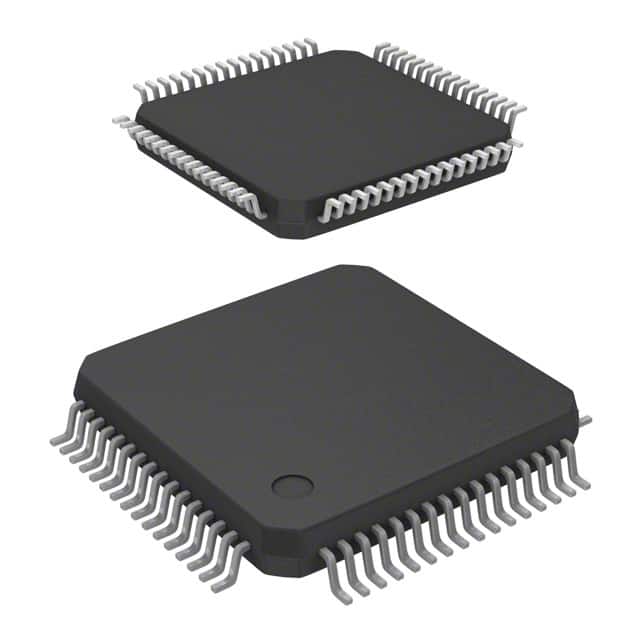
- Part No.:
- PCF8576CHL/1,157
- Manufacturer:
- NXP Semiconductors
- Category:
- Display Drivers
- Package:
- 64-LQFP
- Datasheet:
-
 PCF8576CHL/1,157.pdf
- Description:
- IC DRVR 7 SEGMENT 64LQFP
- Quantity:
- Payment:

- Shipping:

Inventory:4,567
Please send an inquiry. Send us your inquiry, and we will respond immediately.
Product details
Overview
PCF8576CHL/1,157 from NXP Semiconductors is a universal LCD controller and driver IC designed for low-multiplex-rate segment displays. It supports up to 4 backplanes and 40 segments, delivers internal LCD bias generation, operates from 2 V to 6 V logic/LCD supply, and communicates via I²C-bus - enabling direct interface with microcontrollers in battery-powered instrumentation and consumer display modules.
For engineers reviewing the PCF8576CHL/1,157 datasheet, PCF8576CHL/1,157 pinout, PCF8576CHL/1,157 application, or PCF8576CHL/1,157 equivalent, key selection criteria include static/1:2/1:3/1:4 multiplex drive mode support, 40 × 4-bit display RAM with auto-incremented addressing, integrated voltage-follower LCD bias buffers, power-saving mode operation, and LQFP64 package compatibility with plane-wiring optimization.
Technical Context
The PCF8576CHL/1,157 implements a synchronous LCD drive architecture with an internal oscillator (enabled via OSC–VSS) or external clock input (OSC–VDD), generating frame frequencies of 69 Hz (normal mode) or 65 Hz (power-saving mode). Its timing engine sequences display RAM → shift register → display register transfers while maintaining synchronization across cascaded devices using the SYNC pin.
It integrates a 40 × 4-bit static display RAM with bank-switching capability in static/duplex modes, subaddress decoding (A0–A2), and hardware-controlled blinking. The LCD bias generator produces 1/2 or 1/3 bias voltages from internal resistor dividers between VDD and VLCD, eliminating external bias components.
Key Specifications
| Parameter | Value and Actual Design Meaning |
|---|---|
| Display Drive Capability | Up to 4 backplanes and 40 segments - supports static, 1:2, 1:3, or 1:4 multiplexed LCDs including 20×7-segment or 10×14-segment alphanumeric displays. |
| I²C Interface | Standard-mode (100 kHz) bidirectional bus - enables microcontroller communication with minimal software overhead and auto-incremented RAM addressing. |
| Supply Voltage Range | VDD = 2 V to 6 V - accommodates both low-threshold (e.g., STN) and high-threshold (e.g., twisted nematic) LCD panels without level-shifting. |
| Display RAM | 40 × 4-bit static RAM - stores full display state; data pointer auto-increments by 2 (1:4), 3 (1:3), 4 (1:2), or 8 (static) per byte write. |
| LCD Bias Generation | Internal voltage-follower buffers with selectable 1/2 or 1/3 bias - eliminates need for external resistive divider or charge pump in all configurations. |
| Power Modes | Normal-power and power-saving modes - reduces clock frequency by factor of 6 in power-saving mode for ultra-low current in battery applications. |
| Frame Frequency | 69 Hz (normal) or 65 Hz (power-saving) at fclk = 200 kHz - ensures flicker-free visible display while maintaining timing margin for I²C data throughput. |
Pinout & Package
LQFP64 package (SOT314-2), 10 × 10 × 1.4 mm body, with optimized pin layout for single- and multi-device plane wiring. Pin 1 is top-left corner (notch-mark side), pin count includes 4 no-connect (n.c.) positions.
| Pin/Terminal | Circuit Role | Design Meaning |
|---|---|---|
| SDA (10) | I²C serial data I/O | Open-drain bidirectional line - requires external pull-up; handles command/data transfer and ACK/NACK signaling. |
| SCL (11) | I²C serial clock input | Master-generated clock - synchronizes all I²C transactions; minimum 125 kHz required for 100 kHz bus rate. |
| SYNC (12) | Cascade synchronization I/O | Propagates timing alignment signal between daisy-chained PCF8576C devices to prevent frame skew. |
| CLK (13) | External clock I/O or output | Outputs internal oscillator signal when OSC = VSS; becomes input when OSC = VDD - enables system-wide clock distribution. |
| BP0–BP3 (25–28) | LCD backplane outputs | Drive four independent backplane waveforms; configurable for static, 1:2, 1:3, or 1:4 multiplex - unused pins may be left open. |
| S0–S39 (2–7, 29–32, 34–47, 49–64) | LCD segment outputs | 40 dedicated CMOS outputs - directly connect to LCD segment electrodes; unused outputs must remain unconnected. |
| VLCD (21) | LCD supply voltage input | Reference for internal bias generator - sets full-scale LCD operating voltage (Voper = VDD − VLCD); supports temperature compensation. |
| VDD (14), VSS (20) | Logic supply rails | Separate logic (VDD/VSS) and LCD (VLCD) supplies - allows independent voltage optimization for MCU interface and display contrast. |
Key Features
| Feature | Design Value |
|---|---|
| Integrated LCD bias generation | Eliminates external bias resistors or charge pumps - reduces BOM count and PCB area in space-constrained designs. |
| Auto-incremented RAM addressing | Reduces I²C transaction count during full-display updates - improves firmware efficiency and lowers CPU load in real-time UI systems. |
| Cascadable architecture | Enables expansion to 2560 display elements (64 × PCF8576C) using SYNC and CLK signals - supports large custom segment panels without FPGA or ASIC. |
| Selectable multiplex drive modes | Hardware-configurable 1:1 (static), 1:2, 1:3, or 1:4 drive - matches diverse LCD module requirements without redesigning driver circuitry. |
| Power-saving mode | Reduces dynamic power consumption by >80 % - extends battery life in portable meters, thermostats, and telecom handsets. |
Applications
| Industrial Panel Meters | Consumer Appliance Displays |
|---|---|
Use Scenario: Digital multimeter or flow meter with 4-digit 7-segment LCD and status icons. IC Role / Device Role / Timing Role: Primary LCD controller driving 4 backplanes and 32 segments; generates multiplexed waveforms and internal bias. Use Value: Single-chip solution replaces discrete bias generator + microcontroller GPIO expansion - cuts component count and simplifies EMC layout. | Use Scenario: Microwave oven or washing machine control panel with alphanumeric + icon display. IC Role / Device Role / Timing Role: Standalone segment driver interfacing to 8-bit MCU via I²C; manages blinking indicators and segment remapping. Use Value: Hardware subaddressing (A0–A2) allows multiple PCF8576CHL/1,157 on same bus - enables modular UI design with shared MCU resources. |
| Medical Diagnostic Devices | Telecom Handset Keypads |
Use Scenario: Portable blood glucose monitor with low-power static LCD and backlight control. IC Role / Device Role / Timing Role: Static-drive mode controller with VLCD-adjustable contrast; enters power-saving mode between readings. Use Value: 2 V minimum VDD enables direct Li-ion battery operation (3.0–4.2 V) with no regulator - improves energy efficiency and runtime. | Use Scenario: Feature phone keypad with segmented display showing signal strength, battery, and caller ID. IC Role / Device Role / Timing Role: Cascaded dual-PCF8576CHL/1,157 configuration driving 80 segments across two display zones. Use Value: SYNC pin synchronization ensures zero frame misalignment between upper/lower display sections - prevents visual tearing during scrolling. |
Equivalent & Alternatives
The following parts are listed as comparable options for similar LCD driver applications.
| Alternative Part | Technical Difference | Application Difference | Selection Advice |
|---|---|---|---|
| PCF8576CT/1 | VSO56 package (56-pin), smaller footprint (7.2 × 4.4 × 1.2 mm), identical electrical specs and pinout mapping for SDA/SCL/BP/S pins. | Preferred for ultra-compact PCBs where height <1.2 mm is critical; lacks n.c. pins present in LQFP64 - requires revised layout. | Select PCF8576CT/1 when board space is constrained and thermal dissipation permits lower package mass. |
| PCF8575T | 16-bit I/O expander (no LCD bias, no multiplex timing engine); requires external LCD driver circuitry and bias network. | Only suitable for static LCDs with external drive - cannot replace PCF8576CHL/1,157 in multiplexed applications or where integrated bias is required. | Choose PCF8575T only if existing design already uses discrete LCD drivers and only needs GPIO expansion. |
Compared with PCF8576CT/1, the PCF8576CHL/1,157 offers superior thermal performance and mechanical robustness in LQFP64; versus PCF8575T, it delivers complete LCD subsystem integration - eliminating six external components and reducing firmware complexity by handling multiplex sequencing and bias generation in hardware.
Availability
PCF8576CHL/1,157 is available at Aetrix Electronics and suitable for industrial panel meters, consumer appliance displays, medical diagnostic devices, and telecom handset keypads requiring stable component supply and long-term lifecycle support.
Supply support for PCF8576CHL/1,157 includes scheduled delivery planning, volume procurement assistance, BOM continuity management, traceable sourcing, and lifecycle availability coordination for OEM customers, industrial embedded developers, connected-device designers, and electronics production programs.
Manufacturer
NXP Semiconductors is a global semiconductor leader specializing in secure connectivity solutions for automotive, industrial, and IoT applications, with core expertise in mixed-signal IC design and embedded processing.
The PCF8576C product line was engineered specifically for cost-sensitive, low-power segment LCD interfaces - targeting applications where microcontroller GPIO scarcity, display complexity, and battery life constrain traditional driver approaches.
FAQ
What LCD configurations does the PCF8576CHL/1,157 support?
The PCF8576CHL/1,157 supports static (1 backplane), 1:2, 1:3, and 1:4 multiplexed LCDs with up to 40 segments. It drives up to 20 seven-segment characters, 10 fourteen-segment characters, or 160 graphic elements. Configuration is selected via mode-set commands and hardware subaddressing (A0–A2), with bias set to 1/2 or 1/3 depending on multiplex ratio - all verified in the PCF8576CHL/1,157 datasheet Section 7.3.
Does the PCF8576CHL/1,157 require external components for LCD biasing?
No, the PCF8576CHL/1,157 includes an internal LCD bias generator with voltage-follower buffers and selectable 1/2 or 1/3 bias configuration - eliminating external resistors, capacitors, or charge pumps. This is confirmed in Section 7.2 and Figure 6 of the PCF8576CHL/1,157 datasheet, and applies across all supported drive modes.
How does the PCF8576CHL/1,157 handle cascading for larger displays?
The PCF8576CHL/1,157 uses the SYNC pin for inter-device timing synchronization and CLK pin for clock distribution in cascaded systems. Display data auto-wraps to the next device when the subaddress counter matches hardware inputs (A0–A2), enabling up to 2560 elements with 64 devices - as specified in Section 7.13 and Table 5 of the PCF8576CHL/1,157 datasheet.
What is the power consumption behavior of the PCF8576CHL/1,157 in power-saving mode?
In power-saving mode, the PCF8576CHL/1,157 reduces its internal clock frequency by a factor of six, lowering dynamic power consumption significantly - ideal for battery-operated devices like handheld meters and telephones. Frame frequency drops from 69 Hz to 65 Hz at 200 kHz clock, and response time increases proportionally, but no data loss occurs - per Section 7.6 and Table 7 of the PCF8576CHL/1,157 datasheet.
Can unused segment or backplane outputs on the PCF8576CHL/1,157 be left unconnected?
Yes, unused segment outputs (S0–S39) and backplane outputs (BP0–BP3) on the PCF8576CHL/1,157 may be left open-circuit. Section 7.9 and 7.10 of the PCF8576CHL/1,157 datasheet explicitly state this, noting that in 1:2/1:3/1:4 modes, unused BP pins can be tied together to enhance drive capability - no pull-up/down or termination is required.
PCF8576CHL/1,157 Specifications
- Product attributes
- Attribute value
- Manufacturer:
- NXP Semiconductors
- Series:
- -
- Package/Case:
- 64-LQFP
- Packaging:
- Tray
- Product Status:
- Discontinued at Digi-Key
- Display Type:
- LCD
- Configuration:
- 7 Segment + DP, 14 Segment + DP + AP, Dot Matrix
- Interface:
- I2C
- Digits or Characters:
- 10 Characters, 20 Characters, 160 Elements
- Current - Supply:
- 120 µA
- Voltage - Supply:
- 2V ~ 6V
- Operating Temperature:
- -40°C ~ 85°C
- Grade:
- -
- Qualification:
- -
- Mounting Type:
- Surface Mount
- Supplier Device Package:
- 64-LQFP (10x10)
PCF8576CHL/1,157 FAQ
1.How can I place an order for PCF8576CHL/1,157 through Aetrix?
Please submit a Request for Quotation (RFQ) for PCF8576CHL/1,157 on Aetrix. Our sales agent will provide a competitive quotation and guide you through the order confirmation once you accept the terms.
2.Are the price and stock information for PCF8576CHL/1,157 reliable?
The price and inventory of PCF8576CHL/1,157 are updated periodically and may fluctuate due to market conditions. Stock and pricing data are typically refreshed every 24 hours. Quotation validity for PCF8576CHL/1,157 is usually 5 days.
3.What payment methods are accepted for PCF8576CHL/1,157?
We accept Wire Transfer, PayPal, Credit Card, Western Union, MoneyGram, and Escrow for PCF8576CHL/1,157 transactions.
Note: Certain payment methods may incur a processing fee.
4.How is shipping managed for PCF8576CHL/1,157?
PCF8576CHL/1,157 orders can be shipped via leading logistics carriers, including DHL, UPS, FedEx, TNT, or Registered Mail.
Once your PCF8576CHL/1,157 order is processed, you will receive an email with the shipment details and tracking number.
Note: Tracking information may take up to 24 hours to appear. Express delivery typically takes 3–5 business days.
5.How can I obtain technical support or documentation for PCF8576CHL/1,157?
For technical support, including PCF8576CHL/1,157 datasheets, pinout diagrams, or application guidance, please contact our engineering support team. They can provide detailed documentation and assistance for your PCF8576CHL/1,157 requirements.
6.How does Aetrix verify that PCF8576CHL/1,157 is sourced from the original manufacturer or authorized distributors?
All PCF8576CHL/1,157 products on Aetrix are procured from qualified distributors and authorized channels. Our dedicated quality assurance team conducts strict verification, including traceability checks and, if necessary, third-party testing. This ensures that PCF8576CHL/1,157 meets industry standards.
7.What is the process for return or replacement of PCF8576CHL/1,157?
All PCF8576CHL/1,157 units undergo pre-shipment inspection (PSI). If there is an issue with PCF8576CHL/1,157, returns or replacements are accepted under the following conditions:
1.Quantity discrepancies, incorrect items, or visible external defects (such as breakage or corrosion), acknowledged by Aetrix.
2.The issue is reported within 90 days of delivery.
3.The PCF8576CHL/1,157 part is unused and in its original packaging.
Return procedure for PCF8576CHL/1,157:
1.Submit a request within 90 days.
2.Obtain a Return Material Authorization (RMA) from Aetrix.
PCF8576CHL/1,157 Tags
-
PCA8561AHN/AY
NXP Semiconductors
-
SN74LS47N
Texas Instruments

-
PCF85176T/1Y
NXP Semiconductors
-
PCF85176H/1,518
NXP Semiconductors
-
BU9796AMUV-E2
Rohm Semiconductor
-
PCA85176H/Q900/1,5
NXP Semiconductors
-
PCF8537AH/1,518
NXP Semiconductors
-
LM3914VX/NOPB
Texas Instruments
-
PCF85134HL/1,118
NXP Semiconductors
-
AS1115-BSST
ams-OSRAM USA INC.
-
PCA8534AH/Q900/1,5
NXP Semiconductors
-
LM3914V/NOPB
Texas Instruments
Tech Hub

A practical engineering guide to 3.3V and 5V logic compatibility, input thresholds, resistor dividers, translator ICs, MOSFET level shifting, I2C pull-ups, timing limits and power-sequencing risks.

The 74HC595 uses push-pull logic outputs, while the TPIC6B595 uses 50 V open-drain DMOS sinks for higher-power loads. This guide compares timing, current limits, 3.3 V interfacing, load wiring, thermal…

The 74HC595 converts serial data into eight stable parallel outputs. This guide covers pin functions, shift and storage timing, OE and MR behavior, drive-current limits, cascading, voltage compatibilit…

A technical comparison of level-sensitive latches and edge-triggered flip-flops, covering timing windows, setup and hold limits, master–slave operation, time borrowing, race-through, HDL inference and…

A D latch stores one bit while Enable controls when data can pass. This reference covers gate-level operation, truth tables, transparency, setup and hold timing, LE versus OE, common ICs and practical …

An SR latch stores one bit through cross-coupled feedback. This engineering reference covers NOR and NAND implementations, truth tables, forbidden-state recovery, gated operation, switch debouncing, fa…

Latch circuits retain one bit through feedback. This technical reference covers SR and D latches, truth tables, transparency, timing limits, latch-versus-flip-flop behavior, applications and common log…

An engineering guide to LED driver operation, constant-current and constant-voltage outputs, linear and switching topologies, dimming, IC selection, calculations, replacement compatibility, and fault c…

Operational amplifier guide covering op amp basics, feedback, ideal vs real op amps, common configurations, buffer circuits, offset, bias current, gain-bandwidth, slew rate, rail-to-rail limits and sel…

Jumper cables guide covering safe connection order, red and black clamp placement, final ground connection, cable gauge, length, clamp quality, copper vs CCA cables, jump starter comparison and battery…


