
 My Inquiry
 My Account


Texas Instruments PCI2030PGF
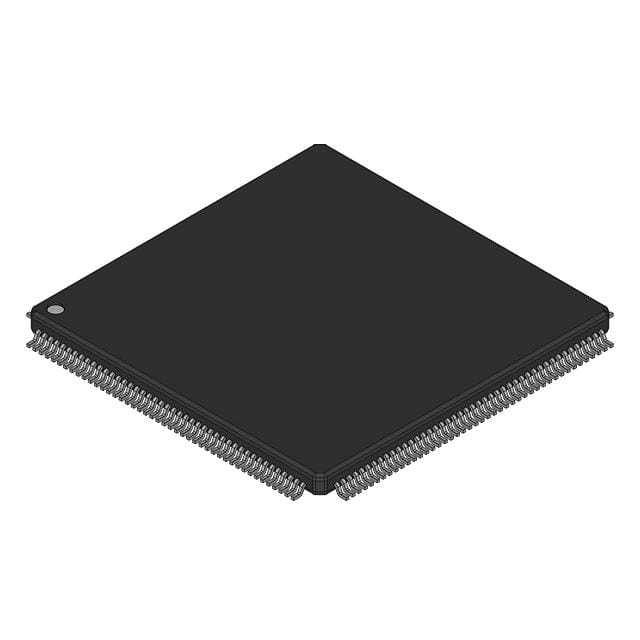
- Part No.:
- PCI2030PGF
- Manufacturer:
- Texas Instruments
- Category:
- Specialized
- Package:
- 176-LQFP
- Datasheet:
-
 PCI2030PGF.pdf
- Description:
- PCI BUS CONTROLLER PQFP176
- Quantity:
- Payment:

- Shipping:

Inventory:240
Please send an inquiry. Send us your inquiry, and we will respond immediately.
Product details
Overview
PCI2030PGF from Texas Instruments is a PCI-to-PCI bridge IC enabling hierarchical expansion of 32-bit, 33-MHz PCI buses in embedded and industrial systems. It implements dual independent 32-bit PCI interfaces (primary and secondary), supports burst transfers, internal arbitration for up to six secondary bus masters, and provides six secondary PCI clock outputs. It operates with 3.3-V core logic and universal 3.3-V/5-V PCI signaling compatibility.
For engineers reviewing the PCI2030PGF datasheet, PCI2030PGF pinout, PCI2030PGF application, or PCI2030PGF equivalent, this device is critical for PCI bus segmentation, add-in card multi-device integration, electrical loading mitigation beyond ten devices per bus, and legacy PCI system scalability where predictable latency and subtractive decoding are required.
Technical Context
The PCI2030PGF implements a transparent, configuration-space-accessible bridge compliant with PCI Local Bus Specification 2.1 and PCI-to-PCI Bridge Specification 1.0. Its architecture includes independent read/write buffers per direction, secondary positive decode with configurable subtractive decoding, and serial IRQ bridging for interrupt aggregation across buses.
It features dual 3.3-V core logic with separate VCCP supplies for primary and secondary I/Os, enabling mixed 3.3-V/5-V signaling environments. The device supports concurrent operation, bus locking propagation, PCI Clock Run, and docking connect detection - all implemented in advanced submicron CMOS for low-power operation at 33 MHz.
Key Specifications
| Parameter | Value and Actual Design Meaning |
|---|---|
| PCI Compliance | Fully compliant with PCI Local Bus Spec 2.1 and PCI-to-PCI Bridge Spec 1.0 - ensures interoperability with standard PCI controllers and peripherals. |
| Bus Width & Speed | 32-bit, 33-MHz on both primary and secondary buses - supports standard PCI bandwidth (132 MB/s peak) without downclocking or width reduction. |
| Core Supply | 3.3 V VCC - powers internal logic; decoupled from I/O supply rails for noise isolation and signal integrity. |
| I/O Voltage Support | Universal 3.3-V/5-V PCI signaling via separate P_VCCP and S_VCCP - enables connection to legacy 5-V slots and modern 3.3-V add-in cards. |
| Secondary Masters | Internal arbitration for up to six secondary bus masters - eliminates need for external arbiter in most multi-device secondary bus configurations. |
| Latency | Predictable, specification-compliant latency - guarantees deterministic timing behavior for real-time and time-critical PCI transactions. |
| Package | 176-pin plastic quad flatpack (PGF) - JEDEC MS-026 compliant, surface-mountable, with 0.5-mm pitch and 24.2 mm × 24.2 mm footprint. |
Pinout & Package
Packaged in a 176-pin plastic quad flatpack (PGF), the PCI2030PGF uses a JEDEC MS-026-compliant 0.5-mm pitch QFP with 24.2 mm × 24.2 mm body size and 1.35–1.60 mm height. Thermal and mechanical design supports standard reflow profiles and board-level reliability in industrial environments.
| Pin/Terminal | Circuit Role | Design Meaning |
|---|---|---|
| P_AD31–P_AD0 | Primary address/data multiplexed bus | Carries 32-bit address during phase 1, then 32-bit data during phase 2 - requires external latch and timing control per PCI spec. |
| S_AD31–S_AD0 | Secondary address/data multiplexed bus | Independent 32-bit path for subordinate bus traffic - enables full bandwidth isolation between primary and secondary domains. |
| P_C/BE3–P_C/BE0 | Primary command/byte enable | Defines transaction type (e.g., memory read/write) in address phase; selects active byte lanes (0–3) in data phase. |
| S_C/BE3–S_C/BE0 | Secondary command/byte enable | Enables precise byte-level control on secondary bus - essential for mixed-endian or partial-word access scenarios. |
| P_CLK / S_PCLK0–S_PCLK5 | Primary clock / six secondary clocks | P_CLK synchronizes primary bus; six S_PCLK outputs drive multiple secondary slots or peripherals with independent clock enables. |
| P_RST / S_RST | Primary reset input / secondary reset output | P_RST resets entire device; S_RST is logically OR'd and drives secondary bus - ensures coordinated reset sequencing. |
| P_GNT / P_REQ | Primary grant input / request output | Integrates with host-side arbiter - allows bridge to act as PCI initiator only when granted, preventing bus contention. |
| S_REQ0–S_REQ5 / S_GNT0–S_GNT5 | Secondary request inputs / grant outputs | Supports up to six external initiators on secondary bus; internal arbiter resolves conflicts without external logic. |
Key Features
| Feature | Design Value |
|---|---|
| Two extension windows | Enable custom address decoding for non-standard peripherals or firmware-mapped regions without consuming standard BAR space. |
| VGA/palette memory & I/O decoding | Hardware support for legacy VGA subsystem addressing - simplifies integration in PC-compatible or industrial graphics platforms. |
| EEPROM interface | Loads TI-subsystem ID and subsystem vendor ID at power-up - enables plug-and-play enumeration and BIOS auto-configuration. |
| Four primary + four secondary GPIOs | Configurable I/Os usable for board-level status signaling, reset coordination, or FPGA/CPLD handshaking across bus domains. |
| Serial IRQ bridging | Aggregates secondary bus interrupt requests into single primary IRQ line - reduces IRQ resource consumption and simplifies OS driver design. |
Applications
| Industrial Control Backplane | Legacy PC Add-in Card Expansion |
|---|---|
|
Use Scenario: A modular PLC chassis uses multiple I/O modules connected via a secondary PCI bus segmented from the main controller's primary PCI bus. IC Role / Device Role / Timing Role: PCI2030PGF acts as transparent bridge, isolating electrical loading while preserving full 32-bit/33-MHz throughput and deterministic latency for motion control cycles. Use Value: Enables >10 total PCI devices across hierarchical buses without violating PCI electrical specs - critical for scalable, field-upgradable control systems. |
Use Scenario: An add-in card integrates multiple PCI functions (IDE controller, video controller, audio codec) but must fit within one physical slot. IC Role / Device Role / Timing Role: PCI2030PGF serves as on-card bridge, creating secondary bus for co-located peripherals - avoids slot count limitation and maintains full bandwidth per function. Use Value: Eliminates need for multiple slots or custom backplane wiring - reduces BOM cost and improves mechanical robustness in compact enclosures. |
| Embedded Medical Imaging System | Test & Measurement Instrumentation |
|
Use Scenario: A digital radiography system uses a high-speed frame grabber and FPGA-based image processor on a secondary PCI bus behind the host CPU. IC Role / Device Role / Timing Role: PCI2030PGF provides subtractive decoding and burst transfer support - ensuring uninterrupted DMA streaming from detector to memory. Use Value: Guarantees predictable latency and no wait-state insertion during sustained 132 MB/s transfers - essential for real-time image reconstruction. |
Use Scenario: A modular PXI-style test platform uses PCI2030PGF to isolate high-noise analog acquisition modules from digital control logic on the primary bus. IC Role / Device Role / Timing Role: Acts as signal domain separator with independent power domains (P_VCCP/S_VCCP) - prevents ground bounce coupling between measurement and control paths. Use Value: Maintains <1 LSB noise floor in 24-bit ADC measurements by eliminating shared-bus interference - meets Class I metrology requirements. |
Equivalent & Alternatives
The following parts are listed as comparable options for similar PCI-to-PCI bridge applications.
| Alternative Part | Technical Difference | Application Difference | Selection Advice |
|---|---|---|---|
| Intel 21150 | Higher integration: includes built-in arbiter, hot-plug support, and 64-bit/66-MHz capability - not present in PCI2030PGF. | Targeted at server/workstation-class systems requiring hot-swap and wider/faster buses - over-spec for cost-sensitive industrial use. | Select Intel 21150 only if 64-bit support, hot-plug, or higher clock rates are mandatory; PCI2030PGF remains optimal for 32-bit/33-MHz deterministic embedded designs. |
| PLX Technology PCI9050 | Non-transparent bridge with local bus interface (EISA/ISA-like) - lacks PCI-to-PCI transparency and native PCI arbitration logic. | Used for host-to-peripheral bridging (e.g., FPGA or ASIC interfacing), not for hierarchical PCI bus expansion. | Choose PCI9050 only for custom peripheral interfacing; PCI2030PGF is the correct choice when transparent, standards-compliant PCI bus segmentation is required. |
Compared with Intel 21150 and PLX PCI9050, the PCI2030PGF delivers minimal-footprint, low-power, fully transparent PCI segmentation with guaranteed latency - making it uniquely suited for resource-constrained, electrically sensitive, and specification-bound industrial and medical platforms where simplicity and compliance outweigh feature bloat.
Availability
PCI2030PGF is available at Aetrix Electronics and suitable for industrial control backplanes, legacy PC add-in card expansion, embedded medical imaging systems, and test & measurement instrumentation requiring stable component supply and long-term obsolescence management.
Supply support for PCI2030PGF includes scheduled delivery planning, volume procurement assistance, BOM continuity management, traceable sourcing, and lifecycle availability coordination for OEM customers, industrial embedded developers, connected-device designers, and electronics production programs.
Manufacturer
Texas Instruments is a global semiconductor leader focused on analog, embedded processing, and connectivity technologies, with decades of expertise in high-reliability interface and system-on-chip solutions.
The PCI2030PGF belongs to TI's PCI interface product line, designed specifically for hierarchical PCI bus expansion in cost-sensitive, electrically constrained, and long-lifecycle embedded systems where standards compliance and deterministic timing are non-negotiable.
FAQ
What PCI specifications does the PCI2030PGF comply with?
The PCI2030PGF complies with PCI Local Bus Specification 2.1 and PCI-to-PCI Bridge Specification 1.0. It meets all mandatory timing, electrical, and protocol requirements for transparent bridging, including burst transfers, bus locking propagation, and predictable latency - verified in TI's production test flow per XCPS012 datasheet.
Does the PCI2030PGF support both 3.3-V and 5-V PCI signaling environments?
Yes, the PCI2030PGF supports universal PCI signaling via separate P_VCCP and S_VCCP supply pins. These can be independently set to either 3.3 V or 5 V, allowing the primary interface to connect to a 5-V motherboard while the secondary interface drives 3.3-V add-in cards - all without level shifters.
How many secondary bus masters can the PCI2030PGF arbitrate?
The PCI2030PGF provides internal arbitration for up to six secondary PCI bus masters, using dedicated S_REQ0–S_REQ5 and S_GNT0–S_GNT5 signals. This eliminates the need for external arbitration logic in most multi-device secondary bus implementations, reducing component count and layout complexity.
What is the function of the EEPROM interface on the PCI2030PGF?
The EEPROM interface on the PCI2030PGF loads TI's subsystem ID and subsystem vendor ID during power-up initialization. This enables automatic enumeration by BIOS or operating system without manual configuration - critical for plug-and-play deployment in embedded and industrial systems using the PCI2030PGF.
Is the PCI2030PGF pin-compatible with other TI PCI bridge devices?
No documented pin-to-pin compatibility exists between the PCI2030PGF and other TI PCI bridges (e.g., PCI2040 or PCI2050). The PCI2030PGF uses a unique 176-pin PGF package with specific signal allocation per XCPS012. Migration to newer TI bridges requires PCB redesign and firmware adaptation due to architectural and pinout differences.
PCI2030PGF Specifications
- Product attributes
- Attribute value
- Manufacturer:
- Texas Instruments
- Series:
- -
- Package/Case:
- 176-LQFP
- Packaging:
- Bulk
- Product Status:
- Active
- Applications:
- PCI Express MAX to PCI Express PHY
- Interface:
- PCI
- Voltage - Supply:
- 3V ~ 3.6V, 4.75V ~ 5.25V
- Supplier Device Package:
- 176-LQFP (24x24)
- Grade:
- -
- Qualification:
- -
- Mounting Type:
- Surface Mount
PCI2030PGF FAQ
1.How can I place an order for PCI2030PGF through Aetrix?
Please submit a Request for Quotation (RFQ) for PCI2030PGF on Aetrix. Our sales agent will provide a competitive quotation and guide you through the order confirmation once you accept the terms.
2.Are the price and stock information for PCI2030PGF reliable?
The price and inventory of PCI2030PGF are updated periodically and may fluctuate due to market conditions. Stock and pricing data are typically refreshed every 24 hours. Quotation validity for PCI2030PGF is usually 5 days.
3.What payment methods are accepted for PCI2030PGF?
We accept Wire Transfer, PayPal, Credit Card, Western Union, MoneyGram, and Escrow for PCI2030PGF transactions.
Note: Certain payment methods may incur a processing fee.
4.How is shipping managed for PCI2030PGF?
PCI2030PGF orders can be shipped via leading logistics carriers, including DHL, UPS, FedEx, TNT, or Registered Mail.
Once your PCI2030PGF order is processed, you will receive an email with the shipment details and tracking number.
Note: Tracking information may take up to 24 hours to appear. Express delivery typically takes 3–5 business days.
5.How can I obtain technical support or documentation for PCI2030PGF?
For technical support, including PCI2030PGF datasheets, pinout diagrams, or application guidance, please contact our engineering support team. They can provide detailed documentation and assistance for your PCI2030PGF requirements.
6.How does Aetrix verify that PCI2030PGF is sourced from the original manufacturer or authorized distributors?
All PCI2030PGF products on Aetrix are procured from qualified distributors and authorized channels. Our dedicated quality assurance team conducts strict verification, including traceability checks and, if necessary, third-party testing. This ensures that PCI2030PGF meets industry standards.
7.What is the process for return or replacement of PCI2030PGF?
All PCI2030PGF units undergo pre-shipment inspection (PSI). If there is an issue with PCI2030PGF, returns or replacements are accepted under the following conditions:
1.Quantity discrepancies, incorrect items, or visible external defects (such as breakage or corrosion), acknowledged by Aetrix.
2.The issue is reported within 90 days of delivery.
3.The PCI2030PGF part is unused and in its original packaging.
Return procedure for PCI2030PGF:
1.Submit a request within 90 days.
2.Obtain a Return Material Authorization (RMA) from Aetrix.
PCI2030PGF Tags
-
NVT4857UKAZ
NXP Semiconductors
-
TCA8418RTWR
Texas Instruments

-
PCA9546APWR
Texas Instruments

-
MD0100N8-G
Microchip Technology
-
PCA9548APW,118
NXP Semiconductors
-
PCA9540BDP,118
NXP Semiconductors
-
PCA9548APWR
Texas Instruments
-
PCA9546APW,118
NXP Semiconductors
-
PTN3360DBS,518
NXP Semiconductors
-
PCA9546ABS,118
NXP Semiconductors
-
PCA9518PWR
Texas Instruments
-
PCA9545APW,118
NXP Semiconductors
Tech Hub

A practical engineering guide to 3.3V and 5V logic compatibility, input thresholds, resistor dividers, translator ICs, MOSFET level shifting, I2C pull-ups, timing limits and power-sequencing risks.

The 74HC595 uses push-pull logic outputs, while the TPIC6B595 uses 50 V open-drain DMOS sinks for higher-power loads. This guide compares timing, current limits, 3.3 V interfacing, load wiring, thermal…

The 74HC595 converts serial data into eight stable parallel outputs. This guide covers pin functions, shift and storage timing, OE and MR behavior, drive-current limits, cascading, voltage compatibilit…

A technical comparison of level-sensitive latches and edge-triggered flip-flops, covering timing windows, setup and hold limits, master–slave operation, time borrowing, race-through, HDL inference and…

A D latch stores one bit while Enable controls when data can pass. This reference covers gate-level operation, truth tables, transparency, setup and hold timing, LE versus OE, common ICs and practical …

An SR latch stores one bit through cross-coupled feedback. This engineering reference covers NOR and NAND implementations, truth tables, forbidden-state recovery, gated operation, switch debouncing, fa…

Latch circuits retain one bit through feedback. This technical reference covers SR and D latches, truth tables, transparency, timing limits, latch-versus-flip-flop behavior, applications and common log…

An engineering guide to LED driver operation, constant-current and constant-voltage outputs, linear and switching topologies, dimming, IC selection, calculations, replacement compatibility, and fault c…

Operational amplifier guide covering op amp basics, feedback, ideal vs real op amps, common configurations, buffer circuits, offset, bias current, gain-bandwidth, slew rate, rail-to-rail limits and sel…

Jumper cables guide covering safe connection order, red and black clamp placement, final ground connection, cable gauge, length, clamp quality, copper vs CCA cables, jump starter comparison and battery…


