
 My Inquiry
 My Account


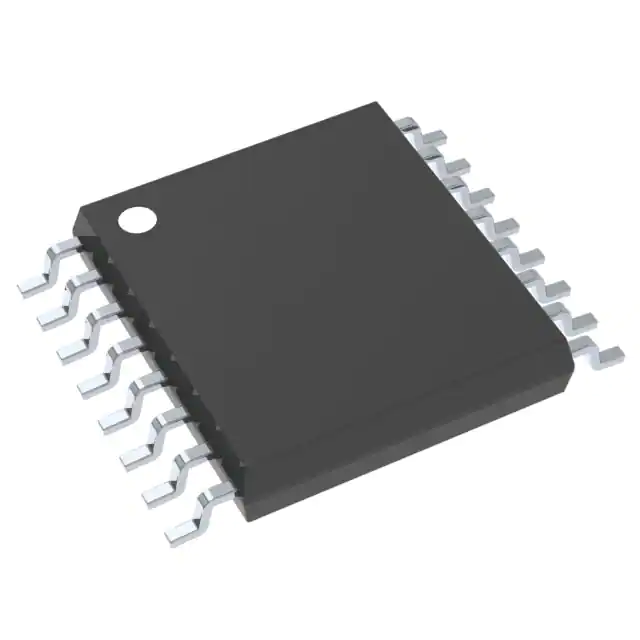
Texas Instruments PCM3008TG4
- Part No.:
- PCM3008TG4
- Manufacturer:
- Texas Instruments
- Category:
- CODECS
- Package:
- 16-TSSOP (0.173", 4.40mm Width)
- Datasheet:
-
 PCM3008TG4.pdf
- Description:
- IC STEREO CODEC 16BIT 16-TSSOP
- Quantity:
- Payment:

- Shipping:

Inventory:2,349
Please send an inquiry. Send us your inquiry, and we will respond immediately.
Product details
Overview
PCM3008TG4 from Texas Instruments is a low-power, single-ended 16-bit stereo audio codec IC with integrated delta-sigma ADC and DAC, operating from 2.1 V to 3.6 V supply and supporting 8–48 kHz sampling rates. It delivers THD+N of –84 dB (ADC) and –88 dB (DAC), SNR of 88 dB (ADC) and 92 dB (DAC), and features pop-noise-free muting for portable digital video cameras and MD players.
For engineers reviewing the PCM3008TG4 datasheet, PCM3008TG4 pinout, PCM3008TG4 application, or PCM3008TG4 equivalent, this page provides verified technical context, validated pin functions, confirmed audio interface timing (LRCK/BCK/DIN/DOUT), and real-world selection guidance for cost-sensitive consumer audio systems requiring single-ended analog I/O and low-voltage operation.
Technical Context
The PCM3008TG4 implements dual 5th-order delta-sigma modulation: ADC uses 64× oversampling with decimation and digital high-pass filtering; DAC uses 8× oversampling with interpolation, de-emphasis (32/44.1/48 kHz), and analog FIR/LPF. Both sections share a common reference circuit and VCOM bias node.
It supports left-justified 16-bit ADC data and right-justified 16-bit DAC data over a synchronous serial interface driven by SYSCK (256/384/512×fS), LRCK, and BCK. Independent PDAD and PDDA pins enable ADC-only, DAC-only, or full power-down modes with zero-code DOUT and VCOM-held VOUT outputs.
Key Specifications
| Parameter | Value and Actual Design Meaning |
|---|---|
| Resolution | 16-bit ADC and DAC - enables CD-quality audio digitization and playback without external quantization scaling. |
| THD+N (ADC) | –84 dB at –0.5 dBFS - ensures low distortion in microphone or line-level input paths for portable recording. |
| THD+N (DAC) | –88 dB at 0 dBFS - maintains clean output drive into headphone or line-out amplifiers. |
| Sampling Rate | 8–48 kHz - covers voice, telephony, and full-range consumer audio applications including MD and digital camcorders. |
| Supply Voltage | 2.1 V to 3.6 V - compatible with single-cell Li-ion or dual-cell alkaline battery systems without LDO regulation. |
| Power Dissipation | 32 mW at VCC = 2.4 V - enables thermal-safe integration in space-constrained handheld enclosures. |
| Digital Interface | Left-justified ADC / right-justified DAC - simplifies connection to TI C5000/C6000 DSPs and ARM-based audio controllers. |
Pinout & Package
PCM3008TG4 is housed in a 16-pin TSSOP package (JEDEC MO-153, TI drawing ZZ363) with 0.65 mm pitch and exposed pad not electrically connected. Thermal resistance θJA = 150°C/W.
| Pin/Terminal | Circuit Role | Design Meaning |
|---|---|---|
| VINL / VINR | ADC analog input (L/R channel) | Single-ended voltage inputs with 30 kΩ input impedance; require AC coupling and DC bias via VCOM. |
| VOUTL / VOUTR | DAC analog output (L/R channel) | Single-ended voltage outputs referenced to VCOM; include integrated analog LPF and FIR filter. |
| VCOM | ADC/DAC common-mode reference | 0.5×VCC bias node; requires 0.1 µF + 1 µF decoupling to GND for stable common-mode voltage. |
| DIN / DOUT | Serial audio data I/O | MSB-first, 16-bit data lines synchronized to BCK and LRCK; Schmitt-trigger inputs (3.3 V tolerant). |
| LRCK / BCK / SYSCK | Audio clock inputs | LRCK = word clock (fS), BCK = bit clock (32/48/64×fS), SYSCK = master clock (256/384/512×fS). |
| PDAD / PDDA | Power-down control | Active-low independent controls: PDAD forces DOUT = 0; PDDA holds VOUT = VCOM during mute/power-down. |
| DEM0 / DEM1 | De-emphasis selection | Two-pin binary control for 32/44.1/48 kHz de-emphasis or OFF - matches legacy CD playback requirements. |
Key Features
| Feature | Design Value |
|---|---|
| Pop-noise free muting | Fade-in/fade-out and VCOM-hold during PDAD/PDDA transitions eliminate audible click/pop in portable audio on/off sequences. |
| Integrated anti-aliasing & reconstruction filters | On-chip analog front-end (HPF at ADC input) and analog FIR/LPF at DAC output reduce external component count by ≥4 passive parts per channel. |
| Digital high-pass filter (HPF) | DC-blocking HPF embedded in ADC decimation path (–3 dB at 0.078×fS) eliminates need for external AC-coupling caps in some configurations. |
| Low-voltage, low-power operation | Operates down to 2.1 V with 32 mW total dissipation - extends battery life in single-supply 2.4 V systems like camcorders and MD players. |
| Independent ADC/DAC power control | Enables partial operation (e.g., record-only or playback-only mode) to cut system power by up to 50% versus full codec activation. |
Applications
| Digital Video Camera | Portable MiniDisc Player |
|---|---|
Use Scenario: Capturing stereo audio during video recording with battery-powered CMOS sensor and DSP subsystem. IC Role / Device Role / Timing Role: ADC digitizes mic/line inputs; DAC drives internal speaker or line-out; SYSCK synchronized to video frame rate clock. Use Value: Single-supply 2.4 V operation and 32 mW dissipation extend recording time; pop-free muting prevents audio artifacts during start/stop. |
Use Scenario: Playback of compressed ATRAC audio with analog output to headphones or external amplifier. IC Role / Device Role / Timing Role: DAC reconstructs decoded audio stream; de-emphasis pins configured for 44.1 kHz; LRCK aligned to CD-standard sample rate. Use Value: Integrated analog LPF and FIR filter meet EIAJ TR-102 THD+N < –85 dB requirement; VCOM-referenced outputs simplify headphone driver design. |
| USB Audio Adapter (Low-Cost) | VoIP Handset Base Station |
Use Scenario: USB-to-analog audio bridge for PC headsets using microcontroller-based USB audio class firmware. IC Role / Device Role / Timing Role: ADC captures microphone input; DAC drives headset speaker; BCK/LRCK generated from USB SOF-derived clock. Use Value: Left/right-justified interface matches standard USB audio descriptors; independent PDAD/PDDA allows mic mute without affecting speaker output. |
Use Scenario: Full-duplex audio interface between VoIP processor and analog telephone line or handset. IC Role / Device Role / Timing Role: ADC handles near-end talk detection and echo cancellation reference; DAC delivers far-end audio with 8 kHz sampling. Use Value: 8 kHz minimum sampling rate meets G.711 telephony standard; THD+N ≤ –84 dB ensures clear voice intelligibility without added noise floor. |
Equivalent & Alternatives
The following parts are listed as comparable options for similar stereo audio codec applications.
| Alternative Part | Technical Difference | Application Difference | Selection Advice |
|---|---|---|---|
| TLV320AIC23BPW | Higher SNR (94 dB), I²S/MSB-justified interface, 2.7–3.6 V supply only | Requires external LDO for 2.4 V systems; better suited for higher-fidelity portable audio than cost-optimized camcorders | Select when >90 dB SNR and I²S compatibility are required; avoid if 2.1–2.4 V battery operation is mandatory. |
| AK4531VN | 24-bit resolution, 3.0–3.6 V supply, no integrated analog LPF/FIR, requires external op-amps | Needs ≥4 additional passives per channel; targets professional-grade portable recorders rather than consumer MD/camcorder cost points | Choose for extended dynamic range in studio-recording accessories; not drop-in for PCM3008TG4's single-ended, filter-integrated design. |
Compared with TLV320AIC23BPW and AK4531VN, PCM3008TG4 offers the lowest BOM cost and smallest footprint for 16-bit stereo audio in 2.1–3.6 V battery-powered systems, trading resolution and interface flexibility for integrated analog filtering and guaranteed pop-noise suppression at sub-3 V operation.
Availability
PCM3008TG4 is available at Aetrix Electronics and suitable for digital video cameras, portable MD players, and USB audio adapters requiring stable component supply, long-term lifecycle support, and consistent parametric performance across production batches.
Supply support for PCM3008TG4 includes scheduled delivery planning, volume procurement assistance, BOM continuity management, traceable sourcing, and lifecycle availability coordination for OEM customers, industrial embedded developers, connected-device designers, and electronics production programs.
Manufacturer
Texas Instruments is a global semiconductor leader specializing in analog, embedded processing, and connectivity technologies with broad industrial and consumer market reach.
The PCM3008 product line was designed for cost-sensitive, battery-operated consumer audio systems requiring single-chip stereo ADC/DAC functionality with minimal external components and robust low-voltage operation.
FAQ
What is the absolute maximum supply voltage for PCM3008TG4?
The absolute maximum supply voltage for PCM3008TG4 is 4 V. Exceeding this rating may cause permanent damage. The recommended operating range is 2.1 V to 3.6 V, with typical operation at 2.4 V delivering optimal THD+N and power efficiency. PCM3008TG4 must be operated within these limits to ensure reliable performance and longevity in portable audio designs.
Does PCM3008TG4 support I²S format?
No, PCM3008TG4 does not support I²S format. It accepts left-justified 16-bit data for ADC and right-justified 16-bit data for DAC, with LRCK and BCK timing aligned to standard PCM framing. I²S requires MSB-first data with LRCK edge coinciding with first BCK pulse - a timing relationship not implemented in PCM3008TG4. Engineers must configure host controllers accordingly when interfacing PCM3008TG4.
How does PCM3008TG4 achieve pop-noise free muting?
PCM3008TG4 achieves pop-noise free muting through combined digital and analog techniques: digital fade-in/fade-out during DAC power-up/down, and analog VOUT hold at VCOM (0.5×VCC) during PDDA assertion. This eliminates voltage transients across output coupling capacitors. PCM3008TG4 implements this without external circuitry - a key differentiator for portable audio where mechanical switches or discrete muting FETs add cost and board area.
Can PCM3008TG4 operate at 8 kHz sampling rate?
Yes, PCM3008TG4 supports 8 kHz sampling rate, as specified in its electrical characteristics table. At 8 kHz, the required SYSCK frequencies are 2.048 MHz (256×fS), 3.072 MHz (384×fS), or 4.096 MHz (512×fS). This makes PCM3008TG4 suitable for narrowband voice applications such as VoIP handsets and intercom systems where low bandwidth and ultra-low power are critical design constraints.
What is the function of the VCOM pin on PCM3008TG4?
The VCOM pin on PCM3008TG4 serves as the common-mode reference voltage (0.5×VCC) for both ADC inputs and DAC outputs. It must be decoupled to GND with a 0.1 µF ceramic and ≥1 µF bulk capacitor placed adjacent to the pin. VCOM stabilizes DC bias points, enables single-ended analog I/O without external op-amps, and ensures accurate gain matching and THD+N performance across temperature and supply variations in PCM3008TG4.
PCM3008TG4 Specifications
- Product attributes
- Attribute value
- Manufacturer:
- Texas Instruments
- Series:
- -
- Package/Case:
- 16-TSSOP (0.173", 4.40mm Width)
- Packaging:
- Tube
- Product Status:
- Discontinued at Digi-Key
- Type:
- Stereo Audio
- Data Interface:
- Serial
- Resolution (Bits):
- 16 b
- Number of ADCs / DACs:
- 2 / 2
- Sigma Delta:
- Yes
- S/N Ratio, ADCs / DACs (db) Typ:
- 88 / 92
- Dynamic Range, ADCs / DACs (db) Typ:
- 88 / 92
- Voltage - Supply, Analog:
- 2.1V ~ 3.6V
- Voltage - Supply, Digital:
- 2.1V ~ 3.6V
- Operating Temperature:
- -25°C ~ 85°C
- Grade:
- -
- Qualification:
- -
- Mounting Type:
- Surface Mount
- Supplier Device Package:
- 16-TSSOP
PCM3008TG4 FAQ
1.How can I place an order for PCM3008TG4 through Aetrix?
Please submit a Request for Quotation (RFQ) for PCM3008TG4 on Aetrix. Our sales agent will provide a competitive quotation and guide you through the order confirmation once you accept the terms.
2.Are the price and stock information for PCM3008TG4 reliable?
The price and inventory of PCM3008TG4 are updated periodically and may fluctuate due to market conditions. Stock and pricing data are typically refreshed every 24 hours. Quotation validity for PCM3008TG4 is usually 5 days.
3.What payment methods are accepted for PCM3008TG4?
We accept Wire Transfer, PayPal, Credit Card, Western Union, MoneyGram, and Escrow for PCM3008TG4 transactions.
Note: Certain payment methods may incur a processing fee.
4.How is shipping managed for PCM3008TG4?
PCM3008TG4 orders can be shipped via leading logistics carriers, including DHL, UPS, FedEx, TNT, or Registered Mail.
Once your PCM3008TG4 order is processed, you will receive an email with the shipment details and tracking number.
Note: Tracking information may take up to 24 hours to appear. Express delivery typically takes 3–5 business days.
5.How can I obtain technical support or documentation for PCM3008TG4?
For technical support, including PCM3008TG4 datasheets, pinout diagrams, or application guidance, please contact our engineering support team. They can provide detailed documentation and assistance for your PCM3008TG4 requirements.
6.How does Aetrix verify that PCM3008TG4 is sourced from the original manufacturer or authorized distributors?
All PCM3008TG4 products on Aetrix are procured from qualified distributors and authorized channels. Our dedicated quality assurance team conducts strict verification, including traceability checks and, if necessary, third-party testing. This ensures that PCM3008TG4 meets industry standards.
7.What is the process for return or replacement of PCM3008TG4?
All PCM3008TG4 units undergo pre-shipment inspection (PSI). If there is an issue with PCM3008TG4, returns or replacements are accepted under the following conditions:
1.Quantity discrepancies, incorrect items, or visible external defects (such as breakage or corrosion), acknowledged by Aetrix.
2.The issue is reported within 90 days of delivery.
3.The PCM3008TG4 part is unused and in its original packaging.
Return procedure for PCM3008TG4:
1.Submit a request within 90 days.
2.Obtain a Return Material Authorization (RMA) from Aetrix.
PCM3008TG4 Tags
-
NAU88C22YG
Nuvoton Technology Corporation
-
TLV320AIC3100IRHBR
Texas Instruments
-
DA7212-01UM2
Renesas
-
NAU8810YG
Nuvoton Technology Corporation
-
DA7218-00U32
Renesas
-
CMX655DQ6-TR1K
CML Micro
-
SGTL5000XNLA3
NXP Semiconductors
-
TLV320AIC3104IRHBR
Texas Instruments
-
MAX9867EWV+T
Analog Devices Inc./Maxim Integrated
-
MAX9860ETG+T
Analog Devices Inc./Maxim Integrated
-
TLV320AIC3106IRGZR
Texas Instruments
-
SGTL5000XNLA3R2
NXP Semiconductors
Tech Hub

A practical engineering guide to 3.3V and 5V logic compatibility, input thresholds, resistor dividers, translator ICs, MOSFET level shifting, I2C pull-ups, timing limits and power-sequencing risks.

The 74HC595 uses push-pull logic outputs, while the TPIC6B595 uses 50 V open-drain DMOS sinks for higher-power loads. This guide compares timing, current limits, 3.3 V interfacing, load wiring, thermal…

The 74HC595 converts serial data into eight stable parallel outputs. This guide covers pin functions, shift and storage timing, OE and MR behavior, drive-current limits, cascading, voltage compatibilit…

A technical comparison of level-sensitive latches and edge-triggered flip-flops, covering timing windows, setup and hold limits, master–slave operation, time borrowing, race-through, HDL inference and…

A D latch stores one bit while Enable controls when data can pass. This reference covers gate-level operation, truth tables, transparency, setup and hold timing, LE versus OE, common ICs and practical …

An SR latch stores one bit through cross-coupled feedback. This engineering reference covers NOR and NAND implementations, truth tables, forbidden-state recovery, gated operation, switch debouncing, fa…

Latch circuits retain one bit through feedback. This technical reference covers SR and D latches, truth tables, transparency, timing limits, latch-versus-flip-flop behavior, applications and common log…

An engineering guide to LED driver operation, constant-current and constant-voltage outputs, linear and switching topologies, dimming, IC selection, calculations, replacement compatibility, and fault c…

Operational amplifier guide covering op amp basics, feedback, ideal vs real op amps, common configurations, buffer circuits, offset, bias current, gain-bandwidth, slew rate, rail-to-rail limits and sel…

Jumper cables guide covering safe connection order, red and black clamp placement, final ground connection, cable gauge, length, clamp quality, copper vs CCA cables, jump starter comparison and battery…


