
 My Inquiry
 My Account


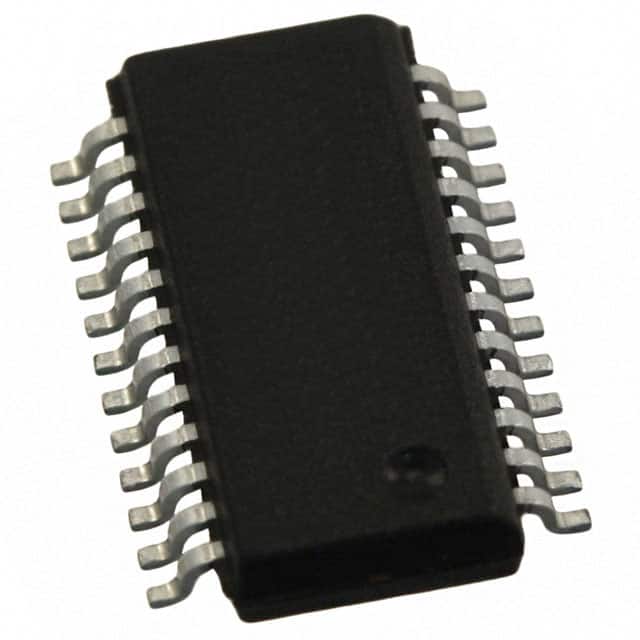
Texas Instruments PCM3500EG4
- Part No.:
- PCM3500EG4
- Manufacturer:
- Texas Instruments
- Category:
- CODECS
- Package:
- 24-SSOP (0.209", 5.30mm Width)
- Datasheet:
-
 PCM3500EG4.pdf
- Description:
- IC VOICE/MODEM CODEC 24-SSOP
- Quantity:
- Payment:

- Shipping:

Inventory:1,083
Please send an inquiry. Send us your inquiry, and we will respond immediately.
Product details
Overview
PCM3500EG4 from Burr-Brown (now Texas Instruments) is a low-voltage, mono 16-bit voice/modem CODEC integrating delta-sigma ADC and DAC, on-chip crystal oscillator, and time-slot TDM serial interface. It operates from +2.7V to +3.6V, supports 7.2–26kHz sampling, delivers 88dB dynamic range at 8kHz, and targets portable speech processing and software modem AFEs.
For engineers reviewing the PCM3500EG4 datasheet, PCM3500EG4 pinout, PCM3500EG4 application, or PCM3500EG4 equivalent, this page provides verified functional identity, SSOP-24 package mapping, master/slave serial timing, loop-back mode behavior, and real-world power-down current (60µA typ) - all critical for embedded voice system integration and multi-CODEC TDM bus design.
Technical Context
The PCM3500EG4 implements dual delta-sigma modulation: a decimation filter in the ADC path and interpolation filter in the DAC path, both operating at 512× sampling rate (e.g., 4.096MHz at 8kHz fS). Its analog front end includes integrated anti-aliasing and output low-pass filters plus a programmable high-pass filter (HPFD pin) for DC blocking.
Serial interface operation supports three modes: Slave (FS/BCK inputs), Master (FS/BCK outputs), and Time Slot Mode (TSC=1), enabling up to four PCM3500EG4 devices on one 4-wire bus with frame sync chaining via FSO. Synchronization loss detection triggers automatic DAC output clamping to VCOM and DOUT high-impedance state within one FS period.
Key Specifications
| Parameter | Value and Actual Design Meaning |
|---|---|
| Resolution | 16-bit delta-sigma ADC and DAC - enables 88dB dynamic range and SNR suitable for voice-band telephony (300Hz–3.4kHz). |
| Sampling Frequency | 7.2–26kHz - covers standard voice (8kHz), wideband speech (16kHz), and software modem (up to 26kHz) requirements. |
| Supply Voltage | +2.7V to +3.6V - single-supply operation compatible with Li-ion battery-powered portable systems. |
| Power-Down Current | 60µA typical - allows ultra-low-power sleep states in handheld recorders or always-on voice trigger circuits. |
| System Clock | 512× fS (3.686–13.312MHz) - supports external clock or on-chip crystal oscillator (XTI/XTO pins) for flexible clock sourcing. |
| THD+N (DAC) | –90dB typ at 1kHz, 0dBFS - meets ITU-T G.712 linearity requirements for modem analog front ends. |
| Package | 24-pin SSOP (338 drawing) - surface-mount footprint with 0.64mm pitch, optimized for compact modem PCB layouts. |
Pinout & Package
PCM3500EG4 is housed in a 24-pin Small Outline Package (SSOP), per Burr-Brown drawing 338, with 0.64mm lead pitch and exposed pad not present. Pin functions are validated per datasheet PDS-1524B Rev B (2000) and SBAS117.
| Pin/Terminal | Circuit Role | Design Meaning |
|---|---|---|
| 1 VCOM | Output | Common-mode voltage reference (0.5×VCC); must be decoupled to AGND for stable ADC/DAC biasing. |
| 6 M/S | Input | Master/Slave select: logic high = Master (FS/BCK outputs); logic low = Slave (FS/BCK inputs). |
| 8 BCK | I/O | Bit clock: input in Slave Mode, output in Master Mode; runs at 16fS (normal) or 64fS (Time Slot Mode). |
| 10 DIN | Input | DAC serial data input: 16-bit MSB-first two's complement; sampled on rising edge of BCK. |
| 11 DOUT | Output | ADC serial data output: tri-state in Time Slot Mode; valid on falling edge of BCK. |
| 17 XTI | Input | Crystal oscillator input or external system clock source; Schmitt-trigger input with internal pull-down. |
| 20 PDWN | Input | Power-down and reset control: logic low enables 60µA power-down; rising edge initiates full reset sequence. |
Key Features
| Feature | Design Value |
|---|---|
| Integrated analog filters | On-chip anti-aliasing (ADC) and reconstruction (DAC) filters eliminate need for external RC networks in voice-band applications. |
| ADC-to-DAC loop-back mode | Enables self-test and calibration without external signal routing - activated by LOOP pin high, useful for production test and firmware validation. |
| Time Slot Mode (TSM) | Supports up to four PCM3500EG4 devices on shared serial bus using 64-bit frames and FSO daisy-chain synchronization. |
| Programmable high-pass filter | HPFD pin disables internal DC-blocking HPF - allows full-bandwidth signal capture when needed (e.g., audio diagnostics). |
| Low-jitter clock architecture | Internal PLL-free 512× oversampling ensures minimal phase noise impact on THD+N, critical for modem symbol recovery. |
Applications
| Software Modem AFE | Portable Voice Recorder |
|---|---|
|
Use Scenario: Embedded software modem in notebook PC or PDA performing V.34/V.90 line encoding/decoding. IC Role / Device Role / Timing Role: Analog front end CODEC handling line-side signal conditioning, sampling, and serial data exchange with host DSP. Use Value: 56kbps support, 88dB DR, and TDM scalability enable multi-channel modem stacks without additional glue logic. |
Use Scenario: Battery-powered handheld voice memo device with record/playback and onboard storage. IC Role / Device Role / Timing Role: Mono audio capture and playback engine with low-power sleep (60µA) and fast wake-up via PDWN. Use Value: Single 3.3V supply and integrated filters reduce BOM count and PCB area versus discrete ADC+DAC+filter solutions. |
| Speech Recognition Front End | Teleconferencing Audio Hub |
|
Use Scenario: Edge node in smart speaker or IoT gateway capturing near-field voice for local keyword spotting. IC Role / Device Role / Timing Role: High-fidelity analog input stage feeding MFCC feature extraction pipeline; HPFD pin enables full-band analysis. Use Value: –90dB THD+N and 92dB SNR ensure clean spectral representation for robust phoneme classification. |
Use Scenario: USB-connected conference speaker with echo cancellation requiring multiple synchronized audio channels. IC Role / Device Role / Timing Role: One of four time-slot CODECs sharing single serial bus to host MCU, synchronized via FSO chaining. Use Value: TSM eliminates need for separate serial interfaces per channel, reducing MCU pin count and firmware complexity. |
Equivalent & Alternatives
The following parts are listed as comparable options for similar voice/modem CODEC applications.
| Alternative Part | Technical Difference | Application Difference | Selection Advice |
|---|---|---|---|
| TLV320AIC10CP | 16-bit sigma-delta CODEC with integrated PGA, but no on-chip crystal oscillator; requires external clock source. | Lacks TDM time-slot mode and loop-back test capability; better suited for microphone preamp-heavy designs. | Choose TLV320AIC10CP if system already provides stable master clock and needs programmable gain before ADC. |
| PCM3002E | Pin-compatible 16-bit stereo CODEC (dual PCM3500EG4 functionality), higher supply current (15mA vs 12mA), no HPFD pin. | Provides simultaneous stereo I/O but lacks mono-optimized low-power profile and individual HPF disable per channel. | Choose PCM3002E only when stereo recording/playback is mandatory and board space allows larger SSOP-28 package. |
Compared with TLV320AIC10CP and PCM3002E, PCM3500EG4 uniquely combines on-chip crystal oscillator, ADC-to-DAC loop-back, and scalable TDM - making it optimal for cost-sensitive, space-constrained mono voice systems requiring self-test and multi-device synchronization.
Availability
PCM3500EG4 is available at Aetrix Electronics and suitable for portable voice recorders, software modems, speech recognition front ends, and teleconferencing audio hubs requiring stable component supply across extended product lifecycles.
Supply support for PCM3500EG4 includes scheduled delivery planning, volume procurement assistance, BOM continuity management, traceable sourcing, and lifecycle availability coordination for OEM customers, industrial embedded developers, connected-device designers, and electronics production programs.
Manufacturer
Burr-Brown Corporation, acquired by Texas Instruments in 2000, specialized in precision analog ICs including data converters, amplifiers, and interface products for industrial and communications markets.
The PCM3500EG4 belongs to Burr-Brown's voice-band CODEC product line, designed specifically for low-power, low-cost modem and speech processing AFEs in portable electronics - emphasizing integration, TDM scalability, and robust clock synchronization.
FAQ
What is the function of the HPFD pin on the PCM3500EG4?
The HPFD (High-Pass Filter Disable) pin on the PCM3500EG4 controls the internal high-pass filter in the ADC path. When HPFD is logic high, the DC-blocking HPF is disabled, allowing full-bandwidth analog input capture down to 0Hz. This is essential for applications like audio diagnostics or non-voice sensor signal acquisition where DC or sub-audio content must be preserved. The PCM3500EG4 defaults to HPF enabled when HPFD is low or unconnected due to its internal pull-down resistor.
Does the PCM3500EG4 support stereo audio?
No, the PCM3500EG4 is a mono CODEC - it contains one 16-bit delta-sigma ADC and one 16-bit delta-sigma DAC. It does not support native stereo operation. For stereo applications, designers must use two PCM3500EG4 devices (with TDM time-slot mode) or select a dedicated stereo part such as the PCM3002E. The PCM3500EG4 datasheet explicitly defines it as a "mono voice/modem CODEC", and all timing, filtering, and interface specifications assume single-channel operation.
How does the PCM3500EG4 handle clock synchronization loss?
The PCM3500EG4 continuously monitors phase alignment between the system clock (XTI/SCKIO) and frame sync (FS). If the phase deviation exceeds ±1.5 BCK periods, it detects synchronization loss and within one FS period forces the DAC output to VCOM (0.5×VCC) and places DOUT in high-impedance state. This fail-safe behavior prevents corrupted audio output and alerts the host processor. Recovery occurs automatically once synchronization is restored, with defined tADCDLY2 and tDACDLY2 delays before valid data resumes.
Can the PCM3500EG4 operate without an external crystal?
Yes, the PCM3500EG4 can operate without an external crystal by using an external master clock applied to either XTI (pin 17) or SCKIO (pin 15). When using SCKIO as clock input, XTI must be grounded. The required system clock frequency is exactly 512× the desired sampling frequency (e.g., 4.096MHz for 8kHz fS). Crystal operation is optional - the on-chip oscillator circuit is provided for systems lacking a stable master clock source, but is not mandatory for PCM3500EG4 functionality.
What is the purpose of the LOOP pin on the PCM3500EG4?
The LOOP (ADC-to-DAC Loop-Back) pin on the PCM3500EG4 enables internal signal routing where ADC digital output is fed directly to the DAC input, bypassing the serial interface. When LOOP is logic high, analog input on VIN appears at VOUT after conversion delay (tDACDLY1 ≈ 2048/fS), allowing hardware-level self-test and calibration without host intervention. This feature is especially valuable in production test environments and firmware validation for voice-enabled devices using PCM3500EG4.
PCM3500EG4 Specifications
- Product attributes
- Attribute value
- Manufacturer:
- Texas Instruments
- Series:
- SoundPlus™
- Package/Case:
- 24-SSOP (0.209", 5.30mm Width)
- Packaging:
- Tube
- Product Status:
- Discontinued at Digi-Key
- Type:
- Voice-Band
- Data Interface:
- Serial
- Resolution (Bits):
- 16 b
- Number of ADCs / DACs:
- 1 / 1
- Sigma Delta:
- Yes
- S/N Ratio, ADCs / DACs (db) Typ:
- 88 / 92
- Dynamic Range, ADCs / DACs (db) Typ:
- 88 / 92
- Voltage - Supply, Analog:
- 2.7V ~ 3.6V
- Voltage - Supply, Digital:
- 2.7V ~ 3.6V
- Operating Temperature:
- -25°C ~ 85°C
- Grade:
- -
- Qualification:
- -
- Mounting Type:
- Surface Mount
- Supplier Device Package:
- 24-SSOP
PCM3500EG4 FAQ
1.How can I place an order for PCM3500EG4 through Aetrix?
Please submit a Request for Quotation (RFQ) for PCM3500EG4 on Aetrix. Our sales agent will provide a competitive quotation and guide you through the order confirmation once you accept the terms.
2.Are the price and stock information for PCM3500EG4 reliable?
The price and inventory of PCM3500EG4 are updated periodically and may fluctuate due to market conditions. Stock and pricing data are typically refreshed every 24 hours. Quotation validity for PCM3500EG4 is usually 5 days.
3.What payment methods are accepted for PCM3500EG4?
We accept Wire Transfer, PayPal, Credit Card, Western Union, MoneyGram, and Escrow for PCM3500EG4 transactions.
Note: Certain payment methods may incur a processing fee.
4.How is shipping managed for PCM3500EG4?
PCM3500EG4 orders can be shipped via leading logistics carriers, including DHL, UPS, FedEx, TNT, or Registered Mail.
Once your PCM3500EG4 order is processed, you will receive an email with the shipment details and tracking number.
Note: Tracking information may take up to 24 hours to appear. Express delivery typically takes 3–5 business days.
5.How can I obtain technical support or documentation for PCM3500EG4?
For technical support, including PCM3500EG4 datasheets, pinout diagrams, or application guidance, please contact our engineering support team. They can provide detailed documentation and assistance for your PCM3500EG4 requirements.
6.How does Aetrix verify that PCM3500EG4 is sourced from the original manufacturer or authorized distributors?
All PCM3500EG4 products on Aetrix are procured from qualified distributors and authorized channels. Our dedicated quality assurance team conducts strict verification, including traceability checks and, if necessary, third-party testing. This ensures that PCM3500EG4 meets industry standards.
7.What is the process for return or replacement of PCM3500EG4?
All PCM3500EG4 units undergo pre-shipment inspection (PSI). If there is an issue with PCM3500EG4, returns or replacements are accepted under the following conditions:
1.Quantity discrepancies, incorrect items, or visible external defects (such as breakage or corrosion), acknowledged by Aetrix.
2.The issue is reported within 90 days of delivery.
3.The PCM3500EG4 part is unused and in its original packaging.
Return procedure for PCM3500EG4:
1.Submit a request within 90 days.
2.Obtain a Return Material Authorization (RMA) from Aetrix.
PCM3500EG4 Tags
-
NAU88C22YG
Nuvoton Technology Corporation
-
TLV320AIC3100IRHBR
Texas Instruments
-
DA7212-01UM2
Renesas
-
NAU8810YG
Nuvoton Technology Corporation
-
DA7218-00U32
Renesas
-
CMX655DQ6-TR1K
CML Micro
-
SGTL5000XNLA3
NXP Semiconductors
-
TLV320AIC3104IRHBR
Texas Instruments
-
MAX9867EWV+T
Analog Devices Inc./Maxim Integrated
-
MAX9860ETG+T
Analog Devices Inc./Maxim Integrated
-
TLV320AIC3106IRGZR
Texas Instruments
-
SGTL5000XNLA3R2
NXP Semiconductors
Tech Hub

A practical engineering guide to 3.3V and 5V logic compatibility, input thresholds, resistor dividers, translator ICs, MOSFET level shifting, I2C pull-ups, timing limits and power-sequencing risks.

The 74HC595 uses push-pull logic outputs, while the TPIC6B595 uses 50 V open-drain DMOS sinks for higher-power loads. This guide compares timing, current limits, 3.3 V interfacing, load wiring, thermal…

The 74HC595 converts serial data into eight stable parallel outputs. This guide covers pin functions, shift and storage timing, OE and MR behavior, drive-current limits, cascading, voltage compatibilit…

A technical comparison of level-sensitive latches and edge-triggered flip-flops, covering timing windows, setup and hold limits, master–slave operation, time borrowing, race-through, HDL inference and…

A D latch stores one bit while Enable controls when data can pass. This reference covers gate-level operation, truth tables, transparency, setup and hold timing, LE versus OE, common ICs and practical …

An SR latch stores one bit through cross-coupled feedback. This engineering reference covers NOR and NAND implementations, truth tables, forbidden-state recovery, gated operation, switch debouncing, fa…

Latch circuits retain one bit through feedback. This technical reference covers SR and D latches, truth tables, transparency, timing limits, latch-versus-flip-flop behavior, applications and common log…

An engineering guide to LED driver operation, constant-current and constant-voltage outputs, linear and switching topologies, dimming, IC selection, calculations, replacement compatibility, and fault c…

Operational amplifier guide covering op amp basics, feedback, ideal vs real op amps, common configurations, buffer circuits, offset, bias current, gain-bandwidth, slew rate, rail-to-rail limits and sel…

Jumper cables guide covering safe connection order, red and black clamp placement, final ground connection, cable gauge, length, clamp quality, copper vs CCA cables, jump starter comparison and battery…


