
 My Inquiry
 My Account


Infineon Technologies PEB 20256 E V2.2
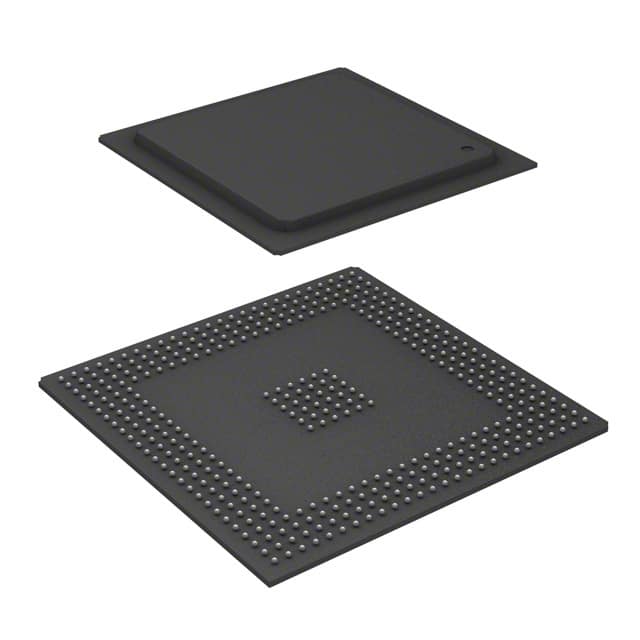
- Part No.:
- PEB 20256 E V2.2
- Manufacturer:
- Infineon Technologies
- Category:
- Telecom
- Package:
- 388-BBGA
- Datasheet:
-
 PEB 20256 E V2.2.pdf
- Description:
- IC TELECOM INTERFACE 388BGA
- Quantity:
- Payment:

- Shipping:

Inventory:2,334
Please send an inquiry. Send us your inquiry, and we will respond immediately.
Product details
Overview
PEB 20256 E V2.2 from Infineon Technologies is a multichannel network interface controller supporting HDLC and PPP protocols, implementing 16- or 28-port synchronous serial channel aggregation over PCI or Intel/Motorola parallel bus interfaces, with on-chip DMA, programmable FIFOs, and remote payload loop capability for telecom datacom systems.
For engineers reviewing the PEB 20256 E V2.2 datasheet, PEB 20256 E V2.2 pinout, PEB 20256 E V2.2 application, or PEB 20256 E V2.2 equivalent, key selection criteria include synchronous serial port count (16/28), PCI 2.1 compliance, dual-bus interface flexibility (Intel/Motorola), HDLC/PPP frame handling depth, and remote loopback support for line diagnostics.
Technical Context
The PEB 20256 E V2.2 integrates a PCI 2.1-compliant interface with 33 MHz operation and 32-bit data width, alongside configurable parallel bus logic supporting both Intel-style (LD/LRD) and Motorola-style (ECLK/DS) timing protocols. It implements per-channel HDLC/PPP framing with CRC-16/CRC-32 generation and checking.
Internal architecture includes a central command processor, channel-specific control logic, dual-port RAM for descriptor management, and independent transmit/receive FIFOs (up to 2 kB each). Remote payload loopback is implemented via dedicated register-controlled path bypassing channel processors for physical-layer testing.
Key Specifications
| Parameter | Value and Actual Design Meaning |
|---|---|
| Protocol Support | HDLC and PPP framing with CRC-16/CRC-32 generation/checking per channel |
| Channel Count | Configurable for 16-port or 28-port synchronous serial operation |
| Host Interface | PCI 2.1 compliant (33 MHz, 32-bit); optional Intel or Motorola parallel bus mode |
| FIFO Depth | Up to 2 kB per channel for TX/RX buffering with programmable watermark levels |
| Remote Loopback | Dedicated hardware path enabling payload-level loopback without CPU or channel processor involvement |
| Timing Compliance | Meets Intel Bus Interface Timing (Master Mode) and Motorola Bus Interface Timing per DS2 Rev 04.2001 |
Pinout & Package
PEB 20256 E V2.2 is housed in a 208-pin PQFP (Plastic Quad Flat Package) with 0.5 mm pitch, measuring 28 × 28 mm, as specified in Chapter 10 of DS2 (04.2001). Pin functions are defined for PCI, Intel bus, Motorola bus, and synchronous serial I/O modes - configuration determined by strap pins at reset.
| Pin/Terminal | Circuit Role | Design Meaning |
|---|---|---|
| CLKIN | PCI Clock Input | Accepts 33 MHz system clock; drives internal PCI interface timing and channel synchronization |
| AD[31:0] | PCI Address/Data Multiplex | Time-multiplexed 32-bit address/data bus; requires external latch for address capture |
| C/BE[3:0]# | PCI Command/Byte Enable | Defines transaction type (I/O, memory, config) and active byte lanes during data phase |
| FRAME# | PCI Initiate Transaction | Active-low signal indicating start/end of PCI bus transaction cycle |
| INTA# | PCI Interrupt Request | Open-drain interrupt output asserted when channel event or error condition requires host attention |
Key Features
| Feature | Design Value |
|---|---|
| Multi-protocol channel engine | Independent HDLC/PPP processing per channel with full CRC offload and flag detection |
| Flexible host interface | Selectable PCI, Intel, or Motorola bus protocol via hardware strapping - no firmware reconfiguration needed |
| Scalable port density | Single device supports either 16 or 28 synchronous serial ports via pin-strapped mode selection |
| Hardware-assisted diagnostics | Remote payload loopback enables physical-layer testing without channel processor or host CPU intervention |
| DMA-capable descriptor engine | On-chip command processor manages scatter-gather DMA transfers between host memory and channel FIFOs |
Applications
| Telecom Access Node | Enterprise Router Line Card |
|---|---|
Use Scenario: Aggregating T1/E1 leased lines into a central DSLAM or MSAN chassis using synchronous serial interfaces. IC Role / Device Role / Timing Role: Multichannel HDLC/PPP controller managing framing, CRC, and channelized payload transport across 28 TDM channels. Use Value: Eliminates need for discrete HDLC controllers per line, reducing BOM count and PCB area while maintaining per-channel error detection. | Use Scenario: Front-panel WAN interface module in modular enterprise routers supporting multiple PPP-over-serial uplinks. IC Role / Device Role / Timing Role: Protocol accelerator handling PPP encapsulation/decapsulation and link-layer keepalive for up to 16 serial WAN ports. Use Value: Offloads CPU-intensive frame processing, enabling deterministic latency for QoS-sensitive traffic classes. |
| Industrial SCADA Gateway | Legacy Protocol Converter |
Use Scenario: Connecting Modbus RTU field devices over RS-485 to IP-based SCADA master via HDLC-framed TCP tunneling. IC Role / Device Role / Timing Role: Synchronous serial bridge converting legacy serial protocols into packetized payloads for Ethernet transport. Use Value: Provides deterministic framing and CRC integrity verification required for mission-critical telemetry without software stack overhead. | Use Scenario: Converting proprietary synchronous serial protocols used in broadcast equipment to standardized HDLC for inter-system interoperability. IC Role / Device Role / Timing Role: Bit-level protocol translator with configurable clock polarity, phase, and frame alignment for non-standard sync formats. Use Value: Enables reuse of legacy hardware by emulating custom framing behavior via register-programmable channel descriptors. |
Equivalent & Alternatives
The following parts are listed as comparable options for similar multichannel synchronous serial protocol controller applications.
| Alternative Part | Technical Difference | Application Difference | Selection Advice |
|---|---|---|---|
| PEF 20256 E | Same die, but configured for PCI-only interface (no Intel/Motorola bus mode); lacks remote payload loopback register set | Suitable only for PCI-based designs requiring identical channel count and HDLC/PPP functionality | Select when PCI interface suffices and remote loopback diagnostics are unnecessary |
| Infineon PEB 20257 E | Successor device with enhanced PCI-X support (66 MHz), larger FIFOs (4 kB), and extended register set for jitter tolerance and clock recovery | Targets higher-speed backplane applications where timing margin and payload throughput exceed V2.2 capabilities | Choose for new designs requiring >33 MHz host bandwidth or improved buffer headroom under bursty traffic |
Compared with PEF 20256 E, the PEB 20256 E V2.2 adds dual-bus flexibility and remote loopback for field-deployable diagnostics; versus PEB 20257 E, it trades higher PCI bandwidth and FIFO depth for cost-sensitive, mature-platform compatibility in established telecom infrastructure.
Availability
PEB 20256 E V2.2 is available at Aetrix Electronics and suitable for telecom access nodes, enterprise router line cards, and industrial SCADA gateways requiring stable component supply and long-term lifecycle support.
Supply support for PEB 20256 E V2.2 includes scheduled delivery planning, volume procurement assistance, BOM continuity management, traceable sourcing, and lifecycle availability coordination for OEM customers, industrial embedded developers, connected-device designers, and electronics production programs.
Manufacturer
Infineon Technologies AG is a German semiconductor manufacturer specializing in power management, automotive ICs, security controllers, and communications chips, headquartered in Munich.
The MUNICH256 product line was designed specifically for carrier-grade multichannel datacom infrastructure, targeting HDLC/PPP aggregation in TDM-to-packet gateways and legacy protocol bridging systems.
FAQ
What bus interfaces does the PEB 20256 E V2.2 support?
The PEB 20256 E V2.2 supports three mutually exclusive host interfaces selected at power-on: PCI 2.1 (33 MHz), Intel-style parallel bus (with LD/LRD signaling), or Motorola-style parallel bus (with ECLK/DS timing). Strap pins on pins 199–201 determine the active mode; no runtime switching is possible.
How many synchronous serial ports can it manage simultaneously?
The device operates in either 16-port or 28-port mode, selected by the state of pin 202 (PORT_SEL#). In 16-port mode, all channels support full HDLC/PPP feature set; in 28-port mode, two channels share certain resources, limiting CRC options on those ports per DS2 Section 2.2.
Does it support automatic HDLC flag detection and abort handling?
Yes - each channel includes dedicated hardware for zero-bit insertion/removal, flag detection (0x7E), abort sequence recognition (0x7F), and automatic CRC-16/CRC-32 generation and verification. Abort handling triggers channel-specific status flags and optional interrupt assertion without CPU polling.
Is remote payload loopback available in both PCI and parallel bus configurations?
Yes - remote payload loopback is implemented in the physical layer and is fully functional regardless of host interface mode. The CSPEC_BUFFER register (bit TBRTC/TBFTC) controls activation, and the path bypasses channel processors and host interface logic entirely, enabling true end-to-end physical-layer test.
PEB 20256 E V2.2 Specifications
- Product attributes
- Attribute value
- Manufacturer:
- Infineon Technologies
- Series:
- -
- Package/Case:
- 388-BBGA
- Packaging:
- Tray
- Product Status:
- Obsolete
- Function:
- Network Controller
- Interface:
- HDLC, PPP, SS7, TMA
- Number of Circuits:
- -
- Voltage - Supply:
- 3V ~ 3.6V
- Current - Supply:
- 200mA
- Power (Watts):
- 3 W
- Operating Temperature:
- 0°C ~ 70°C
- Grade:
- -
- Qualification:
- -
- Mounting Type:
- Surface Mount
- Supplier Device Package:
- PG-BGA-388-2
PEB 20256 E V2.2 FAQ
1.How can I place an order for PEB 20256 E V2.2 through Aetrix?
Please submit a Request for Quotation (RFQ) for PEB 20256 E V2.2 on Aetrix. Our sales agent will provide a competitive quotation and guide you through the order confirmation once you accept the terms.
2.Are the price and stock information for PEB 20256 E V2.2 reliable?
The price and inventory of PEB 20256 E V2.2 are updated periodically and may fluctuate due to market conditions. Stock and pricing data are typically refreshed every 24 hours. Quotation validity for PEB 20256 E V2.2 is usually 5 days.
3.What payment methods are accepted for PEB 20256 E V2.2?
We accept Wire Transfer, PayPal, Credit Card, Western Union, MoneyGram, and Escrow for PEB 20256 E V2.2 transactions.
Note: Certain payment methods may incur a processing fee.
4.How is shipping managed for PEB 20256 E V2.2?
PEB 20256 E V2.2 orders can be shipped via leading logistics carriers, including DHL, UPS, FedEx, TNT, or Registered Mail.
Once your PEB 20256 E V2.2 order is processed, you will receive an email with the shipment details and tracking number.
Note: Tracking information may take up to 24 hours to appear. Express delivery typically takes 3–5 business days.
5.How can I obtain technical support or documentation for PEB 20256 E V2.2?
For technical support, including PEB 20256 E V2.2 datasheets, pinout diagrams, or application guidance, please contact our engineering support team. They can provide detailed documentation and assistance for your PEB 20256 E V2.2 requirements.
6.How does Aetrix verify that PEB 20256 E V2.2 is sourced from the original manufacturer or authorized distributors?
All PEB 20256 E V2.2 products on Aetrix are procured from qualified distributors and authorized channels. Our dedicated quality assurance team conducts strict verification, including traceability checks and, if necessary, third-party testing. This ensures that PEB 20256 E V2.2 meets industry standards.
7.What is the process for return or replacement of PEB 20256 E V2.2?
All PEB 20256 E V2.2 units undergo pre-shipment inspection (PSI). If there is an issue with PEB 20256 E V2.2, returns or replacements are accepted under the following conditions:
1.Quantity discrepancies, incorrect items, or visible external defects (such as breakage or corrosion), acknowledged by Aetrix.
2.The issue is reported within 90 days of delivery.
3.The PEB 20256 E V2.2 part is unused and in its original packaging.
Return procedure for PEB 20256 E V2.2:
1.Submit a request within 90 days.
2.Obtain a Return Material Authorization (RMA) from Aetrix.
PEB 20256 E V2.2 Tags

-
LMC567CMX/NOPB
Texas Instruments
-
LM567CMX/NOPB
Texas Instruments
-
LM567CM/NOPB
Texas Instruments
-
VSC8531XMW-02
Microchip Technology
-
VSC8531XMW-05
Microchip Technology

-
GPY115C0VI
MaxLinear, Inc.
-
SI32185-A-FMR
Skyworks Solutions Inc.
-
VSC8541XMV-05
Microchip Technology
-
SI32178-B-FM1R
Skyworks Solutions Inc.
-
GPY215C0VI
MaxLinear, Inc.
-
CPC7514ZTR
Littelfuse Inc.
-
VSC8502XML-03
Microchip Technology
Tech Hub

An engineering guide to LED driver operation, constant-current and constant-voltage outputs, linear and switching topologies, dimming, IC selection, calculations, replacement compatibility, and fault c…

Operational amplifier guide covering op amp basics, feedback, ideal vs real op amps, common configurations, buffer circuits, offset, bias current, gain-bandwidth, slew rate, rail-to-rail limits and sel…

Jumper cables guide covering safe connection order, red and black clamp placement, final ground connection, cable gauge, length, clamp quality, copper vs CCA cables, jump starter comparison and battery…

LDO regulator guide covering low dropout voltage, power dissipation, thermal design, PSRR, output noise, capacitor stability, adjustable LDO circuits, LDO vs buck converter and datasheet selection chec…

Conditional Access Module guide covering CAM meaning, CI/CI+ interface, smart card authorization, DVB security workflow, TV and set-top box compatibility, internal electronics, ESD protection, connecto…

Guide to electronic component obsolescence covering EOL risk, PCN/PDN notices, last-time buy planning, replacement options, form-fit-function validation, counterfeit risk and BOM lifecycle management.

18650 battery guide covering lithium-ion cell basics, 3.6V/3.7V voltage, 4.2V charging, mAh and Wh capacity, protected cells, chargers, BMS, series-parallel packs, holders, welding and sourcing checks.…

Hall effect sensor guide covering working principle, linear and digital sensors, Arduino circuits, current sensing, speed detection, automotive applications, A3144 examples, signal filtering and datash…

Product Change Notification guide for electronic components, covering PCN meaning, PCN vs PDN/EOL, common change types, risk levels, form-fit-function review, engineering validation, BOM control, LTB/L…

A practical guide to blend door actuators, covering HVAC function, symptoms, location, AC and heater issues, reset and calibration, replacement cost, electrical diagnosis, compatibility checks, and rep…


