
 My Inquiry
 My Account


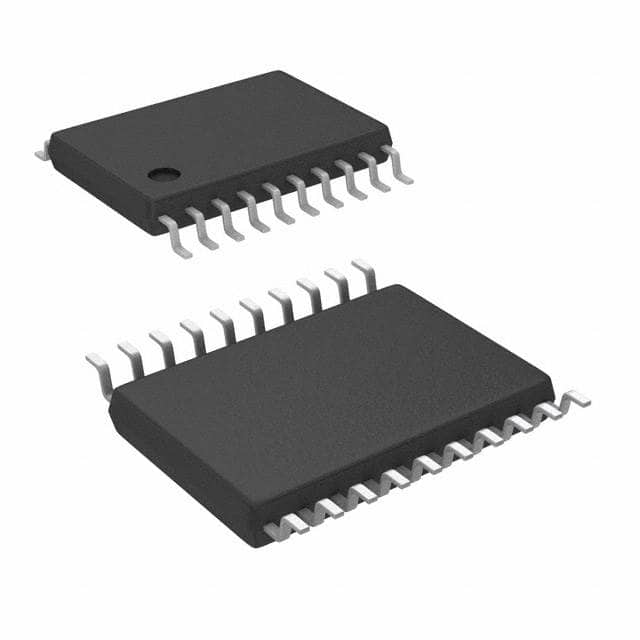
Infineon Technologies PEB2256H-V12
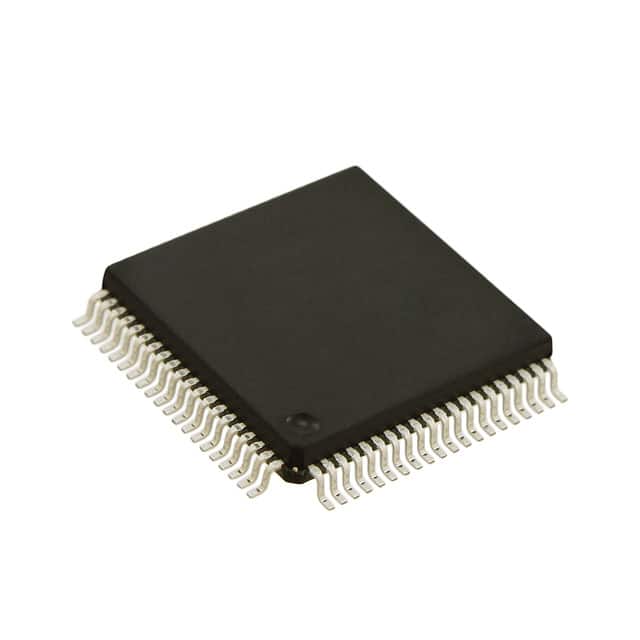
- Part No.:
- PEB2256H-V12
- Manufacturer:
- Infineon Technologies
- Category:
- Specialized
- Package:
- 80-QFP
- Datasheet:
-
 PEB2256H-V12.pdf
- Description:
- IC INTERFACE SPECIALIZED 80MQFP
- Quantity:
- Payment:

- Shipping:

Inventory:4,013
Please send an inquiry. Send us your inquiry, and we will respond immediately.
Product details
Overview
PEB2256H-V12 from Infineon Technologies is a single-chip E1/T1/J1 framer and line interface IC supporting long- and short-haul telecommunication applications. It integrates full framer/synchronizer, clock and data recovery, jitter attenuator, elastic buffer, signaling controller (SS7, CAS, HDLC/LAPD), and programmable pulse shaper. Operates at 2.048 MHz (E1) or 1.544 MHz (T1/J1) with −43 dBm sensitivity and supports CRC4, CRC6, and ESF-DL formats.
For engineers reviewing the PEB2256H-V12 datasheet, PEB2256H-V12 pinout, PEB2256H-V12 application, or PEB2256H-V12 equivalent, this device serves as a complete physical-layer solution for carrier-grade access equipment, including DSLAMs, multiservice access platforms, and TDM-over-packet gateways requiring deterministic timing, robust alarm handling, and multi-standard protocol support.
Technical Context
The PEB2256H-V12 implements dual-path architecture: independent receive and transmit chains each include line interface, CDR, jitter attenuator, elastic buffer, and framer logic. Its microprocessor interface supports mixed byte/word FIFO access and interrupt-driven control, enabling seamless integration with ARM7 or SH-3 host processors.
It features configurable framing modes - E1 doubleframe/CRC-multiframe, T1/J1 F4/D4/ESF/SLC96 - with automatic resynchronization, floating multiframe alignment, and bit-robbed CAS handling. The signaling controller supports both serial and µP-access modes for SS7 MTP2 and LAPD, plus Sa-bit, A-bit, E-bit, and DL-channel access per standard.
Key Specifications
| Parameter | Value and Actual Design Meaning |
|---|---|
| E1 Data Rate | 2.048 Mbps - matches ITU-T G.704 E1 primary rate for European and global TDM networks. |
| T1/J1 Data Rate | 1.544 Mbps - compliant with ANSI T1.107 and T1.403 for North American and Japanese trunking. |
| Input Sensitivity | −43 dBm - enables reliable operation over 2.5 km of 120 Ω twisted-pair (long-haul E1) without external amplification. |
| Jitter Tolerance | ±1500 ppm (E1), ±1000 ppm (T1) - meets GR-499-CORE and ITU-T G.823 for network edge deployment. |
| Output Jitter | < 0.2 UI p-p (E1), < 0.15 UI p-p (T1) - ensures clean clock/data delivery to downstream PHY or switch fabric. |
| Framing Support | CRC4 (E1), CRC6/ESF (T1/J1), SLC96, D4, F4 - covers all legacy and extended superframe variants used in live carrier networks. |
| Signaling Protocols | SS7 MTP2, CAS (bit-robbed & Sa-bit), HDLC/LAPD - enables direct connection to PSTN signaling networks without external protocol engines. |
Pinout & Package
PEB2256H-V12 is housed in an 81-pin Low-Profile Ball Grid Array (P-LBGA-81-1) package with 0.8 mm pitch, optimized for high-density telecom line card layouts and thermal dissipation under continuous 24/7 operation.
| Pin/Terminal | Circuit Role | Design Meaning |
|---|---|---|
| CLKIN | Master Clock Input | Accepts 2.048 MHz (E1) or 1.544 MHz (T1/J1) reference; drives internal PLL for all timing domains. |
| RDAT, RCLK | Receive Data & Clock Inputs | Differential PECL-compatible inputs for raw line data; CDR locks to incoming signal without external clock. |
| TCLK, TDAT | Transmit Clock & Data Outputs | PECL-level outputs synchronized to local clock domain; jitter attenuated and framed per selected standard. |
| INT | Interrupt Output | Active-low open-drain signal indicating alarm conditions (LOS, AIS, RAI), frame loss, or FIFO status. |
| CS#, RD#, WR#, A0–A3 | µP Interface Control | Standard 8-bit parallel bus interface compatible with Intel and Motorola address/data multiplexing schemes. |
| TDI, TDO, TCK, TMS | Boundary Scan I/O | IEEE 1149.1-compliant JTAG pins for production test and in-system debug of PCB interconnects. |
Key Features
| Feature | Design Value |
|---|---|
| Integrated Line Interface + CDR | Eliminates need for discrete line drivers, receivers, and clock recovery ICs - reduces BOM count by ≥4 components. |
| Multi-Standard Framing Engine | Single silicon supports E1, T1, and J1 with runtime reconfiguration - avoids separate SKUs for regional deployments. |
| Programmable Pulse Shaper | Adjusts transmit waveform rise/fall times and amplitude to meet ITU-T G.703 mask requirements across cable lengths. |
| Embedded Signaling Controller | Hardware-accelerated CAS, SS7 MTP2, and LAPD processing offloads host CPU and guarantees sub-frame latency. |
| Floating Multiframe Alignment | Automatically adapts to frame slip events without service interruption - critical for resilient access node operation. |
Applications
| DSLAM Line Card | Enterprise TDM Gateway |
|---|---|
Use Scenario: Aggregating 32 E1 lines from copper-based broadband subscribers into ATM or IP backhaul. IC Role / Device Role / Timing Role: Physical layer framer and line interface handling E1 framing, CAS extraction, and jitter cleanup before packet mapping. Use Value: Enables deterministic 2 ms round-trip delay budget and zero frame slips during DSLAM firmware upgrades. |
Use Scenario: Converting legacy PBX T1 trunks to SIP-based VoIP infrastructure using TDM-over-IP bridging. IC Role / Device Role / Timing Role: T1 framer with ESF and CRC6 support, providing precise clock recovery and alarm propagation to VoIP media gateway. Use Value: Maintains E&M signaling integrity and delivers <10−12 BER over 10 km of T1 span without external repeaters. |
| Mobile Backhaul Node | Public Safety Radio System |
Use Scenario: Connecting base station controllers (BSC) to MSC via E1 links in 2G/3G macrocell sites. IC Role / Device Role / Timing Role: E1 framer with Sa-bit access and SS7 MTP2 support for O&M channel transport and synchronization distribution. Use Value: Provides hitless switchover between primary/backup E1 feeds during maintenance windows. |
Use Scenario: Interfacing land mobile radio (LMR) trunked systems with PSTN emergency call routing via J1 interfaces. IC Role / Device Role / Timing Role: J1 framer with bit-robbed CAS and remote alarm (yellow alarm) generation for dispatch center trunk monitoring. Use Value: Ensures <99.999% uptime for 911 call path by detecting and reporting line degradation before failure. |
Equivalent & Alternatives
The following parts are listed as comparable options for similar framer and line interface applications.
| Alternative Part | Technical Difference | Application Difference | Selection Advice |
|---|---|---|---|
| PMC-Sierra PM5352 | Requires external line interface; lacks integrated CDR and pulse shaper; supports only T1/E1 (no J1). | Used in cost-sensitive T1-only enterprise gateways where line reach ≤1 km. | Select when board space allows discrete line driver and system clock is tightly controlled. |
| TI CD1000 | Single-mode (E1-only); no SS7 or ESF support; smaller 64-pin QFP package. | Targeted at low-port-count E1 muxes in remote office terminals. | Select only for greenfield E1-only deployments with no future T1/J1 expansion requirement. |
Compared with PM5352 and CD1000, the PEB2256H-V12 provides full multi-standard integration, longer-haul line drive capability, and carrier-grade alarm handling - making it the sole choice for field-deployed, multi-regional access equipment requiring zero hardware redesign.
Availability
PEB2256H-V12 is available at Aetrix Electronics and suitable for DSLAM line cards, mobile backhaul nodes, enterprise TDM gateways, and public safety radio systems requiring stable component supply across extended product lifecycles.
Supply support for PEB2256H-V12 includes scheduled delivery planning, volume procurement assistance, BOM continuity management, traceable sourcing, and lifecycle availability coordination for OEM customers, industrial embedded developers, connected-device designers, and electronics production programs.
Manufacturer
Infineon Technologies AG is a German semiconductor manufacturer specializing in power management, automotive, and communications ICs, with headquarters in Munich and global design centers.
The FALC (Framer and Line Interface Component) product line was developed specifically for carrier-class wired access infrastructure, targeting E1/T1/J1 physical layer convergence in DSLAMs, MSAPs, and TDM-over-packet edge devices.
FAQ
Does PEB2256H-V12 support both E1 and T1/J1 framing simultaneously?
No. The device operates in a single mode selected at power-up via configuration pins or software register write. Mode switching requires reset and reinitialization; concurrent dual-standard operation is not supported. Each mode configures dedicated framer logic, CDR parameters, and signaling controller behavior per ITU-T or ANSI standards.
What is the maximum supported cable length for E1 operation?
The PEB2256H-V12 supports up to 2.5 km of 120 Ω twisted-pair cable in long-haul E1 mode, verified per ITU-T G.703 Annex A. This assumes −43 dBm input sensitivity, 0.35 UI jitter tolerance, and use of the integrated equalization network. Short-haul mode supports ≤650 m with reduced equalization gain.
Is boundary scan (JTAG) functionality enabled by default?
Yes. IEEE 1149.1 boundary scan is fully implemented and active upon power-up. TDI, TDO, TCK, and TMS pins operate independently of the main µP interface and support full interconnect testing, including solder joint integrity verification on dense line card PCBs.
Can the programmable pulse shaper meet ITU-T G.703 Class I mask requirements?
Yes. The integrated pulse shaper allows real-time adjustment of rise/fall times (15–40 ns range) and output amplitude (0.8–1.2 Vpp) to comply with G.703 Class I mask for E1 and T1. Calibration is performed via internal DACs controlled through the µP interface, eliminating need for external resistor networks.
PEB2256H-V12 Specifications
- Product attributes
- Attribute value
- Manufacturer:
- Infineon Technologies
- Series:
- -
- Package/Case:
- 80-QFP
- Packaging:
- Tube
- Product Status:
- Obsolete
- Applications:
- Wireless
- Interface:
- -
- Voltage - Supply:
- 3.13V ~ 3.46V
- Supplier Device Package:
- P-MQFP-80-1
- Grade:
- -
- Qualification:
- -
- Mounting Type:
- Surface Mount
PEB2256H-V12 FAQ
1.How can I place an order for PEB2256H-V12 through Aetrix?
Please submit a Request for Quotation (RFQ) for PEB2256H-V12 on Aetrix. Our sales agent will provide a competitive quotation and guide you through the order confirmation once you accept the terms.
2.Are the price and stock information for PEB2256H-V12 reliable?
The price and inventory of PEB2256H-V12 are updated periodically and may fluctuate due to market conditions. Stock and pricing data are typically refreshed every 24 hours. Quotation validity for PEB2256H-V12 is usually 5 days.
3.What payment methods are accepted for PEB2256H-V12?
We accept Wire Transfer, PayPal, Credit Card, Western Union, MoneyGram, and Escrow for PEB2256H-V12 transactions.
Note: Certain payment methods may incur a processing fee.
4.How is shipping managed for PEB2256H-V12?
PEB2256H-V12 orders can be shipped via leading logistics carriers, including DHL, UPS, FedEx, TNT, or Registered Mail.
Once your PEB2256H-V12 order is processed, you will receive an email with the shipment details and tracking number.
Note: Tracking information may take up to 24 hours to appear. Express delivery typically takes 3–5 business days.
5.How can I obtain technical support or documentation for PEB2256H-V12?
For technical support, including PEB2256H-V12 datasheets, pinout diagrams, or application guidance, please contact our engineering support team. They can provide detailed documentation and assistance for your PEB2256H-V12 requirements.
6.How does Aetrix verify that PEB2256H-V12 is sourced from the original manufacturer or authorized distributors?
All PEB2256H-V12 products on Aetrix are procured from qualified distributors and authorized channels. Our dedicated quality assurance team conducts strict verification, including traceability checks and, if necessary, third-party testing. This ensures that PEB2256H-V12 meets industry standards.
7.What is the process for return or replacement of PEB2256H-V12?
All PEB2256H-V12 units undergo pre-shipment inspection (PSI). If there is an issue with PEB2256H-V12, returns or replacements are accepted under the following conditions:
1.Quantity discrepancies, incorrect items, or visible external defects (such as breakage or corrosion), acknowledged by Aetrix.
2.The issue is reported within 90 days of delivery.
3.The PEB2256H-V12 part is unused and in its original packaging.
Return procedure for PEB2256H-V12:
1.Submit a request within 90 days.
2.Obtain a Return Material Authorization (RMA) from Aetrix.
PEB2256H-V12 Tags
-
NVT4857UKAZ
NXP USA Inc.
-
TCA8418RTWR
Texas Instruments
-
PCA9546APWR
Texas Instruments
-
MD0100N8-G
Microchip Technology
-
PCA9548APW,118
NXP USA Inc.
-
PCA9540BDP,118
NXP USA Inc.
-
PCA9548APWR
Texas Instruments
-
PCA9546APW,118
NXP USA Inc.
-
PTN3360DBS,518
NXP USA Inc.
-
PCA9546ABS,118
NXP USA Inc.
-
PCA9518PWR
Texas Instruments
-
PCA9545APW,118
NXP USA Inc.
Tech Hub

An engineering guide to LED driver operation, constant-current and constant-voltage outputs, linear and switching topologies, dimming, IC selection, calculations, replacement compatibility, and fault c…

Operational amplifier guide covering op amp basics, feedback, ideal vs real op amps, common configurations, buffer circuits, offset, bias current, gain-bandwidth, slew rate, rail-to-rail limits and sel…

Jumper cables guide covering safe connection order, red and black clamp placement, final ground connection, cable gauge, length, clamp quality, copper vs CCA cables, jump starter comparison and battery…

LDO regulator guide covering low dropout voltage, power dissipation, thermal design, PSRR, output noise, capacitor stability, adjustable LDO circuits, LDO vs buck converter and datasheet selection chec…

Conditional Access Module guide covering CAM meaning, CI/CI+ interface, smart card authorization, DVB security workflow, TV and set-top box compatibility, internal electronics, ESD protection, connecto…

Guide to electronic component obsolescence covering EOL risk, PCN/PDN notices, last-time buy planning, replacement options, form-fit-function validation, counterfeit risk and BOM lifecycle management.

18650 battery guide covering lithium-ion cell basics, 3.6V/3.7V voltage, 4.2V charging, mAh and Wh capacity, protected cells, chargers, BMS, series-parallel packs, holders, welding and sourcing checks.…

Hall effect sensor guide covering working principle, linear and digital sensors, Arduino circuits, current sensing, speed detection, automotive applications, A3144 examples, signal filtering and datash…

Product Change Notification guide for electronic components, covering PCN meaning, PCN vs PDN/EOL, common change types, risk levels, form-fit-function review, engineering validation, BOM control, LTB/L…

A practical guide to blend door actuators, covering HVAC function, symptoms, location, AC and heater issues, reset and calibration, replacement cost, electrical diagnosis, compatibility checks, and rep…


