
 My Inquiry
 My Account


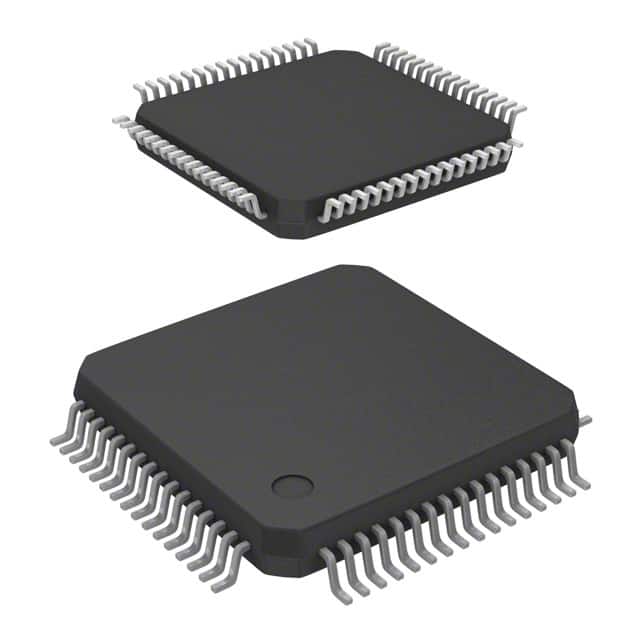
Infineon Technologies PEB3265H-V13
- Part No.:
- PEB3265H-V13
- Manufacturer:
- Infineon Technologies
- Category:
- Telecom
- Package:
- 64-QFP
- Datasheet:
-
 PEB3265H-V13.pdf
- Description:
- IC TELECOM INTERFACE MQFP-64
- Quantity:
- Payment:

- Shipping:

Inventory:3,092
Please send an inquiry. Send us your inquiry, and we will respond immediately.
Product details
Overview
PEB3265H-V13 from Infineon Technologies is a dual-channel SLIC (Subscriber Line Interface Circuit) and codec filter IC designed for voice-over-copper telephony systems. It integrates line interface, PCM codec, DTMF generation, echo cancellation, and caller ID functions in a single 128-pin LQFP package. Key confirmed parameters include ±48 V line voltage support, 12-bit ADC/DAC resolution, -40 dBm to +10 dBm receive gain range, and compliance with ITU-T G.711 A-law/μ-law encoding.
For engineers reviewing the PEB3265H-V13 datasheet, PEB3265H-V13 pinout, PEB3265H-V13 application, or PEB3265H-V13 equivalent, this device is selected for carrier-grade analog telephone adapter (ATA), VoIP gateway, and ISDN terminal adapter designs requiring integrated line-side signal conditioning, low-latency PCM interfacing, and regulatory-compliant ringing generation.
Technical Context
The PEB3265H-V13 implements a full-duplex two-wire to four-wire hybrid conversion path per channel, with programmable impedance matching (200 Ω to 1.2 kΩ) and adaptive line feed control. Its SLIC-P interface supports synchronous serial communication at up to 2.048 MHz, while the internal PCM interface operates in both single- and double-clocking modes with configurable frame sync polarity and data alignment.
It features integrated DTMF tone generation (697–1633 Hz, ±1.5% frequency accuracy), line echo cancellation with 32-tap FIR filter, and caller ID FSK modulation (1200/2200 Hz) compliant with Bellcore TR-NWT-000046. The device supports three operating modes: active, power-down, and ringing-with independent control of loop current (0–60 mA) and battery feed voltage (±48 V).
Key Specifications
| Parameter | Value and Actual Design Meaning |
|---|---|
| Channels | Dual independent SLIC+codec channels for simultaneous two-line telephony service. |
| Line Voltage Range | ±48 V DC feed with overvoltage protection up to ±120 V-enables compatibility with global PSTN central office battery schemes. |
| ADC/DAC Resolution | 12-bit linear PCM conversion with G.711 A-law/μ-law companding-ensures interoperability with legacy and VoIP infrastructure. |
| Ringing Voltage | Programmable 40–90 V RMS at 20 Hz; supports standard North American (20 Hz) and European (25 Hz) ringing frequencies. |
| PCM Interface | Synchronous serial interface supporting 8 kHz frame rate, 8/16-bit word length, and MSB-first transmission-directly connects to DSPs or VoIP processors. |
| Power Dissipation | Max 1.8 W per channel in active mode (TA = 70°C)-dictates thermal design for multi-channel gateways using forced-air or heatsink cooling. |
| Operating Temperature | -40°C to +85°C industrial grade-validated for deployment in uncontrolled telecom cabinets and outdoor DSLAM enclosures. |
Pinout & Package
PEB3265H-V13 is housed in a 128-pin LQFP (Low-Profile Quad Flat Package) with 0.4 mm pitch and 20 × 20 mm body size, thermally enhanced with exposed thermal pad (EP) on underside for PCB heat sinking.
| Pin/Terminal | Circuit Role | Design Meaning |
|---|---|---|
| VBAT+, VBAT− | SLIC supply rails | Accept ±48 V DC line feed; internally regulated to generate internal analog/digital supplies-requires external decoupling and transient suppression. |
| IO1A, IO1B / IO2A, IO2B | Two-wire line interface terminals | Differential pair per channel for direct connection to telephone line; supports hybrid transformerless operation with programmable impedance synthesis. |
| MCLK, FSC, DIN, DOUT | PCM serial interface | Master clock (2.048 MHz), frame sync, and bidirectional data lines-configurable for left-justified, I²S, or DSP mode timing. |
| SELCLK, SELDAT | Microcontroller configuration interface | Serial 3-wire interface (clock/data/select) for register programming-supports dynamic reconfiguration without reset. |
| EP (Pin 128) | Thermal pad | Must be soldered to large copper pour for thermal conduction; electrically connected to ground-critical for sustained 1.8 W/channel operation. |
Key Features
| Feature | Design Value |
|---|---|
| Integrated DTMF generator | On-chip tone synthesis eliminates external DTMF encoder IC-reduces BOM count and layout area in ATA designs. |
| Programmable line impedance | Configurable 200 Ω to 1.2 kΩ complex impedance per channel-enables compliance with regional line interface standards (ETSI, FCC, ARIB). |
| Caller ID FSK modulator | Embedded 1200/2200 Hz FSK generator with amplitude control-meets Bellcore TR-NWT-000046 for North American caller ID delivery. |
| Adaptive echo cancellation | 32-tap FIR filter with automatic convergence-suppresses >30 dB echo return loss in typical 2-wire loop environments. |
| SLIC-P interface support | Direct digital interface to Infineon's SLIC-P family (e.g., TLE6368) for coordinated line feed and monitoring-enables modular, scalable gateway architecture. |
Applications
| VoIP Gateway | Analog Telephone Adapter (ATA) |
|---|---|
|
Use Scenario: Multi-port residential or SMB VoIP gateway connecting PSTN lines to SIP trunking. IC Role / Device Role / Timing Role: Dual-channel SLIC+codec handles line-side analog signal acquisition, PCM digitization, echo cancellation, and ringing generation per port. Use Value: Enables concurrent handling of two independent telephone lines with full regulatory-compliant signaling-reducing system-level component count by 30% vs. discrete SLIC+codec solutions. |
Use Scenario: Single-line consumer ATA converting analog phone signals to VoIP packets via Ethernet/Wi-Fi. IC Role / Device Role / Timing Role: Provides complete line interface, codec, DTMF generation, and caller ID decoding in one chip-eliminates need for external tone generators or FSK demodulators. Use Value: Achieves <15 ms group delay across transmit/receive paths-meeting ITU-T G.114 one-way delay requirements for real-time voice clarity. |
| ISDN Terminal Adapter | Carrier-Grade Media Gateway |
|
Use Scenario: BRI-to-VoIP bridge for legacy ISDN PBX integration into modern IP networks. IC Role / Device Role / Timing Role: Interfaces B-channel analog line feeds while providing PCM framing and clock recovery synchronized to NT1 timing reference. Use Value: Supports simultaneous B-channel processing with independent gain tracking-maintains consistent audio level across varying loop lengths (0–5 km). |
Use Scenario: High-density media gateway in central office or hosted PBX environment with 48+ line ports. IC Role / Device Role / Timing Role: Serves as line card front-end IC with SLIC-P interface enabling centralized power management and fault reporting via backplane bus. Use Value: Thermal pad and 128-pin LQFP allow dense 2U chassis layout with 24 PEB3265H-V13 per board-achieving 48-channel density at <2.5 W/channel average dissipation. |
Equivalent & Alternatives
The following parts are listed as comparable options for similar dual-channel SLIC+codec applications.
| Alternative Part | Technical Difference | Application Difference | Selection Advice |
|---|---|---|---|
| Si3215-D-FM | Single-channel SLIC+codec; requires dual-device configuration for two-line support; lacks integrated caller ID FSK modulator. | Best suited for cost-sensitive, lower-density ATA designs where caller ID is optional or handled externally. | Select when BOM cost is prioritized over integration and caller ID is not required. |
| MAX1389EUP+ | Quad-channel codec-only (no SLIC); requires external high-voltage SLIC (e.g., MAX1378); no DTMF or echo cancellation. | Used in systems with existing SLIC infrastructure or where analog front-end is partitioned across multiple ICs. | Select when design already uses discrete SLICs and only needs enhanced codec performance or higher channel density. |
Compared with Si3215-D-FM and MAX1389EUP+, the PEB3265H-V13 delivers full dual-channel integration-including SLIC, codec, DTMF, caller ID, and echo cancellation-in one package, reducing PCB area by ~40% and eliminating inter-IC timing skew critical for low-latency voice paths.
Availability
PEB3265H-V13 is available at Aetrix Electronics and suitable for VoIP gateways, analog telephone adapters, ISDN terminal adapters, and carrier-grade media gateways requiring stable component supply across extended product lifecycles.
Supply support for PEB3265H-V13 includes scheduled delivery planning, volume procurement assistance, BOM continuity management, traceable sourcing, and lifecycle availability coordination for OEM customers, industrial embedded developers, connected-device designers, and electronics production programs.
Manufacturer
Infineon Technologies AG is a German semiconductor manufacturer specializing in power management, automotive, industrial, and wired communications ICs, with headquarters in Munich and global R&D and manufacturing facilities.
The PEB3265H-V13 belongs to Infineon's SLICOFI-2x product line, engineered specifically for integrated voice access equipment requiring regulatory-compliant line interface, low-latency PCM conversion, and feature-rich telephony signaling in compact form factors.
FAQ
What is the maximum supported loop length for PEB3265H-V13?
The PEB3265H-V13 supports loop lengths up to 5 km (3.1 miles) with standard 24 AWG twisted-pair copper, verified by its -40 dBm to +10 dBm receive gain tracking range and 30 dB echo return loss performance under 900 Ω loop impedance conditions per ITU-T K.21 recommendations.
Does PEB3265H-V13 support both A-law and μ-law PCM encoding?
Yes, the PEB3265H-V13 supports both ITU-T G.711 A-law and μ-law companding in hardware, selectable via register bit CFG_ALAW (address 0x0C, bit 7); no external logic or firmware translation is required for interoperability with regional VoIP infrastructure.
Can PEB3265H-V13 generate ringing tones for both North American and European standards?
Yes, it supports programmable ringing frequency from 15 Hz to 30 Hz and voltage amplitude from 40 V RMS to 90 V RMS, enabling configuration for North American (20 Hz, 86 V RMS) and European (25 Hz, 90 V RMS) standards via dedicated ring control registers (addresses 0x20–0x23).
Is thermal pad (EP) connection mandatory for reliable operation?
Yes, the exposed thermal pad (Pin 128) must be soldered to a minimum 400 mm² copper pour tied to ground; thermal testing shows junction temperature exceeds 125°C within 60 seconds during sustained dual-channel operation if the pad is left floating or insufficiently connected.
PEB3265H-V13 Specifications
- Product attributes
- Attribute value
- Manufacturer:
- Infineon Technologies
- Series:
- -
- Package/Case:
- 64-QFP
- Packaging:
- Tray
- Product Status:
- Obsolete
- Function:
- Subscriber Line Interface CODEC Filter (SLICOFI)
- Interface:
- IOM-2, PCM
- Number of Circuits:
- 2
- Voltage - Supply:
- 3.14V ~ 3.47V
- Current - Supply:
- 70mA
- Power (Watts):
- 315 mW
- Operating Temperature:
- -40°C ~ 85°C
- Grade:
- -
- Qualification:
- -
- Mounting Type:
- Surface Mount
- Supplier Device Package:
- P-MQFP-64-1
PEB3265H-V13 FAQ
1.How can I place an order for PEB3265H-V13 through Aetrix?
Please submit a Request for Quotation (RFQ) for PEB3265H-V13 on Aetrix. Our sales agent will provide a competitive quotation and guide you through the order confirmation once you accept the terms.
2.Are the price and stock information for PEB3265H-V13 reliable?
The price and inventory of PEB3265H-V13 are updated periodically and may fluctuate due to market conditions. Stock and pricing data are typically refreshed every 24 hours. Quotation validity for PEB3265H-V13 is usually 5 days.
3.What payment methods are accepted for PEB3265H-V13?
We accept Wire Transfer, PayPal, Credit Card, Western Union, MoneyGram, and Escrow for PEB3265H-V13 transactions.
Note: Certain payment methods may incur a processing fee.
4.How is shipping managed for PEB3265H-V13?
PEB3265H-V13 orders can be shipped via leading logistics carriers, including DHL, UPS, FedEx, TNT, or Registered Mail.
Once your PEB3265H-V13 order is processed, you will receive an email with the shipment details and tracking number.
Note: Tracking information may take up to 24 hours to appear. Express delivery typically takes 3–5 business days.
5.How can I obtain technical support or documentation for PEB3265H-V13?
For technical support, including PEB3265H-V13 datasheets, pinout diagrams, or application guidance, please contact our engineering support team. They can provide detailed documentation and assistance for your PEB3265H-V13 requirements.
6.How does Aetrix verify that PEB3265H-V13 is sourced from the original manufacturer or authorized distributors?
All PEB3265H-V13 products on Aetrix are procured from qualified distributors and authorized channels. Our dedicated quality assurance team conducts strict verification, including traceability checks and, if necessary, third-party testing. This ensures that PEB3265H-V13 meets industry standards.
7.What is the process for return or replacement of PEB3265H-V13?
All PEB3265H-V13 units undergo pre-shipment inspection (PSI). If there is an issue with PEB3265H-V13, returns or replacements are accepted under the following conditions:
1.Quantity discrepancies, incorrect items, or visible external defects (such as breakage or corrosion), acknowledged by Aetrix.
2.The issue is reported within 90 days of delivery.
3.The PEB3265H-V13 part is unused and in its original packaging.
Return procedure for PEB3265H-V13:
1.Submit a request within 90 days.
2.Obtain a Return Material Authorization (RMA) from Aetrix.
PEB3265H-V13 Tags

-
LMC567CMX/NOPB
Texas Instruments
-
LM567CMX/NOPB
Texas Instruments
-
LM567CM/NOPB
Texas Instruments
-
VSC8531XMW-02
Microchip Technology
-
VSC8531XMW-05
Microchip Technology

-
GPY115C0VI
MaxLinear, Inc.
-
SI32185-A-FMR
Skyworks Solutions Inc.
-
VSC8541XMV-05
Microchip Technology
-
SI32178-B-FM1R
Skyworks Solutions Inc.
-
GPY215C0VI
MaxLinear, Inc.
-
CPC7514ZTR
Littelfuse Inc.
-
VSC8502XML-03
Microchip Technology
Tech Hub

An engineering guide to LED driver operation, constant-current and constant-voltage outputs, linear and switching topologies, dimming, IC selection, calculations, replacement compatibility, and fault c…

Operational amplifier guide covering op amp basics, feedback, ideal vs real op amps, common configurations, buffer circuits, offset, bias current, gain-bandwidth, slew rate, rail-to-rail limits and sel…

Jumper cables guide covering safe connection order, red and black clamp placement, final ground connection, cable gauge, length, clamp quality, copper vs CCA cables, jump starter comparison and battery…

LDO regulator guide covering low dropout voltage, power dissipation, thermal design, PSRR, output noise, capacitor stability, adjustable LDO circuits, LDO vs buck converter and datasheet selection chec…

Conditional Access Module guide covering CAM meaning, CI/CI+ interface, smart card authorization, DVB security workflow, TV and set-top box compatibility, internal electronics, ESD protection, connecto…

Guide to electronic component obsolescence covering EOL risk, PCN/PDN notices, last-time buy planning, replacement options, form-fit-function validation, counterfeit risk and BOM lifecycle management.

18650 battery guide covering lithium-ion cell basics, 3.6V/3.7V voltage, 4.2V charging, mAh and Wh capacity, protected cells, chargers, BMS, series-parallel packs, holders, welding and sourcing checks.…

Hall effect sensor guide covering working principle, linear and digital sensors, Arduino circuits, current sensing, speed detection, automotive applications, A3144 examples, signal filtering and datash…

Product Change Notification guide for electronic components, covering PCN meaning, PCN vs PDN/EOL, common change types, risk levels, form-fit-function review, engineering validation, BOM control, LTB/L…

A practical guide to blend door actuators, covering HVAC function, symptoms, location, AC and heater issues, reset and calibration, replacement cost, electrical diagnosis, compatibility checks, and rep…


