
 My Inquiry
 My Account


Diodes Incorporated PI2EQX502TZHEX
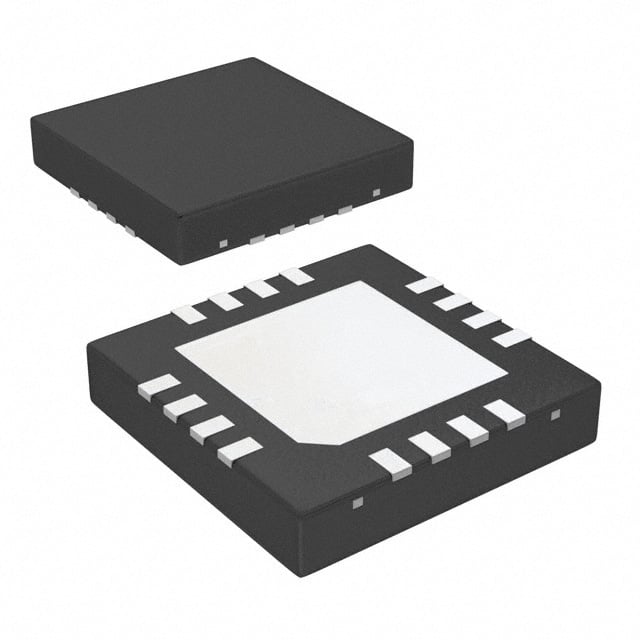
- Part No.:
- PI2EQX502TZHEX
- Manufacturer:
- Diodes Incorporated
- Category:
- Signal Buffers, Repeaters, Splitters
- Package:
- 16-WFQFN Exposed Pad
- Datasheet:
-
 PI2EQX502TZHEX.pdf
- Description:
- IC REDRIVER USB 3.0 1CH 16TQFN
- Quantity:
- Payment:

- Shipping:

Inventory:649
Please send an inquiry. Send us your inquiry, and we will respond immediately.
Product details
Overview
PI2EQX502TZHEX from Diodes Incorporated is a USB 3.0-compliant 1-port, 5.0 Gbps signal ReDriver with 1.2V single-supply operation, 100Ω differential CML I/Os, and programmable equalization/de-emphasis for inter-symbol interference reduction. It operates fully independently per channel and supports signal extension across cables, backplanes, or switch fabrics in host-peripheral links.
For engineers reviewing the PI2EQX502TZHEX datasheet, PI2EQX502TZHEX pinout, PI2EQX502TZHEX application, or PI2EQX502TZHEX equivalent, key selection criteria include differential data rate (5.0 Gbps), input signal detection threshold, slumber-mode entry timing (7.3 ms idle), output squelch behavior, and EQ/DE-EMPH configuration via pins.
Technical Context
The PI2EQX502TZHEX implements a two-channel, fully independent CML-based ReDriver architecture with integrated limiting amplifiers and adjustable equalization on each input path. Each channel features autonomous signal detection, squelch control, and automatic receiver detect logic that reinitiates detection after 7.3 ms of inactivity.
It uses pin-strapped configuration for output de-emphasis level selection and relies on 100Ω differential CML termination for both input and output interfaces. Power management includes low-power slumber mode triggered by channel inactivity, achieving ~137 mW total supply power at 1.2 V.
Key Specifications
| Parameter | Value and Actual Design Meaning |
|---|---|
| Data Rate | 5.0 Gbps - Supports full USB 3.0 SuperSpeed signaling without protocol translation. |
| Supply Voltage | 1.2 V - Single rail enables direct integration with low-voltage SoC I/O domains. |
| Input/Output Interface | 100 Ω differential CML - Matches standard USB 3.0 physical layer impedance for minimal reflection. |
| Power Consumption | ~137 mW - Measured total device power at 1.2 V, enabling thermal-constrained board layouts. |
| Equalization Control | Programmable via internal circuitry - Compensates for high-frequency loss in PCB traces or cables up to 15 dB. |
| Receiver Detect Timeout | 7.3 ms idle → re-detect loop - Ensures reliable plug/unplug detection while minimizing false triggers. |
Pinout & Package
Package: 16-pin TQFN, 3 mm × 3 mm, 0.5 mm pitch, exposed thermal pad.
| Pin/Terminal | Circuit Role | Design Meaning |
|---|---|---|
| 1, 2, 15, 16 | Differential I/O (XI+/XI−, XO+/XO−) | 100 Ω CML-compatible signal paths; channel 1 input/output pair. |
| 3, 4, 13, 14 | Differential I/O (YI+/YI−, YO+/YO−) | 100 Ω CML-compatible signal paths; channel 2 input/output pair. |
| 5, 6, 7, 8 | EQ_x, DEEMPH_x, EN_x, DET_x | Per-channel pin-strapped controls for equalization, de-emphasis, enable, and detection status. |
| 9, 12 | VDD, GND | 1.2 V supply and ground reference for analog and digital blocks. |
| 10, 11 | NC | No-connect pins; must be left floating or tied to GND per layout guidelines. |
Key Features
| Feature | Design Value |
|---|---|
| USB 3.0 SuperSpeed compliance | Fully meets electrical and timing requirements of USB 3.0 specification for repeater functionality. |
| Independent dual-channel operation | Each channel detects input presence, applies squelch, and enters slumber mode autonomously-no cross-channel dependency. |
| Pin-configured de-emphasis | Three discrete output emphasis levels selectable via hardwired pins-no I²C or register programming required. |
| Auto receiver detect with timeout | Re-initiates detection loop after 7.3 ms idle; transitions to Unplug Mode if no load, or Slumber Mode if inactive. |
| Low-power slumber mode | Reduces dynamic current draw during link inactivity while retaining fast wake-up capability (<1 µs). |
Applications
| External Storage Device | Digital Camera |
|---|---|
Use Scenario: High-speed data transfer between USB 3.0 host and portable SSD enclosure with long internal flex cable. IC Role / Device Role / Timing Role: Signal integrity restoration ReDriver placed between host controller and connector to compensate for 8–12 dB channel loss. Use Value: Enables stable 5.0 Gbps link over 15 cm flex cable where native PHY would fail due to ISI-induced jitter. | Use Scenario: USB 3.0 video streaming from DSLR/mirrorless camera to host PC with real-time preview. IC Role / Device Role / Timing Role: Channel-specific ReDriver ensuring clean eye opening at receiver input under variable cable lengths and EMI conditions. Use Value: Maintains BER <1e−12 at 5.0 Gbps by dynamically adjusting equalization per frame burst traffic pattern. |
| Tablet PC Docking Station | Multi-function Printer |
Use Scenario: Docking station with USB 3.0 upstream port and multiple downstream peripherals routed through shared PCB stackup. IC Role / Device Role / Timing Role: Isolated ReDriver channel managing upstream link integrity while coexisting with PCIe and DisplayPort routing. Use Value: Prevents crosstalk-induced eye closure on 5 Gbps differential pairs routed adjacent to noisy high-speed buses. | Use Scenario: All-in-one printer with simultaneous USB 3.0 scan-to-PC and print-from-cloud functions. IC Role / Device Role / Timing Role: Dual-channel ReDriver supporting concurrent high-bandwidth scan data and low-latency command streams. Use Value: Guarantees deterministic latency for command ACKs and sustained throughput >400 MB/s for raw image transfers. |
Equivalent & Alternatives
The following parts are listed as comparable options for similar USB 3.0 ReDriver applications.
| Alternative Part | Technical Difference | Application Difference | Selection Advice |
|---|---|---|---|
| TS3USB30E from Texas Instruments | Passive analog switch (not a ReDriver); no equalization, no active signal regeneration. | Suitable only for short-board connections (<5 cm), not for cable or lossy trace compensation. | Select when signal integrity is already sufficient and only switching/routing is needed. |
| USB3320 from Microchip Technology | Integrated USB 3.0 transceiver + PHY + MAC; requires full USB stack support and larger footprint. | Used in embedded host/device designs needing protocol handling-not for pure signal conditioning. | Select when implementing full USB 3.0 endpoint functionality, not just physical layer boosting. |
Compared with TS3USB30E and USB3320, the PI2EQX502TZHEX uniquely delivers active 5.0 Gbps signal regeneration with programmable equalization in a compact 3×3 mm package-making it the only choice for loss-compensated USB 3.0 repeater applications requiring zero protocol involvement.
Availability
PI2EQX502TZHEX is available at Aetrix Electronics and suitable for external storage enclosures, digital cameras, docking stations, and multi-function printers requiring stable component supply and guaranteed USB 3.0 signal integrity.
Supply support for PI2EQX502TZHEX includes scheduled delivery planning, volume procurement assistance, BOM continuity management, traceable sourcing, and lifecycle availability coordination for OEM customers, industrial embedded developers, connected-device designers, and electronics production programs.
Manufacturer
Diodes Incorporated is a global manufacturer of discrete semiconductors, analog ICs, and mixed-signal solutions, headquartered in Plano, Texas, with design and manufacturing operations across Asia and the Americas.
The PI2EQX502TZHEX belongs to Diodes' high-speed interface ReDriver product line, engineered specifically to restore signal integrity in USB 3.0 SuperSpeed links without altering protocol behavior or adding software overhead.
FAQ
What is the function of the DET_x pin on PI2EQX502TZHEX?
The DET_x pin outputs an open-drain signal indicating active signal detection on its associated channel. When a valid differential input is present above threshold, DET_x pulls low; otherwise, it remains high-impedance. This allows system-level firmware to monitor link presence without polling registers or consuming MCU GPIO resources.
Does PI2EQX502TZHEX require external configuration via I²C or SPI?
No. The PI2EQX502TZHEX uses pin-strapped configuration for equalization and de-emphasis settings-no serial interface, no firmware, and no external memory required. All operational modes (active, slumber, unplug) are managed autonomously by on-chip detection logic.
Can PI2EQX502TZHEX be used with USB 3.1 Gen 1 or USB 3.2 Gen 1?
Yes. USB 3.1 Gen 1 and USB 3.2 Gen 1 are electrically identical to USB 3.0 SuperSpeed (5.0 Gbps). The PI2EQX502TZHEX meets all USB-IF electrical compliance requirements for this data rate and has been validated in Gen 1-certified systems.
How does the slumber mode reduce power consumption?
Slumber mode disables the channel's limiting amplifier, equalizer, and output driver while retaining input signal detection circuitry. This reduces quiescent current per channel to <10 µA, cutting total device power from ~137 mW to <200 µW-enabling always-on USB ports with minimal standby draw.
PI2EQX502TZHEX Specifications
- Product attributes
- Attribute value
- Manufacturer:
- Diodes Incorporated
- Series:
- ReDriver™
- Package/Case:
- 16-WFQFN Exposed Pad
- Packaging:
- Tape & Reel (TR)
- Product Status:
- Active
- Type:
- Buffer, ReDriver
- Applications:
- USB 3.0
- Input:
- CML
- Output:
- CML
- Data Rate (Max):
- 5Gbps
- Number of Channels:
- 1
- Delay Time:
- -
- Signal Conditioning:
- -
- Capacitance - Input:
- -
- Voltage - Supply:
- 1.2V
- Current - Supply:
- -
- Operating Temperature:
- -
- Grade:
- -
- Qualification:
- -
- Mounting Type:
- Surface Mount
- Supplier Device Package:
- 16-TQFN (3x3)
PI2EQX502TZHEX FAQ
1.How can I place an order for PI2EQX502TZHEX through Aetrix?
Please submit a Request for Quotation (RFQ) for PI2EQX502TZHEX on Aetrix. Our sales agent will provide a competitive quotation and guide you through the order confirmation once you accept the terms.
2.Are the price and stock information for PI2EQX502TZHEX reliable?
The price and inventory of PI2EQX502TZHEX are updated periodically and may fluctuate due to market conditions. Stock and pricing data are typically refreshed every 24 hours. Quotation validity for PI2EQX502TZHEX is usually 5 days.
3.What payment methods are accepted for PI2EQX502TZHEX?
We accept Wire Transfer, PayPal, Credit Card, Western Union, MoneyGram, and Escrow for PI2EQX502TZHEX transactions.
Note: Certain payment methods may incur a processing fee.
4.How is shipping managed for PI2EQX502TZHEX?
PI2EQX502TZHEX orders can be shipped via leading logistics carriers, including DHL, UPS, FedEx, TNT, or Registered Mail.
Once your PI2EQX502TZHEX order is processed, you will receive an email with the shipment details and tracking number.
Note: Tracking information may take up to 24 hours to appear. Express delivery typically takes 3–5 business days.
5.How can I obtain technical support or documentation for PI2EQX502TZHEX?
For technical support, including PI2EQX502TZHEX datasheets, pinout diagrams, or application guidance, please contact our engineering support team. They can provide detailed documentation and assistance for your PI2EQX502TZHEX requirements.
6.How does Aetrix verify that PI2EQX502TZHEX is sourced from the original manufacturer or authorized distributors?
All PI2EQX502TZHEX products on Aetrix are procured from qualified distributors and authorized channels. Our dedicated quality assurance team conducts strict verification, including traceability checks and, if necessary, third-party testing. This ensures that PI2EQX502TZHEX meets industry standards.
7.What is the process for return or replacement of PI2EQX502TZHEX?
All PI2EQX502TZHEX units undergo pre-shipment inspection (PSI). If there is an issue with PI2EQX502TZHEX, returns or replacements are accepted under the following conditions:
1.Quantity discrepancies, incorrect items, or visible external defects (such as breakage or corrosion), acknowledged by Aetrix.
2.The issue is reported within 90 days of delivery.
3.The PI2EQX502TZHEX part is unused and in its original packaging.
Return procedure for PI2EQX502TZHEX:
1.Submit a request within 90 days.
2.Obtain a Return Material Authorization (RMA) from Aetrix.
PI2EQX502TZHEX Tags
-
PCA9509GM,125
NXP USA Inc.
-
PCA9617ADPJ
NXP USA Inc.
-
TCA9509DGKR
Texas Instruments
-
PCA9617ATPZ
NXP USA Inc.
-
PCA9517ADP,118
NXP USA Inc.
-
PCA9515ADP,118
NXP USA Inc.
-
PCA9515AD,118
NXP USA Inc.
-
PCA9517DP,118
NXP USA Inc.

-
TUSB211ARWBR
Texas Instruments
-
PCA9517AD,118
NXP USA Inc.
-
PCA9517ATP,147
NXP USA Inc.
-
P82B96PWR
Texas Instruments
Tech Hub

Jumper cables guide covering safe connection order, red and black clamp placement, final ground connection, cable gauge, length, clamp quality, copper vs CCA cables, jump starter comparison and battery…

LDO regulator guide covering low dropout voltage, power dissipation, thermal design, PSRR, output noise, capacitor stability, adjustable LDO circuits, LDO vs buck converter and datasheet selection chec…

Conditional Access Module guide covering CAM meaning, CI/CI+ interface, smart card authorization, DVB security workflow, TV and set-top box compatibility, internal electronics, ESD protection, connecto…

Guide to electronic component obsolescence covering EOL risk, PCN/PDN notices, last-time buy planning, replacement options, form-fit-function validation, counterfeit risk and BOM lifecycle management.

18650 battery guide covering lithium-ion cell basics, 3.6V/3.7V voltage, 4.2V charging, mAh and Wh capacity, protected cells, chargers, BMS, series-parallel packs, holders, welding and sourcing checks.…

Hall effect sensor guide covering working principle, linear and digital sensors, Arduino circuits, current sensing, speed detection, automotive applications, A3144 examples, signal filtering and datash…

Product Change Notification guide for electronic components, covering PCN meaning, PCN vs PDN/EOL, common change types, risk levels, form-fit-function review, engineering validation, BOM control, LTB/L…

A practical guide to blend door actuators, covering HVAC function, symptoms, location, AC and heater issues, reset and calibration, replacement cost, electrical diagnosis, compatibility checks, and rep…

Engineering guide to Raspberry Pi alternatives, covering chip-level differences, Orange Pi, ROCK, Jetson, Banana Pi, NanoPi, Compute Module, Pico, GPIO, camera, HAT compatibility, and replacement risks…
Engineering guide to dynamic load response testing for high-current buck converters, covering load step setup, slew rate, Vcore undershoot, overshoot, recovery time, probe location, output capacitors a…


