
 My Inquiry
 My Account


Diodes Incorporated PI3B3257QE
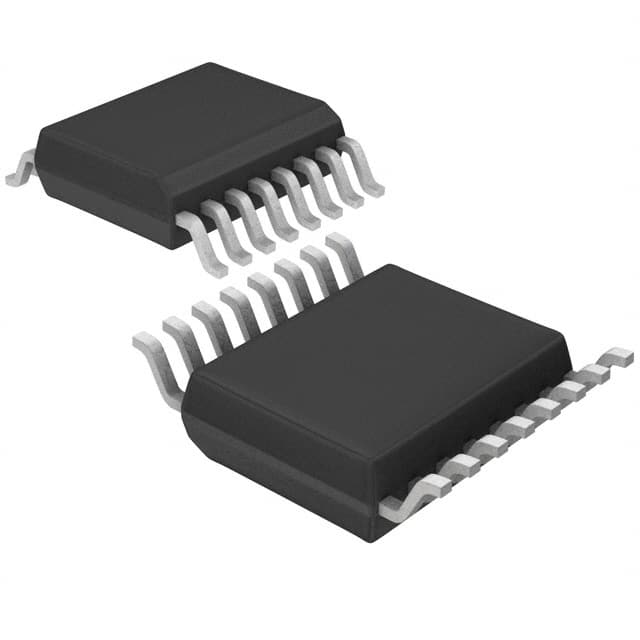
- Part No.:
- PI3B3257QE
- Manufacturer:
- Diodes Incorporated
- Category:
- Signal Switches, Multiplexers, Decoders
- Package:
- 16-SSOP (0.154", 3.90mm Width)
- Datasheet:
-
 PI3B3257QE.pdf
- Description:
- IC MUX/DEMUX 4 X 2:1 16QSOP
- Quantity:
- Payment:

- Shipping:

Inventory:329
Please send an inquiry. Send us your inquiry, and we will respond immediately.
Product details
Overview
PI3B3257QE from Diodes Incorporated is a 3.3 V quad 2:1 multiplexer/demultiplexer with three-state outputs, pinout- and function-compatible with PI74FCT257T, 74F257, and 74ALS/AS/LS257 logic families. It features 5 Ω switch on-resistance, 4.8 ns max propagation delay, and ultra-low quiescent current (0.1 µA typical), enabling high-speed signal routing in notebook and portable computing systems.
For engineers reviewing the PI3B3257QE datasheet, PI3B3257QE pinout, PI3B3257QE application, or PI3B3257QE equivalent, key selection criteria include low on-resistance switching, rail-to-rail input tolerance up to +3.6 V, three-state output control via independent enable (E) and select (S), and compatibility with legacy 74-series logic footprints in QSOP packaging.
Technical Context
The PI3B3257QE implements four independent bidirectional analog/digital switches controlled by a shared select (S) and enable (E) signal. Each switch connects one of two inputs (IA0/IA1, IB0/IB1, etc.) to its corresponding output (YA–YD) with near-zero propagation delay and no ground bounce.
It operates as a transparent bus switch: when enabled and selected, signals pass through with only RC delay dominated by 5 Ω RON and load capacitance - not internal logic gates. Input logic levels are TTL-compatible and tolerate up to +3.6 V regardless of VCC = 3.3 V ±10%.
Key Specifications
| Parameter | Value and Actual Design Meaning |
|---|---|
| VCC Supply | 3.3 V ±10% - fixed single-supply operation; no dual-rail or level-shifting required |
| RON | 5 Ω typical - enables low-loss signal integrity for high-speed digital or analog pass-through |
| tIY Propagation Delay | 0.25 ns typical (CL = 50 pF) - negligible added delay vs. PCB trace alone |
| tPZL/tPHZ | 4.8 ns max - fast enable/disable timing for dynamic bus isolation |
| ICC Quiescent Current | 0.1 µA typical - supports battery-powered operation without significant standby drain |
| Input Voltage Range | –0.5 V to +4.6 V - allows rail-to-rail input drive and hot-plug tolerance |
| Operating Temperature | –40°C to +85°C ambient - qualified for industrial and mobile embedded environments |
Pinout & Package
PI3B3257QE is supplied in a 16-pin QSOP (Q) package (150 mil width), with exposed pad not present. Pin 1 is marked by a notch or index area; GND (Pin 12) and VCC (Pin 11) are adjacent to support low-inductance decoupling.
| Pin/Terminal | Circuit Role | Design Meaning |
|---|---|---|
| E | Global Enable Input | Active-low; places all YA–YD outputs in high-impedance state when high |
| S | Common Select Input | Chooses between IA0/IB0/IC0/ID0 (S = L) or IA1/IB1/IC1/ID1 (S = H) |
| IA0–ID1 | Input Terminals (8 total) | Bidirectional; may serve as input or output depending on signal direction and control state |
| YA–YD | Output Terminals (4 total) | Three-state outputs; driven only when E = L; otherwise high-Z |
| VCC | Positive Supply | 3.3 V nominal; must be applied before any I/O signals per sequencing requirement |
| GND | Ground Reference | Return path for supply and signal currents; ties to system ground plane |
Key Features
| Feature | Design Value |
|---|---|
| Quad 2:1 Mux/Demux Architecture | Four independent switches sharing one S and one E control line - reduces PCB routing complexity vs. discrete solutions |
| 5 Ω On-Resistance | Minimizes voltage drop and distortion across switched signals up to 120 mA DC |
| Rail-to-Rail Input Tolerance | Supports interfacing with 5 V logic or mixed-voltage systems without external level shifters |
| 0.1 µA Quiescent Current | Enables always-on signal paths in power-sensitive applications like lid-open detection or wake-on-LAN circuits |
| QSOP-16 Footprint Compatibility | Direct replacement for legacy 74-series 257 devices - no board redesign needed |
Applications
| USB 2.0 Data Switching | Notebook Display Multiplexing |
|---|---|
|
Use Scenario: Routing USB D+/D− lines between two hosts (e.g., docking station and laptop) using a single physical connector. IC Role / Device Role / Timing Role: Bidirectional analog switch enabling seamless host handover without signal degradation or timing skew. Use Value: 5 Ω RON and sub-nanosecond propagation preserve USB 2.0 eye diagram integrity at 480 Mbps. |
Use Scenario: Selecting between integrated GPU and discrete GPU video outputs to a single LVDS or eDP display panel. IC Role / Device Role / Timing Role: High-speed parallel data path selector synchronized to GPU frame boundaries via E/S control. Use Value: 4.8 ns disable time ensures clean blanking during source transitions, eliminating visual artifacts. |
| PCIe Lane Sharing | Embedded Test Access Port (TAP) Routing |
|
Use Scenario: Sharing PCIe x1 lanes between Wi-Fi/BT module and cellular modem in space-constrained M.2 modules. IC Role / Device Role / Timing Role: Low-latency, low-capacitance signal path switch supporting PCIe Gen 1 signaling (2.5 GT/s). Use Value: 8.5 pF OFF capacitance minimizes crosstalk; 25 pF ON capacitance maintains impedance continuity. |
Use Scenario: Isolating JTAG TCK/TMS/TDI/TDO signals between multiple ASICs on a test board during boundary-scan programming. IC Role / Device Role / Timing Role: Three-state-controlled signal router preventing bus contention during device-specific scan operations. Use Value: Independent E control allows per-device enable/disable without affecting other TAP chains. |
Equivalent & Alternatives
The following parts are listed as comparable options for similar quad 2:1 mux/demux applications.
| Alternative Part | Technical Difference | Application Difference | Selection Advice |
|---|---|---|---|
| SN74CBT3257PWR | Higher RON (7 Ω typ), higher ICC (1 µA), same 3.3 V operation and pinout | Marginally lower bandwidth; less suitable for >400 Mbps differential signaling | Preferred where TI ecosystem alignment or longer production availability is prioritized |
| 74LVC257PW,118 | CMOS-based, higher propagation delay (5.5 ns), no rail-to-rail input tolerance (VIN ≤ VCC) | Not suitable for mixed-voltage or hot-plug scenarios; requires strict 3.3 V input compliance | Chosen when cost sensitivity outweighs performance requirements and voltage margins are guaranteed |
Compared with SN74CBT3257PWR and 74LVC257PW,118, the PI3B3257QE delivers superior signal fidelity via lower on-resistance and faster switching, while its rail-to-rail input capability enables robust interoperability in heterogeneous voltage domains - critical for modern portable system integration.
Availability
PI3B3257QE is available at Aetrix Electronics and suitable for notebook computing, USB docking stations, and embedded test equipment requiring stable component supply, long-lifecycle support, and RoHS-compliant packaging.
Supply support for PI3B3257QE includes scheduled delivery planning, volume procurement assistance, BOM continuity management, traceable sourcing, and lifecycle availability coordination for OEM customers, industrial embedded developers, connected-device designers, and electronics production programs.
Manufacturer
Diodes Incorporated is a global manufacturer of discrete semiconductors and integrated circuits, specializing in high-performance, energy-efficient components for consumer, computing, industrial, and communications markets.
The PI3B3257QE belongs to Diodes' NanoSwitch™ bus switch product line, engineered for ultra-low-power, high-speed signal routing in portable and space-constrained electronics where minimal propagation delay and leakage current are critical.
FAQ
Can PI3B3257QE operate with 5 V logic inputs while powered at 3.3 V?
Yes. The device accepts input voltages from –0.5 V to +4.6 V regardless of VCC = 3.3 V, enabling direct interface with 5 V microcontrollers or FPGAs without level shifters. This rail-to-rail input tolerance is verified across –40°C to +85°C and specified in the DC Electrical Characteristics table.
What is the maximum continuous current per switch channel?
The absolute maximum DC output current is 120 mA per channel, as defined in the Maximum Ratings table. This rating applies under steady-state conditions with proper PCB thermal design; derating is recommended above +70°C ambient per the Power Dissipation specification (0.5 W max).
Is PI3B3257QE pin-compatible with standard 74-series 257 devices in SOIC packages?
Yes. The PI3B3257QE in QSOP (Q) matches the pinout and logic function of 74F257, 74ALS257, and 74AS257. Its SOIC variant (PI3B3257WEX) provides identical pin mapping and electrical behavior, allowing drop-in replacement on existing 16-pin SOIC footprints.
Does the PI3B3257QE require external pull-up or pull-down resistors on control pins?
No. The E and S inputs have CMOS-compatible thresholds and negligible leakage (±1 µA), so they can be driven directly from FPGA GPIO or microcontroller outputs. External biasing is unnecessary unless floating-state prevention is required in system-level power-down modes.
PI3B3257QE Specifications
- Product attributes
- Attribute value
- Manufacturer:
- Diodes Incorporated
- Series:
- -
- Package/Case:
- 16-SSOP (0.154", 3.90mm Width)
- Packaging:
- Tube
- Product Status:
- Active
- Type:
- Multiplexer/Demultiplexer
- Circuit:
- 4 x 2:1
- Independent Circuits:
- 1
- Current - Output High, Low:
- -
- Voltage Supply Source:
- Single Supply
- Voltage - Supply:
- 3V ~ 3.6V
- Operating Temperature:
- -40°C ~ 125°C
- Grade:
- -
- Qualification:
- -
- Mounting Type:
- Surface Mount
- Supplier Device Package:
- 16-QSOP
PI3B3257QE FAQ
1.How can I place an order for PI3B3257QE through Aetrix?
Please submit a Request for Quotation (RFQ) for PI3B3257QE on Aetrix. Our sales agent will provide a competitive quotation and guide you through the order confirmation once you accept the terms.
2.Are the price and stock information for PI3B3257QE reliable?
The price and inventory of PI3B3257QE are updated periodically and may fluctuate due to market conditions. Stock and pricing data are typically refreshed every 24 hours. Quotation validity for PI3B3257QE is usually 5 days.
3.What payment methods are accepted for PI3B3257QE?
We accept Wire Transfer, PayPal, Credit Card, Western Union, MoneyGram, and Escrow for PI3B3257QE transactions.
Note: Certain payment methods may incur a processing fee.
4.How is shipping managed for PI3B3257QE?
PI3B3257QE orders can be shipped via leading logistics carriers, including DHL, UPS, FedEx, TNT, or Registered Mail.
Once your PI3B3257QE order is processed, you will receive an email with the shipment details and tracking number.
Note: Tracking information may take up to 24 hours to appear. Express delivery typically takes 3–5 business days.
5.How can I obtain technical support or documentation for PI3B3257QE?
For technical support, including PI3B3257QE datasheets, pinout diagrams, or application guidance, please contact our engineering support team. They can provide detailed documentation and assistance for your PI3B3257QE requirements.
6.How does Aetrix verify that PI3B3257QE is sourced from the original manufacturer or authorized distributors?
All PI3B3257QE products on Aetrix are procured from qualified distributors and authorized channels. Our dedicated quality assurance team conducts strict verification, including traceability checks and, if necessary, third-party testing. This ensures that PI3B3257QE meets industry standards.
7.What is the process for return or replacement of PI3B3257QE?
All PI3B3257QE units undergo pre-shipment inspection (PSI). If there is an issue with PI3B3257QE, returns or replacements are accepted under the following conditions:
1.Quantity discrepancies, incorrect items, or visible external defects (such as breakage or corrosion), acknowledged by Aetrix.
2.The issue is reported within 90 days of delivery.
3.The PI3B3257QE part is unused and in its original packaging.
Return procedure for PI3B3257QE:
1.Submit a request within 90 days.
2.Obtain a Return Material Authorization (RMA) from Aetrix.
PI3B3257QE Tags
-
SN74HC138DR
Texas Instruments
-
TC7SB3157CFU,LF(CT
Toshiba Semiconductor and Storage
-
74CBTLV3257PW,118
Nexperia USA Inc.
-
SN74CBTLV3257PWR
Texas Instruments
-
74CBTLV3257GUX
Nexperia USA Inc.
-
74HC154BQ,118
Nexperia USA Inc.

-
P3S0200GMX
NXP USA Inc.
-
SN74CB3Q3245PWR
Texas Instruments
-
SN74CB3Q3257RGYR
Texas Instruments
-
TCA9543APWR
Texas Instruments
-
TCA9546APWR
Texas Instruments
-
SN74HC138N
Texas Instruments
Tech Hub

An engineering guide to LED driver operation, constant-current and constant-voltage outputs, linear and switching topologies, dimming, IC selection, calculations, replacement compatibility, and fault c…

Operational amplifier guide covering op amp basics, feedback, ideal vs real op amps, common configurations, buffer circuits, offset, bias current, gain-bandwidth, slew rate, rail-to-rail limits and sel…

Jumper cables guide covering safe connection order, red and black clamp placement, final ground connection, cable gauge, length, clamp quality, copper vs CCA cables, jump starter comparison and battery…

LDO regulator guide covering low dropout voltage, power dissipation, thermal design, PSRR, output noise, capacitor stability, adjustable LDO circuits, LDO vs buck converter and datasheet selection chec…

Conditional Access Module guide covering CAM meaning, CI/CI+ interface, smart card authorization, DVB security workflow, TV and set-top box compatibility, internal electronics, ESD protection, connecto…

Guide to electronic component obsolescence covering EOL risk, PCN/PDN notices, last-time buy planning, replacement options, form-fit-function validation, counterfeit risk and BOM lifecycle management.

18650 battery guide covering lithium-ion cell basics, 3.6V/3.7V voltage, 4.2V charging, mAh and Wh capacity, protected cells, chargers, BMS, series-parallel packs, holders, welding and sourcing checks.…

Hall effect sensor guide covering working principle, linear and digital sensors, Arduino circuits, current sensing, speed detection, automotive applications, A3144 examples, signal filtering and datash…

Product Change Notification guide for electronic components, covering PCN meaning, PCN vs PDN/EOL, common change types, risk levels, form-fit-function review, engineering validation, BOM control, LTB/L…

A practical guide to blend door actuators, covering HVAC function, symptoms, location, AC and heater issues, reset and calibration, replacement cost, electrical diagnosis, compatibility checks, and rep…


