
 My Inquiry
 My Account


Diodes Incorporated PI3EQX12902AZLEX
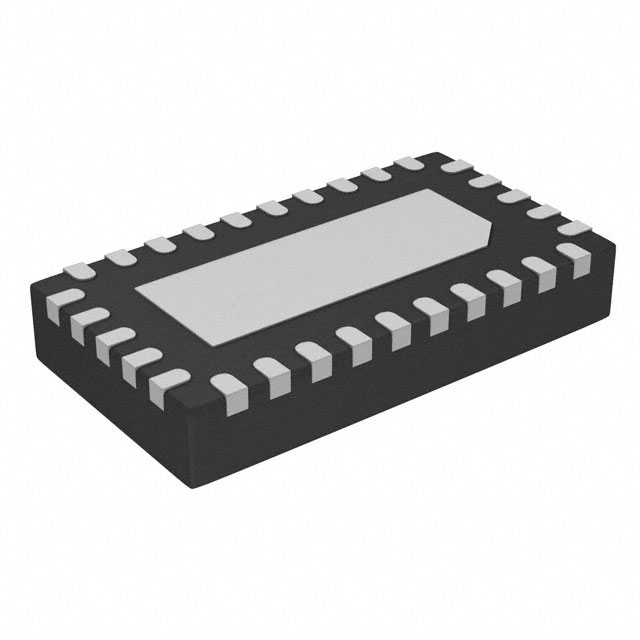
- Part No.:
- PI3EQX12902AZLEX
- Manufacturer:
- Diodes Incorporated
- Category:
- Signal Buffers, Repeaters, Splitters
- Package:
- 30-WFQFN Exposed Pad
- Datasheet:
-
 PI3EQX12902AZLEX.pdf
- Description:
- ICREDRIV PCIE3/SATA W-QFN2545-30
- Quantity:
- Payment:

- Shipping:

Inventory:9,362
Please send an inquiry. Send us your inquiry, and we will respond immediately.
Product details
Overview
PI3EQX12902AZLEX from Diodes Incorporated is a low-power, dual-channel linear ReDriver supporting 8 Gbps PCIe 3.0 and 6 Gbps SATA 3.0 protocols with programmable equalization, flat gain, and linear swing control. It features two independent 100 Ω differential CML I/Os, auto receiver detection, and adaptive low-power mode for notebook PCs and server motherboards.
For engineers reviewing the PI3EQX12902AZLEX datasheet, PI3EQX12902AZLEX pinout, PI3EQX12902AZLEX application, or PI3EQX12902AZLEX equivalent, key selection criteria include differential signal integrity optimization across M.2, U.2, and SATA Express interfaces, transparent link training compatibility, and industrial-temperature operation with 3.3 V ±0.3 V supply.
Technical Context
The PI3EQX12902AZLEX implements fully independent channel architecture with per-channel input-level detection driving output activation. Its linear equalization compensates for high-frequency loss in PCB traces and cables without introducing jitter amplification typical of limiting ReDrivers.
It supports transparent pass-through of PCIe 3.0 OOB signaling, link training, and idle states while maintaining protocol compliance. Control is implemented via pin-strapping (not I²C), enabling fixed configuration without firmware overhead in space-constrained docking and storage platforms.
Key Specifications
| Parameter | Value and Actual Design Meaning |
|---|---|
| Data Rate | 8 Gbps PCIe 3.0 / 6 Gbps SATA 3.0 - enables full-speed lane extension without protocol renegotiation |
| Input/Output Impedance | 100 Ω differential CML - matches standard high-speed serial interface routing requirements |
| Supply Voltage | 3.3 V ±0.3 V - compatible with standard I/O rail in modern compute platforms |
| Operating Temperature | –40 °C to +85 °C - supports industrial-grade deployment in servers and notebooks |
| Power Management | Auto receiver-detect + low-power mode - reduces quiescent current when input signal absent |
| Protocol Transparency | Transparent to link training, OOB, and idle - preserves native PCIe/SATA handshaking behavior |
Pinout & Package
Package: 30-pin TQFN, 2.5 mm × 4.5 mm, ZL30 footprint (Pb-free & Green).
| Pin/Terminal | Circuit Role | Design Meaning |
|---|---|---|
| RXAP/RXAN | Channel A differential input (+/–) | Accepts 100 Ω CML input from upstream ASIC or connector |
| TXAP/TXAN | Channel A differential output (+/–) | Drives 100 Ω CML load toward downstream M.2/U.2 or SATA Express port |
| RXBP/RXBN | Channel B differential input (+/–) | Independent second lane input, electrically isolated from Channel A |
| TXBP/TXBN | Channel B differential output (+/–) | Independent second lane output, supports dual-lane extension without cross-talk |
| EQA/EQB | Equalization control pins | Pin-strapped selection of 3 equalization levels per channel |
| SWA/SWB | Linear swing control pins | Pin-strapped selection of 3 output amplitude levels per channel |
| FGA/FGB | Flat gain control pins | Pin-strapped selection of 3 gain settings per channel to compensate trace loss |
| EN# | Enable input (active-low) | Hardware-controlled global shutdown; pulls device into ultra-low power state |
Key Features
| Feature | Design Value |
|---|---|
| Dual independent channels | Enables simultaneous PCIe 3.0 and SATA 3.0 lane extension on shared physical I/O without interference |
| Pin-strapped configuration | Eliminates need for I²C bus or firmware initialization-ideal for cost-sensitive, space-constrained designs |
| Auto receiver detection | Reduces dynamic power by disabling unused channel when no valid input signal is present |
| Transparent protocol handling | Maintains native PCIe 3.0 and SATA 3.0 link training sequences, ensuring interoperability with host and endpoint devices |
Applications
| Notebook PC Connectivity | Server Motherboard Signal Extension |
|---|---|
Use Scenario: Extending PCIe 3.0 and SATA 3.0 signals from CPU chipset to M.2 or U.2 slots in thin-and-light notebooks. IC Role / Device Role / Timing Role: Linear ReDriver restoring signal integrity across 8–12 cm FR4 traces with >15 dB loss at 4 GHz. Use Value: Enables reliable 8 Gbps operation without requiring expensive low-loss laminate or redesigning layer stackup. | Use Scenario: Driving dual-lane PCIe 3.0 signals from processor I/O to rear-panel SATA Express or internal JBOD backplane connectors. IC Role / Device Role / Timing Role: Dual-channel signal conditioner preserving eye opening and jitter budget across multi-inch cable or flex-pcb interconnects. Use Value: Eliminates need for active retimers in mid-tier server platforms, reducing BOM cost and latency. |
| Blade Server Backplane Interface | Docking Station High-Speed I/O Hub |
Use Scenario: Bridging PCIe 3.0 lanes between blade module and midplane in modular blade chassis with mixed-length interconnects. IC Role / Device Role / Timing Role: Per-lane linear equalizer compensating for variable trace lengths and impedance discontinuities across backplane segments. Use Value: Achieves consistent link training success across all blade positions without per-slot calibration. | Use Scenario: Supporting simultaneous NVMe SSD and SATA HDD connectivity through single USB-C dock with alternate-mode PCIe tunneling. IC Role / Device Role / Timing Role: Protocol-transparent lane repeater enabling hot-plug detection and native enumeration of attached storage devices. Use Value: Maintains full 8 Gbps bandwidth to NVMe drive while sharing same physical connector with legacy SATA peripherals. |
Equivalent & Alternatives
The following parts are listed as comparable options for similar linear ReDriver applications.
| Alternative Part | Technical Difference | Application Difference | Selection Advice |
|---|---|---|---|
| PI3EQX12904AZLEX | 4-channel version with identical per-channel specs and pinout compatibility | Suitable for quad-lane extension (e.g., x4 PCIe 3.0 SSD add-in cards) | Select when platform requires ≥3 lanes and board space allows larger 40-pin ZL40 package |
| DS100BR111SQ/NOPB | TI 1-channel linear ReDriver with I²C configuration and lower max data rate (6.25 Gbps) | Limited to single-lane PCIe 3.0 or SAS 12G; lacks SATA 3.0 support | Choose only for single-lane, I²C-configurable designs where protocol flexibility is secondary to configurability |
Compared with PI3EQX12904AZLEX, the PI3EQX12902AZLEX offers optimal density for dual-lane M.2/U.2 expansion; versus DS100BR111SQ/NOPB, it delivers higher data rate, dual-channel independence, and native SATA 3.0 support without I²C overhead.
Availability
PI3EQX12902AZLEX is available at Aetrix Electronics and suitable for notebook PC design, server motherboard signal extension, blade server backplane interfaces, and docking station high-speed I/O hubs requiring stable component supply and industrial-temperature operation.
Supply support for PI3EQX12902AZLEX includes scheduled delivery planning, volume procurement assistance, BOM continuity management, traceable sourcing, and lifecycle availability coordination for OEM customers, industrial embedded developers, connected-device designers, and electronics production programs.
Manufacturer
Diodes Incorporated is a global manufacturer of discrete semiconductors and integrated circuits, headquartered in Plano, Texas, with design and manufacturing operations across Asia and the Americas.
The PI3EQX series targets high-speed serial interface signal conditioning for client and enterprise computing platforms, specifically addressing PCIe/SATA combo I/O consolidation in space- and power-constrained form factors.
FAQ
What protocols does the PI3EQX12902AZLEX natively support?
The PI3EQX12902AZLEX supports PCIe 3.0 at 8 Gbps and SATA 3.0 at 6 Gbps simultaneously across its two independent channels. It maintains full transparency to link training, OOB signaling, and idle states for both protocols without requiring reconfiguration or firmware intervention.
How is configuration performed-via pins or I²C?
Configuration is performed exclusively via pin-strapping: EQA/EQB, SWA/SWB, and FGA/FGB pins set equalization level, output swing, and flat gain per channel. No I²C interface or external controller is required, simplifying layout and eliminating boot-time dependencies.
Does the device support automatic power-down when no signal is present?
Yes. Each channel monitors its differential input (RXAP/RXAN or RXBP/RXBN) and automatically enters low-power mode when no valid signal is detected. This adaptive power management reduces total system power consumption in intermittently active storage or expansion links.
What is the significance of "linear" equalization in this ReDriver?
Linear equalization applies frequency-dependent gain without clipping or limiting, preserving signal amplitude distribution and minimizing jitter generation. Unlike limiting ReDrivers, it avoids distortion-induced bit errors in long-trace or high-loss environments while remaining fully transparent to protocol-level timing and encoding.
PI3EQX12902AZLEX Specifications
- Product attributes
- Attribute value
- Manufacturer:
- Diodes Incorporated
- Series:
- -
- Package/Case:
- 30-WFQFN Exposed Pad
- Packaging:
- Tape & Reel (TR)
- Product Status:
- Active
- Type:
- Buffer, ReDriver
- Applications:
- PCIe
- Input:
- CML
- Output:
- CML
- Data Rate (Max):
- 8Gbps
- Number of Channels:
- 2
- Delay Time:
- -
- Signal Conditioning:
- Input Equalization
- Capacitance - Input:
- -
- Voltage - Supply:
- 3.3V
- Current - Supply:
- -
- Operating Temperature:
- -40°C ~ 85°C
- Grade:
- -
- Qualification:
- -
- Mounting Type:
- Surface Mount
- Supplier Device Package:
- 30-TQFN (2.5x4.5)
PI3EQX12902AZLEX FAQ
1.How can I place an order for PI3EQX12902AZLEX through Aetrix?
Please submit a Request for Quotation (RFQ) for PI3EQX12902AZLEX on Aetrix. Our sales agent will provide a competitive quotation and guide you through the order confirmation once you accept the terms.
2.Are the price and stock information for PI3EQX12902AZLEX reliable?
The price and inventory of PI3EQX12902AZLEX are updated periodically and may fluctuate due to market conditions. Stock and pricing data are typically refreshed every 24 hours. Quotation validity for PI3EQX12902AZLEX is usually 5 days.
3.What payment methods are accepted for PI3EQX12902AZLEX?
We accept Wire Transfer, PayPal, Credit Card, Western Union, MoneyGram, and Escrow for PI3EQX12902AZLEX transactions.
Note: Certain payment methods may incur a processing fee.
4.How is shipping managed for PI3EQX12902AZLEX?
PI3EQX12902AZLEX orders can be shipped via leading logistics carriers, including DHL, UPS, FedEx, TNT, or Registered Mail.
Once your PI3EQX12902AZLEX order is processed, you will receive an email with the shipment details and tracking number.
Note: Tracking information may take up to 24 hours to appear. Express delivery typically takes 3–5 business days.
5.How can I obtain technical support or documentation for PI3EQX12902AZLEX?
For technical support, including PI3EQX12902AZLEX datasheets, pinout diagrams, or application guidance, please contact our engineering support team. They can provide detailed documentation and assistance for your PI3EQX12902AZLEX requirements.
6.How does Aetrix verify that PI3EQX12902AZLEX is sourced from the original manufacturer or authorized distributors?
All PI3EQX12902AZLEX products on Aetrix are procured from qualified distributors and authorized channels. Our dedicated quality assurance team conducts strict verification, including traceability checks and, if necessary, third-party testing. This ensures that PI3EQX12902AZLEX meets industry standards.
7.What is the process for return or replacement of PI3EQX12902AZLEX?
All PI3EQX12902AZLEX units undergo pre-shipment inspection (PSI). If there is an issue with PI3EQX12902AZLEX, returns or replacements are accepted under the following conditions:
1.Quantity discrepancies, incorrect items, or visible external defects (such as breakage or corrosion), acknowledged by Aetrix.
2.The issue is reported within 90 days of delivery.
3.The PI3EQX12902AZLEX part is unused and in its original packaging.
Return procedure for PI3EQX12902AZLEX:
1.Submit a request within 90 days.
2.Obtain a Return Material Authorization (RMA) from Aetrix.
PI3EQX12902AZLEX Tags
-
PCA9509GM,125
NXP USA Inc.
-
PCA9617ADPJ
NXP USA Inc.
-
TCA9509DGKR
Texas Instruments
-
PCA9617ATPZ
NXP USA Inc.
-
PCA9517ADP,118
NXP USA Inc.
-
PCA9515ADP,118
NXP USA Inc.
-
PCA9515AD,118
NXP USA Inc.
-
PCA9517DP,118
NXP USA Inc.

-
TUSB211ARWBR
Texas Instruments
-
PCA9517AD,118
NXP USA Inc.
-
PCA9517ATP,147
NXP USA Inc.
-
P82B96PWR
Texas Instruments
Tech Hub

Jumper cables guide covering safe connection order, red and black clamp placement, final ground connection, cable gauge, length, clamp quality, copper vs CCA cables, jump starter comparison and battery…

LDO regulator guide covering low dropout voltage, power dissipation, thermal design, PSRR, output noise, capacitor stability, adjustable LDO circuits, LDO vs buck converter and datasheet selection chec…

Conditional Access Module guide covering CAM meaning, CI/CI+ interface, smart card authorization, DVB security workflow, TV and set-top box compatibility, internal electronics, ESD protection, connecto…

Guide to electronic component obsolescence covering EOL risk, PCN/PDN notices, last-time buy planning, replacement options, form-fit-function validation, counterfeit risk and BOM lifecycle management.

18650 battery guide covering lithium-ion cell basics, 3.6V/3.7V voltage, 4.2V charging, mAh and Wh capacity, protected cells, chargers, BMS, series-parallel packs, holders, welding and sourcing checks.…

Hall effect sensor guide covering working principle, linear and digital sensors, Arduino circuits, current sensing, speed detection, automotive applications, A3144 examples, signal filtering and datash…

Product Change Notification guide for electronic components, covering PCN meaning, PCN vs PDN/EOL, common change types, risk levels, form-fit-function review, engineering validation, BOM control, LTB/L…

A practical guide to blend door actuators, covering HVAC function, symptoms, location, AC and heater issues, reset and calibration, replacement cost, electrical diagnosis, compatibility checks, and rep…

Engineering guide to Raspberry Pi alternatives, covering chip-level differences, Orange Pi, ROCK, Jetson, Banana Pi, NanoPi, Compute Module, Pico, GPIO, camera, HAT compatibility, and replacement risks…

Engineering guide to dynamic load response testing for high-current buck converters, covering load step setup, slew rate, Vcore undershoot, overshoot, recovery time, probe location, output capacitors a…


