
 My Inquiry
 My Account


Diodes Incorporated PI3EQX16904GLZHEX
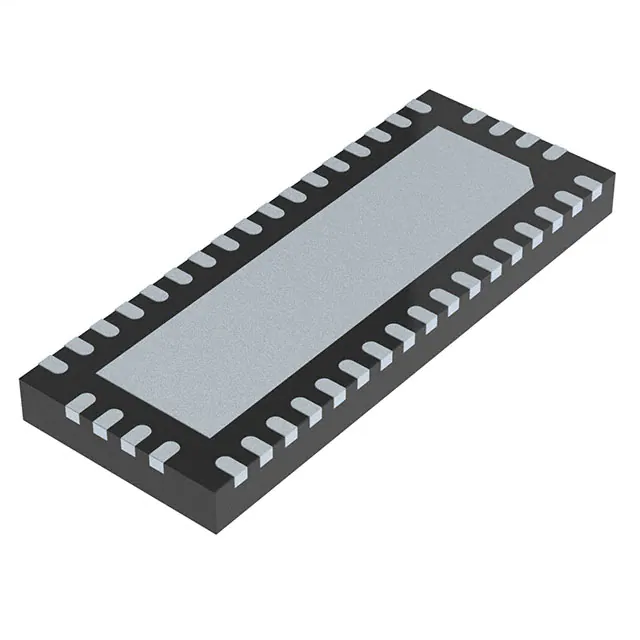
- Part No.:
- PI3EQX16904GLZHEX
- Manufacturer:
- Diodes Incorporated
- Category:
- Signal Buffers, Repeaters, Splitters
- Package:
- 42-VFQFN Exposed Pad
- Datasheet:
-
 PI3EQX16904GLZHEX.pdf
- Description:
- PCIE EQX V-QFN3590-42
- Quantity:
- Payment:

- Shipping:

Inventory:9,612
Please send an inquiry. Send us your inquiry, and we will respond immediately.
Product details
Overview
PI3EQX16904GLZHEX from Diodes Incorporated is a 16 Gbps, 4-channel linear ReDriver IC designed for high-speed serial link signal integrity restoration in PCIe 4.0, SAS-3, InfiniBand FDR, FC-16, and XAUI systems. It features programmable 3-bit linear equalization, 2-bit output swing control, 2-bit flat gain control, and operates from a single 3.3 V ±0.3 V supply across –40°C to +85°C.
For engineers reviewing the PI3EQX16904GLZHEX datasheet, PI3EQX16904GLZHEX pinout, PI3EQX16904GLZHEX application, or PI3EQX16904GLZHEX equivalent, key selection criteria include per-channel independent equalization/swing/gain configuration, CML I/O compatibility (100 Ω differential), transparency to link training and idle states, and dual programming via pin strap or I²C with 3-bit address support.
Technical Context
The PI3EQX16904GLZHEX implements four independent, rate-agnostic linear ReDriver channels-each with cascaded equalizer and linear amplifier stages-to compensate for frequency-dependent loss without introducing jitter multiplication. Its architecture supports transparent pass-through of embedded clock and protocol-specific training sequences (e.g., PCIe LTSSM, SAS INIT).
Equalization is implemented as a continuous-time linear filter with three selectable boost levels (0 dB, 6 dB, 12 dB at Nyquist), while output swing and flat gain are independently adjustable per channel via either hardware strapping or I²C register writes, enabling optimization for varying trace lengths and interconnect losses.
Key Specifications
| Parameter | Value and Actual Design Meaning |
|---|---|
| Data Rate | 2.5–16 Gbps per channel; supports PCIe 4.0 (16 GT/s), SAS-3 (12.0 Gbps), IB FDR (14.0625 Gbps), FC-16 (14.025 Gbps), XAUI (3.125 Gbps) |
| Input/Output Interface | CML-compatible, 100 Ω differential I/O; accepts AC-coupled signals with internal 50 Ω termination or high-Z input mode |
| Equalization Control | 3-bit programmable linear EQ (0/6/12 dB boost at Nyquist); configurable per channel via pin strap or I²C |
| Output Swing | 2-bit adjustable differential output amplitude (typ. 400–800 mVpp); maintains signal fidelity into lossy PCB traces |
| Flat Gain | 2-bit programmable DC gain (–3/0/+3/+6 dB); compensates for low-frequency attenuation without peaking |
| Supply & Temp | 3.3 V ±0.3 V operation; industrial temperature range (–40°C to +85°C); fully RoHS 3 and halogen-free |
Pinout & Package
Package: 42-contact Thin Quad Flat No-Lead (TQFN), 9 mm × 3.5 mm, 0.5 mm pitch, exposed thermal pad.
| Pin/Terminal | Circuit Role | Design Meaning |
|---|---|---|
| VCC | Power supply input | 3.3 V main supply for all four channels and I²C interface; requires local 100 nF decoupling |
| GND | Ground reference | Common return for analog and digital sections; tied to exposed thermal pad for thermal and EMI performance |
| I+, I− (×4) | Differential CML data inputs | AC-coupled, 100 Ω differential inputs; each pair supports independent equalization configuration |
| O+, O− (×4) | Differential CML data outputs | Programmable swing/gain outputs; drive downstream receivers with minimal added jitter |
| SCL, SDA | I²C bus interface | Supports device configuration and status readback; 3-bit slave address selectable via A2/A1/A0 pins |
| PRSNT# | Presence detection input | Active-low signal indicating module insertion; used for hot-plug initialization sequencing |
| EQ[2:0], SWING[1:0], FGAIN[1:0] (strap pins) | Hardware configuration inputs | Set default equalization, output swing, and flat gain values latched at power-up and mirrored to I²C registers |
Key Features
| Feature | Design Value |
|---|---|
| Per-channel independent configuration | Each of four channels can be tuned separately for equalization, swing, and flat gain-enabling mixed-media routing (e.g., short and long traces on same board) |
| Protocol transparency | No modification to link training sequences, idle patterns, or embedded clock recovery; interoperable with PCIe, SAS, IB, FC, and XAUI PHY layers |
| Dual programming interface | Pin-strapped defaults persist after power cycle; I²C allows dynamic runtime reconfiguration without reset |
| Linear architecture | Zero decision feedback or clock-data recovery-eliminates deterministic jitter accumulation common in retimers |
| Thermal and EMI-optimized package | 42-pin TQFN with exposed pad ensures <1.5°C/W junction-to-board thermal resistance and reduced ground bounce noise |
Applications
| PCIe 4.0 Server Backplanes | SAS-3 Enterprise Storage Arrays |
|---|---|
Use Scenario: Extending 16 Gbps PCIe Gen4 signals across 20+ inch backplane traces with >20 dB loss at Nyquist. IC Role / Device Role / Timing Role: Linear ReDriver placed mid-path to restore signal amplitude and eye opening without altering timing or protocol state machines. Use Value: Enables reliable Gen4 link training and stable x16 slot operation where passive trace routing alone fails. | Use Scenario: Interconnecting SAS-3 expanders and drives in high-density JBOD enclosures with mixed-length cables and connectors. IC Role / Device Role / Timing Role: Channel-specific equalization compensates for connector skew and cable loss variation across 12+ lanes. Use Value: Achieves full 12 Gbps SAS-3 throughput with BER <1e–12 without requiring retimer-level latency or protocol awareness. |
| InfiniBand FDR Switch Fabrics | Fibre Channel FC-16 SAN Interconnects |
Use Scenario: Driving FDR (14.0625 Gbps) signals between switch ASICs and QSFP+ cages over FR4 PCBs with impedance discontinuities. IC Role / Device Role / Timing Role: Linear amplification restores high-frequency content lost at vias and connectors while preserving symbol timing integrity. Use Value: Eliminates need for expensive low-loss laminates; maintains sub-100 fs RMS jitter addition required by IBTA compliance. | Use Scenario: Boosting FC-16 (14.025 Gbps) signals across enterprise storage director blades with legacy backplane layouts. IC Role / Device Role / Timing Role: Flat gain compensation corrects low-frequency droop from long AC-coupling capacitors and improves eye height at receiver. Use Value: Restores margin for FC-16 8B/10B decoding without modifying existing firmware or link-layer logic. |
Equivalent & Alternatives
The following parts are listed as comparable options for similar high-speed linear ReDriver applications.
| Alternative Part | Technical Difference | Application Difference | Selection Advice |
|---|---|---|---|
| TI DS125DF410 | Retimer architecture with CDR; adds ~300 ps latency; supports PCIe 4.0 but requires link renegotiation on reconfiguration | Required where deterministic jitter cleanup is critical and added latency is acceptable (e.g., test equipment) | Select only if CDR-based jitter suppression is mandatory; not drop-in compatible due to different power-up sequence and register map |
| Maxim MAX96752 | Designed for automotive GMSL2; 6 Gbps max; includes integrated serializer and sideband channel; no I²C control for EQ/swing | Targeted at camera links, not compute/storage protocols; lacks PCIe/SAS/IB protocol support | Not suitable for data center applications; use only in automotive ADAS video backbone designs |
Compared with DS125DF410 and MAX96752, the PI3EQX16904GLZHEX uniquely delivers protocol-transparent, zero-latency linear redriving at 16 Gbps with per-channel configurability-making it optimal for PCIe 4.0 server backplanes and SAS-3 storage where latency, link stability, and independent channel tuning are essential.
Availability
PI3EQX16904GLZHEX is available at Aetrix Electronics and suitable for PCIe 4.0 server backplanes, SAS-3 enterprise storage arrays, and InfiniBand FDR switch fabrics requiring stable component supply, long-term lifecycle assurance, and RoHS 3-compliant sourcing.
Supply support for PI3EQX16904GLZHEX includes scheduled delivery planning, volume procurement assistance, BOM continuity management, traceable sourcing, and lifecycle availability coordination for OEM customers, industrial embedded developers, connected-device designers, and electronics production programs.
Manufacturer
Diodes Incorporated is a global manufacturer of discrete semiconductors and integrated circuits, specializing in high-performance signal integrity, power management, and protection solutions for data infrastructure and industrial applications.
The PI3EQX ReDriver product line targets high-speed serial interconnects in servers, storage, and networking equipment-designed to extend reach and improve eye margin without protocol dependency or added latency.
FAQ
Does PI3EQX16904GLZHEX require external reference clock or PLL configuration?
No. The PI3EQX16904GLZHEX is a linear ReDriver-not a retimer-so it contains no PLL, CDR, or reference clock circuitry. It operates transparently on incoming data, preserving original timing and eliminating the need for clock synthesis or lock acquisition. This enables immediate signal restoration upon power-up with zero protocol-aware initialization delay.
Can EQ, swing, and flat gain settings be changed dynamically during live link operation?
Yes. All three parameters are controllable in real time via the I²C interface without disrupting data flow or requiring a reset. The device maintains bit transparency during register updates, allowing adaptive tuning in response to thermal drift or changing channel conditions-critical for field-deployed storage and networking systems.
What is the maximum supported trace length improvement using PI3EQX16904GLZHEX at 16 Gbps?
At 16 Gbps, the PI3EQX16904GLZHEX extends usable FR4 trace length by up to 35 inches (89 cm) when configured with 12 dB equalization and optimized swing/gain-based on Diodes' validated eye diagram measurements showing >30% eye height and >0.3 UI horizontal opening after 25 dB channel loss.
Is PI3EQX16904GLZHEX compatible with PCIe 5.0 physical layer?
No. The PI3EQX16904GLZHEX is specified up to 16 Gbps (PCIe 4.0), with bandwidth and EQ response optimized for that range. PCIe 5.0 (32 GT/s) requires higher-frequency equalization and lower intrinsic jitter; Diodes offers the PI3EQX2201 series for PCIe 5.0 applications.
PI3EQX16904GLZHEX Specifications
- Product attributes
- Attribute value
- Manufacturer:
- Diodes Incorporated
- Series:
- ReDriver™
- Package/Case:
- 42-VFQFN Exposed Pad
- Packaging:
- Tape & Reel (TR)
- Product Status:
- Active
- Type:
- Buffer, ReDriver
- Applications:
- Networking
- Input:
- CML
- Output:
- CML
- Data Rate (Max):
- 16Gbps
- Number of Channels:
- 4
- Delay Time:
- -
- Signal Conditioning:
- Input Equalization
- Capacitance - Input:
- -
- Voltage - Supply:
- 3V ~ 3.6V
- Current - Supply:
- -
- Operating Temperature:
- -40°C ~ 85°C
- Grade:
- -
- Qualification:
- -
- Mounting Type:
- Surface Mount
- Supplier Device Package:
- 42-TQFN (9x3.5)
PI3EQX16904GLZHEX FAQ
1.How can I place an order for PI3EQX16904GLZHEX through Aetrix?
Please submit a Request for Quotation (RFQ) for PI3EQX16904GLZHEX on Aetrix. Our sales agent will provide a competitive quotation and guide you through the order confirmation once you accept the terms.
2.Are the price and stock information for PI3EQX16904GLZHEX reliable?
The price and inventory of PI3EQX16904GLZHEX are updated periodically and may fluctuate due to market conditions. Stock and pricing data are typically refreshed every 24 hours. Quotation validity for PI3EQX16904GLZHEX is usually 5 days.
3.What payment methods are accepted for PI3EQX16904GLZHEX?
We accept Wire Transfer, PayPal, Credit Card, Western Union, MoneyGram, and Escrow for PI3EQX16904GLZHEX transactions.
Note: Certain payment methods may incur a processing fee.
4.How is shipping managed for PI3EQX16904GLZHEX?
PI3EQX16904GLZHEX orders can be shipped via leading logistics carriers, including DHL, UPS, FedEx, TNT, or Registered Mail.
Once your PI3EQX16904GLZHEX order is processed, you will receive an email with the shipment details and tracking number.
Note: Tracking information may take up to 24 hours to appear. Express delivery typically takes 3–5 business days.
5.How can I obtain technical support or documentation for PI3EQX16904GLZHEX?
For technical support, including PI3EQX16904GLZHEX datasheets, pinout diagrams, or application guidance, please contact our engineering support team. They can provide detailed documentation and assistance for your PI3EQX16904GLZHEX requirements.
6.How does Aetrix verify that PI3EQX16904GLZHEX is sourced from the original manufacturer or authorized distributors?
All PI3EQX16904GLZHEX products on Aetrix are procured from qualified distributors and authorized channels. Our dedicated quality assurance team conducts strict verification, including traceability checks and, if necessary, third-party testing. This ensures that PI3EQX16904GLZHEX meets industry standards.
7.What is the process for return or replacement of PI3EQX16904GLZHEX?
All PI3EQX16904GLZHEX units undergo pre-shipment inspection (PSI). If there is an issue with PI3EQX16904GLZHEX, returns or replacements are accepted under the following conditions:
1.Quantity discrepancies, incorrect items, or visible external defects (such as breakage or corrosion), acknowledged by Aetrix.
2.The issue is reported within 90 days of delivery.
3.The PI3EQX16904GLZHEX part is unused and in its original packaging.
Return procedure for PI3EQX16904GLZHEX:
1.Submit a request within 90 days.
2.Obtain a Return Material Authorization (RMA) from Aetrix.
PI3EQX16904GLZHEX Tags
-
PCA9509GM,125
NXP USA Inc.
-
PCA9617ADPJ
NXP USA Inc.
-
TCA9509DGKR
Texas Instruments
-
PCA9617ATPZ
NXP USA Inc.
-
PCA9517ADP,118
NXP USA Inc.
-
PCA9515ADP,118
NXP USA Inc.
-
PCA9515AD,118
NXP USA Inc.
-
PCA9517DP,118
NXP USA Inc.

-
TUSB211ARWBR
Texas Instruments
-
PCA9517AD,118
NXP USA Inc.
-
PCA9517ATP,147
NXP USA Inc.
-
P82B96PWR
Texas Instruments
Tech Hub

Jumper cables guide covering safe connection order, red and black clamp placement, final ground connection, cable gauge, length, clamp quality, copper vs CCA cables, jump starter comparison and battery…

LDO regulator guide covering low dropout voltage, power dissipation, thermal design, PSRR, output noise, capacitor stability, adjustable LDO circuits, LDO vs buck converter and datasheet selection chec…

Conditional Access Module guide covering CAM meaning, CI/CI+ interface, smart card authorization, DVB security workflow, TV and set-top box compatibility, internal electronics, ESD protection, connecto…

Guide to electronic component obsolescence covering EOL risk, PCN/PDN notices, last-time buy planning, replacement options, form-fit-function validation, counterfeit risk and BOM lifecycle management.

18650 battery guide covering lithium-ion cell basics, 3.6V/3.7V voltage, 4.2V charging, mAh and Wh capacity, protected cells, chargers, BMS, series-parallel packs, holders, welding and sourcing checks.…

Hall effect sensor guide covering working principle, linear and digital sensors, Arduino circuits, current sensing, speed detection, automotive applications, A3144 examples, signal filtering and datash…

Product Change Notification guide for electronic components, covering PCN meaning, PCN vs PDN/EOL, common change types, risk levels, form-fit-function review, engineering validation, BOM control, LTB/L…

A practical guide to blend door actuators, covering HVAC function, symptoms, location, AC and heater issues, reset and calibration, replacement cost, electrical diagnosis, compatibility checks, and rep…

Engineering guide to Raspberry Pi alternatives, covering chip-level differences, Orange Pi, ROCK, Jetson, Banana Pi, NanoPi, Compute Module, Pico, GPIO, camera, HAT compatibility, and replacement risks…
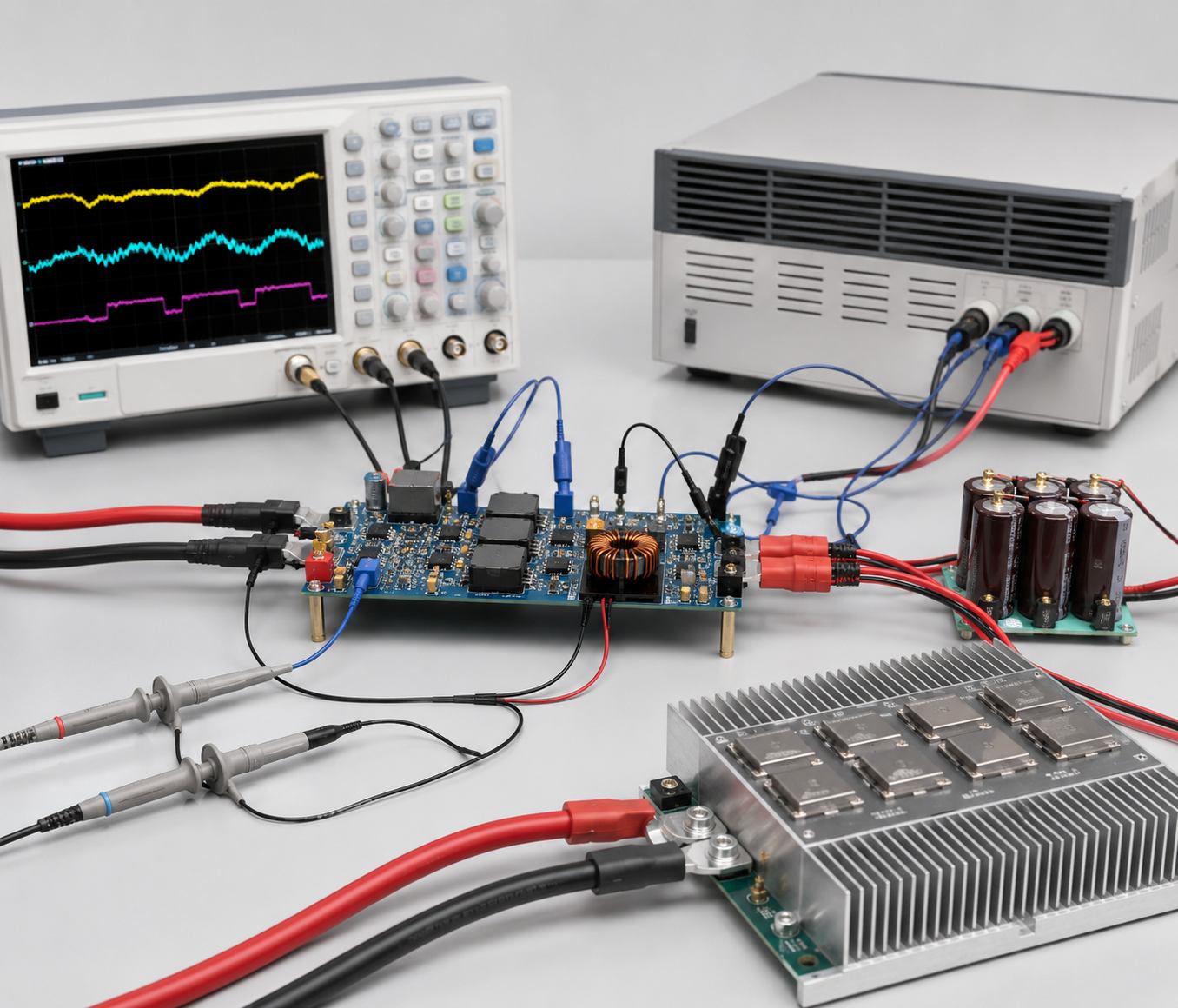
Engineering guide to dynamic load response testing for high-current buck converters, covering load step setup, slew rate, Vcore undershoot, overshoot, recovery time, probe location, output capacitors a…


