
 My Inquiry
 My Account


Diodes Incorporated PI3EQX7502MZDEX
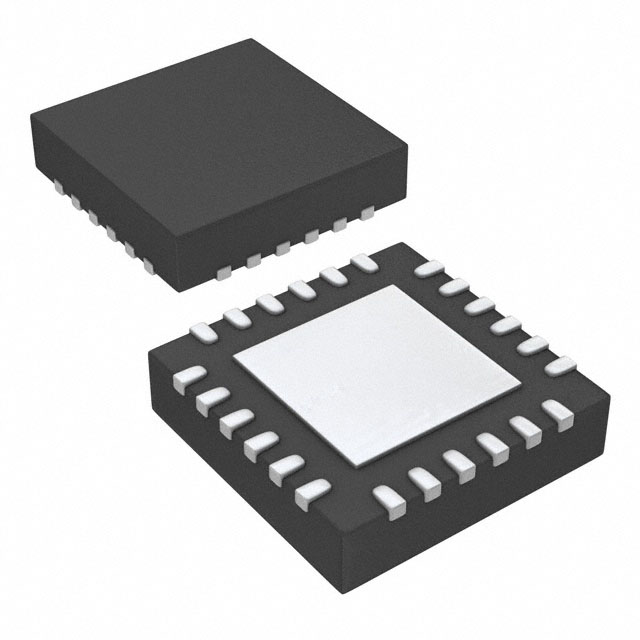
- Part No.:
- PI3EQX7502MZDEX
- Manufacturer:
- Diodes Incorporated
- Category:
- Signal Buffers, Repeaters, Splitters
- Package:
- 24-VFQFN Exposed Pad
- Datasheet:
-
 PI3EQX7502MZDEX.pdf
- Description:
- IC REDRIVER USB 3.0 5GBPS 24TQFN
- Quantity:
- Payment:

- Shipping:

Inventory:2,302
Please send an inquiry. Send us your inquiry, and we will respond immediately.
Product details
Overview
PI3EQX7502MZDEX from Diodes Incorporated (acquired Pericom) is a USB 3.0-compliant 5.0 Gbps single-port ReDriver IC with programmable equalization, de-emphasis, and input threshold control. It conditions differential CML signals across PCB traces, cables, or connectors in host-to-peripheral links, supporting two 100Ω differential I/O pairs and operating from a single 3.3V supply at -40°C to +85°C.
For engineers reviewing the PI3EQX7502MZDEX datasheet, PI3EQX7502MZDEX pinout, PI3EQX7502MZDEX application, or PI3EQX7502MZDEX equivalent, key selection criteria include its 5.0 Gbps per-lane throughput, independent channel squelch with Vth- detection, auto-slumber mode timing (7.3 ms idle), receiver detect enable via RXD-EN, and TQFN-24 (4×4 mm) thermal performance.
Technical Context
The PI3EQX7502MZDEX implements a two-channel, fully independent CML signal conditioning architecture with integrated limiting amplifiers and adjustable equalization per input path. Each channel features dedicated EN_x# control, input signal level detection against programmable Vth-, and output squelch to common-mode voltage upon threshold violation.
Its receiver detect loop activates when RXD-EN is high and resets after ≥7.3 ms of channel inactivity, transitioning to Unplug Mode if no load is detected or returning to Slumber Mode otherwise. Power management includes Standby (EN_x# = 1), Slumber (auto-triggered low-power state), and active operation consuming ~330 mW total.
Key Specifications
| Parameter | Value and Actual Design Meaning |
|---|---|
| Data Rate | 5.0 Gbps per differential lane - supports full USB 3.0 SuperSpeed signaling without protocol translation. |
| Supply Voltage | 3.3 V ±5% - compatible with standard USB 3.0 platform power rails and eliminates need for auxiliary regulators. |
| Operating Temp | -40°C to +85°C - enables deployment in industrial and extended-temperature embedded host/peripheral designs. |
| Power Consumption | ~330 mW typical active - balances signal integrity enhancement with thermal constraints in dense USB hub or dock layouts. |
| I/O Interface | 100 Ω differential CML - matches USB 3.0 PHY output impedance for minimal reflection and insertion loss compensation. |
| Receiver Detect Timeout | 7.3 ms idle period - determines minimum cable disconnect confirmation latency before Unplug Mode activation. |
Pinout & Package
Package: 24-pin TQFN (4 mm × 4 mm, 0.5 mm pitch, exposed thermal pad).
| Pin/Terminal | Circuit Role | Design Meaning |
|---|---|---|
| VDD | Power supply input | 3.3 V supply for core logic and analog signal paths; requires local 100 nF bypassing. |
| GND | Ground reference | Common return for analog and digital sections; tied to exposed thermal pad for thermal dissipation. |
| XI+, XI- | Channel 1 differential input | Accepts 100 Ω CML USB 3.0 SuperSpeed data from upstream source (e.g., host controller). |
| XO+, XO- | Channel 1 differential output | Drives conditioned 5.0 Gbps signal to downstream device (e.g., external storage) with programmable emphasis. |
| EN_1# | Channel 1 enable (active-low) | Pulls low to activate Channel 1; high forces Standby Mode with near-zero current draw. |
| RXD-EN | Receiver detect enable | High enables automatic load presence sensing; initiates 7.3 ms timeout-based Unplug/Slumber decision logic. |
| EQ_1 | Equalization control | Pin-strapped setting selects one of four equalization gain levels to compensate for varying channel loss profiles. |
Key Features
| Feature | Design Value |
|---|---|
| Programmable equalization per channel | Four discrete EQ gain settings via EQ_x pin - adapts to trace length, connector loss, or cable attenuation without firmware. |
| Input signal level detection & squelch | Each channel monitors xI+/- against Vth- threshold; outputs forced to common-mode if signal drops below - prevents false data on disconnected ports. |
| Auto-slumber mode | Enters low-power state after 7.3 ms channel inactivity - reduces dynamic power during idle USB link periods without host intervention. |
| Independent dual-channel operation | EN_1# and EN_2# allow asymmetric enable/disable - supports mixed-speed topologies where only one lane is active. |
Applications
| USB 3.0 Docking Station | Industrial Camera Interface |
|---|---|
Use Scenario: Extending USB 3.0 signals from laptop host to multiple peripherals (HDD, monitor, Ethernet) through a compact dock PCB with >8 cm trace lengths. IC Role / Device Role / Timing Role: ReDriver conditioning each SuperSpeed lane to offset insertion loss and maintain eye opening at 5.0 Gbps. Use Value: Enables reliable 5 Gbps operation over non-ideal routing without redesigning layer stack or adding costly controlled-impedance cabling. | Use Scenario: Connecting high-resolution machine vision camera to embedded vision processor over 1.5 m passive USB 3.0 cable in factory automation cabinet. IC Role / Device Role / Timing Role: Compensating for cable-induced frequency-dependent loss and restoring signal integrity at receiver input. Use Value: Maintains bit error rate <1e-12 over full cable length by applying channel-specific equalization and squelching noise during cable hot-unplug. |
| Multi-function Printer Hub | Tablet PC Expansion Dock |
Use Scenario: Integrating USB 3.0 upstream port into all-in-one printer with internal SATA SSD, scanner ASIC, and wireless module sharing same controller. IC Role / Device Role / Timing Role: Isolating and regenerating SuperSpeed lanes between SoC and peripheral subsystems to prevent crosstalk-induced jitter accumulation. Use Value: Eliminates inter-lane interference that would otherwise close the eye diagram at 5 Gbps, ensuring stable bulk data transfer during scan-to-disk operations. | Use Scenario: Adding USB 3.0 host capability to tablet via magnetic pogo-pin dock interface with mechanical misalignment tolerance and variable contact resistance. IC Role / Device Role / Timing Role: Providing robust input threshold detection and squelch to suppress noise from intermittent pin contact during docking/undocking. Use Value: Prevents spurious enumeration events and link training failures caused by transient contact bounce, improving user experience during frequent dock swaps. |
Equivalent & Alternatives
The following parts are listed as comparable options for similar USB 3.0 signal conditioning applications.
| Alternative Part | Technical Difference | Application Difference | Selection Advice |
|---|---|---|---|
| TUSB21x series (TI) | Single-channel, fixed equalization; no programmable Vth- or auto-slumber timeout. | Limited to short-board applications without cable or long-trace loss compensation needs. | Choose when cost sensitivity outweighs need for adaptive signal optimization. |
| USB3202 (Microchip) | Dual-channel with pin-selectable EQ but lacks RXD-EN–controlled receiver detect loop. | Requires external GPIO and firmware polling to manage unplug detection, increasing system complexity. | Prefer when existing firmware already handles hot-plug state machines and power sequencing. |
Compared with TUSB21x and USB3202, the PI3EQX7502MZDEX delivers autonomous, hardware-based signal health monitoring and adaptive power gating-reducing host software overhead and enabling robust operation in mechanically unstable or thermally constrained USB 3.0 extension paths.
Availability
PI3EQX7502MZDEX is available at Aetrix Electronics and suitable for USB 3.0 docking stations, industrial machine vision interfaces, and multi-function peripheral hubs requiring stable component supply across extended temperature ranges and high-volume production cycles.
Supply support for PI3EQX7502MZDEX includes scheduled delivery planning, volume procurement assistance, BOM continuity management, traceable sourcing, and lifecycle availability coordination for OEM customers, industrial embedded developers, connected-device designers, and electronics production programs.
Manufacturer
Diodes Incorporated acquired Pericom Semiconductor in 2017 and integrates its high-speed interface portfolio into signal integrity solutions for USB, PCIe, HDMI, and DisplayPort applications.
The PI3EQX7502MZDEX belongs to Pericom's ReDriver™ family, engineered specifically to restore degraded USB 3.0 SuperSpeed signals in space-constrained, thermally demanding host-peripheral interconnects.
FAQ
What is the function of the RXD-EN pin?
RXD-EN enables the hardware-based receiver detection loop. When pulled high, it activates automatic load presence sensing per channel. After ≥7.3 ms of inactivity, the device checks for load; absence triggers Unplug Mode, while presence returns it to Slumber Mode. This eliminates need for host-driven polling during cable disconnect events.
How does the PI3EQX7502MZDEX handle signal loss during hot-unplug?
Upon hot-unplug, input signal amplitude drops below the Vth- threshold. The IC immediately activates squelch, driving XO+/XO- to common-mode voltage. This prevents downstream receivers from interpreting noise as valid data, avoiding link training errors or enumeration glitches in connected peripherals.
Can EQ_1 and EQ_2 be set to different levels simultaneously?
Yes. EQ_1 and EQ_2 are independent pin-strapped inputs, allowing distinct equalization gain settings per channel. This supports asymmetric channel loss profiles-for example, when one lane traverses longer PCB traces while the other connects directly to a nearby connector-without requiring shared configuration.
Is the exposed thermal pad on the TQFN-24 package required to be soldered?
Yes. The exposed pad is electrically connected to GND and serves as the primary thermal path. Diodes Incorporated's datasheet specifies mandatory soldering to a thermal land on the PCB with ≥60% coverage and at least four thermal vias to inner ground planes to maintain junction temperature within -40°C to +85°C ambient limits.
PI3EQX7502MZDEX Specifications
- Product attributes
- Attribute value
- Manufacturer:
- Diodes Incorporated
- Series:
- ReDriver™
- Package/Case:
- 24-VFQFN Exposed Pad
- Packaging:
- Tape & Reel (TR)
- Product Status:
- Active
- Type:
- Buffer, ReDriver
- Applications:
- USB 3.0
- Input:
- CML
- Output:
- CML
- Data Rate (Max):
- 5Gbps
- Number of Channels:
- 1
- Delay Time:
- 305ps
- Signal Conditioning:
- Input Equalization, Output De-Emphasis
- Capacitance - Input:
- -
- Voltage - Supply:
- 3V ~ 3.6V
- Current - Supply:
- 125mA
- Operating Temperature:
- -
- Grade:
- -
- Qualification:
- -
- Mounting Type:
- Surface Mount
- Supplier Device Package:
- 24-TQFN (4x4)
PI3EQX7502MZDEX FAQ
1.How can I place an order for PI3EQX7502MZDEX through Aetrix?
Please submit a Request for Quotation (RFQ) for PI3EQX7502MZDEX on Aetrix. Our sales agent will provide a competitive quotation and guide you through the order confirmation once you accept the terms.
2.Are the price and stock information for PI3EQX7502MZDEX reliable?
The price and inventory of PI3EQX7502MZDEX are updated periodically and may fluctuate due to market conditions. Stock and pricing data are typically refreshed every 24 hours. Quotation validity for PI3EQX7502MZDEX is usually 5 days.
3.What payment methods are accepted for PI3EQX7502MZDEX?
We accept Wire Transfer, PayPal, Credit Card, Western Union, MoneyGram, and Escrow for PI3EQX7502MZDEX transactions.
Note: Certain payment methods may incur a processing fee.
4.How is shipping managed for PI3EQX7502MZDEX?
PI3EQX7502MZDEX orders can be shipped via leading logistics carriers, including DHL, UPS, FedEx, TNT, or Registered Mail.
Once your PI3EQX7502MZDEX order is processed, you will receive an email with the shipment details and tracking number.
Note: Tracking information may take up to 24 hours to appear. Express delivery typically takes 3–5 business days.
5.How can I obtain technical support or documentation for PI3EQX7502MZDEX?
For technical support, including PI3EQX7502MZDEX datasheets, pinout diagrams, or application guidance, please contact our engineering support team. They can provide detailed documentation and assistance for your PI3EQX7502MZDEX requirements.
6.How does Aetrix verify that PI3EQX7502MZDEX is sourced from the original manufacturer or authorized distributors?
All PI3EQX7502MZDEX products on Aetrix are procured from qualified distributors and authorized channels. Our dedicated quality assurance team conducts strict verification, including traceability checks and, if necessary, third-party testing. This ensures that PI3EQX7502MZDEX meets industry standards.
7.What is the process for return or replacement of PI3EQX7502MZDEX?
All PI3EQX7502MZDEX units undergo pre-shipment inspection (PSI). If there is an issue with PI3EQX7502MZDEX, returns or replacements are accepted under the following conditions:
1.Quantity discrepancies, incorrect items, or visible external defects (such as breakage or corrosion), acknowledged by Aetrix.
2.The issue is reported within 90 days of delivery.
3.The PI3EQX7502MZDEX part is unused and in its original packaging.
Return procedure for PI3EQX7502MZDEX:
1.Submit a request within 90 days.
2.Obtain a Return Material Authorization (RMA) from Aetrix.
PI3EQX7502MZDEX Tags
-
PCA9509GM,125
NXP USA Inc.
-
PCA9617ADPJ
NXP USA Inc.
-
TCA9509DGKR
Texas Instruments
-
PCA9617ATPZ
NXP USA Inc.
-
PCA9517ADP,118
NXP USA Inc.
-
PCA9515ADP,118
NXP USA Inc.
-
PCA9515AD,118
NXP USA Inc.
-
PCA9517DP,118
NXP USA Inc.

-
TUSB211ARWBR
Texas Instruments
-
PCA9517AD,118
NXP USA Inc.
-
PCA9517ATP,147
NXP USA Inc.
-
P82B96PWR
Texas Instruments
Tech Hub

Jumper cables guide covering safe connection order, red and black clamp placement, final ground connection, cable gauge, length, clamp quality, copper vs CCA cables, jump starter comparison and battery…

LDO regulator guide covering low dropout voltage, power dissipation, thermal design, PSRR, output noise, capacitor stability, adjustable LDO circuits, LDO vs buck converter and datasheet selection chec…

Conditional Access Module guide covering CAM meaning, CI/CI+ interface, smart card authorization, DVB security workflow, TV and set-top box compatibility, internal electronics, ESD protection, connecto…

Guide to electronic component obsolescence covering EOL risk, PCN/PDN notices, last-time buy planning, replacement options, form-fit-function validation, counterfeit risk and BOM lifecycle management.

18650 battery guide covering lithium-ion cell basics, 3.6V/3.7V voltage, 4.2V charging, mAh and Wh capacity, protected cells, chargers, BMS, series-parallel packs, holders, welding and sourcing checks.…

Hall effect sensor guide covering working principle, linear and digital sensors, Arduino circuits, current sensing, speed detection, automotive applications, A3144 examples, signal filtering and datash…

Product Change Notification guide for electronic components, covering PCN meaning, PCN vs PDN/EOL, common change types, risk levels, form-fit-function review, engineering validation, BOM control, LTB/L…

A practical guide to blend door actuators, covering HVAC function, symptoms, location, AC and heater issues, reset and calibration, replacement cost, electrical diagnosis, compatibility checks, and rep…

Engineering guide to Raspberry Pi alternatives, covering chip-level differences, Orange Pi, ROCK, Jetson, Banana Pi, NanoPi, Compute Module, Pico, GPIO, camera, HAT compatibility, and replacement risks…
Engineering guide to dynamic load response testing for high-current buck converters, covering load step setup, slew rate, Vcore undershoot, overshoot, recovery time, probe location, output capacitors a…


