
 My Inquiry
 My Account


Diodes Incorporated PI4IOE5V9536UEX
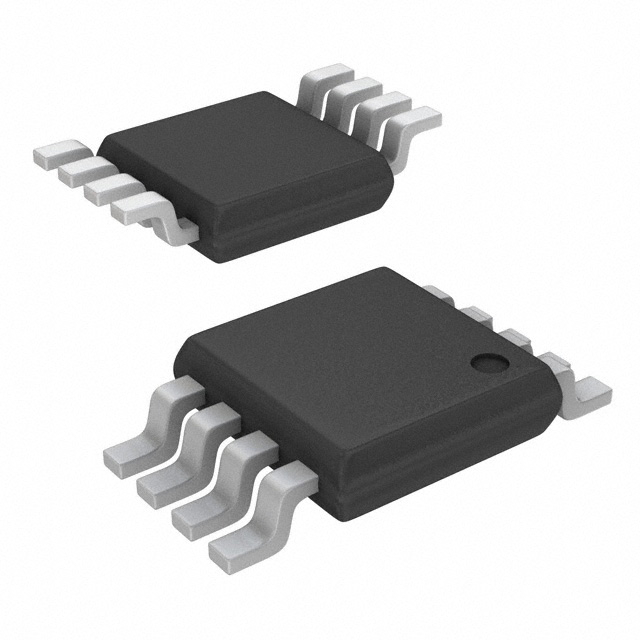
- Part No.:
- PI4IOE5V9536UEX
- Manufacturer:
- Diodes Incorporated
- Category:
- I/O Expanders
- Package:
- 8-TSSOP, 8-MSOP (0.118", 3.00mm Width)
- Datasheet:
-
 PI4IOE5V9536UEX.pdf
- Description:
- IC XPNDR 1MHZ SMBUS 8MSOP
- Quantity:
- Payment:

- Shipping:

Inventory:34,466
Please send an inquiry. Send us your inquiry, and we will respond immediately.
Product details
Overview
PI4IOE5V9536 from Diodes Incorporated is a 4-bit I²C/SMBus GPIO expander IC with 5V-tolerant I/Os, 2.3V–5.5V supply operation, and individual I/O direction/polarity configuration. It serves as a low-power parallel I/O extension for ACPI power switches, push buttons, LEDs, and fan control in embedded systems.
For engineers reviewing the PI4IOE5V9536 datasheet, PI4IOE5V9536 pinout, PI4IOE5V9536 application, or PI4IOE5V9536 equivalent, key selection criteria include I²C clock support up to 1 MHz, 100 kΩ internal pull-up on reset, noise-filtered SCL/SDA inputs, and MSOP-8 packaging for space-constrained designs.
Technical Context
The PI4IOE5V9536 implements a register-mapped I²C slave interface with four dedicated I/O pins (IO0–IO3), each configurable as input or output via the Configuration Register (Register 3). Polarity inversion is supported per-pin through Register 2, enabling flexible signal alignment without external logic.
It features a hardware power-on reset circuit that initializes all registers-including default 4-input state with 100 kΩ pull-ups-and enforces VPOR = 1.16–1.41 V. The I/O structure supports 5V-tolerant inputs even when VCC = 2.3 V, and output drive capability reaches ±10 mA at VCC = 3.0 V with VOL ≤ 0.7 V.
Key Specifications
| Parameter | Value and Actual Design Meaning |
|---|---|
| I²C Clock Frequency | Up to 1 MHz - supports Fast Mode Plus timing for high-speed host communication. |
| Supply Voltage Range | 2.3 V to 5.5 V - enables direct interfacing with 3.3 V and 5 V microcontrollers without level shifters. |
| I/O Voltage Tolerance | Up to 6.0 V on I/O pins - allows safe connection to 5 V peripherals while powered from lower VCC. |
| Standby Current | 0.25–1 µA at VCC = 5.5 V - minimizes quiescent power in battery-backed or always-on systems. |
| Output Drive Strength | ±10 mA per I/O at VCC = 3.0 V - sufficient to directly drive LEDs or small logic loads without external buffers. |
| Input Leakage | ≤100 µA at VI = GND - ensures stable input sampling in high-impedance sensor or switch interfaces. |
| ESD Protection | 4 kV HBM / 1 kV CDM - meets industrial-grade robustness requirements for board-level handling and field operation. |
Pinout & Package
Package: MSOP-8 (U), 3.0 mm × 3.0 mm body, 0.65 mm pitch, RoHS-compliant, green, lead-free.
| Pin/Terminal | Circuit Role | Design Meaning |
|---|---|---|
| 1 IO0 | I/O bidirectional port | Configurable as input (high-Z) or output (push-pull); defaults to input with 100 kΩ pull-up at power-on. |
| 2 IO1 | I/O bidirectional port | Independent direction/polarity control; supports 5V-tolerant input sensing when VCC ≥ 2.3 V. |
| 3 IO2 | I/O bidirectional port | Register-mapped I/O with polarity inversion capability-enables active-low signal compatibility without external inverters. |
| 4 GND | Ground reference | Primary return path for all I/O and internal logic; must be low-impedance to ensure noise immunity and reset stability. |
| 5 IO3 | I/O bidirectional port | Final GPIO channel; supports same drive strength and voltage tolerance as IO0–IO2. |
| 6 SCL | I²C serial clock input | Noise-filtered input accepting standard I²C waveforms; requires external pull-up to VCC or host rail. |
| 7 SDA | I²C serial data I/O | Open-drain bidirectional line with integrated noise filtering; shares pull-up with SCL in typical bus topology. |
| 8 VCC | Power supply | Supplies core logic and I/O drivers; decoupling capacitor (≥100 nF) required within 5 mm of pin for stable operation. |
Key Features
| Feature | Design Value |
|---|---|
| Individual I/O configuration | Each of 4 pins independently set as input or output via Configuration Register-eliminates need for fixed-function GPIO expanders. |
| Polarity inversion per I/O | Bit-wise inversion in Polarity Register allows software-aligned logic levels without external inverters or PCB redesign. |
| Noise-filtered SCL/SDA inputs | 50 ns spike suppression on bus lines prevents false clock/data transitions in electrically noisy environments (e.g., motor control boards). |
| Power-on reset with defined VPOR | Internal POR triggers at 1.16–1.41 V and forces all registers to known defaults-ensures deterministic startup without host intervention. |
| 100 kΩ internal pull-up on reset | Guarantees defined logic-high state on all I/Os during boot-reduces BOM count and improves reliability vs. discrete resistors. |
Applications
| ACPI Power Switch Interface | LED Status Indication |
|---|---|
Use Scenario: Monitoring mechanical power buttons or chassis intrusion switches in desktop/laptop platforms. IC Role / Device Role / Timing Role: GPIO expander providing debounced, 5V-tolerant input capture for ACPI event signaling over I²C. Use Value: Eliminates need for discrete level shifters and pull-ups; reduces PCB area by 40% vs. discrete buffer solutions. |
Use Scenario: Driving multi-color status LEDs on network equipment front panels with limited MCU GPIO. IC Role / Device Role / Timing Role: Low-side LED driver with programmable on/off and polarity inversion for common-anode configurations. Use Value: Delivers ±10 mA per channel at 3.3 V-sufficient for 2 mA indicator LEDs without external transistors. |
| Fan Speed Control Feedback | Sensor Interface Aggregation |
Use Scenario: Reading tachometer signals from 4-wire PC fans in thermal management subsystems. IC Role / Device Role / Timing Role: High-impedance input capture for open-collector fan RPM pulses synchronized to host I²C polling. Use Value: 5V-tolerant inputs accept 5 V tach signals directly-even when VCC = 3.3 V-avoiding level-shifter cost and delay. |
Use Scenario: Consolidating digital outputs from temperature, humidity, and motion sensors onto a single I²C bus. IC Role / Device Role / Timing Role: Parallel-to-serial bridge converting 4-bit sensor status flags into I²C-readable registers. Use Value: Reduces I²C address conflicts by replacing multiple dedicated sensor I/Os with one configurable port. |
Equivalent & Alternatives
The following parts are listed as comparable options for similar GPIO expansion applications.
| Alternative Part | Technical Difference | Application Difference | Selection Advice |
|---|---|---|---|
| TCA6408A | 8-bit I/O, 1.65–5.5 V supply, no internal pull-ups on reset, higher standby current (1 µA typ) | Requires external pull-ups for reliable button sensing; better suited for high-channel-count expansions | Select when >4 GPIOs are needed and board space permits larger TSSOP-16 package. |
| PCA9536 | 4-bit I/O, 2.3–5.5 V, no polarity inversion register, no noise filtering on SCL/SDA | Lacks per-pin polarity control and EMI resilience-less suitable for noisy industrial enclosures | Choose only if polarity inversion and bus noise immunity are not required and lowest BOM cost is critical. |
Compared with TCA6408A and PCA9536, the PI4IOE5V9536 uniquely combines 4-bit flexibility with built-in pull-ups, polarity inversion, and noise filtering-making it optimal for compact, robust, and software-efficient I/O expansion where signal integrity and startup determinism matter.
Availability
PI4IOE5V9536 is available at Aetrix Electronics and suitable for ACPI power management, LED status indication, fan tach feedback, and sensor interface aggregation requiring stable component supply across industrial, computing, and networking product lifecycles.
Supply support for PI4IOE5V9536 includes scheduled delivery planning, volume procurement assistance, BOM continuity management, traceable sourcing, and lifecycle availability coordination for OEM customers, industrial embedded developers, connected-device designers, and electronics production programs.
Manufacturer
Diodes Incorporated is a global semiconductor company specializing in discrete, analog, and mixed-signal ICs for power management, signal integrity, and connectivity applications.
The PI4IOE5V9536 belongs to Diodes' I²C GPIO expander product line, designed specifically for space-constrained embedded systems needing reliable, low-power, and 5V-tolerant I/O extension without external support components.
FAQ
What is the default I/O configuration after power-on reset?
At power-on reset, all four I/O pins (IO0–IO3) default to high-impedance inputs with internal 100 kΩ pull-up resistors enabled. The Configuration Register (Register 3) is initialized to 0xFF, and the Input Port Register reflects externally applied logic levels. This ensures predictable, glitch-free startup without host initialization dependency.
Can the PI4IOE5V9536 drive 5 V logic inputs while operating from a 3.3 V supply?
Yes-the I/O pins are 5V-tolerant up to 6.0 V regardless of VCC, so they can safely receive 5 V signals when VCC = 3.3 V. However, output high-level voltage (VOH) is limited to ~2.6 V at 3.0 V supply and –10 mA load, making it unsuitable for driving 5 V TTL inputs actively; use as input-only or with level-shifting for 5 V output compliance.
Does the device support I²C clock stretching or auto-increment addressing?
No-the PI4IOE5V9536 does not implement clock stretching or auto-increment addressing. Each register access requires explicit command byte transmission before read/write operations. This simplifies host firmware but requires full register addressing in every transaction, limiting burst efficiency compared to auto-increment devices like PCA9555.
How is ESD protection implemented, and what test standards apply?
The PI4IOE5V9536 provides 4 kV HBM (Human Body Model) and 1 kV CDM (Charged Device Model) ESD protection on all pins per JEDEC JS-001 and JESD22-C101 standards. This is achieved through integrated clamp diodes and optimized layout-no external TVS devices are needed for basic handling and board-level ESD immunity in Class 1B/2 environments.
PI4IOE5V9536UEX Specifications
- Product attributes
- Attribute value
- Manufacturer:
- Diodes Incorporated
- Series:
- -
- Package/Case:
- 8-TSSOP, 8-MSOP (0.118", 3.00mm Width)
- Packaging:
- Tape & Reel (TR)
- Product Status:
- Active
- Programmable:
- Not Verified
- Number of I/O:
- 4
- Interface:
- SMBus
- Interrupt Output:
- No
- Features:
- POR
- Output Type:
- -
- Current - Output Source/Sink:
- 50mA
- Clock Frequency:
- 1 MHz
- Voltage - Supply:
- 2.3V ~ 5.5V
- Operating Temperature:
- -40°C ~ 85°C
- Grade:
- -
- Qualification:
- -
- Mounting Type:
- Surface Mount
- Supplier Device Package:
- 8-MSOP
PI4IOE5V9536UEX FAQ
1.How can I place an order for PI4IOE5V9536UEX through Aetrix?
Please submit a Request for Quotation (RFQ) for PI4IOE5V9536UEX on Aetrix. Our sales agent will provide a competitive quotation and guide you through the order confirmation once you accept the terms.
2.Are the price and stock information for PI4IOE5V9536UEX reliable?
The price and inventory of PI4IOE5V9536UEX are updated periodically and may fluctuate due to market conditions. Stock and pricing data are typically refreshed every 24 hours. Quotation validity for PI4IOE5V9536UEX is usually 5 days.
3.What payment methods are accepted for PI4IOE5V9536UEX?
We accept Wire Transfer, PayPal, Credit Card, Western Union, MoneyGram, and Escrow for PI4IOE5V9536UEX transactions.
Note: Certain payment methods may incur a processing fee.
4.How is shipping managed for PI4IOE5V9536UEX?
PI4IOE5V9536UEX orders can be shipped via leading logistics carriers, including DHL, UPS, FedEx, TNT, or Registered Mail.
Once your PI4IOE5V9536UEX order is processed, you will receive an email with the shipment details and tracking number.
Note: Tracking information may take up to 24 hours to appear. Express delivery typically takes 3–5 business days.
5.How can I obtain technical support or documentation for PI4IOE5V9536UEX?
For technical support, including PI4IOE5V9536UEX datasheets, pinout diagrams, or application guidance, please contact our engineering support team. They can provide detailed documentation and assistance for your PI4IOE5V9536UEX requirements.
6.How does Aetrix verify that PI4IOE5V9536UEX is sourced from the original manufacturer or authorized distributors?
All PI4IOE5V9536UEX products on Aetrix are procured from qualified distributors and authorized channels. Our dedicated quality assurance team conducts strict verification, including traceability checks and, if necessary, third-party testing. This ensures that PI4IOE5V9536UEX meets industry standards.
7.What is the process for return or replacement of PI4IOE5V9536UEX?
All PI4IOE5V9536UEX units undergo pre-shipment inspection (PSI). If there is an issue with PI4IOE5V9536UEX, returns or replacements are accepted under the following conditions:
1.Quantity discrepancies, incorrect items, or visible external defects (such as breakage or corrosion), acknowledged by Aetrix.
2.The issue is reported within 90 days of delivery.
3.The PI4IOE5V9536UEX part is unused and in its original packaging.
Return procedure for PI4IOE5V9536UEX:
1.Submit a request within 90 days.
2.Obtain a Return Material Authorization (RMA) from Aetrix.
PI4IOE5V9536UEX Tags
-
TCA6408ARSVR
Texas Instruments
-
TCA9535RTWR
Texas Instruments
-
FXL6408UMX
onsemi
-
PCF8574ADWR
Texas Instruments
-
PCF8574APWR
Texas Instruments
-
TCA9555PWR
Texas Instruments
-
TCA9554PWR
Texas Instruments
-
TCA9554APWR
Texas Instruments
-
TCA9539PWR
Texas Instruments
-
TCA9534PWR
Texas Instruments
-
TCA9555RTWR
Texas Instruments
-
TCA9535PWR
Texas Instruments
Tech Hub

Operational amplifier guide covering op amp basics, feedback, ideal vs real op amps, common configurations, buffer circuits, offset, bias current, gain-bandwidth, slew rate, rail-to-rail limits and sel…

Jumper cables guide covering safe connection order, red and black clamp placement, final ground connection, cable gauge, length, clamp quality, copper vs CCA cables, jump starter comparison and battery…

LDO regulator guide covering low dropout voltage, power dissipation, thermal design, PSRR, output noise, capacitor stability, adjustable LDO circuits, LDO vs buck converter and datasheet selection chec…

Conditional Access Module guide covering CAM meaning, CI/CI+ interface, smart card authorization, DVB security workflow, TV and set-top box compatibility, internal electronics, ESD protection, connecto…

Guide to electronic component obsolescence covering EOL risk, PCN/PDN notices, last-time buy planning, replacement options, form-fit-function validation, counterfeit risk and BOM lifecycle management.

18650 battery guide covering lithium-ion cell basics, 3.6V/3.7V voltage, 4.2V charging, mAh and Wh capacity, protected cells, chargers, BMS, series-parallel packs, holders, welding and sourcing checks.…

Hall effect sensor guide covering working principle, linear and digital sensors, Arduino circuits, current sensing, speed detection, automotive applications, A3144 examples, signal filtering and datash…

Product Change Notification guide for electronic components, covering PCN meaning, PCN vs PDN/EOL, common change types, risk levels, form-fit-function review, engineering validation, BOM control, LTB/L…

A practical guide to blend door actuators, covering HVAC function, symptoms, location, AC and heater issues, reset and calibration, replacement cost, electrical diagnosis, compatibility checks, and rep…

Engineering guide to Raspberry Pi alternatives, covering chip-level differences, Orange Pi, ROCK, Jetson, Banana Pi, NanoPi, Compute Module, Pico, GPIO, camera, HAT compatibility, and replacement risks…


