
 My Inquiry
 My Account


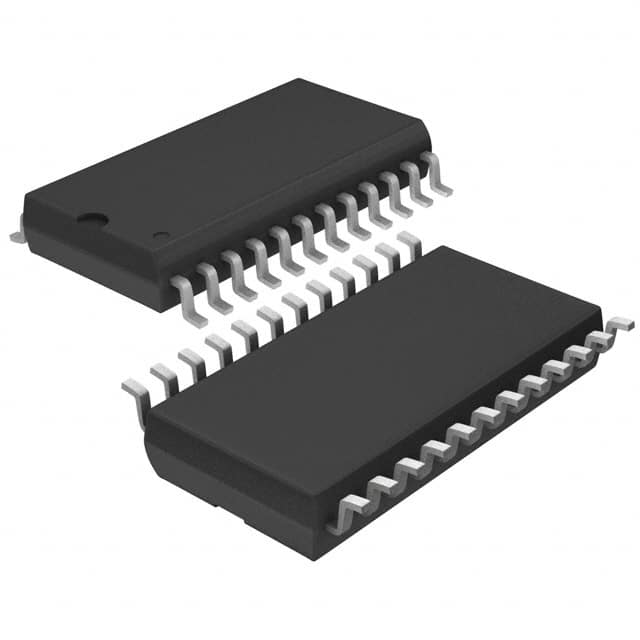
Diodes Incorporated PI5C3400S
- Part No.:
- PI5C3400S
- Manufacturer:
- Diodes Incorporated
- Category:
- Signal Switches, Multiplexers, Decoders
- Package:
- 20-SOIC (0.295", 7.50mm Width)
- Datasheet:
-
 PI5C3400S.pdf
- Description:
- IC BUS FET EXCHG SW 1X2:2 20SOIC
- Quantity:
- Payment:

- Shipping:

Inventory:3,697
Please send an inquiry. Send us your inquiry, and we will respond immediately.
Product details
Overview
PI5C3400S from Pericom Semiconductor is a 4-bit, 4-port bus exchange switch with individual bit-swap control via BX0–BX3 inputs, zero propagation delay, 5 Ω ON-resistance, and active-low Bus Enable (BE). It directly connects A/B and C/D buses in flow-through or exchanged configurations for high-speed digital interconnect in notebook and embedded systems.
For engineers reviewing the PI5C3400S datasheet, PI5C3400S pinout, PI5C3400S application, or PI5C3400S equivalent, key selection criteria include bus exchange timing (tBX ≤ 6.5 ns), ultra-low quiescent current (0.2 µA typical), 5 V operation, and SOIC-24 package compatibility with legacy logic routing.
Technical Context
The PI5C3400S implements four independent bilateral analog switches per bit, each controlled by BE and one BX signal to select between AB↔CD pass-through or AB↔DC exchange modes. Its 0.8 µm CMOS process enables 5 Ω RON and sub-nanosecond tPLH/tPHL (0.25 ns typical) without added ground bounce.
Switching is purely resistive-no latching, clocking, or level-shifting-making it suitable for bidirectional TTL/CMOS bus bridging where signal integrity and deterministic latency are critical. All I/O tolerate –0.5 V to +7.0 V, supporting hot-swap and mixed-voltage domain interfacing.
Key Specifications
| Parameter | Value and Actual Design Meaning |
|---|---|
| ON Resistance | 5 Ω typical at VCC = 4.5 V - enables direct bus connection with minimal voltage drop and RC delay |
| Propagation Delay | 0.25 ns typical - adds negligible latency beyond trace RC in high-speed digital paths |
| Quiescent Current | 0.2 µA typical - supports battery-powered notebook standby without measurable drain |
| Supply Voltage | 4.5 V to 5.5 V - compatible with standard 5 V TTL/CMOS logic rails |
| Operating Temp | –40°C to +85°C - qualified for industrial and portable computing environments |
| Input Hysteresis | 150 mV - prevents chatter on BE/BX control lines under noisy conditions |
| IOH/IOL | ±120 mA - supports driving 50 pF loads at >100 MHz without external buffering |
Pinout & Package
PI5C3400S is housed in a 24-pin 300-mil wide plastic SOIC (Small Outline Integrated Circuit) package with standard JEDEC MS-013AC footprint and 1.27 mm pitch.
| Pin/Terminal | Circuit Role | Design Meaning |
|---|---|---|
| BE | Bus Enable (active low) | Global enable/disable of all 4-bit switches; Hi-Z when high |
| BX0–BX3 | Bit Exchange control (per bit) | Selects AB↔CD (low) or AB↔DC (high) for corresponding bit pair |
| A0–A3, B0–B3 | Port A/B input/output terminals | Bidirectional signal paths; connected directly through switch when enabled |
| C0–C3, D0–D3 | Port C/D input/output terminals | Swapped or passed through based on BX state and BE assertion |
| VCC, GND | Power supply pins | Single 5 V supply; no separate I/O or analog rails required |
| NC | No Connect | Pin 12 is unconnected; must be left floating or tied to GND per layout guidelines |
Key Features
| Feature | Design Value |
|---|---|
| Zero propagation delay architecture | Resistive-switch topology eliminates gate delay; system timing governed only by trace RC and driver strength |
| 5 Ω low-impedance path | Minimizes signal attenuation and rise/fall time degradation across 4-bit parallel buses |
| Ultra-low quiescent power | 0.2 µA typical ICC enables always-on bus routing in battery-critical notebook subsystems |
| Individual bit exchange control | BX0–BX3 allow selective swapping of specific data bits without affecting adjacent lanes |
| Hot-swap tolerant I/O | –0.5 V to +7.0 V absolute max rating protects against backdrive and voltage overshoot during insertion |
Applications
| PCI Express Lane Reconfiguration | Notebook Display Interface Routing |
|---|---|
Use Scenario: Dynamic reassignment of PCIe x1 lanes between GPU, SSD, and USB controller in ultrabook platforms. IC Role / Device Role / Timing Role: Bidirectional 4-bit bus switch enabling physical lane remapping without protocol layer intervention. Use Value: Eliminates need for FPGA-based muxing; reduces BOM cost and power vs. active retimers while preserving signal integrity up to 2.5 GT/s. | Use Scenario: Switching LVDS or eDP video data between integrated GPU and discrete display controller in dual-display notebooks. IC Role / Device Role / Timing Role: Low-latency, zero-ground-bounce bus exchange for 4-bit pixel data lanes during display mode transitions. Use Value: Prevents visual artifacts during hot-plug or resolution change; supports <1 µs switching with no frame buffer corruption. |
| Industrial PLC I/O Module Multiplexing | Legacy ISA Bus Signal Bridging |
Use Scenario: Sharing 4-bit status/control signals among multiple sensor modules in modular PLC backplanes. IC Role / Device Role / Timing Role: Isolated bus exchange node allowing configurable signal routing between CPU and field I/O banks. Use Value: Enables software-defined I/O mapping without hardware redesign; withstands –40°C to +85°C ambient and ESD-prone factory environments. | Use Scenario: Adapting ISA bus address/data lines between legacy 8-bit peripherals and modern microcontroller-based controllers. IC Role / Device Role / Timing Role: Passive, non-inverting bus bridge that preserves timing margins and signal levels across voltage domains. Use Value: Maintains full ISA timing compliance (tAS, tDH, tDS) with no added setup/hold penalties due to zero propagation delay. |
Equivalent & Alternatives
The following parts are listed as comparable options for similar bus exchange switch applications.
| Alternative Part | Technical Difference | Application Difference | Selection Advice |
|---|---|---|---|
| SN74CBT3244DBR | 8-bit, non-exchange configuration; no BX control; fixed A↔B routing only | Lacks per-bit swap capability; suitable only for simple bus isolation, not dynamic reconfiguration | Choose when only bidirectional isolation is needed and board space allows larger 24-pin TSSOP |
| PI5C3257LEX | 4-bit, 2-channel mux/demux; no exchange function; single enable per channel | Supports AB↔CD routing but cannot invert bit order; lacks BX0–BX3 granularity | Prefer for cost-sensitive designs where bit-swapping is unnecessary and lower RON (3 Ω) is critical |
Compared with SN74CBT3244DBR and PI5C3257LEX, the PI5C3400S uniquely delivers per-bit exchange control in a compact SOIC-24, making it the only option for applications requiring runtime bit-level bus topology reconfiguration without added logic overhead.
Availability
PI5C3400S is available at Aetrix Electronics and suitable for notebook design, industrial PLC I/O modules, PCI Express lane management, and legacy bus bridging requiring stable component supply and long-term lifecycle support.
Supply support for PI5C3400S includes scheduled delivery planning, volume procurement assistance, BOM continuity management, traceable sourcing, and lifecycle availability coordination for OEM customers, industrial embedded developers, connected-device designers, and electronics production programs.
Manufacturer
Pericom Semiconductor was a fabless provider of high-speed interface and signal integrity solutions, acquired by Diodes Incorporated in 2016; its logic portfolio remains widely deployed in industrial and computing applications.
The PI5C series targets low-latency, low-power digital interconnect in portable and embedded systems, emphasizing zero-delay switching, ultra-low static current, and robust mixed-signal I/O tolerance.
FAQ
What is the maximum capacitive load the PI5C3400S can drive while maintaining specified timing?
The PI5C3400S is characterized for 50 pF load capacitance with tPLH/tPHL ≤ 0.25 ns. Its 5 Ω RON forms an RC network with load; for loads up to 100 pF, rise/fall times remain within 10% of unloaded values. Driving >100 pF may degrade edge rates but does not affect logic functionality or DC specs.
Can PI5C3400S operate with 3.3 V logic levels?
No. The PI5C3400S requires VCC = 4.5 V to 5.5 V and is not 3.3 V tolerant on control inputs. VIH is guaranteed ≥2.0 V, but operation below 4.5 V violates Absolute Maximum Ratings for VCC and risks undefined switching behavior or increased RON.
Is the NC pin (Pin 12) required to be grounded or left floating?
Pin 12 is internally unconnected and must be left floating per Pericom's design guidance. Grounding it may cause unintended leakage paths or violate internal ESD protection layout; no performance benefit or reliability improvement results from tying NC to GND.
How does the PI5C3400S handle simultaneous switching of multiple bits?
All four bit channels switch independently but share the same BE and VCC/GND rails. No timing skew is introduced between bits-the tBX specification (1.5–6.5 ns) applies identically to BX0–BX3. Ground bounce is eliminated by flow-through architecture, so simultaneous toggling of all BX lines causes no additional noise.
PI5C3400S Specifications
- Product attributes
- Attribute value
- Manufacturer:
- Diodes Incorporated
- Series:
- -
- Package/Case:
- 20-SOIC (0.295", 7.50mm Width)
- Packaging:
- Tube
- Product Status:
- Obsolete
- Type:
- Bus FET Exchange Switch
- Circuit:
- 1 x 2:2
- Independent Circuits:
- 4
- Current - Output High, Low:
- -
- Voltage Supply Source:
- Single Supply
- Voltage - Supply:
- -
- Operating Temperature:
- -40°C ~ 85°C
- Grade:
- -
- Qualification:
- -
- Mounting Type:
- Surface Mount
- Supplier Device Package:
- 20-SOIC
PI5C3400S FAQ
1.How can I place an order for PI5C3400S through Aetrix?
Please submit a Request for Quotation (RFQ) for PI5C3400S on Aetrix. Our sales agent will provide a competitive quotation and guide you through the order confirmation once you accept the terms.
2.Are the price and stock information for PI5C3400S reliable?
The price and inventory of PI5C3400S are updated periodically and may fluctuate due to market conditions. Stock and pricing data are typically refreshed every 24 hours. Quotation validity for PI5C3400S is usually 5 days.
3.What payment methods are accepted for PI5C3400S?
We accept Wire Transfer, PayPal, Credit Card, Western Union, MoneyGram, and Escrow for PI5C3400S transactions.
Note: Certain payment methods may incur a processing fee.
4.How is shipping managed for PI5C3400S?
PI5C3400S orders can be shipped via leading logistics carriers, including DHL, UPS, FedEx, TNT, or Registered Mail.
Once your PI5C3400S order is processed, you will receive an email with the shipment details and tracking number.
Note: Tracking information may take up to 24 hours to appear. Express delivery typically takes 3–5 business days.
5.How can I obtain technical support or documentation for PI5C3400S?
For technical support, including PI5C3400S datasheets, pinout diagrams, or application guidance, please contact our engineering support team. They can provide detailed documentation and assistance for your PI5C3400S requirements.
6.How does Aetrix verify that PI5C3400S is sourced from the original manufacturer or authorized distributors?
All PI5C3400S products on Aetrix are procured from qualified distributors and authorized channels. Our dedicated quality assurance team conducts strict verification, including traceability checks and, if necessary, third-party testing. This ensures that PI5C3400S meets industry standards.
7.What is the process for return or replacement of PI5C3400S?
All PI5C3400S units undergo pre-shipment inspection (PSI). If there is an issue with PI5C3400S, returns or replacements are accepted under the following conditions:
1.Quantity discrepancies, incorrect items, or visible external defects (such as breakage or corrosion), acknowledged by Aetrix.
2.The issue is reported within 90 days of delivery.
3.The PI5C3400S part is unused and in its original packaging.
Return procedure for PI5C3400S:
1.Submit a request within 90 days.
2.Obtain a Return Material Authorization (RMA) from Aetrix.
PI5C3400S Tags
-
SN74HC138DR
Texas Instruments
-
TC7SB3157CFU,LF(CT
Toshiba Semiconductor and Storage
-
74CBTLV3257PW,118
Nexperia USA Inc.

-
SN74CBTLV3257PWR
Texas Instruments
-
74CBTLV3257GUX
Nexperia USA Inc.
-
74HC154BQ,118
Nexperia USA Inc.

-
P3S0200GMX
NXP USA Inc.
-
SN74CB3Q3245PWR
Texas Instruments
-
SN74CB3Q3257RGYR
Texas Instruments
-
TCA9543APWR
Texas Instruments
-
TCA9546APWR
Texas Instruments
-
SN74HC138N
Texas Instruments
Tech Hub

An engineering guide to LED driver operation, constant-current and constant-voltage outputs, linear and switching topologies, dimming, IC selection, calculations, replacement compatibility, and fault c…

Operational amplifier guide covering op amp basics, feedback, ideal vs real op amps, common configurations, buffer circuits, offset, bias current, gain-bandwidth, slew rate, rail-to-rail limits and sel…

Jumper cables guide covering safe connection order, red and black clamp placement, final ground connection, cable gauge, length, clamp quality, copper vs CCA cables, jump starter comparison and battery…

LDO regulator guide covering low dropout voltage, power dissipation, thermal design, PSRR, output noise, capacitor stability, adjustable LDO circuits, LDO vs buck converter and datasheet selection chec…

Conditional Access Module guide covering CAM meaning, CI/CI+ interface, smart card authorization, DVB security workflow, TV and set-top box compatibility, internal electronics, ESD protection, connecto…

Guide to electronic component obsolescence covering EOL risk, PCN/PDN notices, last-time buy planning, replacement options, form-fit-function validation, counterfeit risk and BOM lifecycle management.

18650 battery guide covering lithium-ion cell basics, 3.6V/3.7V voltage, 4.2V charging, mAh and Wh capacity, protected cells, chargers, BMS, series-parallel packs, holders, welding and sourcing checks.…

Hall effect sensor guide covering working principle, linear and digital sensors, Arduino circuits, current sensing, speed detection, automotive applications, A3144 examples, signal filtering and datash…

Product Change Notification guide for electronic components, covering PCN meaning, PCN vs PDN/EOL, common change types, risk levels, form-fit-function review, engineering validation, BOM control, LTB/L…

A practical guide to blend door actuators, covering HVAC function, symptoms, location, AC and heater issues, reset and calibration, replacement cost, electrical diagnosis, compatibility checks, and rep…


