
 My Inquiry
 My Account


Diodes Incorporated PI6C5912012ZDIEX
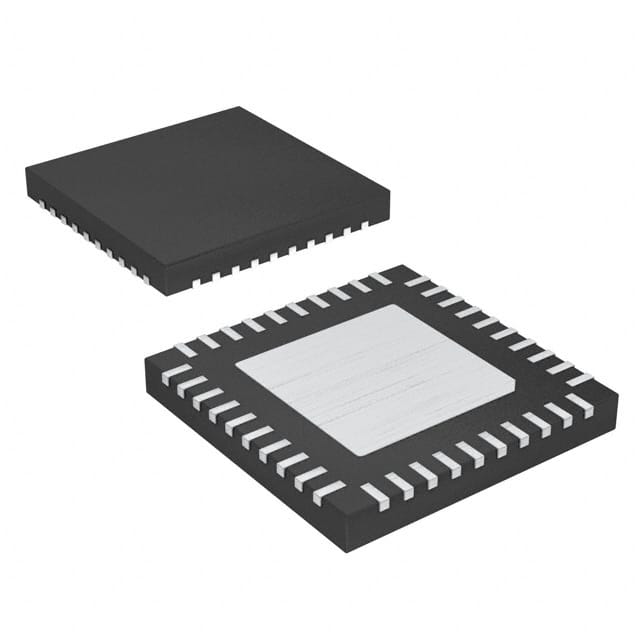
- Part No.:
- PI6C5912012ZDIEX
- Manufacturer:
- Diodes Incorporated
- Category:
- Clock Buffers, Drivers
- Package:
- 40-WFQFN Exposed Pad
- Datasheet:
-
 PI6C5912012ZDIEX.pdf
- Description:
- IC CLK BUFFER 2:12 2GHZ 40TQFN
- Quantity:
- Payment:

- Shipping:

Inventory:1,362
Please send an inquiry. Send us your inquiry, and we will respond immediately.
Product details
Overview
PI6C5912012ZDIEX from Diodes Incorporated is a 12-output LVPECL fanout buffer with up to 2 GHz output frequency, < 0.01 ps typical additive phase jitter (156.25 MHz, 12 kHz–20 MHz), dual selectable differential/single-ended reference inputs, and separate core (VDD) and output (VDDO) supplies for level shifting. It serves as a low-skew clock distribution IC in high-speed networking switch fabric timing paths.
For engineers reviewing the PI6C5912012ZDIEX datasheet, PI6C5912012ZDIEX pinout, PI6C5912012ZDIEX application, or PI6C5912012ZDIEX equivalent, key selection criteria include LVPECL output skew (<30 ps), input select logic (IN_SEL), thermal pad grounding, TQFN-40 package footprint, and dual-supply voltage compatibility (2.5 V / 3.3 V).
Technical Context
The PI6C5912012ZDIEX implements a high-fidelity clock fanout architecture with two independent differential reference inputs (REF_IN0±, REF_IN1±), selected via LVCMOS/LVTTL IN_SEL control. Its internal biasing includes VREF_AC output for AC-coupled input termination and supports both DC- and AC-coupled LVPECL input configurations.
It delivers 12 matched LVPECL output pairs (Q0± through Q11±) with propagation delay of 750 ps, part-to-part skew ±50 ps, and output duty cycle tightly controlled at 48–52%. The device operates across industrial temperature (−40 °C to +85 °C) with dedicated VDD (core) and VDDO (output) rails enabling mixed-voltage system interfacing.
Key Specifications
| Parameter | Value and Actual Design Meaning |
|---|---|
| Output count | 12 differential LVPECL outputs (Q0± to Q11±), each pair electrically matched for low skew |
| Max output frequency | 2 GHz - supports 10G/25G Ethernet, PCIe Gen4/Gen5, and high-speed backplane clocking |
| Additive phase jitter | < 0.01 ps RMS (156.25 MHz, 12 kHz–20 MHz integration) - enables ultra-low-noise clock tree design |
| Input select interface | LVCMOS/LVTTL IN_SEL pin with 200 kΩ pulldown - enables hardware-selectable reference source without external logic |
| Supply separation | VDD (2.5 V / 3.3 V core) and VDDO (2.5 V / 3.3 V output) - allows independent voltage domain interfacing to upstream source and downstream receivers |
| Output skew | 13–30 ps typical max - ensures deterministic timing alignment across all 12 outputs in parallel clock distribution |
| Operating temperature | −40 °C to +85 °C - qualified for industrial-grade telecom and computing infrastructure environments |
Pinout & Package
The PI6C5912012ZDIEX is housed in a 40-pin Thin Quad Flat No-Lead (TQFN) package with exposed thermal pad (package code ZD). The package requires soldering the thermal pad to a grounded PCB copper area for thermal management and electrical stability.
| Pin/Terminal | Circuit Role | Design Meaning |
|---|---|---|
| 1 | IN_SEL | LVCMOS/LVTTL input selecting REF_IN0± (IN_SEL = 0) or REF_IN1± (IN_SEL = 1); internal 200 kΩ pulldown |
| 2,3 / 8,9 | REF_IN1± / REF_IN0± | Differential reference inputs; accept single-ended signals when one side tied to VREF_AC or GND | 5,6 | VDD | Core supply (2.5 V or 3.3 V); powers internal logic and input buffers |
| 7 | VREF_AC | Bias voltage output (VDD − 1.6 V to VDD − 1.1 V); used for AC-coupled input termination |
| 11,20,31,40 | VDDO | Output supply (2.5 V or 3.3 V); sets LVPECL output common-mode level and swing |
| 12–13 / 14–15 / … / 38–39 | Q0± to Q11± | 12 matched LVPECL output differential pairs; each pair has <30 ps inter-pair skew |
| 21,30 | GND | Power ground return for core and output sections; must be low-inductance connection |
| Thermal Pad | Ground plane connection | Exposed copper pad beneath package; must be soldered to PCB ground plane for thermal dissipation and noise reduction |
Key Features
| Feature | Design Value |
|---|---|
| Dual-reference input selection | Hardware-configurable via IN_SEL pin - eliminates need for external multiplexer or FPGA control in redundant clock systems |
| Ultra-low additive jitter | < 0.01 ps RMS - preserves signal integrity in multi-stage clock trees where jitter accumulation is critical |
| Separate VDD/VDDO supplies | Enables interoperability between 2.5 V and 3.3 V domains - simplifies board-level voltage translation for mixed-supply systems |
| Thermal pad with ground tie | Reduces junction-to-ambient thermal resistance to 26.18 °C/W - maintains stable operation under full 105 mA supply current at 85 °C ambient |
| LVPECL output matching | 12 output pairs with ≤30 ps skew - ensures synchronous sampling across multiple ASICs/FPGAs in parallel data paths |
Applications
| 10G/25G Ethernet Switch Fabric | PCIe Gen4/Gen5 Reference Clock Distribution |
|---|---|
Use Scenario: Distributing a single 156.25 MHz or 100 MHz reference clock to 12 line-card PHYs in a modular L2/L3 switch chassis. IC Role / Device Role / Timing Role: LVPECL fanout buffer providing low-jitter, low-skew copies to each PHY's REFCLK input. Use Value: Maintains sub-0.01 ps additive jitter and <30 ps output skew - meets IEEE 802.3bj and OIF CEI-28G-LR jitter budgets for multi-lane SerDes alignment. | Use Scenario: Driving reference clocks to 12 PCIe root complex endpoints and switch chips in a server motherboard with dual-CPU topology. IC Role / Device Role / Timing Role: High-frequency clock repeater delivering 100 MHz differential LVPECL to PCIe slots, M.2 connectors, and chipset clocks. Use Value: Supports 2 GHz bandwidth and 48–52% duty cycle - satisfies PCIe Gen4/Gen5 AC timing requirements including tJITcc and tJITd. |
| High-Speed Backplane Timing Module | Optical Transport Network (OTN) Line Card |
Use Scenario: Fanout of a 2.488 GHz or 9.953 GHz clock across a 16-slot backplane for distributed DSP processing in telecom baseband units. IC Role / Device Role / Timing Role: Low-delay (750 ps) LVPECL buffer replicating master clock to slot-specific SERDES and ADC/DAC clock inputs. Use Value: Propagation delay consistency and part-to-part skew ±50 ps - enables deterministic inter-slot synchronization for time-sensitive packet processing. | Use Scenario: Clock conditioning and distribution for OTU2/OTU3/OTU4 framers and FEC engines on a 100G CFP2 line card. IC Role / Device Role / Timing Role: Jitter-cleaned fanout IC feeding 155.52 MHz, 622.08 MHz, or 2.488 GHz clocks to multiple framer ICs. Use Value: Ultra-low additive jitter preserves SONET/SDH BER performance - meets GR-1377-CORE mask compliance for transport-layer timing. |
Equivalent & Alternatives
The following parts are listed as comparable options for similar LVPECL fanout buffer applications.
| Alternative Part | Technical Difference | Application Difference | Selection Advice |
|---|---|---|---|
| IDT8T49N242A | Integrated PLL with jitter cleaning; 12 LVDS/LVPECL outputs; higher power (145 mA) | Used where input clock requires regeneration; not suitable for pure fanout-only use cases | Select when input reference is noisy and jitter attenuation is required beyond fanout capability |
| Si53302-A01AGM | Programmable 12-output clock generator; supports multiple output formats (LVPECL/LVDS/HCSL); 0.04 ps additive jitter | Used in flexible clock tree designs requiring format conversion or frequency translation | Select when output format diversity or frequency agility is needed alongside fanout |
Compared with IDT8T49N242A and Si53302-A01AGM, the PI6C5912012ZDIEX offers lower power (105 mA), simpler configuration (no I²C or programming), and superior jitter performance (0.01 ps vs. 0.04 ps), making it optimal for fixed-frequency, low-noise fanout in space-constrained telecom and computing modules.
Availability
PI6C5912012ZDIEX is available at Aetrix Electronics and suitable for 10G/25G Ethernet switch fabric timing, PCIe Gen4/Gen5 reference clock distribution, and high-speed backplane timing modules requiring stable component supply and guaranteed long-term industrial temperature support.
Supply support for PI6C5912012ZDIEX includes scheduled delivery planning, volume procurement assistance, BOM continuity management, traceable sourcing, and lifecycle availability coordination for OEM customers, industrial embedded developers, connected-device designers, and electronics production programs.
Manufacturer
Diodes Incorporated is a global manufacturer of discrete semiconductors and integrated circuits, specializing in high-performance analog, logic, and timing solutions for industrial, computing, and communications markets.
The PI6C5912012 belongs to Diodes' Pericom® timing product line, engineered specifically for ultra-low-jitter clock distribution in high-speed serial data infrastructure where deterministic skew and phase noise preservation are critical.
FAQ
What is the recommended power supply decoupling for PI6C5912012ZDIEX?
Each VDD and VDDO pin requires individual 0.1 µF ceramic + 1 µF bulk capacitance placed as close as possible to the pin. The thermal pad must be connected to a solid ground plane. This decoupling scheme minimizes supply-induced jitter and ensures stable 2 GHz operation per the DS40091 Rev 2-2 layout guidelines.
Can PI6C5912012ZDIEX accept single-ended CMOS clock inputs?
Yes - REF_IN0± and REF_IN1± can accept single-ended inputs by AC-coupling the signal to one pin and terminating the other to VREF_AC (for mid-rail bias) or GND. Input high/low thresholds are defined per LVCMOS levels (VIH = 2.0 V min at 3.3 V VDD), and input differential amplitude must meet 0.1–1.5 Vpp depending on frequency.
How is output skew measured and what does "part-to-part skew" mean?
Output skew (TSK) is the maximum time difference between any two LVPECL output transitions under identical load conditions (13–30 ps typ/max). Part-to-part skew (TP2P) is the worst-case delay variation between identical pins on two separately packaged devices (±50 ps), critical for multi-chip clock synchronization in large-scale systems.
Is the thermal pad of PI6C5912012ZDIEX electrically connected internally?
No - the thermal pad is not internally connected to any circuit node. It must be externally soldered to a PCB ground plane to provide thermal conduction and reduce ΘJA from 26.18 °C/W to specification-compliant levels. Floating or unconnected thermal pads cause excessive junction temperature and potential timing drift or failure.
PI6C5912012ZDIEX Specifications
- Product attributes
- Attribute value
- Manufacturer:
- Diodes Incorporated
- Series:
- -
- Package/Case:
- 40-WFQFN Exposed Pad
- Packaging:
- Tape & Reel (TR)
- Product Status:
- Active
- Type:
- Fanout Buffer (Distribution)
- Number of Circuits:
- 1
- Ratio - Input:Output:
- 2:12
- Differential - Input:Output:
- Yes/Yes
- Input:
- Differential or Single-Ended
- Output:
- LVPECL
- Frequency - Max:
- 2 GHz
- Voltage - Supply:
- 2.375V ~ 3.465V
- Operating Temperature:
- -40°C ~ 85°C (TA)
- Mounting Type:
- Surface Mount
- Grade:
- -
- Qualification:
- -
- Supplier Device Package:
- 40-TQFN (6x6)
PI6C5912012ZDIEX FAQ
1.How can I place an order for PI6C5912012ZDIEX through Aetrix?
Please submit a Request for Quotation (RFQ) for PI6C5912012ZDIEX on Aetrix. Our sales agent will provide a competitive quotation and guide you through the order confirmation once you accept the terms.
2.Are the price and stock information for PI6C5912012ZDIEX reliable?
The price and inventory of PI6C5912012ZDIEX are updated periodically and may fluctuate due to market conditions. Stock and pricing data are typically refreshed every 24 hours. Quotation validity for PI6C5912012ZDIEX is usually 5 days.
3.What payment methods are accepted for PI6C5912012ZDIEX?
We accept Wire Transfer, PayPal, Credit Card, Western Union, MoneyGram, and Escrow for PI6C5912012ZDIEX transactions.
Note: Certain payment methods may incur a processing fee.
4.How is shipping managed for PI6C5912012ZDIEX?
PI6C5912012ZDIEX orders can be shipped via leading logistics carriers, including DHL, UPS, FedEx, TNT, or Registered Mail.
Once your PI6C5912012ZDIEX order is processed, you will receive an email with the shipment details and tracking number.
Note: Tracking information may take up to 24 hours to appear. Express delivery typically takes 3–5 business days.
5.How can I obtain technical support or documentation for PI6C5912012ZDIEX?
For technical support, including PI6C5912012ZDIEX datasheets, pinout diagrams, or application guidance, please contact our engineering support team. They can provide detailed documentation and assistance for your PI6C5912012ZDIEX requirements.
6.How does Aetrix verify that PI6C5912012ZDIEX is sourced from the original manufacturer or authorized distributors?
All PI6C5912012ZDIEX products on Aetrix are procured from qualified distributors and authorized channels. Our dedicated quality assurance team conducts strict verification, including traceability checks and, if necessary, third-party testing. This ensures that PI6C5912012ZDIEX meets industry standards.
7.What is the process for return or replacement of PI6C5912012ZDIEX?
All PI6C5912012ZDIEX units undergo pre-shipment inspection (PSI). If there is an issue with PI6C5912012ZDIEX, returns or replacements are accepted under the following conditions:
1.Quantity discrepancies, incorrect items, or visible external defects (such as breakage or corrosion), acknowledged by Aetrix.
2.The issue is reported within 90 days of delivery.
3.The PI6C5912012ZDIEX part is unused and in its original packaging.
Return procedure for PI6C5912012ZDIEX:
1.Submit a request within 90 days.
2.Obtain a Return Material Authorization (RMA) from Aetrix.
PI6C5912012ZDIEX Tags

-
PL133-37TC-R
Microchip Technology
-
PL133-27GC-R
Microchip Technology
-
LMK1C1102DQFR
Texas Instruments
-
LMK1C1102PWR
Texas Instruments
-
LMK1C1104DQFR
Texas Instruments
-
LMK1C1104PWR
Texas Instruments
-
CDC3RL02YFPR
Texas Instruments

-
SY75602ATWL-TR
Microchip Technology
-
SY75603ATWL-TR
Microchip Technology
-
5PB1102CMGI8
Renesas Electronics Corporation
-
PL133-27GI-R
Microchip Technology

-
551MLFT
Renesas Electronics Corporation
Tech Hub

Operational amplifier guide covering op amp basics, feedback, ideal vs real op amps, common configurations, buffer circuits, offset, bias current, gain-bandwidth, slew rate, rail-to-rail limits and sel…

Jumper cables guide covering safe connection order, red and black clamp placement, final ground connection, cable gauge, length, clamp quality, copper vs CCA cables, jump starter comparison and battery…

LDO regulator guide covering low dropout voltage, power dissipation, thermal design, PSRR, output noise, capacitor stability, adjustable LDO circuits, LDO vs buck converter and datasheet selection chec…

Conditional Access Module guide covering CAM meaning, CI/CI+ interface, smart card authorization, DVB security workflow, TV and set-top box compatibility, internal electronics, ESD protection, connecto…

Guide to electronic component obsolescence covering EOL risk, PCN/PDN notices, last-time buy planning, replacement options, form-fit-function validation, counterfeit risk and BOM lifecycle management.

18650 battery guide covering lithium-ion cell basics, 3.6V/3.7V voltage, 4.2V charging, mAh and Wh capacity, protected cells, chargers, BMS, series-parallel packs, holders, welding and sourcing checks.…

Hall effect sensor guide covering working principle, linear and digital sensors, Arduino circuits, current sensing, speed detection, automotive applications, A3144 examples, signal filtering and datash…

Product Change Notification guide for electronic components, covering PCN meaning, PCN vs PDN/EOL, common change types, risk levels, form-fit-function review, engineering validation, BOM control, LTB/L…

A practical guide to blend door actuators, covering HVAC function, symptoms, location, AC and heater issues, reset and calibration, replacement cost, electrical diagnosis, compatibility checks, and rep…

Engineering guide to Raspberry Pi alternatives, covering chip-level differences, Orange Pi, ROCK, Jetson, Banana Pi, NanoPi, Compute Module, Pico, GPIO, camera, HAT compatibility, and replacement risks…


