
 My Inquiry
 My Account


Diodes Incorporated PI6LC48P0201AZHIE
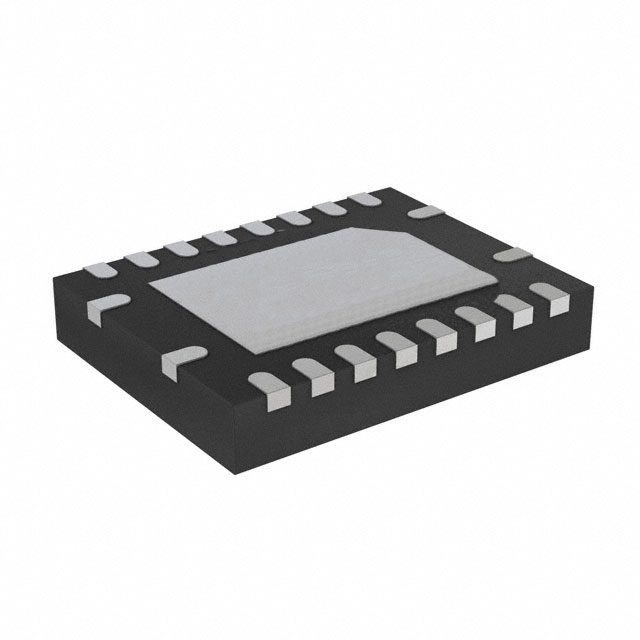
- Part No.:
- PI6LC48P0201AZHIE
- Manufacturer:
- Diodes Incorporated
- Category:
- Application Specific Clock/Timing
- Package:
- 20-WFQFN Exposed Pad
- Datasheet:
-
 PI6LC48P0201AZHIE.pdf
- Description:
- 2-OUTPUT LVPECL NETWORKING CLOCK
- Quantity:
- Payment:

- Shipping:

Inventory:4,504
Please send an inquiry. Send us your inquiry, and we will respond immediately.
Product details
Overview
PI6LC48P0201AZHIE from Pericom is a 2-output LVPECL clock synthesizer optimized for Ethernet reference clock generation, featuring selectable crystal or LVCMOS/LVTTL input, 3.3V/2.5V dual supply support, and ultra-low RMS phase jitter of 0.3ps (typ) at 156.25MHz using a 25MHz crystal. It delivers precise 62.5MHz, 125MHz, and 156.25MHz outputs for high-integrity networking interfaces.
For engineers reviewing the PI6LC48P0201AZHIE datasheet, PI6LC48P0201AZHIE pinout, PI6LC48P0201AZHIE application, or PI6LC48P0201AZHIE equivalent, key selection criteria include differential LVPECL output compliance, industrial temperature operation (–40°C to +85°C), PLL bypass capability, N_SEL frequency select logic, and TQFN-20 package thermal performance (θJA = 19.8°C/W).
Technical Context
The device implements a proprietary low-phase-noise PLL architecture with separate analog (VDDA), core (VDD), and output (VDDO) power domains to isolate switching noise and preserve jitter integrity. Frequency selection is determined by two binary inputs (N_SEL0/N_SEL1), enabling deterministic output frequencies without reprogramming.
It supports dual clock sources: a parallel-resonant 25MHz fundamental-mode crystal (18pF load, ≤50Ω ESR) or single-ended LVCMOS/LVTTL reference input via AC-coupled XTAL_IN, with IN_SEL controlling source selection and PLL_ByPass enabling direct clock pass-through mode.
Key Specifications
| Parameter | Value and Actual Design Meaning |
|---|---|
| Output Count & Type | 2 differential LVPECL output pairs (CLK0/CLK0#, CLK1/CLK1#) for noise-immune, high-speed clock distribution |
| Supported Frequencies | 62.5MHz, 125MHz, 156.25MHz - directly aligned with IEEE 802.3 Ethernet PHY timing requirements |
| RMS Phase Jitter | 0.3ps (typ), 0.5ps (max) @ 156.25MHz (12kHz–20MHz integration band) - meets stringent Ethernet jitter budgets |
| Supply Voltage Options | Full 3.3V (2.97–3.63V) or 2.5V (2.375–2.625V) operation - enables compatibility with mixed-voltage system designs |
| Operating Temperature | –40°C to +85°C industrial range - validated for sustained operation in network edge and embedded infrastructure |
| Package | 20-pin TQFN (ZH), 4mm × 4mm, 0.5mm pitch, exposed thermal pad - provides low-inductance grounding and efficient heat dissipation |
Pinout & Package
The PI6LC48P0201AZHIE is housed in a 20-pin TQFN (ZH) package with an exposed thermal pad connected to GND. Pin layout supports symmetrical routing of differential LVPECL outputs and dedicated power domains (VDDA, VDD, VDDO) for optimal noise isolation.
| Pin/Terminal | Circuit Role | Design Meaning |
|---|---|---|
| 1, 19 | VDDO | Output-stage power supply - decoupled separately to prevent LVPECL switching noise from modulating PLL performance |
| 2, 3 | CLK0, CLK0# | Differential LVPECL clock output pair - requires 150Ω source termination to GND and 100Ω across differential pair per JEDEC 65 |
| 4 | M_reset | Active-high master reset - forces CLKx low / CLKx# high when asserted; internal 51kΩ pulldown ensures safe default state |
| 6 | PLL_ByPass | PLL enable/bypass control - "0" enables PLL synthesis; "1" routes input clock directly to outputs, disabling frequency multiplication |
| 8 | VDDA | Analog PLL core supply - requires RC filter (10Ω + 10μF) to suppress high-frequency ripple affecting VCO stability |
| 9, 11 | N_SEL0, N_SEL1 | Frequency select inputs - binary encoding determines output frequency (00→156.25MHz, 01/11→125MHz, 10→62.5MHz) |
| 10, 16 | VDD | Digital core supply - powers logic, dividers, and control circuitry; requires local 0.1μF bypass |
| 12, 13 | XTAL_IN, XTAL_OUT | Crystal oscillator interface - supports 22.4–27.2MHz fundamental crystals with 18pF load capacitance |
| 14 | Ref_IN | LVCMOS/LVTTL reference input - accepts AC-coupled single-ended clock up to 170MHz; internal 4pF input capacitance |
| 15 | IN_SEL | Input source selector - "0" selects XTAL_IN/XTAL_OUT; "1" selects Ref_IN as clock source |
| 17, 18 | CLK1#, CLK1 | Second differential LVPECL output pair - independently configurable, identical electrical specs to CLK0/CLK0# |
| 5, 7, 20, E-pad | GND | Ground terminals - multiple GND pins and exposed pad ensure low-impedance return path for analog, digital, and output stages |
Key Features
| Feature | Design Value |
|---|---|
| Dual independent LVPECL outputs | Enables simultaneous clocking of two Ethernet PHYs or MAC+PHY subsystems with matched skew (≤35ps) and duty cycle (48–52%) |
| Configurable clock source selection | Hardware-selectable crystal oscillator or external LVCMOS/LVTTL reference eliminates need for firmware configuration or I²C interface |
| Ultra-low phase jitter performance | 0.3ps typical RMS jitter at 156.25MHz satisfies IEEE 802.3an (10GBASE-T) and 802.3ba (40/100GBASE-R) reference clock requirements |
| Separate power domain architecture | VDDA/VDD/VDDO isolation reduces supply-induced jitter by >5dB compared to single-rail clock generators |
| Industrial temperature grade | Validated operation from –40°C to +85°C ensures reliability in uncontrolled environments such as outdoor switches and industrial gateways |
Applications
| 10GBASE-T Ethernet PHY Clocking | Multi-port Gigabit Switch Timing |
|---|---|
Use Scenario: Providing synchronized 156.25MHz reference clocks to multiple 10GBASE-T PHY ICs in a line card or base station unit. IC Role / Device Role / Timing Role: Primary clock synthesizer generating low-jitter differential LVPECL outputs compliant with IEEE 802.3an Annex 58A. Use Value: Eliminates need for discrete crystal oscillators per PHY, reducing BOM count and board area while maintaining <0.5ps RMS jitter margin. | Use Scenario: Distributing 125MHz and 62.5MHz clocks to four independent Gigabit Ethernet MAC+PHY channels in a managed switch ASIC platform. IC Role / Device Role / Timing Role: Dual-output clock generator with independent frequency selection per output bank for multi-rate port aggregation. Use Value: Enables flexible port speed configuration (1G/2.5G/5G) via N_SEL pin strapping without changing firmware or external components. |
| Industrial Ethernet Gateway Synchronization | Optical Transport Network (OTN) Framer Timing |
Use Scenario: Delivering stable 125MHz LVPECL clocks to industrial Ethernet controllers (e.g., TI AM335x, NXP i.MX6) operating in harsh factory-floor environments. IC Role / Device Role / Timing Role: Industrial-grade clock source with extended temperature support and robust ESD protection (2000V HBM). Use Value: Ensures deterministic packet timing and low-latency synchronization under thermal stress, meeting IEC 61850-3 EMC requirements. | Use Scenario: Generating 62.5MHz reference for OTN framer ICs (e.g., Microchip PM5358) in metro optical line cards requiring sub-picosecond jitter. IC Role / Device Role / Timing Role: Low-phase-noise clock generator supporting SONET/SDH OC-192 and OTU2/OTU2e timing specifications. Use Value: Achieves 0.7ps max RMS jitter at 62.5MHz (12kHz–20MHz), satisfying GR-1244-CORE jitter transfer and generation limits. |
Equivalent & Alternatives
The following parts are listed as comparable options for similar clock synthesizer applications.
| Alternative Part | Technical Difference | Application Difference | Selection Advice |
|---|---|---|---|
| IDT 8T49N241 | Programmable via I²C; supports wider frequency range (1–750MHz); higher power consumption (145mA) | Requires firmware initialization; suited for dynamic rate adaptation in SDN/NFV systems | Select when programmability and multi-protocol support (SONET, SyncE, OTN) outweigh fixed-function simplicity |
| Si5338A-B-GM | 4-output, I²C-programmable; lower jitter (0.23ps typ @ 156.25MHz); uses integrated crystal option | Higher BOM cost; requires crystal calibration; better for jitter-critical SerDes applications | Select when ultra-low jitter and output flexibility justify added complexity and cost |
Compared with IDT 8T49N241 and Si5338A-B-GM, the PI6LC48P0201AZHIE offers hardware-strapped simplicity, lower quiescent current (110mA), and zero-firmware integration-ideal for cost-sensitive, high-volume Ethernet PHY clocking where fixed frequencies suffice.
Availability
PI6LC48P0201AZHIE is available at Aetrix Electronics and suitable for 10GBASE-T Ethernet PHY clocking, multi-port Gigabit switch timing, and industrial Ethernet gateway synchronization requiring stable component supply across production lifecycles.
Supply support for PI6LC48P0201AZHIE includes scheduled delivery planning, volume procurement assistance, BOM continuity management, traceable sourcing, and lifecycle availability coordination for OEM customers, industrial embedded developers, connected-device designers, and electronics production programs.
Manufacturer
Pericom Semiconductor (acquired by Diodes Incorporated in 2016) specialized in high-performance clock management, signal integrity, and interface solutions for networking, computing, and communications markets.
The PI6LC48P0201AZHIE belongs to Pericom's HiFlex family-designed specifically for low-jitter, pin-strapped Ethernet clock generation in space-constrained, thermally demanding infrastructure equipment.
FAQ
What crystal specifications are required for optimal 156.25MHz output performance?
The PI6LC48P0201AZHIE requires a 25MHz fundamental-mode parallel-resonant crystal with 18pF load capacitance, ≤50Ω equivalent series resistance (ESR), and ±20ppm frequency tolerance. Pericom recommends FL2500047 (3.2×2.5mm, CL=18pF) or FY2500091 (5×3.2mm, CL=18pF). Deviations increase ppm error and degrade phase jitter beyond 0.5ps.
Can the device operate with only one LVPECL output enabled?
Yes. Unused LVPECL outputs (e.g., CLK1/CLK1#) may be left floating without impact on performance. The device does not require termination on inactive outputs. However, all power supplies (VDD, VDDA, VDDO) and ground pins must remain connected per datasheet recommendations to maintain PLL stability and jitter integrity.
How does PLL bypass mode affect jitter and output frequency accuracy?
In PLL bypass mode (PLL_ByPass = high), the selected input clock (crystal or Ref_IN) passes directly to both outputs with no multiplication or division. Output jitter equals the input source jitter plus propagation delay skew (<10ps). Frequency accuracy matches the input source-no PLL-induced drift or multiplication error. This mode is used for ultra-low-latency clock forwarding or when input jitter is already within specification.
What PCB layout practices minimize phase jitter in high-density designs?
Place 0.1μF ceramic bypass capacitors within 2mm of each VDD/VDDA/VDDO pin, route VDDA with a dedicated 10Ω + 10μF RC filter, and connect the exposed thermal pad to a solid GND plane using ≥4 thermal vias. Route differential LVPECL traces as controlled-impedance pairs (100Ω differential), avoid stubs or splits, and keep XTAL traces short and shielded from digital switching noise.
PI6LC48P0201AZHIE Specifications
- Product attributes
- Attribute value
- Manufacturer:
- Diodes Incorporated
- Series:
- HiFlex™
- Package/Case:
- 20-WFQFN Exposed Pad
- Packaging:
- Tube
- Product Status:
- Active
- Programmable:
- Not Verified
- PLL:
- Yes with Bypass
- Main Purpose:
- Ethernet
- Input:
- LVCMOS, LVTTL, Crystal
- Output:
- LVPECL
- Number of Circuits:
- 1
- Ratio - Input:Output:
- 2:2
- Differential - Input:Output:
- No/Yes
- Frequency - Max:
- 170MHz
- Voltage - Supply:
- 2.375V ~ 2.625V, 2.97V ~ 3.63V
- Operating Temperature:
- -40°C ~ 85°C (TA)
- Mounting Type:
- Surface Mount
- Grade:
- -
- Qualification:
- -
- Supplier Device Package:
- 20-TQFN (4.5x3.5)
PI6LC48P0201AZHIE FAQ
1.How can I place an order for PI6LC48P0201AZHIE through Aetrix?
Please submit a Request for Quotation (RFQ) for PI6LC48P0201AZHIE on Aetrix. Our sales agent will provide a competitive quotation and guide you through the order confirmation once you accept the terms.
2.Are the price and stock information for PI6LC48P0201AZHIE reliable?
The price and inventory of PI6LC48P0201AZHIE are updated periodically and may fluctuate due to market conditions. Stock and pricing data are typically refreshed every 24 hours. Quotation validity for PI6LC48P0201AZHIE is usually 5 days.
3.What payment methods are accepted for PI6LC48P0201AZHIE?
We accept Wire Transfer, PayPal, Credit Card, Western Union, MoneyGram, and Escrow for PI6LC48P0201AZHIE transactions.
Note: Certain payment methods may incur a processing fee.
4.How is shipping managed for PI6LC48P0201AZHIE?
PI6LC48P0201AZHIE orders can be shipped via leading logistics carriers, including DHL, UPS, FedEx, TNT, or Registered Mail.
Once your PI6LC48P0201AZHIE order is processed, you will receive an email with the shipment details and tracking number.
Note: Tracking information may take up to 24 hours to appear. Express delivery typically takes 3–5 business days.
5.How can I obtain technical support or documentation for PI6LC48P0201AZHIE?
For technical support, including PI6LC48P0201AZHIE datasheets, pinout diagrams, or application guidance, please contact our engineering support team. They can provide detailed documentation and assistance for your PI6LC48P0201AZHIE requirements.
6.How does Aetrix verify that PI6LC48P0201AZHIE is sourced from the original manufacturer or authorized distributors?
All PI6LC48P0201AZHIE products on Aetrix are procured from qualified distributors and authorized channels. Our dedicated quality assurance team conducts strict verification, including traceability checks and, if necessary, third-party testing. This ensures that PI6LC48P0201AZHIE meets industry standards.
7.What is the process for return or replacement of PI6LC48P0201AZHIE?
All PI6LC48P0201AZHIE units undergo pre-shipment inspection (PSI). If there is an issue with PI6LC48P0201AZHIE, returns or replacements are accepted under the following conditions:
1.Quantity discrepancies, incorrect items, or visible external defects (such as breakage or corrosion), acknowledged by Aetrix.
2.The issue is reported within 90 days of delivery.
3.The PI6LC48P0201AZHIE part is unused and in its original packaging.
Return procedure for PI6LC48P0201AZHIE:
1.Submit a request within 90 days.
2.Obtain a Return Material Authorization (RMA) from Aetrix.
PI6LC48P0201AZHIE Tags
-
LMK00334RTVRQ1
Texas Instruments
.jpg)
-
DSC557-0344FI0T
Microchip Technology
-
9FGV0241AKILFT
Renesas Electronics Corporation

-
9DBL0452CKILFT
Renesas Electronics Corporation
-
DSC557-0344FL1T
Microchip Technology
-
RC19008AGND#KB0
Renesas Electronics Corporation
-
RC19008AGND#BB0
Renesas Electronics Corporation
-
9DB403DGILFT
Renesas Electronics Corporation
-
9DB233AGILFT
Renesas Electronics Corporation
-
9DB803DGILFT
Renesas Electronics Corporation
-
9FGL0851DKILFT
Renesas Electronics Corporation
-
AB-557-03-HCHC-F-L-C-T
Abracon LLC
Tech Hub

An engineering guide to LED driver operation, constant-current and constant-voltage outputs, linear and switching topologies, dimming, IC selection, calculations, replacement compatibility, and fault c…

Operational amplifier guide covering op amp basics, feedback, ideal vs real op amps, common configurations, buffer circuits, offset, bias current, gain-bandwidth, slew rate, rail-to-rail limits and sel…

Jumper cables guide covering safe connection order, red and black clamp placement, final ground connection, cable gauge, length, clamp quality, copper vs CCA cables, jump starter comparison and battery…

LDO regulator guide covering low dropout voltage, power dissipation, thermal design, PSRR, output noise, capacitor stability, adjustable LDO circuits, LDO vs buck converter and datasheet selection chec…

Conditional Access Module guide covering CAM meaning, CI/CI+ interface, smart card authorization, DVB security workflow, TV and set-top box compatibility, internal electronics, ESD protection, connecto…

Guide to electronic component obsolescence covering EOL risk, PCN/PDN notices, last-time buy planning, replacement options, form-fit-function validation, counterfeit risk and BOM lifecycle management.

18650 battery guide covering lithium-ion cell basics, 3.6V/3.7V voltage, 4.2V charging, mAh and Wh capacity, protected cells, chargers, BMS, series-parallel packs, holders, welding and sourcing checks.…

Hall effect sensor guide covering working principle, linear and digital sensors, Arduino circuits, current sensing, speed detection, automotive applications, A3144 examples, signal filtering and datash…

Product Change Notification guide for electronic components, covering PCN meaning, PCN vs PDN/EOL, common change types, risk levels, form-fit-function review, engineering validation, BOM control, LTB/L…

A practical guide to blend door actuators, covering HVAC function, symptoms, location, AC and heater issues, reset and calibration, replacement cost, electrical diagnosis, compatibility checks, and rep…


