
 My Inquiry
 My Account


Diodes Incorporated PI7C9X1172CZHEX
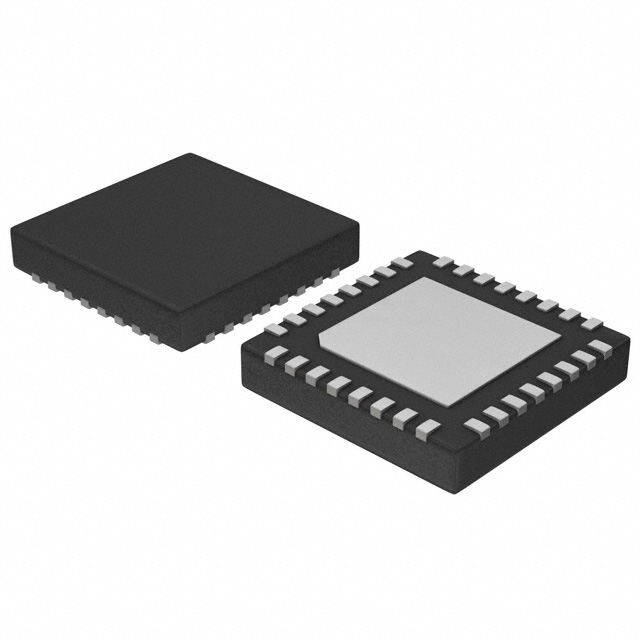
- Part No.:
- PI7C9X1172CZHEX
- Manufacturer:
- Diodes Incorporated
- Category:
- Controllers
- Package:
- 32-VFQFN Exposed Pad
- Datasheet:
-
 PI7C9X1172CZHEX.pdf
- Description:
- IC SPI TO UART BRDGE 32TQFN 2.5K
- Quantity:
- Payment:

- Shipping:

Inventory:3,787
Please send an inquiry. Send us your inquiry, and we will respond immediately.
Product details
Overview
PI7C9X1172 from Diodes Incorporated is a dual-channel UART bridge controller supporting I²C-bus or SPI host interface, providing two full-duplex UARTs with 64-byte TX/RX FIFOs, 16 Mbps baud rate (4× sampling), and backward compatibility with 16C450/16C550 register sets. It operates across 1.8V–3.3V supply, supports RS-485 auto-direction control, IrDA SIR up to 1.152 Mbps, and integrates eight GPIOs - deployed in industrial computing and battery-powered embedded systems.
For engineers reviewing the PI7C9X1172 datasheet, PI7C9X1172 pinout, PI7C9X1172 application, or PI7C9X1172 equivalent, key selection criteria include dual UART channel independence, I²C/SPI interface selectability, hardware/software flow control implementation, RS-485 driver direction control via RTS, and GPIO mapping for DTR/DSR/CD/RI signaling in compact TSSOP-28 or WQFN-32 packages.
Technical Context
The PI7C9X1172 implements two independent UART channels sharing a single I²C or SPI host interface, with separate TX/RX FIFOs (64 bytes each) and programmable trigger levels per FIFO. Its register set mirrors the 16C450 architecture while extending functionality via Enhanced Feature Register (EFR) and Trigger Level Register (TLR).
Hardware flow control uses Auto-RTS and Auto-CTS with configurable halt/resume thresholds stored in the Transmission Control Register (TCR); software flow control supports dual Xon/Xoff characters with flexible detection logic (EFR[3:0] configuration). RS-485 half-duplex mode is enabled by EN485# pin, routing RTS# to driver direction control with polarity inversion support.
Key Specifications
| Parameter | Value and Actual Design Meaning |
|---|---|
| Interface Support | I²C-bus (fast-mode, 400 kHz) or SPI (mode 0, slave-only, up to 33 MHz) |
| UART Channels | Dual independent full-duplex UARTs (UART A and UART B) |
| FIFO Depth | 64-byte transmit and receive buffers per channel, reducing host interrupt load |
| Baud Rate Range | Up to 16 Mbps using 4× oversampling clock; fractional divisor supports precise rates |
| Supply Voltage | 1.8 V, 2.5 V, or 3.3 V operation with low standby current at 3.3 V |
| GPIO Count | Eight user-programmable I/O pins supporting modem control signals (DTR, DSR, CD, RI) |
| RS-485 Support | Auto-direction control via RTS# output with EN485# pin selection and polarity inversion |
Pinout & Package
PI7C9X1172 is available in two RoHS-compliant, lead-free packages: 28-pin TSSOP (L) and 32-pin WQFN5050 (ZH). The WQFN variant includes an exposed thermal pad (non-electrical, must be soldered to PCB ground plane for thermal performance).
| Pin/Terminal | Circuit Role | Design Meaning |
|---|---|---|
| VDD | Power supply input | 1.62–3.63 V core supply; decoupling required near pin |
| I2C/SPI# | Interface mode select | High = I²C mode; Low = SPI mode; sampled at power-up |
| A0/CS#, A1/S1 | Address/selection inputs | I²C: device address bits; SPI: chip select and data-in |
| SCL / SCLK | Clock input | I²C: bidirectional clock; SPI: master clock (idle LOW) |
| SDA / SO / SI | Data I/O | I²C: open-drain bidirectional data; SPI: SO (output), SI (input) |
| TXA, TXB | UART transmit outputs | Active-HIGH idle; support RS-232/422/485 level-shifting or IrDA encoding |
| RXA, RXB | UART receive inputs | Idle HIGH for UART; idle LOW for IrDA; require pull-up/pull-down if unused |
| RTSA#, RTSB#, CTSA#, CTSB# | Flow control signals | Programmable Auto-RTS/CTS; RTS# doubles as RS-485 direction control when EN485# = LOW |
| GPIO[0–7] | Configurable I/O | Support modem control functions (DSR/DTR/CD/RI) or general-purpose use via IODir register |
| IRQ# | Interrupt output | Open-drain active-LOW interrupt; requires external pull-up resistor |
| RESET# | Asynchronous reset | Active-LOW pulse ≥40 ns resets all registers and disables outputs |
| EN485#, ENIR# | Mode enable inputs | Sampled at power-up; configure RS-485 direction control or IrDA encoder/decoder behavior |
Key Features
| Feature | Design Value |
|---|---|
| 16C450 register compatibility | Enables drop-in replacement in legacy UART firmware without driver modification |
| Independent FIFO trigger programming | Per-channel RX/TX interrupt thresholds reduce CPU polling overhead in real-time systems |
| Auto RS-485 half-duplex control | Eliminates external direction-control logic by driving DE/RE via RTS# with polarity inversion option |
| Dual Xon/Xoff software flow control | Supports simultaneous transmission/reception of two distinct flow-control character pairs for robust protocol handling |
| IrDA SIR physical layer integration | On-chip encoder/decoder supports 115.2 kbps standard and optional 1.152 Mbps modes without external components |
Applications
| Industrial Automation | Embedded Telemetry |
|---|---|
Use Scenario: PLC-to-sensor network bridging over RS-485 bus in factory floor environments with EMI noise. IC Role / Device Role / Timing Role: Dual UART bridge converts SPI commands from ARM-based controller into isolated RS-485 frames; handles automatic direction control and hardware flow control. Use Value: Eliminates need for discrete transceivers and direction logic; 64-byte FIFO prevents data loss during burst sensor reads under heavy CPU load. | Use Scenario: Battery-powered environmental monitor transmitting GPS + sensor data via cellular modem using AT command interface. IC Role / Device Role / Timing Role: I²C-connected UART provides two independent serial ports: one for GPS NMEA output, one for modem AT command exchange. Use Value: Low standby current extends battery life; GPIO pins map DTR/DSR for reliable modem handshaking without MCU intervention. |
| Mobile Point-of-Sale Terminal | Smart Building Controller |
Use Scenario: Compact handheld POS terminal integrating Bluetooth printer and magnetic stripe reader via separate UART interfaces. IC Role / Device Role / Timing Role: SPI-hosted dual UART routes printer ESC/POS commands and MSR raw track data concurrently with minimal MCU resource usage. Use Value: Independent 64-byte FIFOs prevent interleaving or overrun between high-speed printer and low-latency card-read events. | Use Scenario: HVAC controller communicating with multiple BACnet MSTP field devices over RS-485 daisy-chain topology. IC Role / Device Role / Timing Role: UART B manages BACnet physical layer timing and collision avoidance; UART A handles local debug console via RS-232. Use Value: Programmable baud rate generator ensures precise 76.8 kbps BACnet timing; EN485# pin enables seamless RS-485 mode switching. |
Equivalent & Alternatives
The following parts are listed as comparable options for similar dual UART bridge applications.
| Alternative Part | Technical Difference | Application Difference | Selection Advice |
|---|---|---|---|
| SC16IS752 | Single I²C interface, 64-byte FIFOs, no IrDA or RS-485 auto-direction; supports SPI only in SC16IS762 variant | Lacks EN485# pin and integrated RS-485 direction control logic; requires external gate for half-duplex | Select when IrDA and RS-485 features are unnecessary and cost sensitivity outweighs feature consolidation |
| MAX3109 | Single SPI interface, 128-byte FIFOs, no I²C support, no GPIOs, no RS-485 auto-direction | Higher FIFO depth but no modem control pins or dual-interface flexibility; limited voltage range (2.7–3.6 V) | Select when maximum buffer depth is critical and host uses SPI exclusively with no need for GPIO expansion |
Compared with SC16IS752 and MAX3109, the PI7C9X1172 uniquely combines I²C/SPI dual-interface support, RS-485 auto-direction, IrDA SIR, and eight GPIOs in a single compact package - enabling consolidated design for space-constrained industrial and portable systems without external glue logic.
Availability
PI7C9X1172 is available at Aetrix Electronics and suitable for industrial automation, embedded telemetry, and mobile point-of-sale terminals requiring stable component supply, long-term lifecycle assurance, and RoHS-compliant packaging.
Supply support for PI7C9X1172 includes scheduled delivery planning, volume procurement assistance, BOM continuity management, traceable sourcing, and lifecycle availability coordination for OEM customers, industrial embedded developers, connected-device designers, and electronics production programs.
Manufacturer
Diodes Incorporated is a global manufacturer of discrete semiconductors and integrated circuits, specializing in high-performance analog, logic, and timing solutions for industrial, computing, and consumer markets.
The PI7C9X1172 belongs to Diodes' UART bridge controller product line, designed to simplify serial interface expansion in resource-constrained embedded systems where dual-channel protocol conversion, low-power operation, and compact footprint are essential.
FAQ
What interface modes does the PI7C9X1172 support, and how is mode selection implemented?
The PI7C9X1172 supports both I²C-bus (fast-mode, up to 400 kHz) and SPI (mode 0, slave-only, up to 33 MHz) host interfaces. Mode selection is controlled by the I2C/SPI# pin: HIGH configures I²C mode, LOW selects SPI mode. This signal is sampled at power-up and latched; changing it during operation has no effect. In I²C mode, A0/A1 set the 7-bit slave address; in SPI mode, A0 serves as CS# and A1 as SI.
How does the PI7C9X1172 implement RS-485 half-duplex direction control without external components?
The PI7C9X1172 uses the EN485# pin to enable RS-485 auto-direction mode. When EN485# is LOW at power-up, the RTS# output becomes the RS-485 driver direction control signal instead of a standard flow-control line. The device automatically asserts RTS# before transmitting and de-asserts it after transmission completes. An internal polarity inversion bit allows matching to either active-HIGH or active-LOW DE/RE requirements.
Can the PI7C9X1172's GPIO pins be used for modem control functions like DTR and DSR, and how are they configured?
Yes - GPIO0 through GPIO7 are fully configurable as modem control signals: GPIO0/DSRB#, GPIO1/DTRB#, GPIO2/CDB#, GPIO3/RIB#, GPIO4/DSRA#, GPIO5/DTRA#, GPIO6/CDA#, and GPIO7/RIA#. Configuration is done via the IODir (I/O Direction) and IOControl registers: setting a bit in IODir to '1' makes the corresponding pin an output (e.g., DTR), while '0' configures it as input (e.g., DSR). Pull-up/down resistors are not internal; external biasing is required for unused inputs.
What is the maximum achievable UART baud rate, and what clock source options support it?
The PI7C9X1172 supports UART baud rates up to 16 Mbps using 4× oversampling. This requires a clock source of at least 64 MHz - achievable via external clock input (up to 64 MHz) or crystal oscillator (up to 24 MHz) with internal PLL multiplication. The baud rate generator uses a 16-bit divisor; for example, a 64 MHz input yields 16 Mbps with divisor = 4. Lower rates (e.g., 115.2 kbps) are supported with 1.8384 MHz crystal or derived clocks.
PI7C9X1172CZHEX Specifications
- Product attributes
- Attribute value
- Manufacturer:
- Diodes Incorporated
- Package/Case:
- 32-VFQFN Exposed Pad
- Programmable:
- Not Verified
- Protocol:
- I2C
- Function:
- Bridge, I2C/SPI to UART
- Interface:
- UART
- Standards:
- -
- Voltage - Supply:
- 1.62V ~ 3.63V
- Current - Supply:
- 6mA
- Operating Temperature:
- -40°C ~ 85°C (TA)
- Supplier Device Package:
- 32-TQFN (5x5)
- Grade:
- -
- Qualification:
- -
PI7C9X1172CZHEX FAQ
1.How can I place an order for PI7C9X1172CZHEX through Aetrix?
Please submit a Request for Quotation (RFQ) for PI7C9X1172CZHEX on Aetrix. Our sales agent will provide a competitive quotation and guide you through the order confirmation once you accept the terms.
2.Are the price and stock information for PI7C9X1172CZHEX reliable?
The price and inventory of PI7C9X1172CZHEX are updated periodically and may fluctuate due to market conditions. Stock and pricing data are typically refreshed every 24 hours. Quotation validity for PI7C9X1172CZHEX is usually 5 days.
3.What payment methods are accepted for PI7C9X1172CZHEX?
We accept Wire Transfer, PayPal, Credit Card, Western Union, MoneyGram, and Escrow for PI7C9X1172CZHEX transactions.
Note: Certain payment methods may incur a processing fee.
4.How is shipping managed for PI7C9X1172CZHEX?
PI7C9X1172CZHEX orders can be shipped via leading logistics carriers, including DHL, UPS, FedEx, TNT, or Registered Mail.
Once your PI7C9X1172CZHEX order is processed, you will receive an email with the shipment details and tracking number.
Note: Tracking information may take up to 24 hours to appear. Express delivery typically takes 3–5 business days.
5.How can I obtain technical support or documentation for PI7C9X1172CZHEX?
For technical support, including PI7C9X1172CZHEX datasheets, pinout diagrams, or application guidance, please contact our engineering support team. They can provide detailed documentation and assistance for your PI7C9X1172CZHEX requirements.
6.How does Aetrix verify that PI7C9X1172CZHEX is sourced from the original manufacturer or authorized distributors?
All PI7C9X1172CZHEX products on Aetrix are procured from qualified distributors and authorized channels. Our dedicated quality assurance team conducts strict verification, including traceability checks and, if necessary, third-party testing. This ensures that PI7C9X1172CZHEX meets industry standards.
7.What is the process for return or replacement of PI7C9X1172CZHEX?
All PI7C9X1172CZHEX units undergo pre-shipment inspection (PSI). If there is an issue with PI7C9X1172CZHEX, returns or replacements are accepted under the following conditions:
1.Quantity discrepancies, incorrect items, or visible external defects (such as breakage or corrosion), acknowledged by Aetrix.
2.The issue is reported within 90 days of delivery.
3.The PI7C9X1172CZHEX part is unused and in its original packaging.
Return procedure for PI7C9X1172CZHEX:
1.Submit a request within 90 days.
2.Obtain a Return Material Authorization (RMA) from Aetrix.
PI7C9X1172CZHEX Tags
-
PTN5150AHXMP
NXP USA Inc.
-
USB3740B-AI9-TR
Microchip Technology
-
USB3740B-AI2-TR
Microchip Technology
-
USB3300-EZK-TR
Microchip Technology
-
USB3300-EZK
Microchip Technology
-
FUSB340TMX
onsemi
-
FUSB302BMPX
onsemi
-
DP83826IRHBR
Texas Instruments
-
MCP2518FDT-E/QBB
Microchip Technology
-
FUSB302MPX
onsemi
-
MCP2518FDT-E/SL
Microchip Technology
-
FT260Q-R
FTDI, Future Technology Devices International Ltd
Tech Hub

An engineering guide to LED driver operation, constant-current and constant-voltage outputs, linear and switching topologies, dimming, IC selection, calculations, replacement compatibility, and fault c…

Operational amplifier guide covering op amp basics, feedback, ideal vs real op amps, common configurations, buffer circuits, offset, bias current, gain-bandwidth, slew rate, rail-to-rail limits and sel…

Jumper cables guide covering safe connection order, red and black clamp placement, final ground connection, cable gauge, length, clamp quality, copper vs CCA cables, jump starter comparison and battery…

LDO regulator guide covering low dropout voltage, power dissipation, thermal design, PSRR, output noise, capacitor stability, adjustable LDO circuits, LDO vs buck converter and datasheet selection chec…

Conditional Access Module guide covering CAM meaning, CI/CI+ interface, smart card authorization, DVB security workflow, TV and set-top box compatibility, internal electronics, ESD protection, connecto…

Guide to electronic component obsolescence covering EOL risk, PCN/PDN notices, last-time buy planning, replacement options, form-fit-function validation, counterfeit risk and BOM lifecycle management.

18650 battery guide covering lithium-ion cell basics, 3.6V/3.7V voltage, 4.2V charging, mAh and Wh capacity, protected cells, chargers, BMS, series-parallel packs, holders, welding and sourcing checks.…

Hall effect sensor guide covering working principle, linear and digital sensors, Arduino circuits, current sensing, speed detection, automotive applications, A3144 examples, signal filtering and datash…

Product Change Notification guide for electronic components, covering PCN meaning, PCN vs PDN/EOL, common change types, risk levels, form-fit-function review, engineering validation, BOM control, LTB/L…

A practical guide to blend door actuators, covering HVAC function, symptoms, location, AC and heater issues, reset and calibration, replacement cost, electrical diagnosis, compatibility checks, and rep…


