
 My Inquiry
 My Account


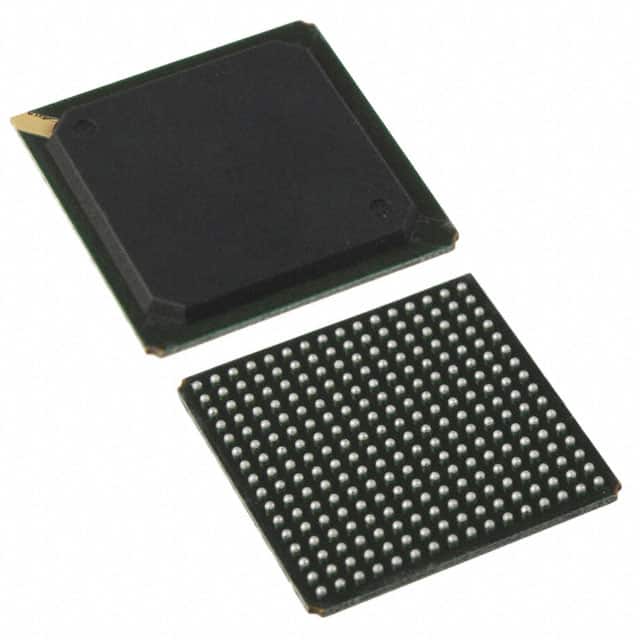
Diodes Incorporated PI7C9X130DNDE
- Part No.:
- PI7C9X130DNDE
- Manufacturer:
- Diodes Incorporated
- Category:
- Specialized
- Package:
- 256-BGA
- Datasheet:
-
 PI7C9X130DNDE.pdf
- Description:
- IC INTERFACE SPECIALIZED 256BGA
- Quantity:
- Payment:

- Shipping:

Inventory:703
Please send an inquiry. Send us your inquiry, and we will respond immediately.
Product details
Overview
PI7C9X130DNDE from Diodes Incorporated is a PCI Express 1.0a to PCI-X 266 MHz reversible bridge IC enabling bidirectional protocol translation between PCIe 1.0a (2.5 GT/s) and 64-bit/133 MHz or 64-bit/266 MHz PCI-X buses. It supports transparent and non-transparent bridging modes, operates with 1.8 V core and 3.3 V I/O supply rails, and implements full PCIe endpoint configuration space mapping for legacy system integration in server backplanes and industrial control chassis.
For engineers reviewing the PI7C9X130DNDE datasheet, PI7C9X130DNDE pinout, PI7C9X130DNDE application, or PI7C9X130DNDE equivalent, key selection considerations include PCIe-to-PCI-X timing compliance, hot-swap support via HSSW/HSEN pins, dual-mode strapping (MODE[1:0]), JTAG boundary scan capability, and register-level control of upstream memory write fragmentation and replay latency timers.
Technical Context
The PI7C9X130DNDE implements a deterministic, register-configurable bridge architecture with separate PCIe TLP parser/transmitter and PCI-X command decoder/arbiter logic. It handles address translation across 32-bit and 64-bit address spaces, supports Type 0/Type 1 configuration transactions, and includes dedicated buffers for posted writes and split completions.
Its clocking scheme accommodates asynchronous operation: PCIe reference clock (100 MHz differential) and PCI-X clock (133/266 MHz single-ended) are independently sourced. The device supports virtual isochronous operation for latency-sensitive transfers and provides programmable ACK/Replay timer values (offset 310h, bit[30]) to tune retry behavior under bus stress.
Key Specifications
| Parameter | Value and Actual Design Meaning |
|---|---|
| PCIe Interface | PCI Express 1.0a compliant, 1-lane, 2.5 GT/s, differential TX/RX with 100 MHz reference clock input |
| PCI-X Interface | 64-bit, 133/266 MHz operation, supports both PCI-X 1.0 and 2.0 electrical specs |
| Bridge Mode | Configurable transparent or non-transparent mode via MODE[1:0] strapping and register bits |
| Power Supply | 1.8 V ±0.1 V core, 3.3 V ±0.3 V I/O, with defined power-up sequencing (VCC_CORE before VCC_IO) |
| Operating Temp | –40°C to +85°C ambient, qualified per JEDEC JESD22-A104 for industrial temperature grade |
| Package | 324-pin PBGA (27 mm × 27 mm, 1.0 mm pitch), RoHS-compliant, lead-free |
| JTAG Support | IEEE 1149.1-compliant boundary scan with 16-bit instruction register and 160-bit data register |
Pinout & Package
PI7C9X130DNDE is housed in a 324-pin plastic ball grid array (PBGA) package with 27 mm × 27 mm footprint and 1.0 mm ball pitch. Thermal pad on underside requires solder paste stencil opening and thermal via pattern per Diodes' layout guidelines (DS40252 Section 17).
| Pin/Terminal | Circuit Role | Design Meaning |
|---|---|---|
| CLK_IN_P / CLK_IN_N | PCIe Reference Clock Input | Differential 100 MHz clock pair; must be terminated with 100 Ω across pins at receiver side |
| PCIX_CLK | PCI-X System Clock Input | Single-ended 133/266 MHz clock; drives internal PCI-X timing generator and synchronizer |
| REQ_L[3:0] | PCI-X Bus Request Outputs | Open-drain outputs driving PCI-X bus arbitration lines; require external 4.7 kΩ pull-ups |
| GNT_L[3:0] | PCI-X Bus Grant Inputs | Active-low inputs accepting grant signals from PCI-X arbiter; sampled synchronously to PCIX_CLK |
| HSSW / HSEN | Hot-Swap Control | HSSW enables hot-swap detection; HSEN enables hot-swap event reporting-both tied LOW if unused |
| SMBCLK / SMBDAT | System Management Bus Interface | Two-wire interface for EEPROM auto-load and runtime status readback (e.g., hot-swap events) |
| MODE[1:0] | Functional Mode Strapping | Pulled HIGH/LOW at power-up to select transparent/non-transparent, forward/reverse, or test modes |
Key Features
| Feature | Design Value |
|---|---|
| Reversible Bridging | Supports PCIe→PCI-X and PCI-X→PCIe data flow direction selection via MODE[1:0] and register control |
| Non-Transparent Mode | Enables inter-processor communication across isolated address domains using doorbell registers and message signaling |
| Hot-Swap Ready | Integrated HSSW/HSEN logic with SMBus status reporting allows safe insertion/removal in live backplane systems |
| EEPROM Auto-Load | Loads configuration from external 24C02-compatible EEPROM at power-on via SMBCLK/SMBDAT interface |
| Latency Timer Tuning | Programmable Replay and Acknowledge Latency Timers (offset 310h) enable optimization for high-throughput or low-latency traffic profiles |
Applications
| Server Backplane Interconnect | Industrial Control Chassis |
|---|---|
Use Scenario: Legacy PCI-X add-in cards (e.g., RAID controllers, frame grabbers) must operate in modern PCIe-based server motherboards. IC Role / Device Role / Timing Role: Protocol translator and timing bridge; converts PCIe TLPs to PCI-X commands while maintaining coherency across clock domains. Use Value: Enables reuse of certified PCI-X peripherals without redesign, preserving firmware investment and qualification time. |
Use Scenario: Programmable logic controllers (PLCs) integrate PCIe host processors with legacy PCI-X motion control modules. IC Role / Device Role / Timing Role: Non-transparent bridge isolating processor and I/O subsystem address spaces; manages mailbox-style inter-processor messaging. Use Value: Provides deterministic, low-overhead communication between real-time control firmware and fieldbus interface hardware. |
| Test Equipment Rack | Medical Imaging Subsystem |
Use Scenario: Modular automated test equipment (ATE) uses PCIe host controllers to drive PCI-X-based digitizers and signal generators. IC Role / Device Role / Timing Role: Transparent bridge presenting PCI-X devices as native PCIe endpoints; handles BAR remapping and interrupt routing. Use Value: Simplifies driver development by abstracting protocol differences-OS sees PCI-X devices as standard PCIe peripherals. |
Use Scenario: MRI scanner front-end subsystem connects FPGA-based image processing (PCIe) to legacy PCI-X digital-to-analog converters for gradient coil control. IC Role / Device Role / Timing Role: Reversible bridge operating in forward mode (PCIe→PCI-X); supports precise timing alignment via programmable latency timers. Use Value: Ensures sub-microsecond jitter control on analog output channels critical for magnetic field fidelity. |
Equivalent & Alternatives
The following parts are listed as comparable options for similar PCI Express to PCI-X bridging applications.
| Alternative Part | Technical Difference | Application Difference | Selection Advice |
|---|---|---|---|
| PLX Technology PEX8112 | PCIe 1.1 (2.5 GT/s), 32-bit/33 MHz PCI, no PCI-X support; integrated DMA engine and MSI-X | Limited to legacy PCI-not suitable for 64-bit/133+ MHz PCI-X bandwidth requirements | Select only when bridging to standard PCI slots and DMA offload is required. |
| Pericom PI7C9X20404 | PCIe 2.0 (5.0 GT/s), 64-bit/133 MHz PCI-X, adds PCIe switch functionality and enhanced power management | Higher PCIe bandwidth and integrated switch fabric; larger package (484-pin PBGA) and higher BOM cost | Choose when future-proofing for PCIe 2.0 or multi-port expansion is needed; not drop-in compatible. |
Compared with PEX8112 and PI7C9X20404, the PI7C9X130DNDE uniquely balances PCI-X 266 MHz support, reversible operation, and industrial temperature range in a compact 324-pin package-making it optimal for cost-sensitive, space-constrained backplane upgrades where PCI-X bandwidth is mandatory.
Availability
PI7C9X130DNDE is available at Aetrix Electronics and suitable for server backplane interconnect, industrial control chassis, and test equipment rack applications requiring stable component supply and long-term lifecycle support.
Supply support for PI7C9X130DNDE includes scheduled delivery planning, volume procurement assistance, BOM continuity management, traceable sourcing, and lifecycle availability coordination for OEM customers, industrial embedded developers, connected-device designers, and electronics production programs.
Manufacturer
Diodes Incorporated is a global manufacturer of discrete semiconductors and integrated circuits, specializing in high-performance analog, logic, and interconnect solutions for industrial, computing, and communications markets.
The PI7C9X130DNDE belongs to Diodes' PCI Express bridge product line, designed specifically to extend the service life of legacy PCI-X infrastructure within modern PCIe-based systems while meeting industrial reliability and thermal requirements.
FAQ
Is PI7C9X130DNDE pin-compatible with earlier revisions like PI7C9X130B?
No. PI7C9X130DNDE uses a 324-pin PBGA package with updated pin assignments for PCIe differential pairs and enhanced hot-swap signaling. Earlier versions used different ballouts and lack HSSW/HSEN pins. Migration requires PCB layout revision and register initialization updates per DS40252 Rev 9 Section 2.8.
Does PI7C9X130DNDE support PCIe 2.0 or higher?
No. The device complies strictly with PCI Express Base Specification 1.0a (2.5 GT/s). It does not support 5.0 GT/s signaling, ASPM L1 substates, or enhanced configuration mechanisms introduced in PCIe 2.0. Its maximum link speed is fixed at 2.5 GT/s with Gen1 encoding.
Can PI7C9X130DNDE operate in reverse mode (PCI-X → PCIe) without firmware changes?
Yes. Reverse bridging is enabled by strapping MODE[1:0] = 10b at power-up and configuring the BRIDGE CONTROL REGISTER (offset 3Ch, bit 12) to set reverse direction. No host firmware modification is required beyond initial configuration register writes during enumeration.
What is the function of the RREF pin on PI7C9X130DNDE?
RREF is a precision 1.2 V reference output used to calibrate internal termination resistors for PCIe differential receivers. It must be connected to a 0.1 µF decoupling capacitor to ground and left unconnected to any external circuitry. Deviation from 1.2 V ±1% invalidates PCIe RX impedance matching per DS40252 Section 16.2.
PI7C9X130DNDE Specifications
- Product attributes
- Attribute value
- Manufacturer:
- Diodes Incorporated
- Series:
- -
- Package/Case:
- 256-BGA
- Packaging:
- Tray
- Product Status:
- Active
- Applications:
- PCI-to-PCI Bridge
- Interface:
- SMBus (2-Wire/I2C)
- Voltage - Supply:
- 1.8V, 3.3V
- Supplier Device Package:
- 256-PBGA (17x17)
- Grade:
- -
- Qualification:
- -
- Mounting Type:
- Surface Mount
PI7C9X130DNDE FAQ
1.How can I place an order for PI7C9X130DNDE through Aetrix?
Please submit a Request for Quotation (RFQ) for PI7C9X130DNDE on Aetrix. Our sales agent will provide a competitive quotation and guide you through the order confirmation once you accept the terms.
2.Are the price and stock information for PI7C9X130DNDE reliable?
The price and inventory of PI7C9X130DNDE are updated periodically and may fluctuate due to market conditions. Stock and pricing data are typically refreshed every 24 hours. Quotation validity for PI7C9X130DNDE is usually 5 days.
3.What payment methods are accepted for PI7C9X130DNDE?
We accept Wire Transfer, PayPal, Credit Card, Western Union, MoneyGram, and Escrow for PI7C9X130DNDE transactions.
Note: Certain payment methods may incur a processing fee.
4.How is shipping managed for PI7C9X130DNDE?
PI7C9X130DNDE orders can be shipped via leading logistics carriers, including DHL, UPS, FedEx, TNT, or Registered Mail.
Once your PI7C9X130DNDE order is processed, you will receive an email with the shipment details and tracking number.
Note: Tracking information may take up to 24 hours to appear. Express delivery typically takes 3–5 business days.
5.How can I obtain technical support or documentation for PI7C9X130DNDE?
For technical support, including PI7C9X130DNDE datasheets, pinout diagrams, or application guidance, please contact our engineering support team. They can provide detailed documentation and assistance for your PI7C9X130DNDE requirements.
6.How does Aetrix verify that PI7C9X130DNDE is sourced from the original manufacturer or authorized distributors?
All PI7C9X130DNDE products on Aetrix are procured from qualified distributors and authorized channels. Our dedicated quality assurance team conducts strict verification, including traceability checks and, if necessary, third-party testing. This ensures that PI7C9X130DNDE meets industry standards.
7.What is the process for return or replacement of PI7C9X130DNDE?
All PI7C9X130DNDE units undergo pre-shipment inspection (PSI). If there is an issue with PI7C9X130DNDE, returns or replacements are accepted under the following conditions:
1.Quantity discrepancies, incorrect items, or visible external defects (such as breakage or corrosion), acknowledged by Aetrix.
2.The issue is reported within 90 days of delivery.
3.The PI7C9X130DNDE part is unused and in its original packaging.
Return procedure for PI7C9X130DNDE:
1.Submit a request within 90 days.
2.Obtain a Return Material Authorization (RMA) from Aetrix.
PI7C9X130DNDE Tags
-
NVT4857UKAZ
NXP USA Inc.
-
TCA8418RTWR
Texas Instruments

-
PCA9546APWR
Texas Instruments

-
MD0100N8-G
Microchip Technology
-
PCA9548APW,118
NXP USA Inc.
-
PCA9540BDP,118
NXP USA Inc.
-
PCA9548APWR
Texas Instruments
-
PCA9546APW,118
NXP USA Inc.
-
PTN3360DBS,518
NXP USA Inc.
-
PCA9546ABS,118
NXP USA Inc.
-
PCA9518PWR
Texas Instruments
-
PCA9545APW,118
NXP USA Inc.
Tech Hub

An engineering guide to LED driver operation, constant-current and constant-voltage outputs, linear and switching topologies, dimming, IC selection, calculations, replacement compatibility, and fault c…

Operational amplifier guide covering op amp basics, feedback, ideal vs real op amps, common configurations, buffer circuits, offset, bias current, gain-bandwidth, slew rate, rail-to-rail limits and sel…

Jumper cables guide covering safe connection order, red and black clamp placement, final ground connection, cable gauge, length, clamp quality, copper vs CCA cables, jump starter comparison and battery…

LDO regulator guide covering low dropout voltage, power dissipation, thermal design, PSRR, output noise, capacitor stability, adjustable LDO circuits, LDO vs buck converter and datasheet selection chec…

Conditional Access Module guide covering CAM meaning, CI/CI+ interface, smart card authorization, DVB security workflow, TV and set-top box compatibility, internal electronics, ESD protection, connecto…

Guide to electronic component obsolescence covering EOL risk, PCN/PDN notices, last-time buy planning, replacement options, form-fit-function validation, counterfeit risk and BOM lifecycle management.

18650 battery guide covering lithium-ion cell basics, 3.6V/3.7V voltage, 4.2V charging, mAh and Wh capacity, protected cells, chargers, BMS, series-parallel packs, holders, welding and sourcing checks.…

Hall effect sensor guide covering working principle, linear and digital sensors, Arduino circuits, current sensing, speed detection, automotive applications, A3144 examples, signal filtering and datash…

Product Change Notification guide for electronic components, covering PCN meaning, PCN vs PDN/EOL, common change types, risk levels, form-fit-function review, engineering validation, BOM control, LTB/L…

A practical guide to blend door actuators, covering HVAC function, symptoms, location, AC and heater issues, reset and calibration, replacement cost, electrical diagnosis, compatibility checks, and rep…


