
 My Inquiry
 My Account


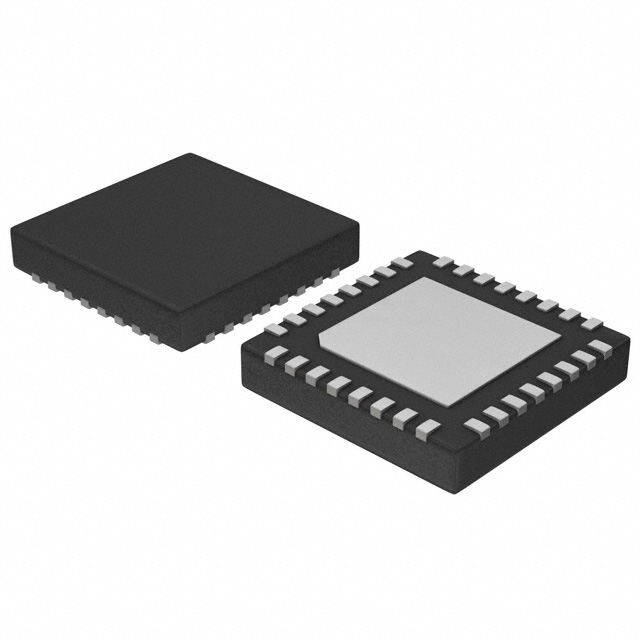
Diodes Incorporated PI7C9X762BZHEX
- Part No.:
- PI7C9X762BZHEX
- Manufacturer:
- Diodes Incorporated
- Category:
- Controllers
- Package:
- 32-VFQFN Exposed Pad
- Datasheet:
-
 PI7C9X762BZHEX.pdf
- Description:
- IC BRIDGE CTRLR I2C/SPI
- Quantity:
- Payment:

- Shipping:

Inventory:3,596
Please send an inquiry. Send us your inquiry, and we will respond immediately.
Product details
Overview
PI7C9X762BZHEX from Diodes Incorporated is a dual-channel, I²C/SPI-to-UART bridge controller with 64-byte TX/RX FIFOs per channel, programmable baud rates up to 16 Mbit/s (4× sampling), hardware/software flow control, and RS-485 direction control via RTS. It operates at 1.8 V, 2.5 V, or 3.3 V and supports industrial temperature range (−40 °C to +85 °C) in TQFN32 package - used in embedded industrial gateways for protocol translation between microcontrollers and legacy serial peripherals.
For engineers reviewing the PI7C9X762BZHEX datasheet, PI7C9X762BZHEX pinout, PI7C9X762BZHEX application, or PI7C9X762BZHEX equivalent, key selection criteria include dual UART channel independence, I²C/SPI interface selectability, GPIO programmability, RS-485 auto-direction control, and 16C450 register compatibility for drop-in firmware reuse.
Technical Context
The PI7C9X762BZHEX implements two independent UART cores sharing a single I²C or SPI host interface, with separate RX/TX FIFOs (64 bytes each), programmable trigger levels via FCR/TLR registers, and full 16C450 register mapping for software compatibility. Its interrupt system supports seven prioritized sources including FIFO status, modem status, and GPIO events.
Hardware flow control uses Auto-RTS/CTS with halt/resume thresholds configurable in TCR; software flow control supports dual Xon/Xoff pairs with flexible enable combinations via EFR[3:0]. RS-485 driver direction is controlled by RTS with polarity inversion option, and IrDA SIR (115.2 kbit/s standard, optional 1.152 Mbit/s) is integrated with encoder/decoder logic.
Key Specifications
| Parameter | Value and Actual Design Meaning |
|---|---|
| UART Channels | Dual independent full-duplex channels (A and B) - enables simultaneous serial communication with two peripherals without host CPU arbitration. |
| FIFO Depth | 64 bytes per channel (TX + RX) - reduces host interrupt frequency and improves throughput in burst data transfers. |
| Max Baud Rate | 16 Mbit/s (4× sampling clock) - supports high-speed industrial serial links such as point-of-sale terminals and PLC backplanes. |
| Interface Options | I²C-bus (fast-mode, 400 kHz) or SPI (mode 0, slave-only, up to 33 MHz) - allows flexible host MCU integration with minimal pin count. |
| GPIO Pins | 8 user-programmable I/O pins with DSR/DTR/CD/RI alternate functions - replaces external level translators or discrete logic in modem interface designs. |
| Supply Voltage | 1.8 V / 2.5 V / 3.3 V operation - enables direct interfacing with low-voltage SoCs and battery-powered edge devices without level-shifting. |
| Operating Temp | −40 °C to +85 °C - certified for deployment in factory automation, outdoor kiosks, and transportation control systems. |
Pinout & Package
PI7C9X762BZHEX is packaged in a 32-pin TQFN (5 mm × 5 mm, 0.5 mm pitch) with exposed thermal pad requiring PCB ground connection. Pin functions support dual UART I/O, I²C/SPI host interface, GPIOs, crystal/external clock input, and hardware reset.
| Pin/Terminal | Circuit Role | Design Meaning |
|---|---|---|
| RTSA / RTSB | UART request-to-send output (active LOW) | Controls RS-485 driver direction; Auto-RTS mode dynamically asserts/deasserts based on RX FIFO fill level. |
| CTSA / CTSB | UART clear-to-send input (active LOW) | Enables hardware flow control; UART halts transmission when CTS is deasserted during Auto-CTS mode. |
| TXA / TXB, RXA / RXB | UART channel A/B transmit/receive I/O | Full-duplex TTL-level serial I/O; supports RS-232/RS-485 with external transceivers. |
| SCL/SCLK, SDA, CS/A0, SI/A1, SO | I²C or SPI host interface signals | I²C-bus mode uses SCL/SDA; SPI mode uses SCLK/CS/SI/SO; A0/A1 configure slave address in I²C mode. |
| GPIO0–GPIO7 | Programmable general-purpose I/O | Configurable as inputs/outputs or modem control signals (DSR/DTR/CD/RI); supports interrupt generation. |
| XTAL1 / XTAL2 | Clock input/output for internal oscillator | Accepts 1–24 MHz crystal or up to 64 MHz external clock - determines UART timing accuracy and baud rate precision. |
| RESET | Hardware reset input (active LOW) | Asynchronous reset clears all internal registers except DLL/DLH/XON1/XON2/XOFF1/XOFF2 - preserves custom baud/divisor settings. |
Key Features
| Feature | Design Value |
|---|---|
| 16C450 Register Compatibility | Full backward compatibility enables reuse of existing UART drivers and BIOS/RTOS UART stacks without modification. |
| Auto RS-485 Direction Control | RTS signal automatically manages RS-485 transceiver direction - eliminates need for external logic or GPIO toggling in half-duplex bus systems. |
| Programmable FIFO Trigger Levels | Independent RX/TX trigger thresholds (via FCR or TLR) allow fine-tuning of interrupt latency vs. CPU load in real-time applications. |
| IrDA SIR Support | Integrated encoder/decoder supports 115.2 kbit/s (standard) and optional 1.152 Mbit/s - enables infrared communication without external ICs. |
| Software Reset Capability | UART core reset initiated via register write - permits runtime recovery from lockup without asserting external RESET pin. |
Applications
| Industrial PLC Gateway | Smart Meter Communication Hub |
|---|---|
|
Use Scenario: Connects ARM-based gateway MCU (I²C/SPI) to multiple legacy RS-485 field devices (sensors, actuators) in distributed control networks. IC Role / Device Role / Timing Role: Dual UART bridge translates host protocol to serial command streams; RS-485 direction control ensures reliable half-duplex bus arbitration. Use Value: Eliminates need for discrete level shifters and direction logic; 64-byte FIFOs absorb burst telemetry from 10+ nodes without packet loss. |
Use Scenario: Enables AMI (Advanced Metering Infrastructure) head-end units to manage bidirectional DLMS/COSEM traffic over RS-232/RS-485 meter interfaces. IC Role / Device Role / Timing Role: UART channel A handles primary meter polling; channel B manages firmware update handshaking and security key exchange. Use Value: Hardware flow control prevents buffer overrun during 9600–115200 bps firmware uploads; GPIOs monitor tamper switches and relay status. |
| Portable Diagnostic Tool | Factory Automation HMI |
|
Use Scenario: Battery-powered handheld tool communicates with automotive ECUs (OBD-II) and industrial controllers using mixed RS-232/RS-485 cables. IC Role / Device Role / Timing Role: Single-chip dual UART bridges low-power Cortex-M host to diverse serial protocols; IrDA supports wireless diagnostics pairing. Use Value: 1.8 V operation extends battery life; software reset recovers from ECU timeout errors without power cycle. |
Use Scenario: Touch-panel HMI connects to PLCs, barcode scanners, and label printers via isolated RS-485/RS-232 ports in noisy factory environments. IC Role / Device Role / Timing Role: Channel A drives main PLC link; channel B handles auxiliary printer/scanner comms; GPIOs control LED indicators and buzzer alerts. Use Value: Industrial temp rating ensures reliability near motors and welders; Auto-CTS prevents data corruption during electromagnetic interference bursts. |
Equivalent & Alternatives
The following parts are listed as comparable options for similar dual-channel UART bridge applications.
| Alternative Part | Technical Difference | Application Difference | Selection Advice |
|---|---|---|---|
| SC16IS752IPW | Same 28-pin TSSOP package; supports I²C only (no SPI); 64-byte FIFOs; lacks IrDA and RS-485 direction control logic. | Preferred where board space is constrained and only I²C host interface is available; unsuitable for SPI-based SoCs or RS-485 auto-direction needs. | Select when footprint compatibility with legacy SC16IS7xx designs is required and RS-485 direction control is handled externally. |
| MAX3107EEG+ | Single-channel UART; SPI-only interface; 128-byte FIFO; integrated ±15 kV ESD protection; no GPIOs or RS-485 control. | Used in high-reliability point-to-point links where ESD robustness is critical; not applicable for dual-peripheral bridging or GPIO expansion. | Choose for ruggedized single-link applications where ESD immunity outweighs channel count and feature set requirements. |
Compared with SC16IS752IPW and MAX3107EEG+, PI7C9X762BZHEX uniquely combines dual UARTs, I²C/SPI flexibility, RS-485 auto-direction, and 8 GPIOs in one TQFN32 package - making it optimal for space-constrained, multi-interface industrial edge nodes.
Availability
PI7C9X762BZHEX is available at Aetrix Electronics and suitable for industrial computing, factory process control, and battery-operated embedded devices requiring stable component supply across long production lifecycles.
Supply support for PI7C9X762BZHEX includes scheduled delivery planning, volume procurement assistance, BOM continuity management, traceable sourcing, and lifecycle availability coordination for OEM customers, industrial embedded developers, connected-device designers, and electronics production programs.
Manufacturer
Diodes Incorporated is a global semiconductor company specializing in discrete, analog, and mixed-signal ICs for power management, signal integrity, and connectivity applications.
The PI7C9X762 belongs to Diodes' serial interface bridge product line, designed specifically for protocol translation between modern microcontrollers and legacy serial peripherals in cost-sensitive, space-constrained industrial systems.
FAQ
Does PI7C9X762BZHEX support both I²C and SPI simultaneously?
No - the I²C/SPI interface is selected at power-up via the I2C/SPI pin (pin 9/TQFN pin 6): logic HIGH configures I²C mode; logic LOW configures SPI mode. The device cannot operate both interfaces concurrently, and pin configuration must be fixed before initialization.
What is the maximum crystal frequency supported for UART timing?
The PI7C9X762BZHEX accepts crystals up to 24 MHz on XTAL1/XTAL2, or external clocks up to 64 MHz. With 24 MHz crystal and 4× oversampling, the maximum achievable baud rate is 16 Mbit/s - verified in DS40306 Rev 4-2 Section 1.2 and Table 11.
How does RS-485 driver direction control work without external logic?
RTSA/RTSB outputs directly drive RS-485 transceiver DE/!RE pins. When Auto-RTS is enabled (EFR[6]), RTS asserts when RX FIFO level falls below the halt threshold (TCR[3:0]) and deasserts when level reaches resume threshold (TCR[7:4]). Polarity inversion is configurable via EFR[4].
Can GPIO pins be used as interrupt sources?
Yes - GPIOs 0–7 support interrupt generation on rising/falling edges. Configuration is done via IOIntEna and IOControl registers; interrupt status is reported in IIR[3:0] and cleared by reading the corresponding GPIO status register - detailed in DS40306 Sections 6.5 and 6.6.
PI7C9X762BZHEX Specifications
- Product attributes
- Attribute value
- Manufacturer:
- Diodes Incorporated
- Package/Case:
- 32-VFQFN Exposed Pad
- Programmable:
- Not Verified
- Protocol:
- I2C
- Function:
- Bridge, I2C/SPI to UART
- Interface:
- UART
- Standards:
- -
- Voltage - Supply:
- 1.8V, 2.5V, 3.3V
- Current - Supply:
- -
- Operating Temperature:
- -40°C ~ 85°C
- Supplier Device Package:
- 32-TQFN (5x5)
- Grade:
- -
- Qualification:
- -
PI7C9X762BZHEX FAQ
1.How can I place an order for PI7C9X762BZHEX through Aetrix?
Please submit a Request for Quotation (RFQ) for PI7C9X762BZHEX on Aetrix. Our sales agent will provide a competitive quotation and guide you through the order confirmation once you accept the terms.
2.Are the price and stock information for PI7C9X762BZHEX reliable?
The price and inventory of PI7C9X762BZHEX are updated periodically and may fluctuate due to market conditions. Stock and pricing data are typically refreshed every 24 hours. Quotation validity for PI7C9X762BZHEX is usually 5 days.
3.What payment methods are accepted for PI7C9X762BZHEX?
We accept Wire Transfer, PayPal, Credit Card, Western Union, MoneyGram, and Escrow for PI7C9X762BZHEX transactions.
Note: Certain payment methods may incur a processing fee.
4.How is shipping managed for PI7C9X762BZHEX?
PI7C9X762BZHEX orders can be shipped via leading logistics carriers, including DHL, UPS, FedEx, TNT, or Registered Mail.
Once your PI7C9X762BZHEX order is processed, you will receive an email with the shipment details and tracking number.
Note: Tracking information may take up to 24 hours to appear. Express delivery typically takes 3–5 business days.
5.How can I obtain technical support or documentation for PI7C9X762BZHEX?
For technical support, including PI7C9X762BZHEX datasheets, pinout diagrams, or application guidance, please contact our engineering support team. They can provide detailed documentation and assistance for your PI7C9X762BZHEX requirements.
6.How does Aetrix verify that PI7C9X762BZHEX is sourced from the original manufacturer or authorized distributors?
All PI7C9X762BZHEX products on Aetrix are procured from qualified distributors and authorized channels. Our dedicated quality assurance team conducts strict verification, including traceability checks and, if necessary, third-party testing. This ensures that PI7C9X762BZHEX meets industry standards.
7.What is the process for return or replacement of PI7C9X762BZHEX?
All PI7C9X762BZHEX units undergo pre-shipment inspection (PSI). If there is an issue with PI7C9X762BZHEX, returns or replacements are accepted under the following conditions:
1.Quantity discrepancies, incorrect items, or visible external defects (such as breakage or corrosion), acknowledged by Aetrix.
2.The issue is reported within 90 days of delivery.
3.The PI7C9X762BZHEX part is unused and in its original packaging.
Return procedure for PI7C9X762BZHEX:
1.Submit a request within 90 days.
2.Obtain a Return Material Authorization (RMA) from Aetrix.
PI7C9X762BZHEX Tags
-
PTN5150AHXMP
NXP USA Inc.
-
USB3740B-AI9-TR
Microchip Technology
-
USB3740B-AI2-TR
Microchip Technology
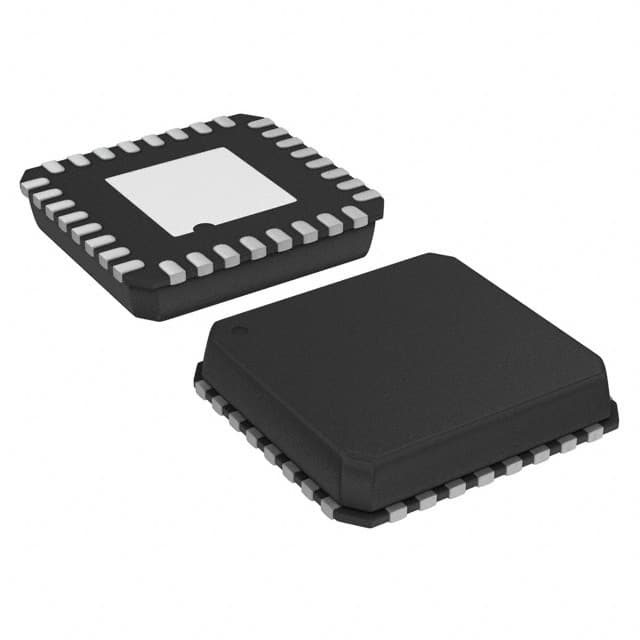
-
USB3300-EZK-TR
Microchip Technology
-
USB3300-EZK
Microchip Technology
-
FUSB340TMX
onsemi
-
FUSB302BMPX
onsemi
-
DP83826IRHBR
Texas Instruments
-
MCP2518FDT-E/QBB
Microchip Technology
-
FUSB302MPX
onsemi
-
MCP2518FDT-E/SL
Microchip Technology
-
FT260Q-R
FTDI, Future Technology Devices International Ltd
Tech Hub

An engineering guide to LED driver operation, constant-current and constant-voltage outputs, linear and switching topologies, dimming, IC selection, calculations, replacement compatibility, and fault c…

Operational amplifier guide covering op amp basics, feedback, ideal vs real op amps, common configurations, buffer circuits, offset, bias current, gain-bandwidth, slew rate, rail-to-rail limits and sel…

Jumper cables guide covering safe connection order, red and black clamp placement, final ground connection, cable gauge, length, clamp quality, copper vs CCA cables, jump starter comparison and battery…

LDO regulator guide covering low dropout voltage, power dissipation, thermal design, PSRR, output noise, capacitor stability, adjustable LDO circuits, LDO vs buck converter and datasheet selection chec…

Conditional Access Module guide covering CAM meaning, CI/CI+ interface, smart card authorization, DVB security workflow, TV and set-top box compatibility, internal electronics, ESD protection, connecto…

Guide to electronic component obsolescence covering EOL risk, PCN/PDN notices, last-time buy planning, replacement options, form-fit-function validation, counterfeit risk and BOM lifecycle management.

18650 battery guide covering lithium-ion cell basics, 3.6V/3.7V voltage, 4.2V charging, mAh and Wh capacity, protected cells, chargers, BMS, series-parallel packs, holders, welding and sourcing checks.…

Hall effect sensor guide covering working principle, linear and digital sensors, Arduino circuits, current sensing, speed detection, automotive applications, A3144 examples, signal filtering and datash…

Product Change Notification guide for electronic components, covering PCN meaning, PCN vs PDN/EOL, common change types, risk levels, form-fit-function review, engineering validation, BOM control, LTB/L…

A practical guide to blend door actuators, covering HVAC function, symptoms, location, AC and heater issues, reset and calibration, replacement cost, electrical diagnosis, compatibility checks, and rep…


