
 My Inquiry
 My Account


Diodes Incorporated PI7C9X7958ANBE
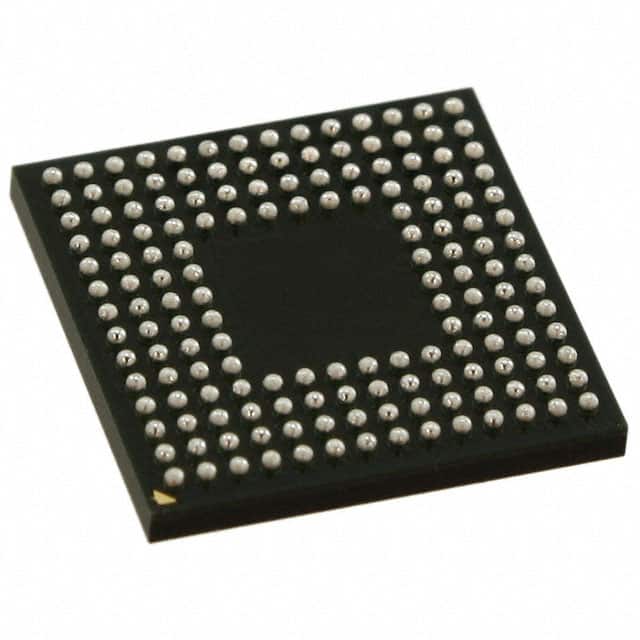
- Part No.:
- PI7C9X7958ANBE
- Manufacturer:
- Diodes Incorporated
- Category:
- Controllers
- Package:
- 160-LFBGA
- Datasheet:
-
 PI7C9X7958ANBE.pdf
- Description:
- IC PCIE-TO-UART BRIDGE 160LFBGA
- Quantity:
- Payment:

- Shipping:

Inventory:3,252
Please send an inquiry. Send us your inquiry, and we will respond immediately.
Product details
Overview
PI7C9X7958ANBE from Pericom Semiconductor is a PCI Express® 2.0-compliant octal UART controller with eight independent asynchronous serial channels, integrated PCIe endpoint logic, 128-byte TX/RX FIFOs per channel, programmable baud rates up to 15 Mbps, and support for RS-232/422/485 transceivers in industrial communication gateways.
For engineers reviewing the PI7C9X7958ANBE datasheet, PI7C9X7958ANBE pinout, PI7C9X7958ANBE application, or PI7C9X7958ANBE equivalent, key selection criteria include PCIe 2.0 x1 link compliance, per-channel FIFO depth and flow control, UART register compatibility with 16550A/16750, EEPROM-based configuration persistence, and LFBGA-160 package thermal performance in embedded server I/O expansion.
Technical Context
The PI7C9X7958ANBE implements a PCIe 2.0 endpoint with configurable BARs (Base Address Registers) and MSI interrupt support, enabling direct memory-mapped I/O access without host CPU polling. It integrates eight independent UART cores sharing a single 25 MHz or 14.7456 MHz crystal oscillator input, each supporting 5–8 data bits, 1–2 stop bits, and parity options.
Each UART channel supports hardware flow control (RTS/CTS), automatic XON/XOFF generation, internal loopback testing, and enhanced modes including 450/550/950-compatible register mapping. The device uses a dedicated EEPROM interface (SR_DO/SR_DI) for persistent configuration storage of vendor ID, subsystem ID, and UART initialization parameters.
Key Specifications
| Parameter | Value and Actual Design Meaning |
|---|---|
| Interface Standard | PCI Express 2.0 x1 endpoint - provides 5 GT/s signaling, full link training, and standard configuration space for plug-and-play enumeration in host systems. |
| UART Channels | 8 independent asynchronous serial ports - enables simultaneous legacy serial peripheral connectivity (e.g., modems, PLCs, barcode scanners) without external multiplexing. |
| FIFO Depth | 128 bytes TX + 128 bytes RX per channel - reduces CPU interrupt load and prevents data loss at high baud rates (up to 15 Mbps) under burst traffic. |
| Baud Rate Range | 50 bps to 15 Mbps - supports legacy low-speed devices and modern high-throughput serial protocols like HDLC or custom packet framing. |
| Register Compatibility | 16550A/16750 software-compatible - ensures drop-in driver reuse across Windows, Linux, and real-time OS platforms without firmware modification. |
| Package | 160-pin LFBGA (12 mm × 12 mm, 0.8 mm pitch) - delivers thermal efficiency and board-space savings for dense I/O card designs with multiple serial interfaces. |
| Operating Temp | −40°C to +85°C - qualified for industrial environments including factory automation controllers and outdoor telecom equipment. |
Pinout & Package
PI7C9X7958ANBE is housed in a 12 mm × 12 mm, 0.8 mm pitch 160-pin Low-Profile Fine-Pitch Ball Grid Array (LFBGA) package with exposed thermal pad for enhanced heat dissipation in sustained I/O workloads.
| Pin/Terminal | Circuit Role | Design Meaning |
|---|---|---|
| CLKINP / CLKINN | Differential crystal oscillator input | Accepts 25 MHz or 14.7456 MHz LVCMOS clock source; enables precise baud rate derivation across all 8 UARTs with ±50 ppm stability. |
| PERST_L | PCIe reset input | Active-low asynchronous reset that clears PCIe configuration space and UART registers, synchronizing device state with host boot sequence. |
| WAKEUP_L | PCIe wake event output | Open-drain signal asserted when UART receive activity occurs during D3hot power state - triggers host resume via PCIe PME mechanism. |
| SR_DO / SR_DI | Serial EEPROM data I/O | Two-wire interface (clock not shared) for loading persistent configuration (vendor ID, subsystem ID, GPIO defaults) at power-on reset. |
| GPIO[7:0] | General-purpose I/O | Configurable as inputs or outputs; used for modem control (DSR, DCD), status indication, or custom handshaking with external peripherals. |
Key Features
| Feature | Design Value |
|---|---|
| PCIe 2.0 Endpoint Logic | Integrated root complex-compatible endpoint with MSI interrupt support, BAR0/BAR1 memory-mapped I/O, and full PCIe configuration space - eliminates need for external bridge ICs. |
| Per-Channel Flow Control | Hardware RTS/CTS and software XON/XOFF handling per UART - prevents buffer overflow during asymmetric data transfer (e.g., sensor telemetry bursts). |
| Enhanced Mode Support | Configurable 450/550/950 register mapping - maintains backward compatibility with legacy drivers while enabling extended features like larger FIFOs and enhanced error reporting. |
| EEPROM-Based Configuration | On-chip SR_DO/SR_DI interface stores vendor-specific IDs, subsystem IDs, and default GPIO states - enables field-upgradable configuration without host software intervention. |
| Industrial Temperature Range | −40°C to +85°C operation - validated for use in uncontrolled ambient environments such as industrial control cabinets and outdoor base station enclosures. |
Applications
| Industrial Serial Gateway | Embedded Server Management |
|---|---|
|
Use Scenario: A DIN-rail mounted gateway aggregates Modbus RTU data from 8 PLCs over RS-485 links and forwards it via Ethernet to SCADA. IC Role / Device Role / Timing Role: PI7C9X7958ANBE serves as the PCIe-attached serial I/O engine, managing timing-critical UART framing, CRC calculation offload, and interrupt coalescing. Use Value: 128-byte FIFOs prevent frame loss during 115.2 kbps Modbus polling bursts; EEPROM-stored port settings survive hot-swap reboots. |
Use Scenario: A 1U rack server uses a PCIe add-in card with PI7C9X7958ANBE to provide out-of-band serial console access to BMC and BIOS debug ports. IC Role / Device Role / Timing Role: Acts as a dedicated serial concentrator, isolating management traffic from main CPU bus and enabling secure remote diagnostics via IPMI-over-serial. Use Value: WAKEUP_L signal allows BMC to wake host CPU on serial login attempt; MSI interrupts reduce latency vs. legacy ISA-style polling. |
| Medical Device Data Logger | Test & Measurement Rack Controller |
|
Use Scenario: A portable ECG analyzer logs waveform data from 8 analog front-ends via isolated RS-232 links to an embedded ARM host running Linux. IC Role / Device Role / Timing Role: Provides deterministic serial framing and DMA-ready FIFOs for zero-copy kernel driver integration using standard ttySx interfaces. Use Value: 16550A register compatibility ensures immediate Linux kernel support; −40°C to +85°C rating covers clinical deployment in air-conditioned and transport environments. |
Use Scenario: An automated test system controls 8 GPIB-to-serial adapters and 4 legacy oscilloscopes via RS-232, synchronized to a central PXI trigger bus. IC Role / Device Role / Timing Role: Serves as a time-stamped serial command distributor, with GPIO[7:0] used for TTL-level trigger synchronization and status feedback. Use Value: Internal loopback mode enables self-test of each UART path before instrument handshake; EEPROM config ensures repeatable setup across calibration cycles. |
Equivalent & Alternatives
The following parts are listed as comparable options for similar octal UART with PCIe interface applications.
| Alternative Part | Technical Difference | Application Difference | Selection Advice |
|---|---|---|---|
| Exar XR17V358 | PCIe 2.0 x1, same 8-channel count and 128-byte FIFOs, but uses SPI EEPROM interface instead of SR_DO/SR_DI; lacks WAKEUP_L pin. | Requires SPI-capable host BIOS/firmware for configuration loading; no native PCIe PME wake capability for low-power monitoring. | Select if existing design already uses SPI EEPROM infrastructure and wake-from-D3 is not required. |
| MaxLinear XR17V838 | PCIe 3.0 x1, 256-byte FIFOs per channel, supports 30 Mbps baud, but requires 1.8 V core supply (vs. PI7C9X7958ANBE's 3.3 V). | Enables higher throughput in next-gen test equipment; incompatible with 3.3 V-only power domains without level-shifting. | Select for new designs targeting >15 Mbps serial links and PCIe 3.0 platform readiness, with appropriate voltage rail planning. |
Compared with XR17V358 and XR17V838, the PI7C9X7958ANBE offers proven industrial temperature reliability, simpler two-wire EEPROM integration, and native PCIe wake signaling - making it optimal for cost-sensitive, thermally demanding, or legacy driver-dependent deployments.
Availability
PI7C9X7958ANBE is available at Aetrix Electronics and suitable for industrial serial gateways, embedded server management cards, medical data loggers, and test & measurement rack controllers requiring stable component supply and long-term lifecycle support.
Supply support for PI7C9X7958ANBE includes scheduled delivery planning, volume procurement assistance, BOM continuity management, traceable sourcing, and lifecycle availability coordination for OEM customers, industrial embedded developers, connected-device designers, and electronics production programs.
Manufacturer
Pericom Semiconductor was a fabless provider of high-performance interface, timing, and signal integrity solutions, acquired by Diodes Incorporated in 2016; its legacy products remain widely deployed in industrial and communications infrastructure.
The PI7C9X7958ANBE belongs to Pericom's PCI Express bridge and serial interface product line, designed specifically to replace legacy ISA/PCI UART add-in cards with PCIe-native, multi-channel serial I/O for embedded computing platforms.
FAQ
Does PI7C9X7958ANBE require an external crystal oscillator?
Yes - it requires a 25 MHz or 14.7456 MHz fundamental-mode crystal connected to CLKINP/CLKINN pins. The internal PLL generates all UART baud clocks and PCIe reference timing; no external clock generator IC is needed, but crystal load capacitance must match datasheet specifications (12 pF typical).
Can PI7C9X7958ANBE operate in both I/O-mapped and memory-mapped modes?
Yes - it supports both programming models. I/O mode uses standard IN/OUT instructions with port addresses assigned via BAR0; memory-mapped mode uses MMIO addressing via BAR1. Mode selection is controlled by the DRIVER_SEL pin at power-on, and register layout differs slightly between modes per datasheet Sections 7.1 and 7.2.
What is the function of the RREF pin on PI7C9X7958ANBE?
RREF is a precision 1.2 V reference output used to bias external RS-232 transceiver charge pumps (e.g., MAX3232). It provides a stable, low-noise voltage source independent of VCC, ensuring consistent driver output swing across temperature and supply variation - critical for reliable long-cable RS-232 operation.
Is EEPROM configuration mandatory for PI7C9X7958ANBE operation?
No - EEPROM is optional. If no EEPROM is present, the device boots with default configuration: vendor ID = 0x12D8, device ID = 0x7958, and all UARTs disabled. Basic functionality (e.g., PCIe enumeration) works without EEPROM, but persistent settings like subsystem ID, GPIO defaults, and UART enablement require it.
PI7C9X7958ANBE Specifications
- Product attributes
- Attribute value
- Manufacturer:
- Diodes Incorporated
- Package/Case:
- 160-LFBGA
- Programmable:
- Not Verified
- Protocol:
- PCI
- Function:
- Bridge, PCI to UART
- Interface:
- UART
- Standards:
- -
- Voltage - Supply:
- 1.8V, 3.3V
- Current - Supply:
- -
- Operating Temperature:
- -40°C ~ 85°C
- Supplier Device Package:
- 160-LFBGA (12x12)
- Grade:
- -
- Qualification:
- -
PI7C9X7958ANBE FAQ
1.How can I place an order for PI7C9X7958ANBE through Aetrix?
Please submit a Request for Quotation (RFQ) for PI7C9X7958ANBE on Aetrix. Our sales agent will provide a competitive quotation and guide you through the order confirmation once you accept the terms.
2.Are the price and stock information for PI7C9X7958ANBE reliable?
The price and inventory of PI7C9X7958ANBE are updated periodically and may fluctuate due to market conditions. Stock and pricing data are typically refreshed every 24 hours. Quotation validity for PI7C9X7958ANBE is usually 5 days.
3.What payment methods are accepted for PI7C9X7958ANBE?
We accept Wire Transfer, PayPal, Credit Card, Western Union, MoneyGram, and Escrow for PI7C9X7958ANBE transactions.
Note: Certain payment methods may incur a processing fee.
4.How is shipping managed for PI7C9X7958ANBE?
PI7C9X7958ANBE orders can be shipped via leading logistics carriers, including DHL, UPS, FedEx, TNT, or Registered Mail.
Once your PI7C9X7958ANBE order is processed, you will receive an email with the shipment details and tracking number.
Note: Tracking information may take up to 24 hours to appear. Express delivery typically takes 3–5 business days.
5.How can I obtain technical support or documentation for PI7C9X7958ANBE?
For technical support, including PI7C9X7958ANBE datasheets, pinout diagrams, or application guidance, please contact our engineering support team. They can provide detailed documentation and assistance for your PI7C9X7958ANBE requirements.
6.How does Aetrix verify that PI7C9X7958ANBE is sourced from the original manufacturer or authorized distributors?
All PI7C9X7958ANBE products on Aetrix are procured from qualified distributors and authorized channels. Our dedicated quality assurance team conducts strict verification, including traceability checks and, if necessary, third-party testing. This ensures that PI7C9X7958ANBE meets industry standards.
7.What is the process for return or replacement of PI7C9X7958ANBE?
All PI7C9X7958ANBE units undergo pre-shipment inspection (PSI). If there is an issue with PI7C9X7958ANBE, returns or replacements are accepted under the following conditions:
1.Quantity discrepancies, incorrect items, or visible external defects (such as breakage or corrosion), acknowledged by Aetrix.
2.The issue is reported within 90 days of delivery.
3.The PI7C9X7958ANBE part is unused and in its original packaging.
Return procedure for PI7C9X7958ANBE:
1.Submit a request within 90 days.
2.Obtain a Return Material Authorization (RMA) from Aetrix.
PI7C9X7958ANBE Tags
-
PTN5150AHXMP
NXP USA Inc.
-
USB3740B-AI9-TR
Microchip Technology
-
USB3740B-AI2-TR
Microchip Technology
-
USB3300-EZK-TR
Microchip Technology
-
USB3300-EZK
Microchip Technology
-
FUSB340TMX
onsemi
-
FUSB302BMPX
onsemi
-
DP83826IRHBR
Texas Instruments
-
MCP2518FDT-E/QBB
Microchip Technology
-
FUSB302MPX
onsemi
-
MCP2518FDT-E/SL
Microchip Technology
-
FT260Q-R
FTDI, Future Technology Devices International Ltd
Tech Hub

An engineering guide to LED driver operation, constant-current and constant-voltage outputs, linear and switching topologies, dimming, IC selection, calculations, replacement compatibility, and fault c…

Operational amplifier guide covering op amp basics, feedback, ideal vs real op amps, common configurations, buffer circuits, offset, bias current, gain-bandwidth, slew rate, rail-to-rail limits and sel…

Jumper cables guide covering safe connection order, red and black clamp placement, final ground connection, cable gauge, length, clamp quality, copper vs CCA cables, jump starter comparison and battery…

LDO regulator guide covering low dropout voltage, power dissipation, thermal design, PSRR, output noise, capacitor stability, adjustable LDO circuits, LDO vs buck converter and datasheet selection chec…

Conditional Access Module guide covering CAM meaning, CI/CI+ interface, smart card authorization, DVB security workflow, TV and set-top box compatibility, internal electronics, ESD protection, connecto…

Guide to electronic component obsolescence covering EOL risk, PCN/PDN notices, last-time buy planning, replacement options, form-fit-function validation, counterfeit risk and BOM lifecycle management.

18650 battery guide covering lithium-ion cell basics, 3.6V/3.7V voltage, 4.2V charging, mAh and Wh capacity, protected cells, chargers, BMS, series-parallel packs, holders, welding and sourcing checks.…

Hall effect sensor guide covering working principle, linear and digital sensors, Arduino circuits, current sensing, speed detection, automotive applications, A3144 examples, signal filtering and datash…

Product Change Notification guide for electronic components, covering PCN meaning, PCN vs PDN/EOL, common change types, risk levels, form-fit-function review, engineering validation, BOM control, LTB/L…

A practical guide to blend door actuators, covering HVAC function, symptoms, location, AC and heater issues, reset and calibration, replacement cost, electrical diagnosis, compatibility checks, and rep…


