
 My Inquiry
 My Account


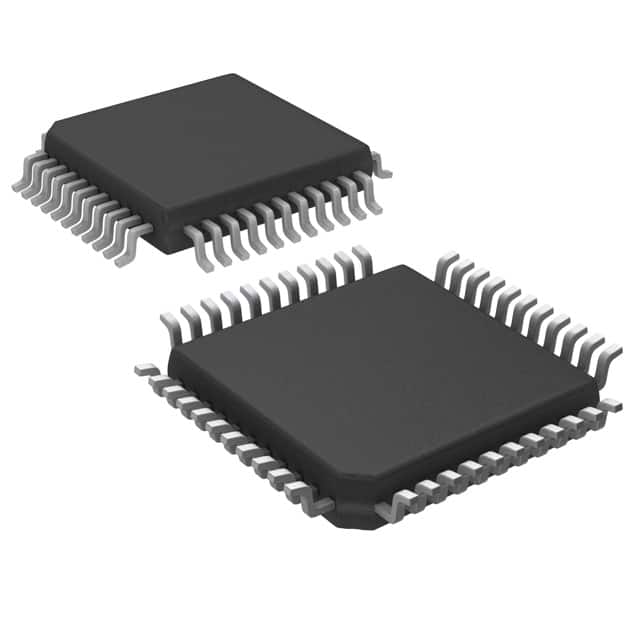
Infineon Technologies PSB 21393 H V1.3
- Part No.:
- PSB 21393 H V1.3
- Manufacturer:
- Infineon Technologies
- Category:
- Telecom
- Package:
- 44-QFP
- Datasheet:
-
 PSB 21393 H V1.3.pdf
- Description:
- IC TELECOM INTERFACE MQFP-44
- Quantity:
- Payment:

- Shipping:

Inventory:4,183
Please send an inquiry. Send us your inquiry, and we will respond immediately.
Product details
Overview
PSB 21393 H V1.3 from Infineon Technologies is a single-chip SCOUT-PX digital codec with integrated UPN transceiver and full speakerphone functionality, designed for ISDN terminal equipment. It supports B1/B2/D-channel IOM-2 interface (2.048 Mbps), UPN burst-mode physical layer signaling, HDLC controller with five message transfer modes, and programmable analog front-end with echo cancellation coefficients. Used in Siemens-compatible ISDN telephony systems requiring hands-free operation.
For engineers reviewing the PSB 21393 H V1.3 datasheet, PSB 21393 H V1.3 pinout, PSB 21393 H V1.3 application, or PSB 21393 H V1.3 equivalent, key selection criteria include UPN transceiver timing compliance (tUPN = 1.5 µs setup/hold), HDLC FIFO depth (128-byte RX/TX), speakerphone AGC convergence time (≤200 ms), and IOM-2 frame synchronization capability with MONITOR channel support.
Technical Context
The PSB 21393 H V1.3 implements a dual-domain architecture: a digital signal processor core handles echo cancellation and tone generation via four independent signal generators and programmable coefficient RAM (CRAM), while a dedicated UPN Layer-1 state machine manages burst-mode line activation, level detection, and transceiver enable/disable sequencing. Its HDLC controller supports non-auto, transparent, and extended transparent modes with MDS2–MDS0 configuration.
IOM-2 interface operates at 2.048 MHz with strobed bit clock and serial data strobe; the MONITOR channel enables real-time D-channel access control and error detection via handshake protocol with timeout logic. The analog front end includes adjustable attenuation plan, DTMF mode, and controlled monitoring path for hybrid testing.
Key Specifications
| Parameter | Value and Actual Design Meaning |
|---|---|
| Interface Type | IOM-2 + UPN + SCI + HDLC - Enables simultaneous ISDN B/D-channel handling and burst-mode line signaling without external glue logic. |
| Data Rate (IOM-2) | 2.048 Mbps - Matches E1/T1 framing standard for direct connection to ISDN S/T bus controllers. |
| FIFO Depth | 128 bytes RX/TX - Supports full HDLC frame buffering for error-resilient D-channel messaging in noisy environments. |
| UPN Timing (tUPN) | 1.5 µs setup/hold - Ensures reliable burst-frame capture during UPN activation/deactivation transitions per DS1 spec. |
| Speakerphone AGC | AGCX/AGCR with ≤200 ms convergence - Maintains stable acoustic output level during dynamic speech activity in hands-free operation. |
| Tone Generation | Four signal generators + sequence controller - Generates ringback, busy, dial tone, and DTMF tones per ETSI EN 300 001-1 without host CPU intervention. |
| Power Supply | 3.3 V ±5 % (digital), 5.0 V ±5 % (analog) - Separated domains minimize noise coupling between DSP and AFE sections. |
Pinout & Package
PSB 21393 H V1.3 is housed in a 128-pin PQFP (Plastic Quad Flat Package) with 0.4 mm pitch, thermally enhanced for sustained ISDN line driver operation. Pin functions are validated per Infineon DS1 (2001-03-07), pages 7–11.
| Pin/Terminal | Circuit Role | Design Meaning |
|---|---|---|
| CLKIN | Master Clock Input | Accepts 16.384 MHz crystal or oscillator input to derive all internal timing including IOM-2 bit clock and UPN strobes. |
| SDS | Serial Data Strobe | Active-low edge-triggered signal indicating valid IOM-2 data on SDI/SDO lines; synchronizes frame boundaries. |
| MONIT | Monitor Channel Enable | Activates D-channel monitoring path for diagnostic access without disrupting primary IOM-2 traffic flow. |
| UPN_EN | UPN Transceiver Enable | Controls power-gating of UPN analog circuitry; low = active, enabling burst transmission/reception. |
| AGC_X | Transmit AGC Control Output | Analog voltage output (0–3.3 V) proportional to near-end speech energy, used for external amplifier gain adjustment. |
| CRAM_CS | CRAM Chip Select | Enables access to 256-word coefficient RAM for real-time speakerphone echo path adaptation. |
Key Features
| Feature | Design Value |
|---|---|
| Integrated UPN Transceiver | Eliminates need for discrete UPN line driver/receiver ICs, reducing BOM count and PCB area in ISDN terminal designs. |
| Programmable CRAM Coefficients | 256-word RAM allows runtime adaptation of echo cancellation filters to room acoustics and handset placement. |
| Dedicated Tone Generator | Four independent oscillators + sequence engine generate standardized telephony tones without consuming host MCU cycles. |
| MONITOR Channel | Provides non-intrusive D-channel visibility for protocol debugging and field diagnostics without interrupting live call paths. |
| Speakerphone Self-Adaption | Automatically adjusts AGC and echo suppression parameters during idle periods, maintaining performance across temperature drift. |
Applications
| ISDN Terminal Adapter | VoIP Gateway Interface |
|---|---|
|
Use Scenario: Embedded ISDN TA in small office PBX systems connecting analog phones to digital S/T bus. IC Role / Device Role / Timing Role: Acts as full-duplex codec + UPN PHY + HDLC controller, managing B1/B2/D-channel framing and burst activation per ETSI TS 101 524. Use Value: Reduces component count by integrating UPN transceiver and speakerphone DSP, enabling compact form factor and lower system cost. |
Use Scenario: Bridging legacy ISDN infrastructure to VoIP networks using media gateway with TDM backplane. IC Role / Device Role / Timing Role: Provides IOM-2 interface to TDM switch and UPN signaling to ISDN line; HDLC handles D-channel LAPD stack. Use Value: Enables deterministic D-channel latency (<50 µs) and synchronized burst timing required for interworking with SIP-ISDN gateways. |
| Conference Phone System | Industrial Remote Terminal Unit |
|
Use Scenario: Multi-microphone conference phone supporting full-duplex speakerphone with acoustic echo cancellation. IC Role / Device Role / Timing Role: Performs real-time echo cancellation using CRAM coefficients, AGC control, and tone generation for keypad feedback. Use Value: Achieves >45 dB echo return loss (ERL) over temperature range –20°C to +70°C without manual calibration. |
Use Scenario: Ruggedized RTU in utility automation communicating over ISDN backup link during fiber outage. IC Role / Device Role / Timing Role: Serves as failover modem interface with UPN burst-mode reconnection and HDLC-based alarm reporting. Use Value: Guarantees <100 ms UPN reactivation time after line fault, meeting IEC 61850-3 recovery requirements. |
Equivalent & Alternatives
The following parts are listed as comparable options for similar ISDN codec + UPN transceiver applications.
| Alternative Part | Technical Difference | Application Difference | Selection Advice |
|---|---|---|---|
| Infineon PSB 21391 V1.3 | Lacks speakerphone support (no AGCX/AGCR, no CRAM, no self-adaption logic); identical UPN/IOM-2/HDLC architecture. | Suitable only for basic ISDN terminal adapters without hands-free operation. | Select when speakerphone functionality is not required and cost reduction is prioritized. |
| Siemens TDA 10011 | Separate codec + UPN transceiver pair; requires external HDLC controller and microcontroller interface logic. | Higher board space and power consumption; supports same ETSI UPN timing but lacks integrated CRAM. | Choose only if legacy design reuse mandates discrete architecture or long-term availability of older Siemen's die. |
Compared with PSB 21393 H V1.3, PSB 21391 offers reduced feature set at lower cost but excludes speakerphone-specific circuits, while TDA 10011 increases system complexity and footprint due to lack of integration-making PSB 21393 optimal for new ISDN endpoint designs requiring hands-free capability.
Availability
PSB 21393 H V1.3 is available at Aetrix Electronics and suitable for ISDN terminal adapters, VoIP gateways, conference phone systems, and industrial remote terminal units requiring stable component supply and long-lifecycle support.
Supply support for PSB 21393 H V1.3 includes scheduled delivery planning, volume procurement assistance, BOM continuity management, traceable sourcing, and lifecycle availability coordination for OEM customers, industrial embedded developers, connected-device designers, and electronics production programs.
Manufacturer
Infineon Technologies AG is a German semiconductor manufacturer specializing in power management, automotive, and wired communications ICs, headquartered in Munich.
The PSB 21393 H V1.3 belongs to Infineon's SCOUT-PX product line, engineered specifically for ETSI-compliant ISDN terminal equipment with integrated voice processing and burst-mode line interface.
FAQ
What is the maximum operating temperature for PSB 21393 H V1.3?
The PSB 21393 H V1.3 is rated for industrial temperature range –20°C to +70°C, verified per Infineon DS1 section 7.1. Thermal derating begins above +65°C ambient, requiring ≥10°C/W PCB copper pour under the PQFP body for continuous operation at full load.
Does PSB 21393 H V1.3 support DTMF detection or only generation?
PSB 21393 H V1.3 supports DTMF generation only, as confirmed in section 4.3.6 of DS1. Detection must be implemented externally via host microcontroller sampling of the CODEC's analog receive path or using a separate DTMF decoder IC.
Can the CRAM coefficients be updated during an active call?
Yes-CRAM coefficients can be rewritten in real time via SCI interface during active speakerphone operation. Section 4.8.1.1 specifies that CRAM writes do not disrupt ongoing echo cancellation, provided the CMDW address field targets valid CRAM locations (0x00–0xFF).
Is the UPN_EN pin active-high or active-low?
The UPN_EN pin is active-low, as defined in DS1 page 9 (Pin Definitions): "UPN_EN: UPN transceiver enable input (active low). When low, UPN analog circuitry is powered and ready for burst transmission." This matches Figure 12 timing diagram showing UPN_EN assertion prior to UPN_CLK activation.
PSB 21393 H V1.3 Specifications
- Product attributes
- Attribute value
- Manufacturer:
- Infineon Technologies
- Series:
- SCOUT™
- Package/Case:
- 44-QFP
- Packaging:
- Tray
- Product Status:
- Obsolete
- Function:
- CODEC
- Interface:
- IOM-2, SCI, UPN
- Number of Circuits:
- 1
- Voltage - Supply:
- 3.3V, 5V
- Current - Supply:
- 27mA
- Power (Watts):
- -
- Operating Temperature:
- -
- Grade:
- -
- Qualification:
- -
- Mounting Type:
- Surface Mount
- Supplier Device Package:
- P-MQFP-44-1
PSB 21393 H V1.3 FAQ
1.How can I place an order for PSB 21393 H V1.3 through Aetrix?
Please submit a Request for Quotation (RFQ) for PSB 21393 H V1.3 on Aetrix. Our sales agent will provide a competitive quotation and guide you through the order confirmation once you accept the terms.
2.Are the price and stock information for PSB 21393 H V1.3 reliable?
The price and inventory of PSB 21393 H V1.3 are updated periodically and may fluctuate due to market conditions. Stock and pricing data are typically refreshed every 24 hours. Quotation validity for PSB 21393 H V1.3 is usually 5 days.
3.What payment methods are accepted for PSB 21393 H V1.3?
We accept Wire Transfer, PayPal, Credit Card, Western Union, MoneyGram, and Escrow for PSB 21393 H V1.3 transactions.
Note: Certain payment methods may incur a processing fee.
4.How is shipping managed for PSB 21393 H V1.3?
PSB 21393 H V1.3 orders can be shipped via leading logistics carriers, including DHL, UPS, FedEx, TNT, or Registered Mail.
Once your PSB 21393 H V1.3 order is processed, you will receive an email with the shipment details and tracking number.
Note: Tracking information may take up to 24 hours to appear. Express delivery typically takes 3–5 business days.
5.How can I obtain technical support or documentation for PSB 21393 H V1.3?
For technical support, including PSB 21393 H V1.3 datasheets, pinout diagrams, or application guidance, please contact our engineering support team. They can provide detailed documentation and assistance for your PSB 21393 H V1.3 requirements.
6.How does Aetrix verify that PSB 21393 H V1.3 is sourced from the original manufacturer or authorized distributors?
All PSB 21393 H V1.3 products on Aetrix are procured from qualified distributors and authorized channels. Our dedicated quality assurance team conducts strict verification, including traceability checks and, if necessary, third-party testing. This ensures that PSB 21393 H V1.3 meets industry standards.
7.What is the process for return or replacement of PSB 21393 H V1.3?
All PSB 21393 H V1.3 units undergo pre-shipment inspection (PSI). If there is an issue with PSB 21393 H V1.3, returns or replacements are accepted under the following conditions:
1.Quantity discrepancies, incorrect items, or visible external defects (such as breakage or corrosion), acknowledged by Aetrix.
2.The issue is reported within 90 days of delivery.
3.The PSB 21393 H V1.3 part is unused and in its original packaging.
Return procedure for PSB 21393 H V1.3:
1.Submit a request within 90 days.
2.Obtain a Return Material Authorization (RMA) from Aetrix.
PSB 21393 H V1.3 Tags

-
LMC567CMX/NOPB
Texas Instruments
-
LM567CMX/NOPB
Texas Instruments
-
LM567CM/NOPB
Texas Instruments
-
VSC8531XMW-02
Microchip Technology
-
VSC8531XMW-05
Microchip Technology

-
GPY115C0VI
MaxLinear, Inc.
-
SI32185-A-FMR
Skyworks Solutions Inc.
-
VSC8541XMV-05
Microchip Technology
-
SI32178-B-FM1R
Skyworks Solutions Inc.
-
GPY215C0VI
MaxLinear, Inc.
-
CPC7514ZTR
Littelfuse Inc.
-
VSC8502XML-03
Microchip Technology
Tech Hub

An engineering guide to LED driver operation, constant-current and constant-voltage outputs, linear and switching topologies, dimming, IC selection, calculations, replacement compatibility, and fault c…

Operational amplifier guide covering op amp basics, feedback, ideal vs real op amps, common configurations, buffer circuits, offset, bias current, gain-bandwidth, slew rate, rail-to-rail limits and sel…

Jumper cables guide covering safe connection order, red and black clamp placement, final ground connection, cable gauge, length, clamp quality, copper vs CCA cables, jump starter comparison and battery…

LDO regulator guide covering low dropout voltage, power dissipation, thermal design, PSRR, output noise, capacitor stability, adjustable LDO circuits, LDO vs buck converter and datasheet selection chec…

Conditional Access Module guide covering CAM meaning, CI/CI+ interface, smart card authorization, DVB security workflow, TV and set-top box compatibility, internal electronics, ESD protection, connecto…

Guide to electronic component obsolescence covering EOL risk, PCN/PDN notices, last-time buy planning, replacement options, form-fit-function validation, counterfeit risk and BOM lifecycle management.

18650 battery guide covering lithium-ion cell basics, 3.6V/3.7V voltage, 4.2V charging, mAh and Wh capacity, protected cells, chargers, BMS, series-parallel packs, holders, welding and sourcing checks.…

Hall effect sensor guide covering working principle, linear and digital sensors, Arduino circuits, current sensing, speed detection, automotive applications, A3144 examples, signal filtering and datash…

Product Change Notification guide for electronic components, covering PCN meaning, PCN vs PDN/EOL, common change types, risk levels, form-fit-function review, engineering validation, BOM control, LTB/L…

A practical guide to blend door actuators, covering HVAC function, symptoms, location, AC and heater issues, reset and calibration, replacement cost, electrical diagnosis, compatibility checks, and rep…


