
 My Inquiry
 My Account


STMicroelectronics PSD833F2-90M
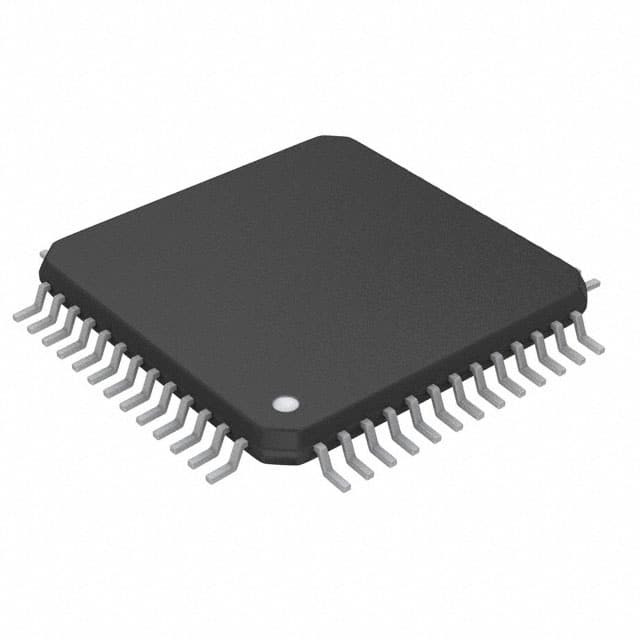
- Part No.:
- PSD833F2-90M
- Manufacturer:
- STMicroelectronics
- Category:
- Specialized ICs
- Package:
- 52-QFP
- Datasheet:
-
 PSD833F2-90M.pdf
- Description:
- IC PROG PERIPH IC 52PQFP
- Quantity:
- Payment:

- Shipping:

Inventory:1,512
Please send an inquiry. Send us your inquiry, and we will respond immediately.
Product details
Overview
PSD833F2-90M from STMicroelectronics is a Flash in-system programmable (ISP) peripheral IC for 8-bit microcontrollers, integrating dual-bank Flash (1 Mbit primary + 256 Kbit secondary), 256 Kbit SRAM, 27 reconfigurable I/O ports, and a hybrid PLD (3000-gate CPLD + user-defined DPLD). It supports concurrent read/erase/write operations and operates at 5 V with 90 ns access time. Used in legacy industrial MCU systems requiring field-upgradable firmware and flexible address decoding.
For engineers reviewing the PSD833F2-90M datasheet, PSD833F2-90M pinout, PSD833F2-90M application, or PSD833F2-90M equivalent, key selection criteria include ISP JTAG support, dual-bank Flash concurrency, PLD-based chip select decoding, and compatibility with 80C51/68HC11 bus protocols.
Technical Context
The PSD833F2-90M implements a tightly coupled memory-peripheral architecture where the primary Flash (32K × 8, 8 uniform sectors) and secondary Flash (64K × 4, 4 uniform sectors) operate independently under JTAG-controlled ISP. Its page register expands MCU address space by 256×, enabling access to >16 MB of logical memory using an 8-bit bus.
The integrated PLD comprises two distinct blocks: a 16-output macrocell CPLD for glue logic and timing-critical control signals, and a decode PLD (DPLD) that performs user-configurable internal chip select generation-eliminating external logic for memory mapping in 8-bit embedded systems.
Key Specifications
| Parameter | Value and Actual Design Meaning |
|---|---|
| Primary Flash | 1 Mbit (32K × 8), organized in 8 uniform sectors - enables sector-level erase without disrupting active code execution. |
| Secondary Flash | 256 Kbit (64K × 4), 4 uniform sectors - dedicated for boot code or configuration storage, independent of primary Flash operations. |
| SRAM | 256 Kbit (32K × 8) - provides fast, nonvolatile-shadowed data buffer for MCU peripherals and real-time variables. |
| Access Time | 90 ns - guarantees timing compliance with 80C51 and 68HC11 buses running at ≤11 MHz system clock. |
| I/O Ports | 27 reconfigurable pins - configurable as MCU I/O, PLD I/O, latched address outputs, or special function signals (e.g., JTAG, reset). |
| PLD Capacity | ~3000 equivalent gates - includes 16 OMCs and 24 IMCs, supporting combinational and registered logic for address decoding and state machines. |
| JTAG Interface | IEEE 1149.1-compliant serial port - enables full-chip ISP, boundary-scan testing, and in-field firmware updates without socket removal. |
Pinout & Package
PQFP52 (M) package - 52-pin plastic quad flat pack with 0.65 mm pitch, ECOPACK® compliant, suitable for surface-mount assembly in industrial control modules.
| Pin/Terminal | Circuit Role | Design Meaning |
|---|---|---|
| A0–A15 | Address Inputs | 16-bit multiplexed or non-multiplexed address bus interface compatible with 80C51 and 68HC11 MCUs. |
| D0–D7 | Data Bus | 8-bit bidirectional data path supporting byte-wide read/write to Flash, SRAM, and PLD registers. |
| RD, WR, CS | Control Signals | Standard 8-bit MCU bus strobes - enable memory-mapped access to PSD internal resources without glue logic. |
| TCK, TMS, TDI, TDO | JTAG Port | IEEE 1149.1 boundary-scan interface - used for ISP programming, debug visibility, and manufacturing test. |
| RESET | Active-Low Reset Input | Synchronizes internal state machines and forces known initialization of Flash, SRAM, and PLD configuration. |
| CSI (PD2) | Chip Select Input | Enables PSD only when asserted - allows multi-device memory mapping via external address decoding or DPLD output. |
Key Features
| Feature | Design Value |
|---|---|
| Concurrent Dual-Bank Flash Operation | Read from one bank while erasing/writing the other - eliminates firmware update downtime in field-deployed systems. |
| Configurable I/O Port Modes | 27 pins support 6 operating modes (MCU I/O, PLD I/O, latched address, etc.) - reduces external logic count and PCB footprint. |
| User-Defined DPLD Decoding | Internal chip select generation based on address/control inputs - replaces discrete decoders (e.g., 74LS138) in MCU memory maps. |
| Page Register Address Expansion | 256× logical address space extension - enables 8-bit MCUs to access >16 MB of combined Flash/SRAM without hardware banking. |
| Programmable Power Management | Automatic power-down (APD) unit with configurable timeout - reduces standby current to <100 µA during idle MCU cycles. |
Applications
| Industrial PLC I/O Module | Legacy Medical Device Controller |
|---|---|
|
Use Scenario: Field-upgradable firmware in DIN-rail mounted PLC I/O expansion modules with 80C51-based main controller. IC Role / Device Role / Timing Role: Memory/peripheral co-processor providing Flash storage, SRAM buffering, and PLD-based address decoding for analog/digital I/O ASICs. Use Value: Enables remote firmware patching via JTAG without module replacement, reducing maintenance cost and downtime. |
Use Scenario: Control subsystem in CE-certified patient monitor with fixed-function 8-bit MCU and safety-critical boot integrity requirements. IC Role / Device Role / Timing Role: Secure boot loader and configuration manager - secondary Flash stores signed firmware images; DPLD enforces write-protection during runtime. Use Value: Meets IEC 62304 Class B software update requirements via hardware-enforced Flash sector protection and JTAG lockout. |
| Automotive Body Control Unit (BCU) | Point-of-Sale Terminal MCU Subsystem |
|
Use Scenario: Low-cost BCU in 12 V automotive applications using 68HC11 derivative MCU with limited on-chip memory. IC Role / Device Role / Timing Role: Memory expansion and peripheral interface - primary Flash holds application code; CPLD generates PWM and CAN transceiver control signals. Use Value: Eliminates need for external EPROM and discrete logic, meeting AEC-Q100 Grade 2 temperature range (−40°C to +105°C) with 5 V operation. |
Use Scenario: Embedded controller in EMV-compliant payment terminal with requirement for secure firmware updates and tamper-resistant storage. IC Role / Device Role / Timing Role: Trusted execution environment anchor - secondary Flash stores encrypted keys; PLD implements secure boot state machine with hardware-based reset vector validation. Use Value: Provides hardware-rooted security primitives required for PCI PTS v6.0 certification without adding external secure elements. |
Equivalent & Alternatives
The following parts are listed as comparable options for similar Flash+PLD peripheral applications.
| Alternative Part | Technical Difference | Application Difference | Selection Advice |
|---|---|---|---|
| PSD834F2-90M | 2 Mbit primary Flash (vs. 1 Mbit), same 256 Kbit secondary Flash and PLD structure. | Required where larger application code footprint exceeds 1 Mbit - e.g., feature-rich HMI firmware with bitmap assets. | Select when code size growth is projected beyond 1 Mbit but same timing, pinout, and PLD functionality are needed. |
| PSD853F2-90M | Includes additional 256 Kbit EEPROM block and enhanced JTAG security features (lock bits, password protection). | Suitable for applications requiring nonvolatile parameter storage with byte-level endurance (>100k cycles) and firmware IP protection. | Choose when field calibration data persistence or intellectual property protection outweighs cost premium over PSD833F2. |
Compared with PSD833F2-90M, PSD834F2-90M offers double primary Flash capacity with identical timing and PLD capability, while PSD853F2-90M adds EEPROM and security extensions-making each optimal for distinct firmware scalability or data retention requirements.
Availability
PSD833F2-90M is available at Aetrix Electronics and suitable for industrial PLC I/O modules, legacy medical device controllers, and automotive body control units requiring stable component supply and long-term obsolescence management.
Supply support for PSD833F2-90M includes scheduled delivery planning, volume procurement assistance, BOM continuity management, traceable sourcing, and lifecycle availability coordination for OEM customers, industrial embedded developers, connected-device designers, and electronics production programs.
Manufacturer
STMicroelectronics is a global semiconductor leader headquartered in Geneva, Switzerland, designing and manufacturing microcontrollers, power management ICs, and memory solutions for industrial, automotive, and consumer markets.
The PSD8XXFX product line was engineered specifically to extend the life and capability of 8-bit MCU platforms by integrating Flash, SRAM, and programmable logic into a single ISP-capable peripheral - targeting cost-sensitive, long-lifecycle embedded systems.
FAQ
Is PSD833F2-90M still in production?
No - PSD833F2-90M is marked obsolete by STMicroelectronics (Doc ID 7833 Rev 7, Table 1). However, Aetrix Electronics maintains verified legacy inventory with full traceability, extended warranty, and engineering support for ongoing production and repair programs.
What MCU families does PSD833F2-90M directly interface with?
It natively supports 80C51XA, 80C251, 80C31, and 68HC11 derivatives via documented bus timing and control signal mappings (Sections 15.5–15.8, Doc ID 7833). No external bus translators are required for these architectures.
Can the PLD logic be reconfigured in-system after initial programming?
Yes - both the CPLD and DPLD blocks are fully reprogrammable via JTAG. The OMC and IMC configurations, including product term allocations and output enables, are stored in Flash and can be updated without power cycle or device removal.
Does PSD833F2-90M support 3 V operation?
No - PSD833F2-90M is a 5 V-only device (see Table 40, Operating Conditions). It is not compatible with 3 V logic families or mixed-voltage systems without level-shifting circuitry on all I/O and control lines.
PSD833F2-90M Specifications
- Product attributes
- Attribute value
- Manufacturer:
- STMicroelectronics
- Series:
- -
- Package/Case:
- 52-QFP
- Packaging:
- Tray
- Product Status:
- Obsolete
- Programmable:
- Verified
- Type:
- Programmable Peripherals IC
- Applications:
- 8-Bit MCU Peripherals
- Mounting Type:
- Surface Mount
- Supplier Device Package:
- 52-PQFP (10x10)
- Grade:
- -
- Qualification:
- -
PSD833F2-90M FAQ
1.How can I place an order for PSD833F2-90M through Aetrix?
Please submit a Request for Quotation (RFQ) for PSD833F2-90M on Aetrix. Our sales agent will provide a competitive quotation and guide you through the order confirmation once you accept the terms.
2.Are the price and stock information for PSD833F2-90M reliable?
The price and inventory of PSD833F2-90M are updated periodically and may fluctuate due to market conditions. Stock and pricing data are typically refreshed every 24 hours. Quotation validity for PSD833F2-90M is usually 5 days.
3.What payment methods are accepted for PSD833F2-90M?
We accept Wire Transfer, PayPal, Credit Card, Western Union, MoneyGram, and Escrow for PSD833F2-90M transactions.
Note: Certain payment methods may incur a processing fee.
4.How is shipping managed for PSD833F2-90M?
PSD833F2-90M orders can be shipped via leading logistics carriers, including DHL, UPS, FedEx, TNT, or Registered Mail.
Once your PSD833F2-90M order is processed, you will receive an email with the shipment details and tracking number.
Note: Tracking information may take up to 24 hours to appear. Express delivery typically takes 3–5 business days.
5.How can I obtain technical support or documentation for PSD833F2-90M?
For technical support, including PSD833F2-90M datasheets, pinout diagrams, or application guidance, please contact our engineering support team. They can provide detailed documentation and assistance for your PSD833F2-90M requirements.
6.How does Aetrix verify that PSD833F2-90M is sourced from the original manufacturer or authorized distributors?
All PSD833F2-90M products on Aetrix are procured from qualified distributors and authorized channels. Our dedicated quality assurance team conducts strict verification, including traceability checks and, if necessary, third-party testing. This ensures that PSD833F2-90M meets industry standards.
7.What is the process for return or replacement of PSD833F2-90M?
All PSD833F2-90M units undergo pre-shipment inspection (PSI). If there is an issue with PSD833F2-90M, returns or replacements are accepted under the following conditions:
1.Quantity discrepancies, incorrect items, or visible external defects (such as breakage or corrosion), acknowledged by Aetrix.
2.The issue is reported within 90 days of delivery.
3.The PSD833F2-90M part is unused and in its original packaging.
Return procedure for PSD833F2-90M:
1.Submit a request within 90 days.
2.Obtain a Return Material Authorization (RMA) from Aetrix.
PSD833F2-90M Tags
-
CAP200DG-TL
Power Integrations
-
ATSHA204A-MAHDA-T
Microchip Technology

-
ATSHA204A-SSHDA-T
Microchip Technology
-
ATSHA204A-STUCZ-T
Microchip Technology
-
ATECC608B-MAHDA-T
Microchip Technology
-
ATECC608B-MAHCZ-S
Microchip Technology

-
ATECC608B-SSHDA-T
Microchip Technology
-
ATECC608B-MAHDA-S
Microchip Technology
-
ATECC608A-MAHDA-S
Microchip Technology
-
ATECC608B-MAVDA-T
Microchip Technology

-
ATECC608A-SSHDA-T
Microchip Technology
-
ATECC508A-MAHDA-T
Microchip Technology
Tech Hub

Operational amplifier guide covering op amp basics, feedback, ideal vs real op amps, common configurations, buffer circuits, offset, bias current, gain-bandwidth, slew rate, rail-to-rail limits and sel…

Jumper cables guide covering safe connection order, red and black clamp placement, final ground connection, cable gauge, length, clamp quality, copper vs CCA cables, jump starter comparison and battery…

LDO regulator guide covering low dropout voltage, power dissipation, thermal design, PSRR, output noise, capacitor stability, adjustable LDO circuits, LDO vs buck converter and datasheet selection chec…

Conditional Access Module guide covering CAM meaning, CI/CI+ interface, smart card authorization, DVB security workflow, TV and set-top box compatibility, internal electronics, ESD protection, connecto…

Guide to electronic component obsolescence covering EOL risk, PCN/PDN notices, last-time buy planning, replacement options, form-fit-function validation, counterfeit risk and BOM lifecycle management.

18650 battery guide covering lithium-ion cell basics, 3.6V/3.7V voltage, 4.2V charging, mAh and Wh capacity, protected cells, chargers, BMS, series-parallel packs, holders, welding and sourcing checks.…

Hall effect sensor guide covering working principle, linear and digital sensors, Arduino circuits, current sensing, speed detection, automotive applications, A3144 examples, signal filtering and datash…

Product Change Notification guide for electronic components, covering PCN meaning, PCN vs PDN/EOL, common change types, risk levels, form-fit-function review, engineering validation, BOM control, LTB/L…

A practical guide to blend door actuators, covering HVAC function, symptoms, location, AC and heater issues, reset and calibration, replacement cost, electrical diagnosis, compatibility checks, and rep…

Engineering guide to Raspberry Pi alternatives, covering chip-level differences, Orange Pi, ROCK, Jetson, Banana Pi, NanoPi, Compute Module, Pico, GPIO, camera, HAT compatibility, and replacement risks…


