
 My Inquiry
 My Account


STMicroelectronics PSD834F2V-15M
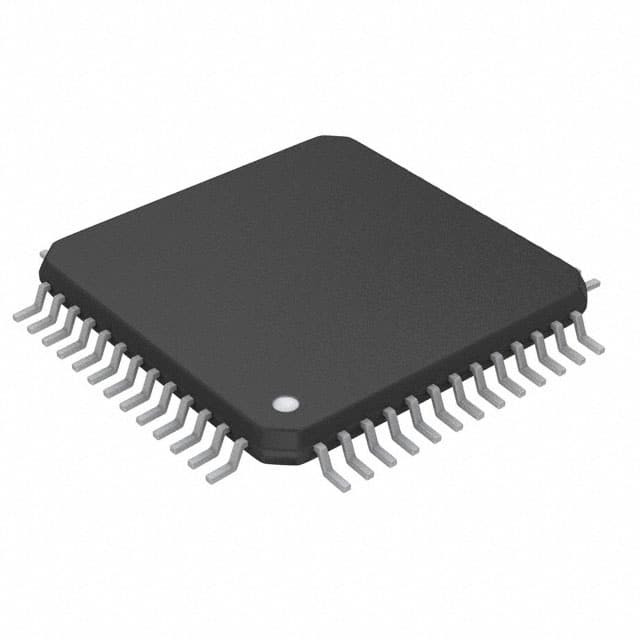
- Part No.:
- PSD834F2V-15M
- Manufacturer:
- STMicroelectronics
- Category:
- Specialized ICs
- Package:
- 52-QFP
- Datasheet:
-
 PSD834F2V-15M.pdf
- Description:
- IC PROG PERIPH IC 52PQFP
- Quantity:
- Payment:

- Shipping:

Inventory:1,231
Please send an inquiry. Send us your inquiry, and we will respond immediately.
Product details
Overview
PSD834F2V-15M from STMicroelectronics is a programmable system device (PSD) integrating 2 Mbit primary Flash, 256 Kbit secondary Flash, 64 Kbit battery-backed SRAM, a 16-output CPLD, a 73-input DPLD, and 27 reconfigurable I/O ports - all optimized for 8-bit MCU bus interfacing with single 3.3 V ±10% supply. It enables in-system programming (ISP) via JTAG, concurrent code execution and update, and hardware-accelerated address decoding for embedded control systems.
For engineers reviewing the PSD834F2V-15M datasheet, PSD834F2V-15M pinout, PSD834F2V-15M application, or PSD834F2V-15M equivalent, key selection criteria include Flash sector count (8+4), SRAM retention capability with external VSTBY, PLD macrocell count (16 OMC + 24 IMC), and support for multiplexed/non-multiplexed 8-bit buses including Intel 8051, Motorola 68HC11, and Zilog Z8 families.
Technical Context
The PSD834F2V implements a dual-memory architecture where the 256 Kbit secondary Flash supports concurrent execution while the 2 Mbit primary Flash is updated - eliminating need for complex IAP software overhead. Its DPLD provides combinatorial address decoding for memory block selection, while the CPLD delivers configurable logic with 140 product terms and runtime power gating via Turbo Bit (PMMR0) and PMMR2 controls.
MCU interface logic auto-detects bus type (multiplexed or non-multiplexed) and responds to standard control signals (RD, WR, ALE, CS); Port A/B can be configured as data ports, Port C hosts JTAG pins (TMS/TCK/TDI/TDO/TSTAT/TERR), and Port D includes chip select input (CSI/PD2) and clock input (CLKIN/PD1). All memory access times include DPLD decoding latency.
Key Specifications
| Parameter | Value and Actual Design Meaning |
|---|---|
| Primary Flash | 2 Mbit (256K × 8), 8 uniform sectors - enables modular firmware updates without full erase. |
| Secondary Flash | 256 Kbit (32K × 8), 4 uniform sectors - supports boot code execution during primary Flash reprogramming. |
| SRAM | 64 Kbit battery-backed - retains critical state across power loss when VSTBY (PC2) is connected to external battery. |
| CPLD Resources | 16 output macrocells (OMC), 24 input macrocells (IMC), 140 product terms - implements state machines, counters, and glue logic without external components. |
| DPLD Resources | 73 inputs, 17 outputs, 42 product terms - performs real-time address decoding for Flash/SRAM/registers with zero software overhead. |
| JTAG ISP | Full-chip programming via TMS/TCK/TDI/TDO on Port C - eliminates need for external programmer or boot EPROM. |
| Power Management | Standby current ≤25 µA; Automatic Power-down (APD) unit disables blocks during MCU inactivity - extends battery life in portable systems. |
Pinout & Package
PSD834F2V-15M is available in PQFP52 (M) package per manufacturer documentation. Pin assignments are validated per datasheet Figures 92–93 and Table 2.
| Pin/Terminal | Circuit Role | Design Meaning |
|---|---|---|
| PA0–PA7 | Port A I/O | Configurable as MCU I/O, PLD I/O, or latched address outputs - supports multiplexed bus timing. |
| PB0–PB7 | Port B I/O | Same configuration flexibility as Port A; may combine with Port A as 16-bit data port for non-multiplexed buses. |
| PC0–PC7 | Port C I/O | Includes JTAG signals (PC0=TMS, PC1=TCK, PC3=TSTAT, PC4=TERR, PC5=TDI, PC6=TDO); PC2=VSTBY for SRAM battery backup. |
| PD0–PD2 | Port D I/O | PD1=CLKIN (system clock input), PD2=CSI (chip select input), PD0=reserved - defines core timing and enable behavior. |
| AD0–AD15 | Address/Data Bus | Multiplexed 16-bit bus - interfaces directly with 8051/68HC11/Z80 families; latching controlled by ALE signal. |
| RD, WR, ALE, CS | Control Inputs | Native MCU control signals - drive internal decode logic and memory access without glue logic. |
Key Features
| Feature | Design Value |
|---|---|
| Page Register | 8-bit register expands MCU address space by factor of 256 - enables access to >64 KB memory without external paging hardware. |
| Concurrent Flash Operation | Execute from secondary Flash while programming primary Flash - removes requirement for shadow RAM or dual-bank firmware design. |
| Runtime PLD Power Control | Turbo Bit (PMMR0) and PMMR2 bits disable CPLD inputs/outputs - reduces dynamic power during idle without firmware reload. |
| Flexible I/O Configuration | 27 pins individually assignable to MCU I/O, PLD I/O, address latch, or special functions - replaces discrete logic and reduces PCB layer count. |
| Integrated Boot Memory | 256 Kbit secondary Flash pre-configured for boot code - eliminates external boot ROM and simplifies BOM for MCU-based controllers. |
Applications
| Industrial PLC Controller | Medical Device Firmware Hub |
|---|---|
Use Scenario: Compact programmable logic controller requiring field-upgradable firmware, deterministic I/O response, and non-volatile state retention during brownouts. IC Role / Device Role / Timing Role: Central memory and logic hub - hosts boot loader, application code, and real-time I/O mapping logic; synchronizes with 8051-based control core. Use Value: Battery-backed SRAM preserves alarm history and calibration data; dual Flash enables zero-downtime firmware patches verified before activation. | Use Scenario: Portable diagnostic instrument with regulatory-compliant firmware update process and tamper-resistant configuration storage. IC Role / Device Role / Timing Role: Secure non-volatile configuration manager - stores encrypted calibration tables, device identity, and audit logs in protected Flash sectors. Use Value: JTAG-locked Flash protection prevents unauthorized modification; 15-year data retention meets IEC 62304 Class C requirements. |
| Automotive Body Control Module | Smart Energy Meter Interface |
Use Scenario: CAN-connected body controller needing robust EEPROM replacement, low-power sleep mode, and ASIL-B compatible memory integrity. IC Role / Device Role / Timing Role: MCU co-processor for memory management and peripheral logic - handles window lift sequencing, door lock state machine, and LIN bus interface timing. Use Value: 100,000 Flash endurance exceeds automotive lifecycle requirements; APD mode reduces quiescent current to ≤25 µA in vehicle-off state. | Use Scenario: Utility meter with remote firmware updates, tamper detection logging, and decade-long data logging under intermittent power. IC Role / Device Role / Timing Role: Embedded memory subsystem - manages tariff schedule storage, consumption history buffers, and secure boot validation sequence. Use Value: Concurrent Flash operation allows OTA updates without interrupting metering accuracy; VSTBY-backed SRAM retains last-read kWh value across grid outages. |
Equivalent & Alternatives
The following parts are listed as comparable options for similar programmable memory and logic integration applications.
| Alternative Part | Technical Difference | Application Difference | Selection Advice |
|---|---|---|---|
| PSD813F2V-15M | 1 Mbit primary Flash, no secondary Flash, same CPLD/DPLD resources - lacks concurrent execution capability. | Suitable only for static firmware deployments without field update requirements. | Select when cost sensitivity outweighs need for in-field firmware upgrades. |
| AT49BV1614A-15TI | Standalone 16 Mbit Flash with no SRAM, PLD, or JTAG - requires external logic for decode and MCU interface. | Requires additional CPLD or FPGA for address decoding and I/O expansion - increases BOM and layout complexity. | Select only if existing design already uses discrete Flash and logic, and no consolidation benefit is needed. |
Compared with PSD834F2V-15M, PSD813F2V-15M reduces Flash capacity and removes concurrent update capability, while AT49BV1614A-15TI offers higher density but forces external implementation of all logic, memory management, and ISP - making PSD834F2V-15M the only solution integrating Flash, SRAM, PLD, and JTAG ISP in one PQFP52 package for 8-bit MCU systems.
Availability
PSD834F2V-15M is available at Aetrix Electronics and suitable for industrial PLC controllers, medical diagnostic instruments, automotive body control modules, and smart energy meters requiring stable component supply and long-term lifecycle support.
Supply support for PSD834F2V-15M includes scheduled delivery planning, volume procurement assistance, BOM continuity management, traceable sourcing, and lifecycle availability coordination for OEM customers, industrial embedded developers, connected-device designers, and electronics production programs.
Manufacturer
STMicroelectronics is a global semiconductor leader specializing in microcontrollers, power management, and embedded memory solutions for industrial, automotive, and consumer applications.
The PSD family was designed to replace discrete Flash, SRAM, and PLD components in 8-bit MCU systems - delivering unified memory management, hardware-accelerated address decoding, and field-programmable logic in a single integrated device.
FAQ
What MCU families does PSD834F2V-15M natively support?
PSD834F2V-15M supports Intel 8031/8051XA/80196/80186/80C251/80386EX, Motorola 68HC11/68HC12/68HC16/683XX, Philips 8031/8051XA, and Zilog Z80/Z8 families. Its bus interface logic auto-detects multiplexed or non-multiplexed configurations and responds directly to RD, WR, ALE, and CS signals without external translation logic.
How is concurrent Flash programming achieved without halting MCU operation?
Concurrent operation is enabled by separating execution and programming memory spaces: the MCU executes code from the 256 Kbit secondary Flash while simultaneously reprogramming the 2 Mbit primary Flash. This eliminates need for shadow RAM or dual-bank firmware schemes, and is managed entirely by hardware address routing and sector-select logic within the PSD.
Can the CPLD be reprogrammed in the field, and what interface is used?
Yes, the CPLD (including both DPLD and CPLD arrays) can be fully reprogrammed in the field using the JTAG serial interface on Port C (PC0–PC6). Programming is performed via TMS/TCK/TDI/TDO signals and does not require MCU involvement - enabling logic updates independent of host firmware, with full security lock capability.
What is the role of the VSTBY pin (PC2), and how is SRAM retention implemented?
VSTBY (PC2) is a dedicated voltage standby input that connects to an external battery or supercapacitor. When main VCC drops below operating threshold, the PSD automatically switches SRAM power source to VSTBY, preserving all 64 Kbit contents. Data retention is guaranteed for ≥15 years under specified temperature and voltage conditions per datasheet Section AC/DC Parameters.
PSD834F2V-15M Specifications
- Product attributes
- Attribute value
- Manufacturer:
- STMicroelectronics
- Series:
- -
- Package/Case:
- 52-QFP
- Packaging:
- Tray
- Product Status:
- Obsolete
- Programmable:
- Verified
- Type:
- Programmable Peripherals IC
- Applications:
- 8-Bit MCU Peripherals
- Mounting Type:
- Surface Mount
- Supplier Device Package:
- 52-PQFP (10x10)
- Grade:
- -
- Qualification:
- -
PSD834F2V-15M FAQ
1.How can I place an order for PSD834F2V-15M through Aetrix?
Please submit a Request for Quotation (RFQ) for PSD834F2V-15M on Aetrix. Our sales agent will provide a competitive quotation and guide you through the order confirmation once you accept the terms.
2.Are the price and stock information for PSD834F2V-15M reliable?
The price and inventory of PSD834F2V-15M are updated periodically and may fluctuate due to market conditions. Stock and pricing data are typically refreshed every 24 hours. Quotation validity for PSD834F2V-15M is usually 5 days.
3.What payment methods are accepted for PSD834F2V-15M?
We accept Wire Transfer, PayPal, Credit Card, Western Union, MoneyGram, and Escrow for PSD834F2V-15M transactions.
Note: Certain payment methods may incur a processing fee.
4.How is shipping managed for PSD834F2V-15M?
PSD834F2V-15M orders can be shipped via leading logistics carriers, including DHL, UPS, FedEx, TNT, or Registered Mail.
Once your PSD834F2V-15M order is processed, you will receive an email with the shipment details and tracking number.
Note: Tracking information may take up to 24 hours to appear. Express delivery typically takes 3–5 business days.
5.How can I obtain technical support or documentation for PSD834F2V-15M?
For technical support, including PSD834F2V-15M datasheets, pinout diagrams, or application guidance, please contact our engineering support team. They can provide detailed documentation and assistance for your PSD834F2V-15M requirements.
6.How does Aetrix verify that PSD834F2V-15M is sourced from the original manufacturer or authorized distributors?
All PSD834F2V-15M products on Aetrix are procured from qualified distributors and authorized channels. Our dedicated quality assurance team conducts strict verification, including traceability checks and, if necessary, third-party testing. This ensures that PSD834F2V-15M meets industry standards.
7.What is the process for return or replacement of PSD834F2V-15M?
All PSD834F2V-15M units undergo pre-shipment inspection (PSI). If there is an issue with PSD834F2V-15M, returns or replacements are accepted under the following conditions:
1.Quantity discrepancies, incorrect items, or visible external defects (such as breakage or corrosion), acknowledged by Aetrix.
2.The issue is reported within 90 days of delivery.
3.The PSD834F2V-15M part is unused and in its original packaging.
Return procedure for PSD834F2V-15M:
1.Submit a request within 90 days.
2.Obtain a Return Material Authorization (RMA) from Aetrix.
PSD834F2V-15M Tags
-
CAP200DG-TL
Power Integrations
-
ATSHA204A-MAHDA-T
Microchip Technology

-
ATSHA204A-SSHDA-T
Microchip Technology
-
ATSHA204A-STUCZ-T
Microchip Technology
-
ATECC608B-MAHDA-T
Microchip Technology
-
ATECC608B-MAHCZ-S
Microchip Technology

-
ATECC608B-SSHDA-T
Microchip Technology
-
ATECC608B-MAHDA-S
Microchip Technology
-
ATECC608A-MAHDA-S
Microchip Technology
-
ATECC608B-MAVDA-T
Microchip Technology

-
ATECC608A-SSHDA-T
Microchip Technology
-
ATECC508A-MAHDA-T
Microchip Technology
Tech Hub

Operational amplifier guide covering op amp basics, feedback, ideal vs real op amps, common configurations, buffer circuits, offset, bias current, gain-bandwidth, slew rate, rail-to-rail limits and sel…

Jumper cables guide covering safe connection order, red and black clamp placement, final ground connection, cable gauge, length, clamp quality, copper vs CCA cables, jump starter comparison and battery…

LDO regulator guide covering low dropout voltage, power dissipation, thermal design, PSRR, output noise, capacitor stability, adjustable LDO circuits, LDO vs buck converter and datasheet selection chec…

Conditional Access Module guide covering CAM meaning, CI/CI+ interface, smart card authorization, DVB security workflow, TV and set-top box compatibility, internal electronics, ESD protection, connecto…

Guide to electronic component obsolescence covering EOL risk, PCN/PDN notices, last-time buy planning, replacement options, form-fit-function validation, counterfeit risk and BOM lifecycle management.

18650 battery guide covering lithium-ion cell basics, 3.6V/3.7V voltage, 4.2V charging, mAh and Wh capacity, protected cells, chargers, BMS, series-parallel packs, holders, welding and sourcing checks.…

Hall effect sensor guide covering working principle, linear and digital sensors, Arduino circuits, current sensing, speed detection, automotive applications, A3144 examples, signal filtering and datash…

Product Change Notification guide for electronic components, covering PCN meaning, PCN vs PDN/EOL, common change types, risk levels, form-fit-function review, engineering validation, BOM control, LTB/L…

A practical guide to blend door actuators, covering HVAC function, symptoms, location, AC and heater issues, reset and calibration, replacement cost, electrical diagnosis, compatibility checks, and rep…

Engineering guide to Raspberry Pi alternatives, covering chip-level differences, Orange Pi, ROCK, Jetson, Banana Pi, NanoPi, Compute Module, Pico, GPIO, camera, HAT compatibility, and replacement risks…


