
 My Inquiry
 My Account


Diodes Incorporated PT7C4337ACSE
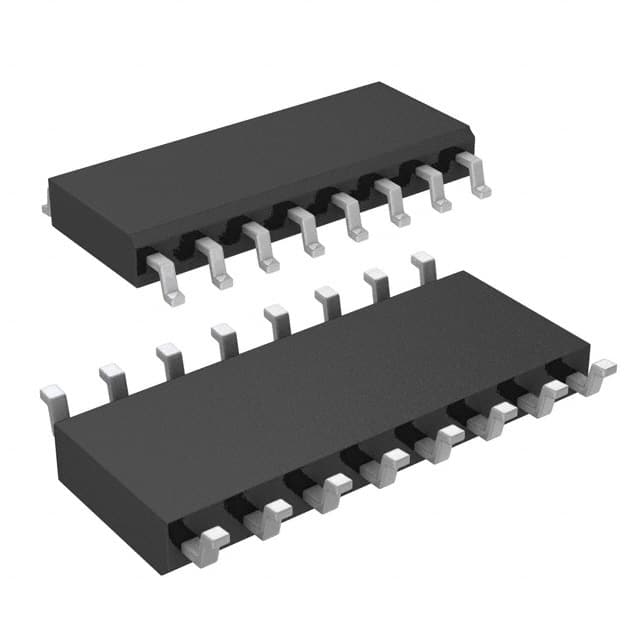
- Part No.:
- PT7C4337ACSE
- Manufacturer:
- Diodes Incorporated
- Category:
- Real Time Clocks
- Package:
- 16-SOIC (0.295", 7.50mm Width)
- Datasheet:
-
 PT7C4337ACSE.pdf
- Description:
- IC RTC CLK/CALENDAR I2C 16SOIC
- Quantity:
- Payment:

- Shipping:

Inventory:120
Please send an inquiry. Send us your inquiry, and we will respond immediately.
Product details
Overview
PT7C4337AC from Diodes Incorporated is a real-time clock (RTC) module with integrated 32.768 kHz crystal oscillator, I²C interface (up to 400 kHz), dual alarm capability, programmable square-wave output (1 Hz / 4.096 kHz / 8.192 kHz / 32.768 kHz), and oscillator fail detection. It supports both 12- and 24-hour time formats, century bit, and operates from 1.2 V to 5.5 V - used in industrial HMIs, smart meters, and battery-backed embedded controllers for accurate timekeeping during main power loss.
For engineers reviewing the PT7C4337AC datasheet, PT7C4337AC pinout, PT7C4337AC application, or PT7C4337AC equivalent, key selection considerations include its integrated crystal (eliminating external load capacitor design), dual open-drain interrupt outputs (INTA and SQW/INTB), low timekeeping current (450–800 nA at 1.3–1.8 V), and I²C register-mapped alarm masking with day/date vs. weekday selectability.
Technical Context
The PT7C4337AC integrates a precision 32.768 kHz crystal oscillator with built-in 12 pF load capacitors on X1 and X2 pins, enabling direct crystal connection without external capacitors for CL = 12.5 pF crystals. Its oscillator stop flag (OSF) provides hardware-detectable failure indication within 100 ms.
It implements two independent alarm comparators with maskable fields (seconds through date/weekday), configurable interrupt routing via INTCN bit, and a shared SQW/INTB pin supporting either square-wave generation or Alarm 2 interrupt output - all managed through an 8-bit I²C address space with dedicated control/status registers (0Eh/0Fh).
Key Specifications
| Parameter | Value and Actual Design Meaning |
|---|---|
| Oscillator | Integrated 32.768 kHz crystal oscillator with built-in 12 pF capacitors - eliminates need for external load caps in standard CL=12.5 pF designs. |
| Timekeeping Current | 450–800 nA at 1.3–1.8 V - enables >10-year coin-cell battery life in backup mode. |
| I²C Interface | Standard-mode (400 kHz max) with open-drain SDA/SCL - compatible with 1.8 V to 5.5 V host logic and requires external pull-ups. |
| Alarm Capability | Dual independent alarms with maskable fields (sec/min/hr/date/weekday) - supports recurring alarms (e.g., "every Monday at 9:00 AM") or one-shot triggers. |
| Square-Wave Output | Programmable 1 Hz / 4.096 kHz / 8.192 kHz / 32.768 kHz on SQW/INTB - usable as system clock source or timing reference without external divider. |
| Operating Voltage | 1.2 V to 5.5 V supply range - supports wide-input industrial rails and ultra-low-voltage backup operation. |
| Accuracy | ±30 ppm frequency tolerance at +25°C, ±2 ppm/V voltage sensitivity, ±10/–120 ppm temperature drift (–10°C to +70°C) - meets utility-grade metering requirements. |
Pinout & Package
PT7C4337AC is packaged in SOIC-16 with 8 NC (no-connect) pins (pins 5–13). All NC pins must be grounded per datasheet for stable oscillator operation. The device uses a 16-pin layout to accommodate internal crystal integration and dual interrupt routing.
| Pin/Terminal | Circuit Role | Design Meaning |
|---|---|---|
| 1 / X1 | Oscillator Input | Crystal input node; connects to one terminal of 32.768 kHz crystal (or external clock source); internal 12 pF cap to GND. |
| 2 / X2 | Oscillator Output | Crystal output node; connects to other crystal terminal; internal 12 pF cap to GND; float if using external clock. |
| 3 / VCC | Power Supply | Main supply input (1.2–5.5 V); powers RTC core, oscillator, and I²C interface. |
| 4 / GND | Ground | Reference ground for all analog/digital circuits; required for oscillator stability and I²C signal integrity. |
| 5–13 / NC | No Connect | Internally unconnected; must be externally tied to GND to prevent noise coupling and ensure oscillator reliability. |
| 14 / SCL | I²C Clock Input | Open-drain input synchronized to host I²C clock; requires external pull-up; supports up to 400 kHz. |
| 15 / SDA | I²C Data I/O | Open-drain bidirectional data line; requires external pull-up; handles register read/write and ACK/NACK. |
| 16 / INTA | Alarm 1 Interrupt Output | Open-drain active-low output asserted when Alarm 1 condition matches; routed independently of INTCN setting. |
Key Features
| Feature | Design Value |
|---|---|
| Integrated Crystal Oscillator | Eliminates external crystal and load capacitor design effort; reduces BOM count and PCB area by ~3 components. |
| Dual Maskable Alarms | Supports complex scheduling (e.g., "alarm every weekday at 7:30 AM") via independent 4-bit mask registers per alarm. |
| Configurable INT Routing | INTCN bit selects whether Alarm 2 triggers SQW/INTB (separate interrupt path) or shares INTA - simplifies interrupt handling in resource-constrained MCUs. |
| Oscillator Fail Detection | OSF flag in status register (0Fh) asserts within 100 ms of crystal stop - enables immediate system-level fault response without polling. |
| Low-Voltage Timekeeping | Valid operation down to 1.2 V with sub-µA current enables reliable timekeeping during brown-out or battery-only modes. |
Applications
| Smart Energy Metering | Industrial HMI Panels |
|---|---|
|
Use Scenario: Utility-grade electricity meter requiring timestamped consumption logs, tariff switching, and tamper detection with 10+ year battery backup. IC Role / Device Role / Timing Role: Primary timekeeping engine with oscillator fail detection and century-aware calendar; maintains accuracy across voltage sags and temperature swings. Use Value: ±30 ppm base accuracy and <±120 ppm temp drift meet IEC 62053-21 Class 0.5S timing requirements; integrated crystal ensures long-term stability without aging-related calibration drift. |
Use Scenario: Factory-floor human-machine interface with scheduled maintenance alerts, shift logging, and firmware update scheduling. IC Role / Device Role / Timing Role: System time source and event scheduler; dual alarms trigger UI notifications and PLC communication windows. Use Value: Programmable 1 Hz square wave drives LED blink patterns; maskable alarms reduce MCU polling overhead by enabling hardware-triggered wake-up from deep sleep. |
| Medical Infusion Pumps | Networked Building Controllers |
|
Use Scenario: Battery-powered infusion pump needing precise dose timing, therapy session logging, and regulatory-compliant audit trails. IC Role / Device Role / Timing Role: Tamper-resistant real-time clock with battery-backed calendar; OSF flag validates time integrity before critical dose execution. Use Value: 450–800 nA timekeeping current extends CR2032 life beyond 5 years; century bit prevents Y2100 rollover errors in long-lifecycle devices. |
Use Scenario: HVAC controller synchronizing zone schedules, energy reporting, and remote diagnostics across distributed building networks. IC Role / Device Role / Timing Role: Central time anchor for NTP-less local synchronization; SQW output clocks auxiliary sensors and communication modules. Use Value: 32.768 kHz square-wave output serves as low-jitter reference for ADC sampling clocks; I²C register map enables seamless integration with existing RTOS time services. |
Equivalent & Alternatives
The following parts are listed as comparable options for similar real-time clock applications.
| Alternative Part | Technical Difference | Application Difference | Selection Advice |
|---|---|---|---|
| RV-3028-C7 | Ultra-low power (150 nA timekeeping), no integrated crystal, SPI/I²C dual interface, auto-calibration via temperature sensor. | Requires external 32.768 kHz crystal and load caps; better suited for size-constrained wearables than industrial panels. | Choose when minimizing battery drain is critical and board space allows crystal placement. |
| DS3231M | TCXO-based (±2 ppm accuracy), integrated temperature-compensated oscillator, higher supply current (3 µA), 16-pin SOIC. | Delivers superior accuracy over temperature but consumes 4× more timekeeping current; no built-in crystal. | Choose when ±2 ppm accuracy across –40°C to +85°C is mandatory and power budget permits. |
Compared with RV-3028-C7 and DS3231M, the PT7C4337AC uniquely balances integrated crystal convenience, sub-µA timekeeping, and dual-alarm flexibility - making it optimal for cost-sensitive industrial controllers where design simplicity and long battery life outweigh extreme accuracy demands.
Availability
PT7C4337AC is available at Aetrix Electronics and suitable for smart metering, industrial HMI panels, medical infusion pumps, and networked building controllers requiring stable component supply, long-term lifecycle support, and RoHS 3-compliant sourcing.
Supply support for PT7C4337AC includes scheduled delivery planning, volume procurement assistance, BOM continuity management, traceable sourcing, and lifecycle availability coordination for OEM customers, industrial embedded developers, connected-device designers, and electronics production programs.
Manufacturer
Diodes Incorporated is a global semiconductor company specializing in discrete, analog, and mixed-signal ICs for power management, signal integrity, and timing applications.
The PT7C4337AC belongs to Diodes' real-time clock product line, designed specifically for industrial and metering applications demanding high reliability, low-power timekeeping, and integrated oscillator simplicity.
FAQ
What is the function of the NC pins on PT7C4337AC?
Pins 5–13 are internally not connected but must be externally tied to GND per the datasheet. This grounding prevents floating nodes from injecting noise into the sensitive oscillator circuit and ensures stable crystal startup and long-term frequency accuracy. Leaving them unconnected risks intermittent timekeeping failures or increased aging drift.
How does the oscillator fail detect (OSF) feature work?
The OSF bit (bit 7 of status register 0Fh) is set automatically within 100 ms if the integrated 32.768 kHz oscillator stops oscillating due to crystal fracture, solder fatigue, or voltage dropout. It remains latched until cleared by writing '0' to the bit, enabling deterministic fault logging and safe system shutdown before time corruption occurs.
Can PT7C4337AC operate without an external crystal?
Yes - the PT7C4337AC includes a fully integrated 32.768 kHz crystal oscillator. No external crystal or load capacitors are required. For external clock input, drive X1 with a clean 32.768 kHz signal and leave X2 floating; the internal oscillator is disabled in this mode per the datasheet configuration.
What determines whether Alarm 2 triggers INTA or SQW/INTB?
The INTCN bit (bit 3 of control register 0Eh) controls routing: when INTCN = 1, Alarm 2 asserts SQW/INTB while Alarm 1 asserts INTA; when INTCN = 0, both alarms assert INTA, and SQW/INTB outputs the selected square-wave frequency. This allows flexible interrupt architecture without additional GPIOs.
PT7C4337ACSE Specifications
- Product attributes
- Attribute value
- Manufacturer:
- Diodes Incorporated
- Series:
- -
- Package/Case:
- 16-SOIC (0.295", 7.50mm Width)
- Packaging:
- Tube
- Product Status:
- Active
- Programmable:
- Not Verified
- Type:
- Clock/Calendar
- Features:
- Alarm, Leap Year, Square Wave Output
- Memory Size:
- -
- Time Format:
- HH:MM:SS (12/24 hr)
- Date Format:
- YY-MM-DD-dd
- Interface:
- I2C, 2-Wire Serial
- Voltage - Supply:
- 1.8V ~ 5.5V
- Voltage - Supply, Battery:
- -
- Current - Timekeeping (Max):
- 0.8µA @ 1.3V ~ 1.8V
- Operating Temperature:
- -40°C ~ 85°C
- Mounting Type:
- Surface Mount
- Grade:
- -
- Qualification:
- -
- Supplier Device Package:
- 16-SOIC
PT7C4337ACSE FAQ
1.How can I place an order for PT7C4337ACSE through Aetrix?
Please submit a Request for Quotation (RFQ) for PT7C4337ACSE on Aetrix. Our sales agent will provide a competitive quotation and guide you through the order confirmation once you accept the terms.
2.Are the price and stock information for PT7C4337ACSE reliable?
The price and inventory of PT7C4337ACSE are updated periodically and may fluctuate due to market conditions. Stock and pricing data are typically refreshed every 24 hours. Quotation validity for PT7C4337ACSE is usually 5 days.
3.What payment methods are accepted for PT7C4337ACSE?
We accept Wire Transfer, PayPal, Credit Card, Western Union, MoneyGram, and Escrow for PT7C4337ACSE transactions.
Note: Certain payment methods may incur a processing fee.
4.How is shipping managed for PT7C4337ACSE?
PT7C4337ACSE orders can be shipped via leading logistics carriers, including DHL, UPS, FedEx, TNT, or Registered Mail.
Once your PT7C4337ACSE order is processed, you will receive an email with the shipment details and tracking number.
Note: Tracking information may take up to 24 hours to appear. Express delivery typically takes 3–5 business days.
5.How can I obtain technical support or documentation for PT7C4337ACSE?
For technical support, including PT7C4337ACSE datasheets, pinout diagrams, or application guidance, please contact our engineering support team. They can provide detailed documentation and assistance for your PT7C4337ACSE requirements.
6.How does Aetrix verify that PT7C4337ACSE is sourced from the original manufacturer or authorized distributors?
All PT7C4337ACSE products on Aetrix are procured from qualified distributors and authorized channels. Our dedicated quality assurance team conducts strict verification, including traceability checks and, if necessary, third-party testing. This ensures that PT7C4337ACSE meets industry standards.
7.What is the process for return or replacement of PT7C4337ACSE?
All PT7C4337ACSE units undergo pre-shipment inspection (PSI). If there is an issue with PT7C4337ACSE, returns or replacements are accepted under the following conditions:
1.Quantity discrepancies, incorrect items, or visible external defects (such as breakage or corrosion), acknowledged by Aetrix.
2.The issue is reported within 90 days of delivery.
3.The PT7C4337ACSE part is unused and in its original packaging.
Return procedure for PT7C4337ACSE:
1.Submit a request within 90 days.
2.Obtain a Return Material Authorization (RMA) from Aetrix.
PT7C4337ACSE Tags

-
MCP7940N-I/SN
Microchip Technology
-
MCP7940MT-I/MNY
Microchip Technology
-
PCF85063ATL/1,118
NXP USA Inc.
-
MCP7940NT-I/SN
Microchip Technology
-
MCP7940NT-I/MS
Microchip Technology
-
MCP7940N-I/MS
Microchip Technology
-
PCF85063AT/AY
NXP USA Inc.
-
PCF85063TP/1Z
NXP USA Inc.
-
PCF85063ATT/AJ
NXP USA Inc.
-
MCP7940NT-E/SN
Microchip Technology
-
MCP7940NT-I/MNY
Microchip Technology
-
MCP79400T-I/SN
Microchip Technology
Tech Hub

An engineering guide to LED driver operation, constant-current and constant-voltage outputs, linear and switching topologies, dimming, IC selection, calculations, replacement compatibility, and fault c…

Operational amplifier guide covering op amp basics, feedback, ideal vs real op amps, common configurations, buffer circuits, offset, bias current, gain-bandwidth, slew rate, rail-to-rail limits and sel…

Jumper cables guide covering safe connection order, red and black clamp placement, final ground connection, cable gauge, length, clamp quality, copper vs CCA cables, jump starter comparison and battery…

LDO regulator guide covering low dropout voltage, power dissipation, thermal design, PSRR, output noise, capacitor stability, adjustable LDO circuits, LDO vs buck converter and datasheet selection chec…

Conditional Access Module guide covering CAM meaning, CI/CI+ interface, smart card authorization, DVB security workflow, TV and set-top box compatibility, internal electronics, ESD protection, connecto…

Guide to electronic component obsolescence covering EOL risk, PCN/PDN notices, last-time buy planning, replacement options, form-fit-function validation, counterfeit risk and BOM lifecycle management.

18650 battery guide covering lithium-ion cell basics, 3.6V/3.7V voltage, 4.2V charging, mAh and Wh capacity, protected cells, chargers, BMS, series-parallel packs, holders, welding and sourcing checks.…

Hall effect sensor guide covering working principle, linear and digital sensors, Arduino circuits, current sensing, speed detection, automotive applications, A3144 examples, signal filtering and datash…

Product Change Notification guide for electronic components, covering PCN meaning, PCN vs PDN/EOL, common change types, risk levels, form-fit-function review, engineering validation, BOM control, LTB/L…

A practical guide to blend door actuators, covering HVAC function, symptoms, location, AC and heater issues, reset and calibration, replacement cost, electrical diagnosis, compatibility checks, and rep…


