
 My Inquiry
 My Account


Diodes Incorporated PT7C433833AZEEX
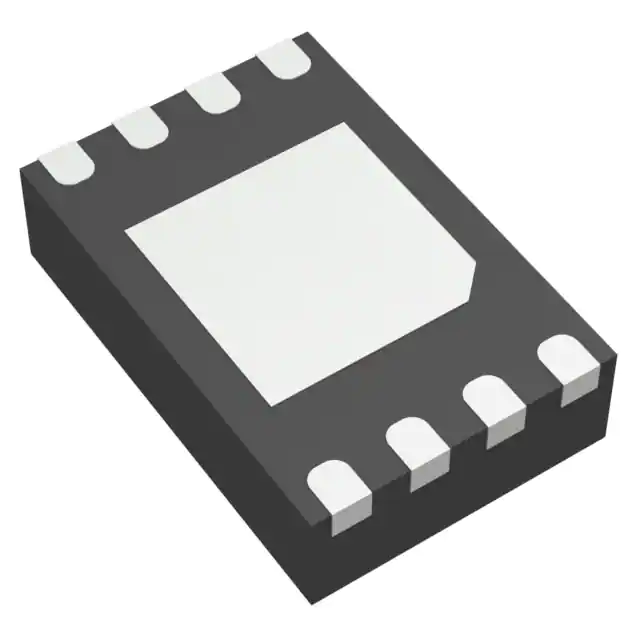
- Part No.:
- PT7C433833AZEEX
- Manufacturer:
- Diodes Incorporated
- Category:
- Real Time Clocks
- Package:
- 8-WFDFN Exposed Pad
- Datasheet:
-
 PT7C433833AZEEX.pdf
- Description:
- IC RTC CLK/CALENDAR I2C 8TDFN
- Quantity:
- Payment:

- Shipping:

Inventory:4,816
Please send an inquiry. Send us your inquiry, and we will respond immediately.
Product details
Overview
PT7C433833AZEEX from Diodes Incorporated is a real-time clock (RTC) module with I²C interface, 32.768 kHz crystal oscillator, 56×8-bit RAM, battery backup support, and programmable square-wave output at 1 Hz / 4.096 kHz / 8.192 kHz / 32.768 kHz. It operates from 2.7 V to 5.5 V and maintains timekeeping during main power loss using a 3 V lithium cell on VBAT.
For engineers reviewing the PT7C433833AZEEX datasheet, PT7C433833AZEEX pinout, PT7C433833AZEEX application, or PT7C433833AZEEX equivalent, key selection criteria include I²C timing compliance (400 kHz max), oscillator fail detection, low-power battery-retention current (≤300 nA), and SOIC/MSOP/TDFN package compatibility in space-constrained embedded systems.
Technical Context
The PT7C433833AZEEX integrates a precision 32.768 kHz crystal oscillator with built-in 20 pF load capacitors and supports external crystal tuning via 4 pF external caps. Its oscillator stop flag (OSF) detects crystal failure within 100 ms and latches status for system diagnostics.
I²C communication uses standard- and fast-mode timing (tLOW ≥1.3 μs, tHIGH ≥0.6 μs, CB ≤400 pF), with open-drain SDA/SQW/OUT pins requiring external pull-ups. The device supports both 12- and 24-hour time formats, century bit–capable calendar registers (00–99 years), and automatic address increment during sequential reads/writes.
Key Specifications
| Parameter | Value and Actual Design Meaning |
|---|---|
| Interface | I²C bus, 7-bit slave address 0xD0 (write) / 0xD1 (read), compatible with standard & fast mode (≤400 kHz) |
| Supply Voltage | 2.7 V to 5.5 V (VCC); 1.3 V to 3.7 V (VBAT) - enables seamless switchover during main power loss |
| Timekeeping Accuracy | Dependent on 32.768 kHz crystal (CL = 12.5 pF); internal oscillator circuit optimized for ±20 ppm stability with proper layout |
| Square-Wave Output | Programmable frequencies: 1 Hz, 4.096 kHz, 8.192 kHz, or 32.768 kHz - selectable via RS1/RS0 bits in Control register |
| Power Consumption | Active current: 40–120 μA (VCC = 3.3 V); standby current: 30–100 μA; VBAT data retention: ≤300 nA (VBAT = 3.7 V) |
| Memory | 56 × 8-bit SRAM - retains user data during VCC dropout while powered by VBAT |
| Oscillator Monitoring | Oscillator Stop Flag (OSF) detects crystal failure and sets bit in Control register; delay ≤100 ms over full voltage/temp range |
Pinout & Package
PT7C433833AZEEX is packaged in an 8-pin TDFN (2 mm × 3 mm, ZE code), with wettable flank leads for automated optical inspection. Thermal pad exposed on underside improves thermal dissipation in high-density PCB layouts.
| Pin/Terminal | Circuit Role | Design Meaning |
|---|---|---|
| X1 | Crytal input / external oscillator input | Accepts 32.768 kHz crystal (CL = 12.5 pF) or external oscillator signal; disables internal oscillator when driven externally |
| X2 | Crytal output / oscillator output | Floated when external oscillator drives X1; connects to crystal's second terminal otherwise |
| SCL | I²C serial clock input | Open-drain compatible; requires external pull-up; defines timing for all I²C transfers |
| SDA | I²C serial data bidirectional | Open-drain I/O; requires external pull-up; supports read/write of time/calendar/RAM/control registers |
| SQW/OUT | Programmable square-wave output | Open-drain output; configurable frequency; operates from VCC or VBAT; used for wake-up, timing reference, or interrupt signaling |
| VCC | Main supply input | Primary power source (2.7–5.5 V); enables full register access; drops below VPF (1.5–2.0 V) triggers battery-only timekeeping mode |
| VBAT | Backup supply input | Connects to 3 V lithium coin cell; powers RTC and RAM during VCC loss; UL-recognized to prevent reverse charging |
| GND | Ground reference | Common return path for VCC, VBAT, and I/O signals; must be low-impedance and isolated from noisy digital ground planes |
Key Features
| Feature | Design Value |
|---|---|
| Integrated crystal oscillator circuit | Optimized for 32.768 kHz crystals with 12.5 pF load; includes internal 20 pF capacitors (CG/CD) to reduce BOM count |
| Oscillator fail detection | OSF flag asserts within 100 ms of crystal stoppage; latched until cleared by software - enables robust system-level time integrity monitoring |
| Low-power battery operation | VBAT data-retention current ≤300 nA ensures >10-year coin-cell life (CR2032 typical); supports continuous timekeeping during extended main-power outages |
| Flexible time format support | Configurable 12-/24-hour mode with AM/PM indicator; calendar registers include day-of-week (1–7), date (1–31), month (1–12), and year (00–99) |
| Programmable square-wave generator | Four selectable frequencies (1 Hz, 4.096 kHz, 8.192 kHz, 32.768 kHz) routed to SQW/OUT - eliminates need for external clock dividers or timers |
Applications
| Industrial PLCs | Smart Meters |
|---|---|
|
Use Scenario: Time-stamping of sensor readings, event logs, and firmware update records in programmable logic controllers operating across wide temperature ranges (−40°C to +85°C). IC Role / Device Role / Timing Role: Primary real-time clock and calendar source; provides timestamped data integrity and synchronized scheduling for control tasks. Use Value: Maintains accurate timekeeping during brownouts using VBAT; OSF flag alerts PLC firmware to potential clock drift before it impacts control loop timing. |
Use Scenario: Metering interval registration, tamper-event logging, and tariff-switching in electricity/gas/water meters with >10-year field lifetime requirements. IC Role / Device Role / Timing Role: Battery-backed timekeeper enabling precise billing cycle alignment and secure audit trails independent of grid power availability. Use Value: ≤300 nA VBAT retention current extends CR2032 battery life beyond 12 years; programmable 1 Hz SQW output drives meter pulse LED or microcontroller wake-up timer. |
| Medical Wearables | Network Routers |
|
Use Scenario: Activity tracking synchronization, sleep-stage logging, and medication reminder scheduling in compact, battery-powered wearable health monitors. IC Role / Device Role / Timing Role: Low-power RTC subsystem managing time-based functions while host MCU remains in deep-sleep mode. Use Value: 8-pin TDFN (2×3 mm) footprint minimizes PCB area; I²C interface reduces interconnect count; 1 Hz SQW output wakes MCU only when needed - extending battery runtime. |
Use Scenario: System boot-time initialization, NTP synchronization anchoring, and log file timestamping in enterprise-grade networking equipment with redundant power supplies. IC Role / Device Role / Timing Role: Hardware time base ensuring consistent uptime tracking and event sequencing across hot-swappable line cards and control processors. Use Value: Oscillator fail detection prevents silent time corruption; 400 kHz I²C speed enables rapid configuration during boot; VCC/VBAT switchover guarantees uninterrupted timekeeping during PSU transitions. |
Equivalent & Alternatives
The following parts are listed as comparable options for similar real-time clock applications.
| Alternative Part | Technical Difference | Application Difference | Selection Advice |
|---|---|---|---|
| DS3231M (Maxim Integrated) | Integrated TCXO (±2 ppm accuracy), higher cost, no built-in crystal load caps, 16-pin TDFN | Used where ultra-high accuracy (<±2 ppm) is required despite tighter board space constraints | Select DS3231M only if system-level timing budget demands <±2 ppm drift over −40°C to +85°C without external compensation |
| PCF8563 (NXP) | Lower VCC min (1.0 V), no OSF flag, 200 nA VBAT current, 8-pin SOIC only, no SQW frequency selection | Preferred in ultra-low-voltage battery systems where 1.0–5.5 V operation and minimal feature set suffice | Choose PCF8563 when design prioritizes lowest possible VCC start-up voltage and does not require oscillator fault detection or multi-frequency SQW output |
Compared with DS3231M and PCF8563, PT7C433833AZEEX delivers balanced performance: superior oscillator monitoring (OSF) vs. PCF8563, lower cost and simpler layout (integrated 20 pF caps) vs. DS3231M, and optimal package flexibility (TDFN/SOIC/MSOP) for mixed-density designs.
Availability
PT7C433833AZEEX is available at Aetrix Electronics and suitable for industrial PLCs, smart meters, and medical wearables requiring stable component supply, long-term lifecycle support, and RoHS 3-compliant packaging.
Supply support for PT7C433833AZEEX includes scheduled delivery planning, volume procurement assistance, BOM continuity management, traceable sourcing, and lifecycle availability coordination for OEM customers, industrial embedded developers, connected-device designers, and electronics production programs.
Manufacturer
Diodes Incorporated is a global manufacturer of discrete semiconductors and integrated circuits, specializing in power management, signal integrity, and timing solutions for industrial, computing, and consumer markets.
The PT7C433833 series belongs to Diodes' precision timing product line, designed specifically for cost-sensitive, space-constrained embedded systems needing reliable, low-power RTC functionality with battery backup and I²C simplicity.
FAQ
What is the function of the OSF (Oscillator Stop Flag) bit in the Control register?
The OSF bit (bit 5 of register 07h) indicates whether the internal 32.768 kHz oscillator has stopped due to crystal failure, disconnection, or excessive load capacitance mismatch. It is latched until cleared by writing '0' to the bit, enabling firmware to detect and log timekeeping faults before corrupted timestamps propagate through the system.
Can PT7C433833AZEEX operate without an external crystal?
No - the device requires either a 32.768 kHz crystal connected between X1 and X2, or an external 32.768 kHz oscillator signal applied to X1 (with X2 floated). The internal oscillator circuit is not functional without one of these sources; there is no internal RC oscillator or factory-trimmed alternative.
How does the VCC-to-VBAT switchover behave during power failure?
When VCC falls below the power-fail threshold (VPF = 1.5–2.0 V), the device automatically disables register access but continues timekeeping and RAM retention using VBAT. Reads/writes resume only after VCC rises above VPF and a 2 ms recovery delay elapses - ensuring register consistency after brownout recovery.
Is the SQW/OUT pin capable of driving a microcontroller interrupt input directly?
Yes - SQW/OUT is an open-drain output compatible with standard CMOS logic levels. When pulled up to VCC or VBAT (via 4.7 kΩ–10 kΩ resistor), it can assert a low-level interrupt to a GPIO pin configured with falling-edge detection, enabling precise wake-up or periodic task triggering without additional level-shifting circuitry.
PT7C433833AZEEX Specifications
- Product attributes
- Attribute value
- Manufacturer:
- Diodes Incorporated
- Series:
- -
- Package/Case:
- 8-WFDFN Exposed Pad
- Packaging:
- Tape & Reel (TR)
- Product Status:
- Obsolete
- Programmable:
- Not Verified
- Type:
- Clock/Calendar
- Features:
- Leap Year, NVSRAM, Square Wave Output
- Memory Size:
- 56B
- Time Format:
- HH:MM:SS (12/24 hr)
- Date Format:
- YY-MM-DD-dd
- Interface:
- I2C, 2-Wire Serial
- Voltage - Supply:
- 2.7V ~ 5.5V
- Voltage - Supply, Battery:
- 1.5V ~ 3.7V
- Current - Timekeeping (Max):
- 125µA @ 2.7V ~ 5.5V
- Operating Temperature:
- -40°C ~ 85°C
- Mounting Type:
- Surface Mount
- Grade:
- -
- Qualification:
- -
- Supplier Device Package:
- 8-TDFN (2x3)
PT7C433833AZEEX FAQ
1.How can I place an order for PT7C433833AZEEX through Aetrix?
Please submit a Request for Quotation (RFQ) for PT7C433833AZEEX on Aetrix. Our sales agent will provide a competitive quotation and guide you through the order confirmation once you accept the terms.
2.Are the price and stock information for PT7C433833AZEEX reliable?
The price and inventory of PT7C433833AZEEX are updated periodically and may fluctuate due to market conditions. Stock and pricing data are typically refreshed every 24 hours. Quotation validity for PT7C433833AZEEX is usually 5 days.
3.What payment methods are accepted for PT7C433833AZEEX?
We accept Wire Transfer, PayPal, Credit Card, Western Union, MoneyGram, and Escrow for PT7C433833AZEEX transactions.
Note: Certain payment methods may incur a processing fee.
4.How is shipping managed for PT7C433833AZEEX?
PT7C433833AZEEX orders can be shipped via leading logistics carriers, including DHL, UPS, FedEx, TNT, or Registered Mail.
Once your PT7C433833AZEEX order is processed, you will receive an email with the shipment details and tracking number.
Note: Tracking information may take up to 24 hours to appear. Express delivery typically takes 3–5 business days.
5.How can I obtain technical support or documentation for PT7C433833AZEEX?
For technical support, including PT7C433833AZEEX datasheets, pinout diagrams, or application guidance, please contact our engineering support team. They can provide detailed documentation and assistance for your PT7C433833AZEEX requirements.
6.How does Aetrix verify that PT7C433833AZEEX is sourced from the original manufacturer or authorized distributors?
All PT7C433833AZEEX products on Aetrix are procured from qualified distributors and authorized channels. Our dedicated quality assurance team conducts strict verification, including traceability checks and, if necessary, third-party testing. This ensures that PT7C433833AZEEX meets industry standards.
7.What is the process for return or replacement of PT7C433833AZEEX?
All PT7C433833AZEEX units undergo pre-shipment inspection (PSI). If there is an issue with PT7C433833AZEEX, returns or replacements are accepted under the following conditions:
1.Quantity discrepancies, incorrect items, or visible external defects (such as breakage or corrosion), acknowledged by Aetrix.
2.The issue is reported within 90 days of delivery.
3.The PT7C433833AZEEX part is unused and in its original packaging.
Return procedure for PT7C433833AZEEX:
1.Submit a request within 90 days.
2.Obtain a Return Material Authorization (RMA) from Aetrix.
PT7C433833AZEEX Tags

-
MCP7940N-I/SN
Microchip Technology
-
MCP7940MT-I/MNY
Microchip Technology
-
PCF85063ATL/1,118
NXP USA Inc.
-
MCP7940NT-I/SN
Microchip Technology
-
MCP7940NT-I/MS
Microchip Technology
-
MCP7940N-I/MS
Microchip Technology
-
PCF85063AT/AY
NXP USA Inc.
-
PCF85063TP/1Z
NXP USA Inc.
-
PCF85063ATT/AJ
NXP USA Inc.
-
MCP7940NT-E/SN
Microchip Technology
-
MCP7940NT-I/MNY
Microchip Technology
-
MCP79400T-I/SN
Microchip Technology
Tech Hub

An engineering guide to LED driver operation, constant-current and constant-voltage outputs, linear and switching topologies, dimming, IC selection, calculations, replacement compatibility, and fault c…

Operational amplifier guide covering op amp basics, feedback, ideal vs real op amps, common configurations, buffer circuits, offset, bias current, gain-bandwidth, slew rate, rail-to-rail limits and sel…

Jumper cables guide covering safe connection order, red and black clamp placement, final ground connection, cable gauge, length, clamp quality, copper vs CCA cables, jump starter comparison and battery…

LDO regulator guide covering low dropout voltage, power dissipation, thermal design, PSRR, output noise, capacitor stability, adjustable LDO circuits, LDO vs buck converter and datasheet selection chec…

Conditional Access Module guide covering CAM meaning, CI/CI+ interface, smart card authorization, DVB security workflow, TV and set-top box compatibility, internal electronics, ESD protection, connecto…

Guide to electronic component obsolescence covering EOL risk, PCN/PDN notices, last-time buy planning, replacement options, form-fit-function validation, counterfeit risk and BOM lifecycle management.

18650 battery guide covering lithium-ion cell basics, 3.6V/3.7V voltage, 4.2V charging, mAh and Wh capacity, protected cells, chargers, BMS, series-parallel packs, holders, welding and sourcing checks.…

Hall effect sensor guide covering working principle, linear and digital sensors, Arduino circuits, current sensing, speed detection, automotive applications, A3144 examples, signal filtering and datash…

Product Change Notification guide for electronic components, covering PCN meaning, PCN vs PDN/EOL, common change types, risk levels, form-fit-function review, engineering validation, BOM control, LTB/L…

A practical guide to blend door actuators, covering HVAC function, symptoms, location, AC and heater issues, reset and calibration, replacement cost, electrical diagnosis, compatibility checks, and rep…


