
 My Inquiry
 My Account


Diodes Incorporated PT7C4372AWEX
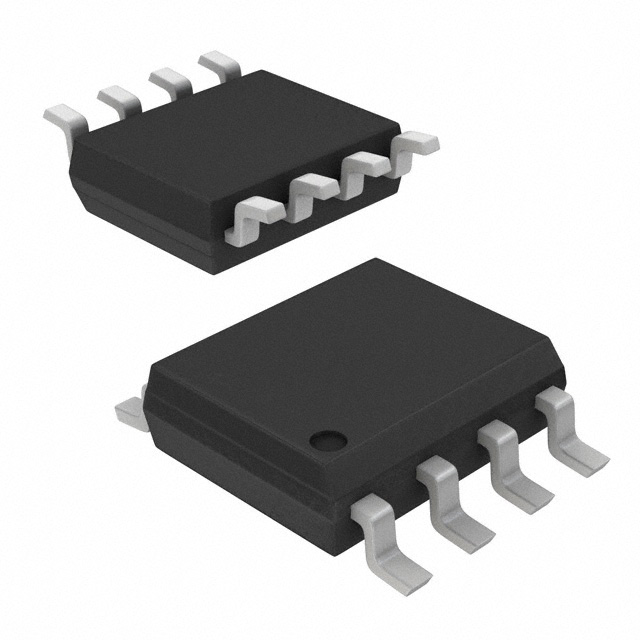
- Part No.:
- PT7C4372AWEX
- Manufacturer:
- Diodes Incorporated
- Category:
- Real Time Clocks
- Package:
- 8-SOIC (0.154", 3.90mm Width)
- Datasheet:
-
 PT7C4372AWEX.pdf
- Description:
- IC RTC CLK/CALENDAR I2C 8SOIC
- Quantity:
- Payment:

- Shipping:

Inventory:3,095
Please send an inquiry. Send us your inquiry, and we will respond immediately.
Product details
Overview
PT7C4372AWEX from Diodes Incorporated is a high-precision I²C real-time clock (RTC) module supporting BCD-coded time/calendar functions (year/month/date/day/hour/minute/second), auto-leap-year calculation through 2099, and dual alarm (Alarm_A/Alarm_B) with interrupt outputs on /INTA and /INTB pins. It operates across 1.3 V to 6 V supply and delivers 0.4 µA typical current at 3.0 V, targeting battery-backed industrial and automotive infotainment systems.
For engineers reviewing the PT7C4372AWEX datasheet, PT7C4372AWEX pinout, PT7C4372AWEX application, or PT7C4372AWEX equivalent, key selection considerations include its ±3.051 ppm clock precision adjustment capability (32.768 kHz crystal), selectable 12-/24-hour mode, five-periodic-interrupt intervals (0.5 s to monthly), and dual open-drain interrupt outputs with configurable routing via SL1/SL2 control bits.
Technical Context
The PT7C4372AWEX integrates a digitally adjustable oscillator circuit with two internal trimming capacitors, enabling precise frequency calibration in ±3.051 ppm steps for 32.768 kHz crystals (±3.125 ppm for 32.000 kHz). Its register-mapped architecture supports independent configuration of Alarm_A (/INTA) and Alarm_B (/INTB), plus oscillation stop detection that flags invalid time data after power loss.
It implements a full BCD timekeeping engine with automatic carry logic across seconds→minutes→hours→days→months→years, including leap-year handling up to 2099. The I²C interface complies with high-speed mode (400 kHz), and both SCL and SDA tolerate up to 6 V beyond VCC, supporting mixed-voltage system interfacing.
Key Specifications
| Parameter | Value and Actual Design Meaning |
|---|---|
| Interface | I²C bus, high-speed mode (400 kHz); SCL/SDA tolerate up to 6 V beyond VCC |
| Timekeeping Accuracy | ±3.051 ppm adjustment resolution (32.768 kHz crystal); ±189.1 ppm total trim range |
| Supply Voltage Range | 1.3 V to 6.0 V - enables direct connection to coin-cell (1.3–3.6 V) or main rail (3.3/5 V) |
| Quiescent Current | 0.4 µA at 3.0 V - ensures >10-year battery life with CR2032 (220 mAh) |
| Interrupt Outputs | /INTA and /INTB: open-drain, independently configurable for Alarm_A, Alarm_B, periodic interrupts, or 32-kHz clock output |
| Calendar Function | BCD-coded year/month/date/day/hour/minute/second; auto-leap-year calculation through year 2099 |
| Crystal Support | External 32.000 kHz or 32.768 kHz crystal; selected via /XSL bit in Time Trimming Register |
Pinout & Package
PT7C4372AWEX is housed in an 8-pin TSSOP (L) package with 0.65 mm pitch and exposed pad (RoHS-compliant, lead-free).
| Pin/Terminal | Circuit Role | Design Meaning |
|---|---|---|
| /INTB | Open-drain interrupt output B | Configurable output for Alarm_B, periodic interrupts, or 32-kHz clock (via register enable) |
| SCL | I²C serial clock input | Accepts up to 6 V beyond VCC; synchronizes all I²C read/write transfers |
| SDA | I²C bidirectional data line | Open-drain output; requires external pull-up; tolerates up to 6 V beyond VCC |
| GND | Ground reference | Common return path for all analog/digital circuitry and crystal oscillator |
| /INTA | Open-drain interrupt output A | Configurable output for Alarm_A, periodic interrupts, or shared Alarm_B (per SL1/SL2 settings) |
| OSCOUT | Clock oscillator output | Drives external 32 kHz crystal together with OSCIN; forms Pierce oscillator loop |
| OSCIN | Clock oscillator input | Completes crystal oscillator circuit; internal biasing enables stable startup |
| VCC | Power supply input | Supports 1.3–6.0 V; powers RTC core, registers, and I/O buffers |
Key Features
| Feature | Design Value |
|---|---|
| Dual independent alarms | Alarm_A routed to /INTA, Alarm_B configurable to /INTA or /INTB; each supports day/hour/minute match with per-day enable |
| Programmable periodic interrupts | Five intervals (0.5 s, 1 s, 1 min, 1 hr, monthly); selectable pulse or level output for CPU wake-up or polling |
| Digital clock precision trim | Adjustment in ±3.051 ppm steps (32.768 kHz crystal); compensates aging, temperature drift, and capacitor tolerance |
| Oscillation stop detection | Hardware flag indicates invalid time data after crystal failure or power loss; prevents use of corrupted calendar |
| Wide voltage operation | 1.3 V minimum VCC enables direct coin-cell backup; 6 V max supports 5 V system rails without level shifters |
Applications
| Industrial Control Panel | Automotive Infotainment |
|---|---|
|
Use Scenario: Standalone HMI unit with local time-stamped event logging and scheduled UI refreshes. IC Role / Device Role / Timing Role: Primary RTC providing BCD time/calendar, periodic wake-up for low-power display updates, and alarm-triggered diagnostics capture. Use Value: 0.4 µA quiescent current extends battery life; oscillation stop detection prevents timestamp corruption during brown-out events. |
Use Scenario: Head unit requiring accurate time display, media scheduling, and firmware update timing validation. IC Role / Device Role / Timing Role: System-level RTC delivering 24-hour format, dual alarms for reminder notifications, and 32-kHz clock output for audio subsystem sync. Use Value: ±3.051 ppm trim resolution maintains <±1.5 sec/month accuracy over temperature; wide 1.3–6 V supply eliminates need for dedicated LDO. |
| Smart Energy Meter | Medical Portable Monitor |
|
Use Scenario: Battery-powered meter logging consumption data with UTC-aligned timestamps for utility billing. IC Role / Device Role / Timing Role: Tamper-resistant timekeeper with auto-leap-year support and interrupt-driven data upload triggers. Use Value: Leap-year calculation through 2099 ensures long-term billing accuracy; /INTB 32-kHz output clocks secure crypto co-processor. |
Use Scenario: Wearable vital sign recorder with sleep-cycle tracking and medication alerts. IC Role / Device Role / Timing Role: Low-power RTC generating daily alarms for patient prompts and periodic sensor sampling interrupts. Use Value: Dual-alarm capability enables separate reminders for dose timing and device calibration; 1.3 V operation supports single-cell Li-ion backup. |
Equivalent & Alternatives
The following parts are listed as comparable options for similar real-time clock applications.
| Alternative Part | Technical Difference | Application Difference | Selection Advice |
|---|---|---|---|
| DS3231M | Integrated TCXO (±2 ppm); higher accuracy but no digital trim; 3.3 V only; no 32-kHz output pin | Requires external temperature compensation circuitry; lacks flexible interrupt routing and dual-alarm independence | Select when absolute accuracy > stability over voltage/temp is critical; avoid if 1.3–6 V supply or /INTB clock output needed |
| PCF8563 | Lower-cost RTC; no clock trim; 0.25 µA current; no leap-year logic; single alarm; 1.8–5.5 V supply | Lacks auto-leap-year, precision adjustment, and dual-interrupt flexibility; limited interrupt interval options | Select for cost-sensitive, short-lifecycle consumer devices where ±2 min/year drift is acceptable |
Compared with DS3231M and PCF8563, PT7C4372AWEX uniquely balances ultra-low power (0.4 µA), wide supply range (1.3–6 V), field-adjustable precision (±3.051 ppm), and dual fully independent alarms-making it optimal for long-life, mixed-rail, and function-rich embedded systems.
Availability
PT7C4372AWEX is available at Aetrix Electronics and suitable for industrial control panels, automotive infotainment head units, smart energy meters, and portable medical monitors requiring stable component supply, long-term lifecycle support, and RoHS-compliant sourcing.
Supply support for PT7C4372AWEX includes scheduled delivery planning, volume procurement assistance, BOM continuity management, traceable sourcing, and lifecycle availability coordination for OEM customers, industrial embedded developers, connected-device designers, and electronics production programs.
Manufacturer
Diodes Incorporated is a global semiconductor company specializing in discrete, analog, and mixed-signal ICs for power management, signal integrity, and timing applications.
The PT7C4372AWEX belongs to Diodes' precision RTC product line, engineered for high-accuracy, low-power, and robust timekeeping in automotive, industrial, and medical systems where reliability across voltage and temperature extremes is essential.
FAQ
What crystal frequencies does the PT7C4372AWEX support?
The PT7C4372AWEX supports external 32.000 kHz and 32.768 kHz crystals. Selection is controlled by the /XSL bit (bit 7) in the Time Trimming Register (address 0x07): /XSL = 0 selects 32.768 kHz, and /XSL = 1 selects 32.000 kHz. Both frequencies are fully supported for timekeeping, alarm, and interrupt functions.
How is the 32-kHz clock output enabled and routed?
The 32-kHz clock output is enabled by clearing the /CLEN bit (bit 3) in Control Register 2 (address 0x0F). It is routed exclusively to the /INTB pin and cannot be redirected to /INTA. This output mirrors the selected crystal frequency (32.768 kHz or 32.000 kHz) and is unaffected by clock precision adjustment settings.
Can Alarm_A and Alarm_B trigger simultaneously on the same pin?
Yes - via SL1/SL2 control bits (bits 4–5 in Control Register 1), both alarms can be routed to /INTA or /INTB. For example, SL2=0/SL1=0 routes Alarm_A and Alarm_B to /INTA while directing 32-kHz output to /INTB. Each alarm retains independent enable/disable control (AALE/BALE bits) and status flag (AAFG/BAFG bits).
Does the PT7C4372AWEX support automatic power-fail detection?
No - it does not include dedicated voltage monitoring or power-fail detection circuitry. However, its Oscillation Stop Detection function identifies invalid time data after power loss or crystal failure by setting a hardware flag. This allows firmware to validate time integrity at boot but does not monitor VCC level transitions.
PT7C4372AWEX Specifications
- Product attributes
- Attribute value
- Manufacturer:
- Diodes Incorporated
- Series:
- -
- Package/Case:
- 8-SOIC (0.154", 3.90mm Width)
- Packaging:
- Tape & Reel (TR)
- Product Status:
- Obsolete
- Programmable:
- Not Verified
- Type:
- Clock/Calendar
- Features:
- Alarm, Leap Year
- Memory Size:
- -
- Time Format:
- HH:MM:SS (12/24 hr)
- Date Format:
- YY-MM-DD-dd
- Interface:
- I2C, 2-Wire Serial
- Voltage - Supply:
- 1.8V ~ 6V
- Voltage - Supply, Battery:
- -
- Current - Timekeeping (Max):
- 0.8µA @ 3V
- Operating Temperature:
- -40°C ~ 85°C (TA)
- Mounting Type:
- Surface Mount
- Grade:
- -
- Qualification:
- -
- Supplier Device Package:
- 8-SOIC
PT7C4372AWEX FAQ
1.How can I place an order for PT7C4372AWEX through Aetrix?
Please submit a Request for Quotation (RFQ) for PT7C4372AWEX on Aetrix. Our sales agent will provide a competitive quotation and guide you through the order confirmation once you accept the terms.
2.Are the price and stock information for PT7C4372AWEX reliable?
The price and inventory of PT7C4372AWEX are updated periodically and may fluctuate due to market conditions. Stock and pricing data are typically refreshed every 24 hours. Quotation validity for PT7C4372AWEX is usually 5 days.
3.What payment methods are accepted for PT7C4372AWEX?
We accept Wire Transfer, PayPal, Credit Card, Western Union, MoneyGram, and Escrow for PT7C4372AWEX transactions.
Note: Certain payment methods may incur a processing fee.
4.How is shipping managed for PT7C4372AWEX?
PT7C4372AWEX orders can be shipped via leading logistics carriers, including DHL, UPS, FedEx, TNT, or Registered Mail.
Once your PT7C4372AWEX order is processed, you will receive an email with the shipment details and tracking number.
Note: Tracking information may take up to 24 hours to appear. Express delivery typically takes 3–5 business days.
5.How can I obtain technical support or documentation for PT7C4372AWEX?
For technical support, including PT7C4372AWEX datasheets, pinout diagrams, or application guidance, please contact our engineering support team. They can provide detailed documentation and assistance for your PT7C4372AWEX requirements.
6.How does Aetrix verify that PT7C4372AWEX is sourced from the original manufacturer or authorized distributors?
All PT7C4372AWEX products on Aetrix are procured from qualified distributors and authorized channels. Our dedicated quality assurance team conducts strict verification, including traceability checks and, if necessary, third-party testing. This ensures that PT7C4372AWEX meets industry standards.
7.What is the process for return or replacement of PT7C4372AWEX?
All PT7C4372AWEX units undergo pre-shipment inspection (PSI). If there is an issue with PT7C4372AWEX, returns or replacements are accepted under the following conditions:
1.Quantity discrepancies, incorrect items, or visible external defects (such as breakage or corrosion), acknowledged by Aetrix.
2.The issue is reported within 90 days of delivery.
3.The PT7C4372AWEX part is unused and in its original packaging.
Return procedure for PT7C4372AWEX:
1.Submit a request within 90 days.
2.Obtain a Return Material Authorization (RMA) from Aetrix.
PT7C4372AWEX Tags

-
MCP7940N-I/SN
Microchip Technology
-
MCP7940MT-I/MNY
Microchip Technology
-
PCF85063ATL/1,118
NXP USA Inc.
-
MCP7940NT-I/SN
Microchip Technology
-
MCP7940NT-I/MS
Microchip Technology
-
MCP7940N-I/MS
Microchip Technology
-
PCF85063AT/AY
NXP USA Inc.
-
PCF85063TP/1Z
NXP USA Inc.
-
PCF85063ATT/AJ
NXP USA Inc.
-
MCP7940NT-E/SN
Microchip Technology
-
MCP7940NT-I/MNY
Microchip Technology
-
MCP79400T-I/SN
Microchip Technology
Tech Hub

An engineering guide to LED driver operation, constant-current and constant-voltage outputs, linear and switching topologies, dimming, IC selection, calculations, replacement compatibility, and fault c…

Operational amplifier guide covering op amp basics, feedback, ideal vs real op amps, common configurations, buffer circuits, offset, bias current, gain-bandwidth, slew rate, rail-to-rail limits and sel…

Jumper cables guide covering safe connection order, red and black clamp placement, final ground connection, cable gauge, length, clamp quality, copper vs CCA cables, jump starter comparison and battery…

LDO regulator guide covering low dropout voltage, power dissipation, thermal design, PSRR, output noise, capacitor stability, adjustable LDO circuits, LDO vs buck converter and datasheet selection chec…

Conditional Access Module guide covering CAM meaning, CI/CI+ interface, smart card authorization, DVB security workflow, TV and set-top box compatibility, internal electronics, ESD protection, connecto…

Guide to electronic component obsolescence covering EOL risk, PCN/PDN notices, last-time buy planning, replacement options, form-fit-function validation, counterfeit risk and BOM lifecycle management.

18650 battery guide covering lithium-ion cell basics, 3.6V/3.7V voltage, 4.2V charging, mAh and Wh capacity, protected cells, chargers, BMS, series-parallel packs, holders, welding and sourcing checks.…

Hall effect sensor guide covering working principle, linear and digital sensors, Arduino circuits, current sensing, speed detection, automotive applications, A3144 examples, signal filtering and datash…

Product Change Notification guide for electronic components, covering PCN meaning, PCN vs PDN/EOL, common change types, risk levels, form-fit-function review, engineering validation, BOM control, LTB/L…

A practical guide to blend door actuators, covering HVAC function, symptoms, location, AC and heater issues, reset and calibration, replacement cost, electrical diagnosis, compatibility checks, and rep…


