
 My Inquiry
 My Account


Diodes Incorporated PT8A2514APE
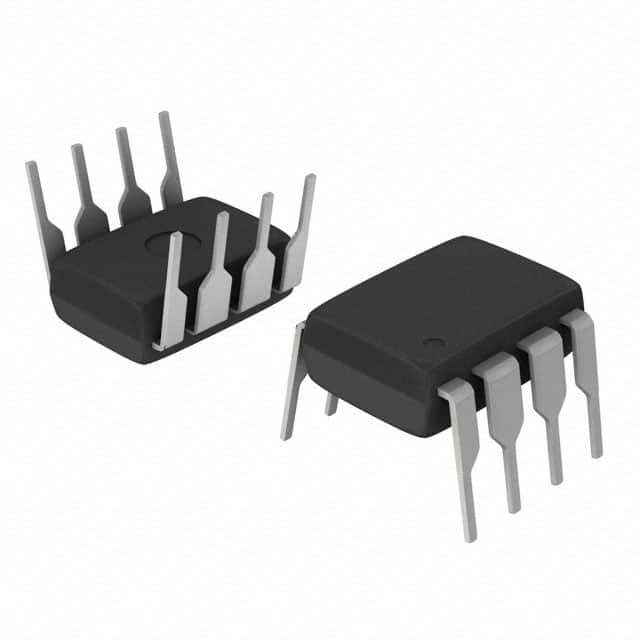
- Part No.:
- PT8A2514APE
- Manufacturer:
- Diodes Incorporated
- Category:
- Programmable Timers and Oscillators
- Package:
- 8-DIP (0.300", 7.62mm)
- Datasheet:
-
 PT8A2514APE.pdf
- Description:
- IC TOASTER TIMER CONTROLLER 8DIP
- Quantity:
- Payment:

- Shipping:

Inventory:3,774
Please send an inquiry. Send us your inquiry, and we will respond immediately.
Product details
Overview
PT8A2514APE from Pericom Semiconductor is a dedicated CMOS LSI toaster controller IC with integrated power-on reset, key scan, timer, and dual-oscillator (internal 256 kHz + external R/C 7.8–8.6 kHz) circuits. It supports Defrost, Reheat, and Bagel functions with interlocked Defrost/Reheat inputs and independent Bagel input, operates from 3.5V to 5.5V, and drives relays and LEDs directly in an 8-pin DIP package for residential toaster control.
For engineers reviewing the PT8A2514APE datasheet, PT8A2514APE pinout, PT8A2514APE application, or PT8A2514APE equivalent, this page delivers verified functional roles per pin, real-world timing behavior (30s–10min adjustable via R/C), relay drive capability (IOL = 4 mA on Defrost/Reheat), active-high Bagel output, and confirmed thermal limits (0°C to 85°C operating range).
Technical Context
The PT8A2514APE implements a state-machine-based logic control core that sequences function activation based on scanned key inputs and manages timer expiration to de-energize relays. Its dual-oscillator architecture uses an internal 256 kHz RC oscillator for key scanning and fault detection, while the external R/C oscillator (7.8–8.6 kHz, typ. 8.192 kHz with 47 kΩ/332 pF) sets precise timing resolution for the 30s–10min adjustable bake cycle.
Pin functionality is dynamically reconfigured: Defrost and Reheat pins serve as both negative-pulse inputs and active-low open-drain outputs driving relays; Bagel pin acts as positive-pulse input and active-high output; CX and RX are dedicated open-drain outputs tied to GND or VCC respectively during function execution to modulate oscillator frequency.
Key Specifications
| Parameter | Value and Actual Design Meaning |
|---|---|
| Supply Voltage | 3.5 V to 5.5 V - Supports direct connection to standard 5 V rail without regulation overhead. |
| Operating Temperature | 0 °C to 85 °C - Validated for enclosed toaster chassis with ambient heat buildup. |
| External Oscillator Freq | 7.808–8.576 kHz - Enables 30 s minimum timer step with 47 kΩ/332 pF R/C network. |
| Defrost/Reheat Sink Current | 4 mA min - Sufficient to directly drive common 5 V relay coils without external transistor. |
| Bagel Output Polarity | Active-high - Matches standard LED anode-drive and relay driver IC input requirements. |
| Power Supply Current | ≤500 µA - Enables low-quiescent operation during standby between toast cycles. |
| Input Logic Thresholds | VIL ≤ 0.35×VCC, VIH ≥ 0.8×VCC - Ensures noise-immune key detection in electrically noisy appliance environments. |
Pinout & Package
PT8A2514APE is housed in a lead-free 8-pin DIP (Dual In-line Package) with 2.54 mm pitch, 9.01–10.16 mm body width, and JEDEC MS-001 BA compliant footprint.
| Pin/Terminal | Circuit Role | Design Meaning |
|---|---|---|
| 1 (Defrost) | Bi-directional I/O | Accepts negative pulse to trigger Defrost mode; sinks 4 mA to drive relay coil when active. |
| 2 (Reheat) | Bi-directional I/O | Accepts negative pulse to trigger Reheat mode; sinks 4 mA to drive relay coil when active; interlocked with Pin 1. |
| 3 (Bagel) | Bi-directional I/O | Accepts positive pulse to trigger Bagel mode; sources 10 mA to drive relay or LED when active; functionally independent. |
| 4 (VCC) | Power Input | Main supply input - must be decoupled with ≥10 µF capacitor near pin for stable oscillator operation. |
| 5 (RX) | Output | Shorts to VCC only during Reheat function - used to modify oscillator frequency for Reheat-specific timing. |
| 6 (OSC) | I/O | Connects external R/C network (R1=47 kΩ, C1=332 pF) to set system clock at 8.192 kHz. |
| 7 (CX) | Output | Shorts to GND only during Defrost function - used to modify oscillator frequency for Defrost-specific timing. |
| 8 (GND) | Ground Reference | System return path - requires low-impedance connection to minimize noise coupling into key scan circuitry. |
Key Features
| Feature | Design Value |
|---|---|
| Integrated Power-On Reset | Automatically clears all logic states and outputs at power-up - eliminates need for external POR circuit. |
| Function Interlock Logic | Hardware-enforced mutual exclusion between Defrost and Reheat keys - prevents conflicting timer activation. |
| Dual Oscillator Architecture | Internal 256 kHz oscillator handles key scanning; external R/C oscillator (7.8–8.6 kHz) governs timing precision - improves reliability vs. single-oscillator designs. |
| Direct Relay Drive Capability | Defrost/Reheat pins sink ≥4 mA; Bagel pin sources ≥10 mA - eliminates discrete driver transistors in basic implementations. |
| Adjustable Timer Range | 30 seconds to 10 minutes via external R/C network - enables fine-grained bake time calibration across toaster models. |
Applications
| Toaster Main Control Unit | Compact Dual-Function Toaster |
|---|---|
Use Scenario: Controlling heating element duration, browning level, and function selection in a standard 2-slice residential toaster. IC Role / Device Role / Timing Role: Central timing and logic controller - manages key scan, function sequencing, and relay activation/deactivation based on user input and elapsed time. Use Value: Eliminates microcontroller firmware development and reduces BOM count by integrating oscillator, reset, timer, and driver functions in one 8-pin IC. | Use Scenario: Enabling Defrost and Reheat modes in a space-constrained mini-toaster with shared heating elements. IC Role / Device Role / Timing Role: Function arbiter and timer executor - enforces Defrost/Reheat interlock and adjusts timing constants via RX/CX pin modulation. Use Value: Guarantees safe, non-overlapping activation of thermal functions using hardware logic - no software validation required. |
| Bagel-Specific Toasting System | Energy-Efficient Appliance Controller |
Use Scenario: Providing dedicated bagel mode with extended lower-power heating in premium countertop appliances. IC Role / Device Role / Timing Role: Independent function initiator and driver - activates Bagel output on positive pulse and sources 10 mA to drive auxiliary relay or indicator LED. Use Value: Enables differentiated product feature without adding MCU resources - leverages native Bagel pin polarity and drive strength. | Use Scenario: Reducing standby power in UL-certified small kitchen appliances requiring <1 mW quiescent consumption. IC Role / Device Role / Timing Role: Low-power system supervisor - draws ≤500 µA during idle, resets cleanly on power-up, and avoids external regulators. Use Value: Meets ENERGY STAR standby requirements without auxiliary power management ICs or complex sleep-state firmware. |
Equivalent & Alternatives
The following parts are listed as comparable options for similar toaster controller applications.
| Alternative Part | Technical Difference | Application Difference | Selection Advice |
|---|---|---|---|
| PT8A2515APE | Same pinout and function set but adds "Cancel" key support and separate LED drive outputs. | Required when user interface includes dedicated Cancel button and independent status LED control. | Select if board layout allows same DIP-8 footprint and design requires enhanced UI flexibility. |
| PT8A2513APE | Omits Bagel function; Defrost/Reheat interlock remains; identical oscillator and timing architecture. | Suitable for cost-sensitive toasters offering only Defrost and Reheat modes. | Choose for simplified BOM where Bagel functionality is not required. |
Compared with PT8A2515APE, PT8A2514APE trades Cancel/LED flexibility for lower gate count and reduced test complexity; versus PT8A2513APE, it adds Bagel support without increasing supply current or thermal load - making it optimal for mid-tier toasters needing three distinct functions with minimal component overhead.
Availability
PT8A2514APE is available at Aetrix Electronics and suitable for residential toaster control, compact dual-function appliance design, and energy-efficient small kitchen electronics requiring stable component supply and long-lifecycle availability.
Supply support for PT8A2514APE includes scheduled delivery planning, volume procurement assistance, BOM continuity management, traceable sourcing, and lifecycle availability coordination for OEM customers, industrial embedded developers, connected-device designers, and electronics production programs.
Manufacturer
Pericom Semiconductor Corporation was a fabless analog and mixed-signal IC designer specializing in timing, interface, and power management solutions before its acquisition by Diodes Incorporated in 2016.
The PT8A2514APE belongs to Pericom's appliance-specific LSI controller product line, engineered for cost-sensitive, high-volume electromechanical cooking devices requiring deterministic timing, robust key scanning, and direct load driving without microcontroller intervention.
FAQ
What external components are mandatory for basic PT8A2514APE operation?
The PT8A2514APE requires an external R/C network (R1 = 47 kΩ, C1 = 332 pF) on the OSC pin to establish the 8.192 kHz system clock, a 10 µF decoupling capacitor on VCC, and pull-down resistors on Defrost/Reheat inputs for reliable negative-pulse detection. No crystal or external oscillator IC is needed due to the integrated R/C oscillator circuit.
How does the PT8A2514APE handle simultaneous Defrost and Reheat key presses?
The PT8A2514APE implements hardware-level interlock logic: if the Defrost key is pressed first, the Reheat input is disabled until Defrost completes or is canceled; vice versa. This prevents concurrent activation and ensures exclusive function execution - no firmware or external logic is required to enforce this behavior.
Can the PT8A2514APE drive a 12 V relay directly?
No - the PT8A2514APE is rated for 3.5–5.5 V operation and its Defrost/Reheat outputs sink only 4 mA at 0.5 V drop. Driving a 12 V relay requires an external NPN transistor (e.g., 8050) or relay driver IC. The datasheet reference design shows Q1 (8050) used for 220 VAC heater control, confirming external amplification is necessary for higher-voltage loads.
Is the internal 256 kHz oscillator used during normal operation or only at startup?
The internal 256 kHz oscillator remains active during normal operation to continuously monitor key inputs and verify external R/C oscillator integrity. It provides the clock for key scanning and fault detection, while the external 8.192 kHz oscillator exclusively controls timing-critical functions like timer counting and relay deactivation.
PT8A2514APE Specifications
- Product attributes
- Attribute value
- Manufacturer:
- Diodes Incorporated
- Series:
- -
- Package/Case:
- 8-DIP (0.300", 7.62mm)
- Packaging:
- Tube
- Product Status:
- Obsolete
- Type:
- Timer Control
- Count:
- -
- Frequency:
- -
- Voltage - Supply:
- 3.5V ~ 5.5V
- Current - Supply:
- -
- Operating Temperature:
- 0°C ~ 85°C (TA)
- Supplier Device Package:
- 8-DIP
- Mounting Type:
- Through Hole
- Grade:
- -
- Qualification:
- -
PT8A2514APE FAQ
1.How can I place an order for PT8A2514APE through Aetrix?
Please submit a Request for Quotation (RFQ) for PT8A2514APE on Aetrix. Our sales agent will provide a competitive quotation and guide you through the order confirmation once you accept the terms.
2.Are the price and stock information for PT8A2514APE reliable?
The price and inventory of PT8A2514APE are updated periodically and may fluctuate due to market conditions. Stock and pricing data are typically refreshed every 24 hours. Quotation validity for PT8A2514APE is usually 5 days.
3.What payment methods are accepted for PT8A2514APE?
We accept Wire Transfer, PayPal, Credit Card, Western Union, MoneyGram, and Escrow for PT8A2514APE transactions.
Note: Certain payment methods may incur a processing fee.
4.How is shipping managed for PT8A2514APE?
PT8A2514APE orders can be shipped via leading logistics carriers, including DHL, UPS, FedEx, TNT, or Registered Mail.
Once your PT8A2514APE order is processed, you will receive an email with the shipment details and tracking number.
Note: Tracking information may take up to 24 hours to appear. Express delivery typically takes 3–5 business days.
5.How can I obtain technical support or documentation for PT8A2514APE?
For technical support, including PT8A2514APE datasheets, pinout diagrams, or application guidance, please contact our engineering support team. They can provide detailed documentation and assistance for your PT8A2514APE requirements.
6.How does Aetrix verify that PT8A2514APE is sourced from the original manufacturer or authorized distributors?
All PT8A2514APE products on Aetrix are procured from qualified distributors and authorized channels. Our dedicated quality assurance team conducts strict verification, including traceability checks and, if necessary, third-party testing. This ensures that PT8A2514APE meets industry standards.
7.What is the process for return or replacement of PT8A2514APE?
All PT8A2514APE units undergo pre-shipment inspection (PSI). If there is an issue with PT8A2514APE, returns or replacements are accepted under the following conditions:
1.Quantity discrepancies, incorrect items, or visible external defects (such as breakage or corrosion), acknowledged by Aetrix.
2.The issue is reported within 90 days of delivery.
3.The PT8A2514APE part is unused and in its original packaging.
Return procedure for PT8A2514APE:
1.Submit a request within 90 days.
2.Obtain a Return Material Authorization (RMA) from Aetrix.
PT8A2514APE Tags

-
NE555DR
Texas Instruments
-
SA555DR
Texas Instruments
-
NA555DR
Texas Instruments
-
SE555DR
Texas Instruments
-
NE555P
Texas Instruments
-
CD4541BM96
Texas Instruments
-
CD4541BE
Texas Instruments
-
TLC555QDR
Texas Instruments
-
TLC555IDR
Texas Instruments
-
TLC555QDRQ1
Texas Instruments
-
TPL5010DDCR
Texas Instruments
-
TLC555CP
Texas Instruments
Tech Hub

An engineering guide to LED driver operation, constant-current and constant-voltage outputs, linear and switching topologies, dimming, IC selection, calculations, replacement compatibility, and fault c…

Operational amplifier guide covering op amp basics, feedback, ideal vs real op amps, common configurations, buffer circuits, offset, bias current, gain-bandwidth, slew rate, rail-to-rail limits and sel…

Jumper cables guide covering safe connection order, red and black clamp placement, final ground connection, cable gauge, length, clamp quality, copper vs CCA cables, jump starter comparison and battery…

LDO regulator guide covering low dropout voltage, power dissipation, thermal design, PSRR, output noise, capacitor stability, adjustable LDO circuits, LDO vs buck converter and datasheet selection chec…

Conditional Access Module guide covering CAM meaning, CI/CI+ interface, smart card authorization, DVB security workflow, TV and set-top box compatibility, internal electronics, ESD protection, connecto…

Guide to electronic component obsolescence covering EOL risk, PCN/PDN notices, last-time buy planning, replacement options, form-fit-function validation, counterfeit risk and BOM lifecycle management.

18650 battery guide covering lithium-ion cell basics, 3.6V/3.7V voltage, 4.2V charging, mAh and Wh capacity, protected cells, chargers, BMS, series-parallel packs, holders, welding and sourcing checks.…

Hall effect sensor guide covering working principle, linear and digital sensors, Arduino circuits, current sensing, speed detection, automotive applications, A3144 examples, signal filtering and datash…

Product Change Notification guide for electronic components, covering PCN meaning, PCN vs PDN/EOL, common change types, risk levels, form-fit-function review, engineering validation, BOM control, LTB/L…

A practical guide to blend door actuators, covering HVAC function, symptoms, location, AC and heater issues, reset and calibration, replacement cost, electrical diagnosis, compatibility checks, and rep…


