
 My Inquiry
 My Account


NXP Semiconductors PTN5100ABSMP
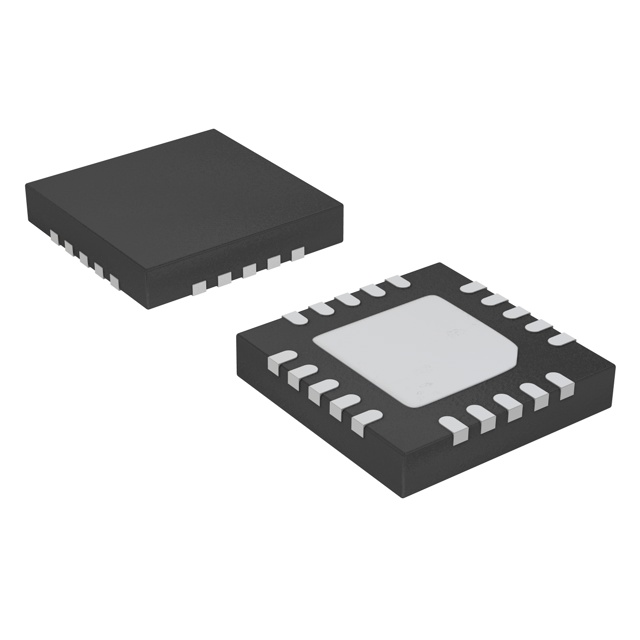
- Part No.:
- PTN5100ABSMP
- Manufacturer:
- NXP Semiconductors
- Category:
- Controllers
- Package:
- 20-VFQFN Exposed Pad
- Datasheet:
-
 PTN5100ABSMP.pdf
- Description:
- IC USB PD PHY TYPE C 20HVQFN
- Quantity:
- Payment:

- Shipping:

Inventory:2,854
Please send an inquiry. Send us your inquiry, and we will respond immediately.
Product details
Overview
PTN5100ABSMP from NXP Semiconductors is a single-port USB Type-C Power Delivery PHY and Protocol IC that implements the physical layer (BMC/4B5B/CRC), protocol layer (packet assembly/disassembly, retries, resets), and Type-C Configuration Channel interface for host or device platforms. It supports Provider (P), Consumer (C), and Dual-Role (P/C, C/P) operation, delivers up to 1 A VCONN switching with forward/reverse current protection, and operates from VDD (3.3 V ±10%) or directly from VBUS (up to 25 V) - enabling Dead Battery mode support in notebooks and Chromebooks.
For engineers reviewing the PTN5100ABSMP datasheet, PTN5100ABSMP pinout, PTN5100ABSMP application, or PTN5100ABSMP equivalent, key selection considerations include its HVQFN20 package, SPI/I2C slave interface configurability, register-programmable Type-C role (DFP/UFP/DRP), CC orientation detection via CC_ORIENT, and integrated VCONN switch with programmable current protection thresholds.
Technical Context
The PTN5100ABSMP integrates dedicated hardware for USB PD PHY functions - including Bi-phase Mark Coding (BMC) encoding/decoding, 4B5B symbol conversion, CRC generation/checking, and SOP*/SOP'-debug/SOP"-debug packet handling - offloading timing-critical tasks from the policy controller MCU. Its CC block autonomously manages Rp/Rd termination, plug orientation detection, and Debug/Accessory identification without MCU intervention during initial connect events.
It implements three open-drain FET enable outputs (EN_USBSRC, EN_USBFET1, EN_USBFET2) for controlling external PMOS power paths, and provides V_MCUPWR (up to 30 mA) to power the policy controller. The VCONN switch features patented soft-start, register-programmable forward current limit, and reverse current protection triggered by inductive cable-unplug transients - all active only when VCONN_IN is within 2.7–5.5 V.
Key Specifications
| Parameter | Value and Actual Design Meaning |
|---|---|
| USB PD Compliance | Fully compliant with USB PD 2.0 and USB Type-C 1.2 specifications, including delta updates and SOP* command support. |
| Operating Voltage | VDD = 3.3 V ±10%; VBUS operational up to 25 V; supports dead-battery operation when powered solely from VBUS. |
| VCONN Switch | Low RON switch delivering up to 1 A (2.7–5.5 V input); includes register-programmable forward/reverse current protection. |
| Interface Options | SPI slave (modes 1/2, up to 30 MHz) or I2C slave (100 kHz / 400 kHz / 1 MHz); factory-configured, not runtime-switchable. |
| CC Pin Tolerance | CC1 and CC2 pins rated for 5.5 V absolute maximum; require external TVS (e.g., PESD5V0S1USF) for ESD/cable discharge protection. |
| Temperature Range | −20 °C to +85 °C ambient operating range; qualified for industrial and portable computing platforms. |
| ESD Rating | 8 kV HBM, 1 kV CDM - meets system-level robustness requirements for consumer and commercial USB-C endpoints. |
Pinout & Package
PTN5100ABSMP is housed in an HVQFN20 package (4 mm × 4 mm, 0.5 mm pitch) with exposed thermal pad requiring solder connection to PCB ground for electrical integrity and thermal performance.
| Pin/Terminal | Circuit Role | Design Meaning |
|---|---|---|
| CC1 / CC2 | Type-C Configuration Channel I/O | Dual-purpose analog IO pins for Rp/Rd termination, cable detection, orientation sensing, and accessory identification per USB-C spec. |
| CC_ORIENT | Cable Orientation Indicator | CMOS output on VIO rail indicating plug direction: LOW = normal (CC1 active), HIGH = reversed (CC2 active); requires MCU initialization post-POR. |
| EN_USBSRC / EN_USBFET1 / EN_USBFET2 | PMOS Gate Enable Outputs | Open-drain, active-low signals controlling external VBUS source/sink FETs; status readable in internal registers. |
| VCONN_IN | VCONN Power Input | Input pin accepting 2.7–5.5 V to power full-featured cables; enables VCONN switch only when within valid range. |
| V_MCUPWR | Policy Controller Power Rail | Output delivering up to 30 mA at VIO level to power external MCU; requires 2.2 µF decoupling capacitor. |
| SPI_CLK_I2C_SCL / SPI_MOSI_I2C_SDA / SPI_CS / SPI_MISO | Host Interface Signals | Dual-function pins supporting either SPI (30 MHz) or I2C (1 MHz); SLV_ADDR selects one of three I2C addresses (0xE0/0xE4/0xE8). |
| INT_N | Interrupt Output | Active-low, open-drain interrupt signaling CC events, VCONN faults, or PD packet completion; requires external VIO pull-up. |
Key Features
| Feature | Design Value |
|---|---|
| Autonomous CC Block Operation | Hardware-managed Rp/Rd termination, plug/unplug debouncing, and orientation detection - reduces MCU firmware overhead during hot-plug events. |
| Register-Programmable PD Roles | NVM + runtime register control enables DFP/UFP/DRP configuration per OEM platform requirement, including dead-battery UFP pull-down behavior. |
| VCONN Reverse Current Protection | Detects instantaneous reverse current flow during cable unplug (inductive kickback) and disables VCONN path within microseconds to prevent system backfeed. |
| Multi-Rail Power Flexibility | Operates from VDD, VBUS, or combined VDD+VBUS; VIO domain isolates I/O logic from core supply, enabling interfacing with 1.8 V or 3.3 V MCUs. |
| Robust Pin Protection | 5.5 V-tolerant CC pins, 28 V-tolerant VBUS/VBUS-FET-enable pins, and 8 kV HBM ESD rating ensure reliability in real-world docking and accessory environments. |
Applications
| Ultrabook Charging Port | USB-C Dock Power Manager |
|---|---|
Use Scenario: A Windows Ultrabook uses PTN5100ABSMP to implement a dual-role USB-C port capable of negotiating 60 W power delivery while maintaining DisplayPort Alt Mode. IC Role / Device Role / Timing Role: PTN5100ABSMP handles BMC decoding, SOP packet exchange, and CC orientation detection - freeing the EC to manage policy decisions and thermal throttling. Use Value: Enables seamless dead-battery charging and automatic role swap (DFP↔UFP) without firmware reconfiguration, reducing boot-time latency and improving user experience. | Use Scenario: A multi-port USB-C dock uses PTN5100ABSMP on its upstream port to negotiate power contracts with host laptops while managing VCONN for active cables. IC Role / Device Role / Timing Role: PTN5100ABSMP acts as UFP to receive power from the host and provides VCONN switching with reverse-current protection during cable disconnect. Use Value: Prevents voltage spikes on VCONN line during hot-unplug, eliminating risk of damage to dock's internal regulators and ensuring compliance with USB-IF Cable Certification requirements. |
| Chromebook Peripheral Hub | Smartphone USB-C Accessory Port |
Use Scenario: A Chromebook dock implements PTN5100ABSMP on its downstream ports to detect and power USB-C peripherals like monitors and SSDs. IC Role / Device Role / Timing Role: PTN5100ABSMP operates as DFP, presenting configurable Rp values and detecting debug accessories via DBGACC_FOUND pin. Use Value: Allows real-time accessory classification (e.g., monitor vs. dongle) and dynamic power allocation - critical for meeting USB-IF PD 3.0 extended power range (EPR) readiness. | Use Scenario: A flagship Android smartphone uses PTN5100ABSMP to support fast-charging negotiation and reversible cable insertion feedback. IC Role / Device Role / Timing Role: PTN5100ABSMP serves as DRP with NVM-configured Rp/Rd, using CC_ORIENT to drive UI indicators for plug orientation. Use Value: Delivers sub-100 ms orientation detection and eliminates need for software polling - enabling instant UI response and reducing battery drain during idle CC monitoring. |
Equivalent & Alternatives
The following parts are listed as comparable options for similar USB-C PD PHY and protocol applications.
| Alternative Part | Technical Difference | Application Difference | Selection Advice |
|---|---|---|---|
| STUSB4500 | Integrated MCU-based solution with embedded PD stack; no external policy controller required. Lacks VCONN reverse current protection and autonomous CC orientation detection. | Targeted for cost-sensitive, single-chip implementations where firmware footprint must be minimized. | Select STUSB4500 only if full-stack integration is prioritized over field-proven interoperability and robust cable-handling features. |
| TUSB7320 | USB 3.0 hub controller with integrated PD PHY; supports only DFP role and lacks DRP/UFP configurability. No VCONN switch or CC_ORIENT output. | Designed for USB-C hubs requiring data + power, not standalone PD port controllers. | Choose TUSB7320 only when simultaneous SuperSpeed data routing and basic PD sourcing are required - not for DRP or accessory-facing roles. |
Compared with STUSB4500 and TUSB7320, PTN5100ABSMP offers true hardware-accelerated PD protocol offload, flexible role assignment (P/C/DRP), and unique VCONN reverse-current protection - making it optimal for high-reliability computing platforms where interoperability and cable robustness are non-negotiable.
Availability
PTN5100ABSMP is available at Aetrix Electronics and suitable for notebook PCs, USB-C docks, and Chromebook peripheral hubs requiring stable component supply, long-term lifecycle support, and full USB-IF compliance validation.
Supply support for PTN5100ABSMP includes scheduled delivery planning, volume procurement assistance, BOM continuity management, traceable sourcing, and lifecycle availability coordination for OEM customers, industrial embedded developers, connected-device designers, and electronics production programs.
Manufacturer
NXP Semiconductors is a global semiconductor company specializing in secure connectivity solutions for automotive, industrial, and consumer applications, with leadership in USB-C, NFC, and edge processing technologies.
The PTN5100ABSMP belongs to NXP's USB Type-C Power Delivery PHY and Protocol IC product line, engineered specifically for high-interoperability, low-latency USB-C port implementation in portable computing and docking systems.
FAQ
What USB Power Delivery specification versions does PTN5100ABSMP support?
PTN5100ABSMP fully supports USB PD 2.0 and USB Type-C 1.2 specifications, including all delta updates published through July 2017. It implements mandatory BMC encoding/decoding, 4B5B symbol conversion, CRC generation/checking, and SOP/SOP'/SOP"-debug packet handling - but does not support USB PD 3.0 or Programmable Power Supply (PPS) extensions.
Can PTN5100ABSMP operate without an external policy controller MCU?
No - PTN5100ABSMP is a PHY/protocol accelerator and requires an external MCU to run the PD Policy Engine and Device Policy Manager. It provides register-level control and status reporting via SPI or I2C, but does not embed firmware or decision logic. The PTN5100ABSMP must be paired with a discrete policy controller to achieve full USB-C PD functionality.
How does PTN5100ABSMP handle dead-battery operation in laptops?
PTN5100ABSMP supports dead-battery operation by drawing power directly from VBUS (up to 25 V) while using VIO for I/O logic. In this mode, it powers the external policy controller via V_MCUPWR (up to 30 mA), maintains CC detection, and implements UFP pull-down behavior - enabling the host to negotiate charging before the main battery or VDD rail is active.
What is the function of the CC_ORIENT pin on PTN5100ABSMP?
The CC_ORIENT pin on PTN5100ABSMP is a CMOS output that indicates USB-C cable plug orientation: LOW signifies normal insertion (CC1 active), HIGH signifies reversed insertion (CC2 active). Its state is invalid until the policy controller initializes PTN5100ABSMP post-power-on reset, after which it provides immediate, hardware-based orientation feedback without software polling.
Does PTN5100ABSMP include built-in ESD protection for CC pins?
PTN5100ABSMP provides 5.5 V absolute maximum rating on CC1 and CC2 pins but does not integrate sufficient ESD protection for USB-C cable discharge events. The datasheet explicitly requires external TVS diodes (e.g., PESD5V0S1USF or PESD5V0S1UL) on both CC lines to meet IEC 61000-4-2 Level 4 (8 kV contact) compliance - a mandatory design step for USB-IF certification.
PTN5100ABSMP Specifications
- Product attributes
- Attribute value
- Manufacturer:
- NXP Semiconductors
- Package/Case:
- 20-VFQFN Exposed Pad
- Programmable:
- Not Verified
- Protocol:
- USB
- Function:
- Controller
- Interface:
- USB
- Standards:
- -
- Voltage - Supply:
- -
- Current - Supply:
- -
- Operating Temperature:
- -20°C ~ 85°C
- Supplier Device Package:
- 20-HVQFN (4x4)
- Grade:
- -
- Qualification:
- -
PTN5100ABSMP FAQ
1.How can I place an order for PTN5100ABSMP through Aetrix?
Please submit a Request for Quotation (RFQ) for PTN5100ABSMP on Aetrix. Our sales agent will provide a competitive quotation and guide you through the order confirmation once you accept the terms.
2.Are the price and stock information for PTN5100ABSMP reliable?
The price and inventory of PTN5100ABSMP are updated periodically and may fluctuate due to market conditions. Stock and pricing data are typically refreshed every 24 hours. Quotation validity for PTN5100ABSMP is usually 5 days.
3.What payment methods are accepted for PTN5100ABSMP?
We accept Wire Transfer, PayPal, Credit Card, Western Union, MoneyGram, and Escrow for PTN5100ABSMP transactions.
Note: Certain payment methods may incur a processing fee.
4.How is shipping managed for PTN5100ABSMP?
PTN5100ABSMP orders can be shipped via leading logistics carriers, including DHL, UPS, FedEx, TNT, or Registered Mail.
Once your PTN5100ABSMP order is processed, you will receive an email with the shipment details and tracking number.
Note: Tracking information may take up to 24 hours to appear. Express delivery typically takes 3–5 business days.
5.How can I obtain technical support or documentation for PTN5100ABSMP?
For technical support, including PTN5100ABSMP datasheets, pinout diagrams, or application guidance, please contact our engineering support team. They can provide detailed documentation and assistance for your PTN5100ABSMP requirements.
6.How does Aetrix verify that PTN5100ABSMP is sourced from the original manufacturer or authorized distributors?
All PTN5100ABSMP products on Aetrix are procured from qualified distributors and authorized channels. Our dedicated quality assurance team conducts strict verification, including traceability checks and, if necessary, third-party testing. This ensures that PTN5100ABSMP meets industry standards.
7.What is the process for return or replacement of PTN5100ABSMP?
All PTN5100ABSMP units undergo pre-shipment inspection (PSI). If there is an issue with PTN5100ABSMP, returns or replacements are accepted under the following conditions:
1.Quantity discrepancies, incorrect items, or visible external defects (such as breakage or corrosion), acknowledged by Aetrix.
2.The issue is reported within 90 days of delivery.
3.The PTN5100ABSMP part is unused and in its original packaging.
Return procedure for PTN5100ABSMP:
1.Submit a request within 90 days.
2.Obtain a Return Material Authorization (RMA) from Aetrix.
PTN5100ABSMP Tags
-
PTN5150AHXMP
NXP Semiconductors
-
USB3740B-AI9-TR
Microchip Technology
-
USB3740B-AI2-TR
Microchip Technology
-
USB3300-EZK-TR
Microchip Technology
-
USB3300-EZK
Microchip Technology
-
FUSB340TMX
onsemi
-
FUSB302BMPX
onsemi
-
DP83826IRHBR
Texas Instruments
-
MCP2518FDT-E/QBB
Microchip Technology
-
FUSB302MPX
onsemi
-
MCP2518FDT-E/SL
Microchip Technology
-
FT260Q-R
FTDI, Future Technology Devices International Ltd
Tech Hub

A practical engineering guide to 3.3V and 5V logic compatibility, input thresholds, resistor dividers, translator ICs, MOSFET level shifting, I2C pull-ups, timing limits and power-sequencing risks.

The 74HC595 uses push-pull logic outputs, while the TPIC6B595 uses 50 V open-drain DMOS sinks for higher-power loads. This guide compares timing, current limits, 3.3 V interfacing, load wiring, thermal…

The 74HC595 converts serial data into eight stable parallel outputs. This guide covers pin functions, shift and storage timing, OE and MR behavior, drive-current limits, cascading, voltage compatibilit…

A technical comparison of level-sensitive latches and edge-triggered flip-flops, covering timing windows, setup and hold limits, master–slave operation, time borrowing, race-through, HDL inference and…

A D latch stores one bit while Enable controls when data can pass. This reference covers gate-level operation, truth tables, transparency, setup and hold timing, LE versus OE, common ICs and practical …

An SR latch stores one bit through cross-coupled feedback. This engineering reference covers NOR and NAND implementations, truth tables, forbidden-state recovery, gated operation, switch debouncing, fa…

Latch circuits retain one bit through feedback. This technical reference covers SR and D latches, truth tables, transparency, timing limits, latch-versus-flip-flop behavior, applications and common log…

An engineering guide to LED driver operation, constant-current and constant-voltage outputs, linear and switching topologies, dimming, IC selection, calculations, replacement compatibility, and fault c…

Operational amplifier guide covering op amp basics, feedback, ideal vs real op amps, common configurations, buffer circuits, offset, bias current, gain-bandwidth, slew rate, rail-to-rail limits and sel…

Jumper cables guide covering safe connection order, red and black clamp placement, final ground connection, cable gauge, length, clamp quality, copper vs CCA cables, jump starter comparison and battery…


