
 My Inquiry
 My Account


Infineon Technologies PVT322S-TPBF

- Part No.:
- PVT322S-TPBF
- Manufacturer:
- Infineon Technologies
- Category:
- Solid State Relays (SSR)
- Package:
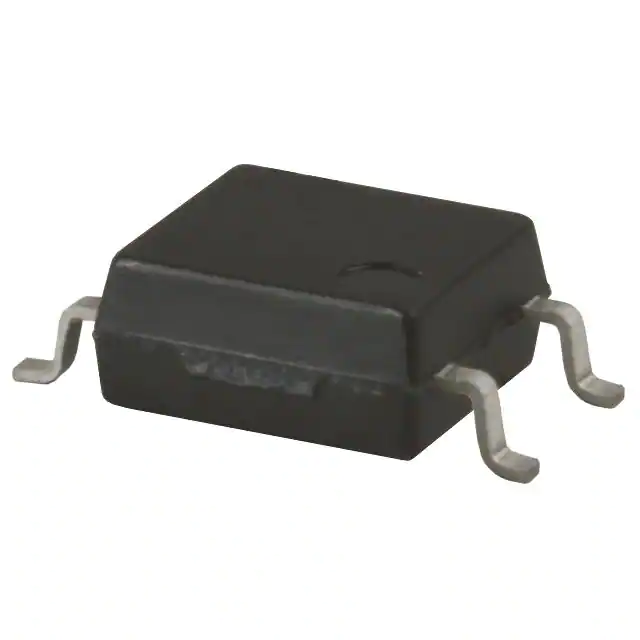
- 8-SMD (0.300", 7.62mm)
- Datasheet:
-
 PVT322S-TPBF.pdf
- Description:
- SSR RELAY SPST-NO 170MA 0-250V
- Quantity:
- Payment:

- Shipping:

Inventory:2,260
Please send an inquiry. Send us your inquiry, and we will respond immediately.
Product details
Overview
PVT322S-TPBF from International Rectifier is a Photo-voltaic relay / solid-state relay in the 8-SMD (0.300", 7.62mm) package. It uses an LED input and an optically isolated output structure so that a low-voltage control circuit can drive an isolated photovoltaic or MOSFET-output switching path.
For engineers reviewing the PVT322S-TPBF datasheet, PVT322S-TPBF pinout, PVT322S-TPBF application, or PVT322S-TPBF equivalent, this device is commonly used in isolated signal and load switching, photovoltaic gate drive, low-leakage solid-state relay outputs, and service and bom continuity designs. The package and suffix are important because PVI, PVN, PVA, PVT, PVG, and PVR devices often share family concepts but differ in output arrangement, relay rating, and mounting style. PVT322S-TPBF should therefore be selected by the exact technical documentation output rating rather than by package similarity alone.
Technical Context
In an isolated load-control design, PVT322S-TPBF transfers command energy across the optical barrier instead of sharing a direct electrical ground between the controller and the switched side. The input LED current, output leakage, on-resistance or photovoltaic output current, and isolation rating determine the actual usable load condition.
surface-mount gull-wing package for automated assembly while maintaining isolation spacing. The board layout should preserve isolation spacing between input and output pins, avoid leakage paths from flux residue or contamination, and keep the load side routing separate from the logic-side drive network.
For replacement work, the exact output type matters: photovoltaic-output optocouplers are used to drive external MOSFET gates, while PhotoMOS-style relay variants switch load current directly. The PVT322S-TPBF technical documentation should be used to confirm which function applies to this orderable line.
Key Specifications
| Parameter | Value and Actual Design Meaning |
|---|---|
| Device Type | Photo-voltaic relay / solid-state relay. |
| Package | 8-SMD (0.300", 7.62mm); Surface-mount gull-wing package supporting automated assembly and optically isolated layout spacing. |
| Channel Count | single or dual isolated output depending on package variant. |
| Isolation Rating | DIP/SMD optically isolated relay class. |
| Output Function | MOSFET output switch controlled by LED input. |
| Switching Timing | solid-state relay turn-on/turn-off timing class. |
| Temperature Class | industrial optically isolated relay temperature class. |
Pinout & Package
The PVT322S-TPBF pinout must be reviewed from the exact package drawing because terminal function, thermal path, and mechanical footprint are linked in this product family. 8-SMD (0.300", 7.62mm) package information and Bulk packaging for this line.
For PCB design, use the package drawing and confirm copper area, soldering method, creepage or clearance where applicable, and the final orderable suffix before layout or replacement approval. surface-mount gull-wing package for automated assembly while maintaining isolation spacing.
| Pin / Function | PCB Design and Circuit Role |
|---|---|
| Input LED Anode / Cathode | control-side LED pins provide optical drive energy; input current must follow the technical documentation forward-current and polarity limits. |
| Photovoltaic / MOSFET Output Pins | isolated output pins generate photovoltaic gate drive or provide a MOSFET relay output depending on the exact PVI/PVN/PVA/PVT/PVG family. |
| Isolation Barrier | separates the logic-control side from the load side; PCB creepage and clearance must match the working-voltage requirement. |
| Package Footprint | surface-mount gull-wing package for automated assembly while maintaining isolation spacing. |
Key Features
- Photo-voltaic relay / solid-state relay using LED input and optically isolated output behavior.
- Provides galvanic isolation between control electronics and the load-side switching path.
- 8-SMD (0.300", 7.62mm) package determines isolation spacing, board footprint, and soldering method.
- Suitable for low-leakage switching, isolated gate drive, or solid-state relay functions depending on exact family.
- No mechanical contacts, improving lifetime in low-current switching applications.
- Output rating and isolation voltage must be confirmed from the exact technical documentation before substitution.
Applications
| Isolated Signal and Load Switching | Photovoltaic Gate Drive |
|---|---|
|
Use Scenario: Instrumentation, test equipment, telecom interfaces, and isolated low-current load switching. IC Role: PVT322S-TPBF transfers control through an optical barrier to an isolated output structure. Use Value: Allows galvanic isolation without mechanical relay contacts. |
Use Scenario: Floating MOSFET gates, analog switch control, and isolated high-side or low-side gate-drive circuits. IC Role: PVT322S-TPBF provides photovoltaic output energy or relay switching depending on the exact family. Use Value: Supports isolated drive or switching where a direct ground reference is not available. |
| Low-Leakage Solid-State Relay Outputs | Service and BOM Continuity |
|
Use Scenario: Measurement circuits, multiplexers, security equipment, and compact relay replacement boards. IC Role: PVT322S-TPBF provides a solid-state isolated output path. Use Value: Reduces contact wear, bounce, and acoustic noise compared with electromechanical relays. |
Use Scenario: Legacy International Rectifier photovoltaic relay boards requiring the same package footprint. IC Role: PVT322S-TPBF maintains the original package and suffix reference for replacement sourcing. Use Value: Helps avoid PCB redesign when output rating and package match the original design. |
Equivalent & Alternatives
When evaluating PVT322S-TPBF equivalent devices, engineers should compare only specific orderable alternatives and should verify package footprint, pinout, electrical ratings, thermal data, qualification status, and suffix or packing requirements before substitution.
| Alternative Part | Technical Difference | Application Difference | Selection Advice |
|---|---|---|---|
| PVT322 | Same base family or close suffix variant; electrical function may be similar, while package, reel orientation, lead finish, or orderable code can differ. | Used when the existing design needs the same functional device with a different supply or assembly code. | Compare PVT322 against PVT322S-TPBF for package drawing, suffix meaning, tape orientation, and documentation revision. |
| PVT322PBF | Same base family or close suffix variant; electrical function may be similar, while package, reel orientation, lead finish, or orderable code can differ. | Used when the existing design needs the same functional device with a different supply or assembly code. | Compare PVT322PBF against PVT322S-TPBF for package drawing, suffix meaning, tape orientation, and documentation revision. |
Compared with related alternatives, PVT322S-TPBF should remain the preferred sourcing reference when the existing BOM, PCB footprint, and qualification documentation require the exact International Rectifier orderable device.
Quality
PVT322S-TPBF should be sourced as original International Rectifier / Infineon inventory through traceable and controlled supply channels. Quality verification may include package inspection, top-mark validation, label and lot review, solderability inspection, moisture-sensitivity handling review, and electrical screening according to the target production requirement.
Because PVT322S-TPBF is used in isolated switching and photovoltaic relay circuits, final validation should include the actual PCB footprint, thermal path, electrical stress, operating temperature, and fault-condition behavior. Traceable sourcing helps reduce counterfeit risk and supports repeatable performance in production, repair, and maintenance programs.
Availability
PVT322S-TPBF available at Aetrix Electronics and suitable for isolated switching and photovoltaic relay circuits requiring stable component supply, package matching, and controlled replacement planning.
Supply support may include scheduled delivery planning, volume procurement support, BOM continuity assistance, traceable sourcing management, and long-term availability support for OEM manufacturers, repair programs, and electronics production teams.
For production or repair deployment, confirming package type, orderable suffix, lifecycle status, environmental requirement, electrical rating, thermal condition, and sourcing continuity helps reduce procurement risk and improve manufacturing stability.
Manufacturer
International Rectifier was a semiconductor manufacturer known for power MOSFETs, IGBTs, gate drivers, power-management ICs, intelligent power switches, photovoltaic relays, and power modules. International Rectifier products became part of Infineon Technologies' power semiconductor portfolio after the acquisition of International Rectifier.
The PVT322S-TPBF ordering line should be reviewed with the relevant International Rectifier legacy technical documentation and Infineon supply-chain references where available. This is especially important for legacy MOSFETs, IRAM modules, PV relay products, and automotive AUIR power devices.
FAQ
What is PVT322S-TPBF used for?
PVT322S-TPBF is used in isolated switching and photovoltaic relay circuits. The exact application depends on the technical documentation electrical ratings, package, pinout, and thermal capability.
Where can I find the PVT322S-TPBF technical documentation?
The PVT322S-TPBF technical documentation should be obtained from International Rectifier / Infineon documentation or an authorized technical documentation source. It should be used to confirm ratings, package information, pinout, thermal data, and test conditions.
What should be considered in PVT322S-TPBF pinout design?
Pinout design should confirm the package drawing, terminal functions, thermal path, high-current routing or isolation spacing, and whether the orderable suffix changes package or packing details.
Can PVT322S-TPBF be used as a direct replacement?
PVT322S-TPBF can be used as a direct replacement only when the package footprint, pinout, electrical ratings, thermal behavior, and qualification status match the original design.
What are common PVT322S-TPBF equivalent solutions?
Equivalent solutions should be limited to specific orderable devices with verified technical documents. Suffix variants may differ in package, reel orientation, lead finish, qualification, or manufacturing status.
PVT322S-TPBF Specifications
- Product attributes
- Attribute value
- Manufacturer:
- Infineon Technologies
- Series:
- PVT, HEXFET®
- Packaging:
- Tape & Reel (TR)
- Product Status:
- Active
- Mounting Type:
- Surface Mount
- Circuit:
- SPST-NO (1 Form A) x 2
- Output Type:
- AC, DC
- Voltage - Input:
- 1.2VDC
- Voltage - Load:
- 0 V ~ 250 V
- Load Current:
- 170 mA
- On-State Resistance (Max):
- 10 Ohms
- Termination Style:
- Gull Wing
- Operating Temperature:
- -40°C ~ 85°C
- Supplier Device Package:
- 8-SMD
- Approval Agency:
- UL
- Grade:
- -
- Qualification:
- -
PVT322S-TPBF FAQ
1.How can I place an order for PVT322S-TPBF through Aetrix?
Please submit a Request for Quotation (RFQ) for PVT322S-TPBF on Aetrix. Our sales agent will provide a competitive quotation and guide you through the order confirmation once you accept the terms.
2.Are the price and stock information for PVT322S-TPBF reliable?
The price and inventory of PVT322S-TPBF are updated periodically and may fluctuate due to market conditions. Stock and pricing data are typically refreshed every 24 hours. Quotation validity for PVT322S-TPBF is usually 5 days.
3.What payment methods are accepted for PVT322S-TPBF?
We accept Wire Transfer, PayPal, Credit Card, Western Union, MoneyGram, and Escrow for PVT322S-TPBF transactions.
Note: Certain payment methods may incur a processing fee.
4.How is shipping managed for PVT322S-TPBF?
PVT322S-TPBF orders can be shipped via leading logistics carriers, including DHL, UPS, FedEx, TNT, or Registered Mail.
Once your PVT322S-TPBF order is processed, you will receive an email with the shipment details and tracking number.
Note: Tracking information may take up to 24 hours to appear. Express delivery typically takes 3–5 business days.
5.How can I obtain technical support or documentation for PVT322S-TPBF?
For technical support, including PVT322S-TPBF datasheets, pinout diagrams, or application guidance, please contact our engineering support team. They can provide detailed documentation and assistance for your PVT322S-TPBF requirements.
6.How does Aetrix verify that PVT322S-TPBF is sourced from the original manufacturer or authorized distributors?
All PVT322S-TPBF products on Aetrix are procured from qualified distributors and authorized channels. Our dedicated quality assurance team conducts strict verification, including traceability checks and, if necessary, third-party testing. This ensures that PVT322S-TPBF meets industry standards.
7.What is the process for return or replacement of PVT322S-TPBF?
All PVT322S-TPBF units undergo pre-shipment inspection (PSI). If there is an issue with PVT322S-TPBF, returns or replacements are accepted under the following conditions:
1.Quantity discrepancies, incorrect items, or visible external defects (such as breakage or corrosion), acknowledged by Aetrix.
2.The issue is reported within 90 days of delivery.
3.The PVT322S-TPBF part is unused and in its original packaging.
Return procedure for PVT322S-TPBF:
1.Submit a request within 90 days.
2.Obtain a Return Material Authorization (RMA) from Aetrix.
PVT322S-TPBF Tags
.jpg)
-
G3VM-21UR11(TR05)
Omron Electronics Inc-EMC Div
-
G3VM-61VY3(TR05)
Omron Electronics Inc-EMC Div
-
CPC1017NTR
Littelfuse Inc.
-
CPC1017N
Littelfuse Inc.
-
CPC1006N
Littelfuse Inc.
-
VO1400AEFTR
Vishay Semiconductor Opto Division
-
CPC1006NTR
Littelfuse Inc.
-
TLP175A(TPL,E
Toshiba Semiconductor and Storage
-
CPC1002NTR
Littelfuse Inc.
-
AQY280S
Panasonic Electric Works
-
CPC1117NTR
Littelfuse Inc.
-
CPC1106NTR
Littelfuse Inc.
Tech Hub

Schmitt triggers use separate rising and falling thresholds to stabilize slow or noisy signals. This guide covers hysteresis, 74HC14 and 74HCT14 selection, comparator calculations, RC oscillators and p…
Counterfeit components can hide behind convincing markings and passing basic function tests. This engineering reference covers source traceability, external inspection, X-ray, XRF, electrical testing, …

A practical engineering and sourcing framework covering lifecycle verification, lifetime-buy calculations, replacement qualification, supplier checks and counterfeit-risk controls.

TTL and CMOS logic families differ in thresholds, loading, output drive, power and timing. This engineering guide compares 74HC and 74HCT, calculates noise margins and checks 3.3 V/5 V compatibility.

A practical engineering guide to 3.3V and 5V logic compatibility, input thresholds, resistor dividers, translator ICs, MOSFET level shifting, I2C pull-ups, timing limits and power-sequencing risks.

The 74HC595 uses push-pull logic outputs, while the TPIC6B595 uses 50 V open-drain DMOS sinks for higher-power loads. This guide compares timing, current limits, 3.3 V interfacing, load wiring, thermal…

The 74HC595 converts serial data into eight stable parallel outputs. This guide covers pin functions, shift and storage timing, OE and MR behavior, drive-current limits, cascading, voltage compatibilit…

A technical comparison of level-sensitive latches and edge-triggered flip-flops, covering timing windows, setup and hold limits, master–slave operation, time borrowing, race-through, HDL inference and…

A D latch stores one bit while Enable controls when data can pass. This reference covers gate-level operation, truth tables, transparency, setup and hold timing, LE versus OE, common ICs and practical …

An SR latch stores one bit through cross-coupled feedback. This engineering reference covers NOR and NAND implementations, truth tables, forbidden-state recovery, gated operation, switch debouncing, fa…


