
 My Inquiry
 My Account


Infineon Technologies PXF 4222 E V1.3-G
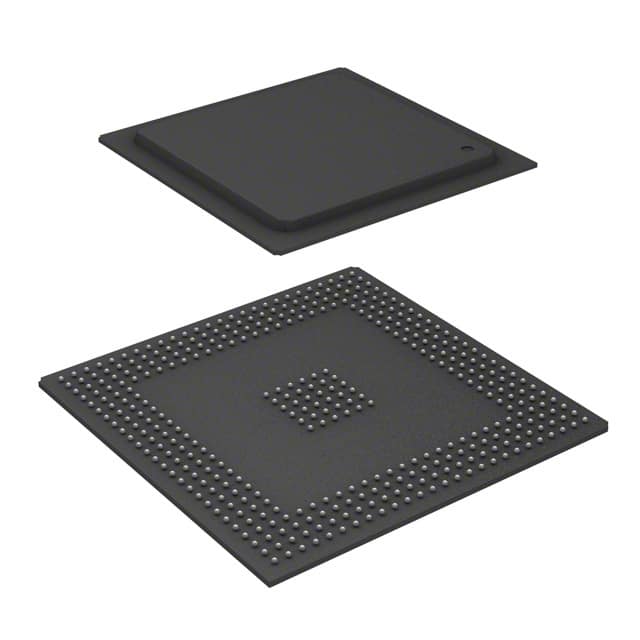
- Part No.:
- PXF 4222 E V1.3-G
- Manufacturer:
- Infineon Technologies
- Category:
- Specialized ICs
- Package:
- 388-BBGA
- Datasheet:
-
 PXF 4222 E V1.3-G.pdf
- Description:
- IC INTERWORKING CONTRLLER 388BGA
- Quantity:
- Payment:

- Shipping:

Inventory:2,840
Please send an inquiry. Send us your inquiry, and we will respond immediately.
Product details
Overview
PXF 4222 E V1.3-G from Infineon Technologies is an ATM interworking controller IC for PDH-to-ATM transport in 3G mobile infrastructure and multiservice WAN routers. It integrates AAL1 adaptation, IMA (4 groups, up to 8 links), on-chip RAM and microcontroller, supports up to 256 AAL1 connections, and delivers ≤16 Mbit/s throughput with SRTS/ACM clock recovery.
For engineers reviewing the PXF 4222 E V1.3-G datasheet, PXF 4222 E V1.3-G pinout, PXF 4222 E V1.3-G application, or PXF 4222 E V1.3-G equivalent, key selection criteria include AAL1 CES support, fractional E1/T1/J1 mapping per ITU-T G.804 and AF-PHY-0130.00, IMA differential delay compensation (25 ms), Utopia Level 1/2 interface compliance, and 3.3 V I/O / 1.8 V core power architecture.
Technical Context
The PXF 4222 E V1.3-G implements full ATM Adaptation Layer 1 (AAL1) per ITU-T I.363-1, supporting both channelized and unchannelized Circuit Emulation Service (CES) with Channel Associated Signaling (CAS). It embeds SRTS and ACM clock recovery methods for synchronization-sensitive voice/video transport over PDH networks.
Its Transmission Convergence (TC) sublayer complies with ITU-T G.804 and maps ATM cells onto fractional E1/T1/J1 lines per AF-PHY-0130.00. On-chip IMA processing handles up to 4 groups and 8 links with 25 ms differential delay compensation, while Utopia Level 1/2 and 16/32-bit microprocessor interfaces enable host integration in line card designs.
Key Specifications
| Parameter | Value and Actual Design Meaning |
|---|---|
| AAL1 Support | ITU-T I.363-1 compliant; enables circuit emulation for TDM voice/video over ATM with CAS and up to 256 connections |
| IMA Capability | 4 IMA groups, up to 8 physical links, 25 ms on-chip differential delay compensation per AF-PHY-0086.000/001 |
| Throughput | ≤16 Mbit/s aggregate data rate for AAL1 CES traffic in line card applications |
| Interface Standards | Utopia Level 1/2 (AF-PHY-0017.000/0039.000); 8× E1/T1/J1 direct framer interface; 16/32-bit Intel/Motorola µP bus |
| Power & Temp | 3.3 V I/O, 1.8 V core; <2 W typical power consumption; industrial temp range −40°C to +85°C |
| Clock Recovery | Integrated SRTS and ACM methods per ITU-T G.804 for stable timing in PDH-based ATM transport |
Pinout & Package
Package: P-BGA-388 (Plastic Ball Grid Array, 388-ball, 27 mm × 27 mm, 1.0 mm pitch).
| Pin/Terminal | Circuit Role | Design Meaning |
|---|---|---|
| E1_Tx[0..7] | E1/T1/J1 Transmit Data Output | 8 independent serial outputs for direct connection to external framers (e.g., QuadFALC®) |
| E1_Rx[0..7] | E1/T1/J1 Receive Data Input | 8 independent serial inputs synchronized to recovered clock for PDH line ingress |
| UTOPIA_CLK | Utopia Interface Clock | Input clock for Utopia Level 1/2 interface; defines cell transfer timing to ATM switch fabric |
| UTOPIA_DATA[0..7] | Utopia Data Bus | 8-bit bidirectional data path for Level 1 or 16-bit multiplexed for Level 2 operation |
| µP_A[0..15] | Microprocessor Address Bus | 16-bit address lines for Intel/Motorola-style memory-mapped configuration and control register access |
| µP_RD/WR | Microprocessor Read/Write Control | Active-low strobes enabling synchronous command/data exchange with host processor |
Key Features
| Feature | Design Value |
|---|---|
| AAL1 CES with CAS | Enables legacy TDM voice trunking over ATM without protocol conversion loss; supports channelized/unchannelized modes per ATMF AF-VTOA 0078.000 |
| On-chip IMA Engine | Eliminates need for external IMA ASIC; handles link bonding, cell interleaving, and delay compensation entirely in silicon |
| Integrated Microcontroller & RAM | Reduces external component count; executes OAM functions and stores connection state/configuration without host CPU intervention |
| Message-Based Configuration | Standardized API simplifies firmware development; allows runtime reconfiguration of AAL1 connections and IMA group parameters |
| ATM OAM Fault Management | Hardware-accelerated AIS/RDI/CC per ITU-T I.610 (99) enables autonomous network fault detection and reporting |
Applications
| 3G Node B Line Cards | Multiservice DSLAM Uplink |
|---|---|
Use Scenario: Aggregating E1-based TDM voice traffic from remote radio units into ATM backhaul for RNC connectivity. IC Role / Device Role / Timing Role: AAL1 interworking controller performing CES with SRTS clock recovery and CAS signaling alignment. Use Value: Enables co-location of 2G/3G base stations via shared PDH infrastructure while preserving TDM timing integrity. | Use Scenario: Transporting multiple DSL subscriber voice channels over ATM core using fractional E1 trunks. IC Role / Device Role / Timing Role: ATM TC sublayer mapper converting E1 frames to ATM cells per G.804 and AF-PHY-0130.00. Use Value: Delivers deterministic latency and jitter control for VoIP bearer traffic in broadband access networks. |
| WAN Router Multiservice Cards | Multimedia Gateway CES |
Use Scenario: Consolidating leased-line T1/E1 circuits from enterprise customers into a unified ATM switching fabric. IC Role / Device Role / Timing Role: Interworking element bridging PDH physical layer to ATM layer 2 with IMA link bundling. Use Value: Provides bandwidth scalability (up to 8× T1/E1) and resilience against single-link failure via IMA group protection. | Use Scenario: Emulating TDM time slots for video conferencing streams across IP/ATM hybrid networks. IC Role / Device Role / Timing Role: AAL1 adaptation engine maintaining constant bit-rate timing for uncompressed video payloads. Use Value: Preserves frame sync and lip-sync accuracy by embedding PCM samples in fixed-cell structure with ACM recovery. |
Equivalent & Alternatives
The following parts are listed as comparable options for similar ATM interworking controller applications.
| Alternative Part | Technical Difference | Application Difference | Selection Advice |
|---|---|---|---|
| PMC-Sierra PM5352 | Dedicated IMA-only device; no integrated AAL1 or microcontroller; requires external RAM and framer interface logic | Limited to IMA aggregation; cannot replace full CES/AAL1 functionality in Node B or multimedia gateway roles | Select only when IMA bundling is sole requirement and AAL1/CES offload is handled elsewhere |
| Conexant CX82310 | Single-chip TDM-over-ATM solution with integrated framer; supports AAL1 but lacks IMA and Utopia Level 2 interface | Suitable for low-port-count CES cards; not scalable to 8× E1 or high-throughput multiservice line cards | Prefer for cost-sensitive, low-density DSLAM uplinks where IMA and Utopia Level 2 are unnecessary |
Compared with PM5352 and CX82310, the PXF 4222 E V1.3-G uniquely combines AAL1 CES, IMA, Utopia Level 2, and embedded control in one die-enabling full-featured, space-constrained ATM line cards without external glue logic or memory.
Availability
PXF 4222 E V1.3-G is available at Aetrix Electronics and suitable for 3G Node B deployments, multiservice DSLAM uplink cards, and WAN router line cards requiring stable component supply and long-term lifecycle support.
Supply support for PXF 4222 E V1.3-G includes scheduled delivery planning, volume procurement assistance, BOM continuity management, traceable sourcing, and lifecycle availability coordination for OEM customers, industrial embedded developers, connected-device designers, and electronics production programs.
Manufacturer
Infineon Technologies AG is a German semiconductor manufacturer specializing in power management, automotive, security, and communications ICs, with global R&D and manufacturing operations.
The IWORX-P product line targets ATM interworking in legacy telecom infrastructure, specifically enabling migration from PDH to ATM transport in 3G mobile and multiservice access networks.
FAQ
What clock recovery methods does the PXF 4222 E V1.3-G support for AAL1 CES?
The PXF 4222 E V1.3-G implements both Synchronous Residual Time Stamp (SRTS) and Adaptive Clock Mode (ACM) per ITU-T G.804. SRTS recovers timing from PDH line signals for strict TDM alignment; ACM adapts to variable network delays in packet-switched backhauls-both are hardware-accelerated and configurable per connection.
Does the PXF 4222 E V1.3-G require external memory for AAL1 connection tables?
No. The device integrates on-chip RAM sufficient to store configuration data, connection state, and OAM parameters for all 256 supported AAL1 connections. External memory is optional and used only for extended logging or non-real-time diagnostics-not for operational CES or IMA functions.
Can the PXF 4222 E V1.3-G operate with T1 and E1 simultaneously on the same device?
Yes. Its 8 E1/T1/J1 interfaces are fully independent and configurable per port. Each can be set to T1 (1.544 Mbps), E1 (2.048 Mbps), or J1 (1.544 Mbps) mode via register programming, enabling mixed T1/E1 line cards-common in North American and European multiservice deployments.
Is the Utopia interface on the PXF 4222 E V1.3-G compatible with Level 2 cell delineation?
Yes. The Utopia interface supports both Level 1 (cell payload only) and Level 2 (full cell header + payload) operation per ATMF AF-PHY-0017.000/0039.000. Level 2 mode enables direct connection to ATM switches that perform VP/VC routing, eliminating need for external header insertion logic.
PXF 4222 E V1.3-G Specifications
- Product attributes
- Attribute value
- Manufacturer:
- Infineon Technologies
- Series:
- -
- Package/Case:
- 388-BBGA
- Packaging:
- Tray
- Product Status:
- Obsolete
- Programmable:
- Not Verified
- Type:
- Interworking Controller
- Applications:
- -
- Mounting Type:
- Surface Mount
- Supplier Device Package:
- PG-BGA-388-2
- Grade:
- -
- Qualification:
- -
PXF 4222 E V1.3-G FAQ
1.How can I place an order for PXF 4222 E V1.3-G through Aetrix?
Please submit a Request for Quotation (RFQ) for PXF 4222 E V1.3-G on Aetrix. Our sales agent will provide a competitive quotation and guide you through the order confirmation once you accept the terms.
2.Are the price and stock information for PXF 4222 E V1.3-G reliable?
The price and inventory of PXF 4222 E V1.3-G are updated periodically and may fluctuate due to market conditions. Stock and pricing data are typically refreshed every 24 hours. Quotation validity for PXF 4222 E V1.3-G is usually 5 days.
3.What payment methods are accepted for PXF 4222 E V1.3-G?
We accept Wire Transfer, PayPal, Credit Card, Western Union, MoneyGram, and Escrow for PXF 4222 E V1.3-G transactions.
Note: Certain payment methods may incur a processing fee.
4.How is shipping managed for PXF 4222 E V1.3-G?
PXF 4222 E V1.3-G orders can be shipped via leading logistics carriers, including DHL, UPS, FedEx, TNT, or Registered Mail.
Once your PXF 4222 E V1.3-G order is processed, you will receive an email with the shipment details and tracking number.
Note: Tracking information may take up to 24 hours to appear. Express delivery typically takes 3–5 business days.
5.How can I obtain technical support or documentation for PXF 4222 E V1.3-G?
For technical support, including PXF 4222 E V1.3-G datasheets, pinout diagrams, or application guidance, please contact our engineering support team. They can provide detailed documentation and assistance for your PXF 4222 E V1.3-G requirements.
6.How does Aetrix verify that PXF 4222 E V1.3-G is sourced from the original manufacturer or authorized distributors?
All PXF 4222 E V1.3-G products on Aetrix are procured from qualified distributors and authorized channels. Our dedicated quality assurance team conducts strict verification, including traceability checks and, if necessary, third-party testing. This ensures that PXF 4222 E V1.3-G meets industry standards.
7.What is the process for return or replacement of PXF 4222 E V1.3-G?
All PXF 4222 E V1.3-G units undergo pre-shipment inspection (PSI). If there is an issue with PXF 4222 E V1.3-G, returns or replacements are accepted under the following conditions:
1.Quantity discrepancies, incorrect items, or visible external defects (such as breakage or corrosion), acknowledged by Aetrix.
2.The issue is reported within 90 days of delivery.
3.The PXF 4222 E V1.3-G part is unused and in its original packaging.
Return procedure for PXF 4222 E V1.3-G:
1.Submit a request within 90 days.
2.Obtain a Return Material Authorization (RMA) from Aetrix.
PXF 4222 E V1.3-G Tags
-
CAP200DG-TL
Power Integrations
-
ATSHA204A-MAHDA-T
Microchip Technology

-
ATSHA204A-SSHDA-T
Microchip Technology
-
ATSHA204A-STUCZ-T
Microchip Technology
-
ATECC608B-MAHDA-T
Microchip Technology
-
ATECC608B-MAHCZ-S
Microchip Technology

-
ATECC608B-SSHDA-T
Microchip Technology
-
ATECC608B-MAHDA-S
Microchip Technology
-
ATECC608A-MAHDA-S
Microchip Technology
-
ATECC608B-MAVDA-T
Microchip Technology

-
ATECC608A-SSHDA-T
Microchip Technology
-
ATECC508A-MAHDA-T
Microchip Technology
Tech Hub

Operational amplifier guide covering op amp basics, feedback, ideal vs real op amps, common configurations, buffer circuits, offset, bias current, gain-bandwidth, slew rate, rail-to-rail limits and sel…

Jumper cables guide covering safe connection order, red and black clamp placement, final ground connection, cable gauge, length, clamp quality, copper vs CCA cables, jump starter comparison and battery…

LDO regulator guide covering low dropout voltage, power dissipation, thermal design, PSRR, output noise, capacitor stability, adjustable LDO circuits, LDO vs buck converter and datasheet selection chec…

Conditional Access Module guide covering CAM meaning, CI/CI+ interface, smart card authorization, DVB security workflow, TV and set-top box compatibility, internal electronics, ESD protection, connecto…

Guide to electronic component obsolescence covering EOL risk, PCN/PDN notices, last-time buy planning, replacement options, form-fit-function validation, counterfeit risk and BOM lifecycle management.

18650 battery guide covering lithium-ion cell basics, 3.6V/3.7V voltage, 4.2V charging, mAh and Wh capacity, protected cells, chargers, BMS, series-parallel packs, holders, welding and sourcing checks.…

Hall effect sensor guide covering working principle, linear and digital sensors, Arduino circuits, current sensing, speed detection, automotive applications, A3144 examples, signal filtering and datash…

Product Change Notification guide for electronic components, covering PCN meaning, PCN vs PDN/EOL, common change types, risk levels, form-fit-function review, engineering validation, BOM control, LTB/L…

A practical guide to blend door actuators, covering HVAC function, symptoms, location, AC and heater issues, reset and calibration, replacement cost, electrical diagnosis, compatibility checks, and rep…

Engineering guide to Raspberry Pi alternatives, covering chip-level differences, Orange Pi, ROCK, Jetson, Banana Pi, NanoPi, Compute Module, Pico, GPIO, camera, HAT compatibility, and replacement risks…


