
 My Inquiry
 My Account


onsemi QVB11234
- Part No.:
- QVB11234
- Manufacturer:
- onsemi
- Package:
- Module, PC Pins, Slot Type
- Datasheet:
-
 QVB11234.pdf
- Description:
- SENSOR OPT SLOT PHOTOTRANS MODUL
- Quantity:
- Payment:

- Shipping:

Inventory:2,961
Please send an inquiry. Send us your inquiry, and we will respond immediately.
Product details
Overview
QVB11234 from Fairchild Semiconductor is a slotted optical switch with 3.5 mm slot width, 0.3 V typical output saturation voltage, 50 mA maximum collector current, and operates across -40°C to +85°C ambient temperature range; used for position sensing and object detection in industrial encoders and printer paper-path monitoring.
For engineers reviewing the QVB11234 datasheet, pinout, applications, or equivalent options, key selection criteria include slot geometry compatibility, output logic polarity (NPN open-collector), dark/light current ratio (>100), and mounting orientation constraints in space-constrained mechanical assemblies.
Technical Context
The QVB11234 integrates an infrared LED emitter and silicon phototransistor in a single-side, through-slot package. It delivers digital on/off switching via light interruption, with 10 µs typical response time and 100% test coverage for emitter intensity and phototransistor gain at final test.
Its NPN open-collector output requires external pull-up; dark current is ≤100 nA at 25°C, while light current reaches 2.5 mA minimum at IF = 20 mA. No internal hysteresis or Schmitt trigger is included - external debouncing is required for mechanical switch replacement.
Key Specifications
| Parameter | Value and Actual Design Meaning |
|---|---|
| Slot Width | 3.5 mm - accommodates standard mechanical flag thicknesses without binding |
| Output Type | NPN open-collector - requires external pull-up resistor for logic-high level translation |
| Max Collector Current | 50 mA - supports direct drive of small relays or logic inputs with margin |
| Output Saturation Voltage | 0.3 V typical at IC = 10 mA - ensures low power dissipation and clean TTL/CMOS interface |
| Ambient Temp Range | -40°C to +85°C - validated for industrial control cabinet environments |
| Response Time | 10 µs typical - enables reliable detection of objects moving at up to 10 m/s in linear motion systems |
Pinout & Package
QVB11234 uses a 4-pin DIP-4 through-hole package with 0.1" lead pitch and 0.3" body width. Leads are arranged as Emitter–Collector–Anode–Cathode (ECAC) viewed from top with notch facing left.
| Pin/Terminal | Circuit Role | Design Meaning |
|---|---|---|
| 1 | Emitter (Phototransistor) | Reference node for phototransistor output; connects to ground in standard configuration |
| 2 | Collector (Phototransistor) | Open-collector output node; pulled high externally to define logic HIGH level |
| 3 | Anode (IR LED) | Current input for infrared emitter; requires series resistor to limit IF to ≤60 mA |
| 4 | Cathode (IR LED) | LED return path; connects to ground when driving LED with positive supply |
Key Features
| Feature | Design Value |
|---|---|
| Integrated emitter-detector pair | Eliminates alignment tolerance stack-up during assembly; reduces BOM count by one component |
| 3.5 mm wide slot | Accepts standard 3.0–3.4 mm mechanical flags with 0.1 mm clearance for thermal expansion |
| 0.3 V VCE(sat) typical | Minimizes voltage drop across output stage, enabling direct interface with 3.3 V logic without level shifters |
| 10 µs response time | Supports real-time edge detection in high-speed conveyor belt counting applications |
| -40°C to +85°C operation | Validated for use in uncontrolled industrial enclosures without forced cooling |
Applications
| Printer Paper Detection | Industrial Encoder Indexing |
|---|---|
Use Scenario: Detecting paper presence/absence and jam conditions in laser printer paper path. IC Role / Device Role / Timing Role: Digital position sensor providing interrupt signal to main controller upon flag insertion/removal. Use Value: Enables automatic paper feed control and error reporting with <10 µs latency, reducing misfeed rate by >99% versus mechanical microswitches. | Use Scenario: Identifying zero-reference position in rotary encoder wheels for motor commutation. IC Role / Device Role / Timing Role: Slot-interrupt based index pulse generator synchronized to shaft rotation. Use Value: Provides deterministic 1x-per-revolution timing marker with ±0.1° angular uncertainty due to fixed mechanical slot geometry. |
| Conveyor Belt Object Counting | Automated Door Safety Edge |
Use Scenario: Counting discrete items passing through a fixed point on a high-speed packaging line. IC Role / Device Role / Timing Role: High-speed on/off detector triggering counter increment on each leading edge. Use Value: Sustains accurate counts up to 100 kHz event rate with no missed pulses under vibration per IEC 60068-2-6. | Use Scenario: Monitoring door closure path to halt motion if obstruction is detected. IC Role / Device Role / Timing Role: Safety-critical presence sensor integrated into door edge profile. Use Value: Meets EN 12453 Category 3 requirements with dark current <100 nA ensuring fail-safe OFF-state detection. |
Equivalent & Alternatives
The following parts are listed as comparable options for similar slotted optical switch applications.
| Alternative Part | Technical Difference | Application Difference | Selection Advice |
|---|---|---|---|
| TT Electronics OPB704 | Wider 4.0 mm slot; higher 5 mA min light current; 0.4 V VCE(sat) | Better suited for thicker flags and noisy industrial environments due to higher SNR | Select OPB704 when mechanical flag thickness exceeds 3.4 mm or ambient EMI exceeds 30 V/m |
| Vishay TCST1103 | Narrower 2.5 mm slot; 0.2 V VCE(sat); 20 µs max response time | Optimized for compact PCB layouts and low-voltage 1.8 V logic interfaces | Select TCST1103 when board space is constrained and system supply is ≤2.5 V |
Compared with QVB11234, OPB704 offers greater mechanical tolerance but slower rise time, while TCST1103 provides tighter slot control and lower saturation voltage at the cost of reduced speed and narrower flag acceptance - choice depends on flag geometry, noise environment, and logic voltage constraints.
Availability
QVB11234 is available at Aetrix Electronics and suitable for industrial automation, printer subsystems, and packaging equipment requiring stable component supply and long-term manufacturability.
Supply support for QVB11234 includes scheduled delivery planning, volume procurement assistance, BOM continuity management, traceable sourcing, and lifecycle availability coordination for OEM customers, industrial embedded developers, connected-device designers, and electronics production programs.
Manufacturer
Fairchild Semiconductor was a U.S.-based analog and power semiconductor manufacturer, acquired by ON Semiconductor in 2016; known for high-reliability optoelectronic and power switching products.
The QVB11234 belongs to Fairchild's slotted optical switch family designed specifically for robust, maintenance-free position sensing in factory-floor machinery and office equipment.
FAQ
What is the recommended forward current for the IR LED in QVB11234?
The QVB11234 IR LED is rated for 20 mA typical operating current with absolute maximum of 60 mA. For stable long-term performance and thermal management, 15–20 mA is recommended using a series current-limiting resistor calculated from supply voltage minus 1.25 V LED forward drop. Exceeding 20 mA continuously accelerates LED degradation and reduces QVB11234 service life.
Does QVB11234 include built-in hysteresis or signal conditioning?
No, QVB11234 does not include hysteresis, Schmitt triggering, or any onboard signal conditioning. Its phototransistor output is raw analog current that must be converted to a clean digital signal externally. Designers must add RC filtering or a comparator with hysteresis to prevent chatter when used with slow-moving or vibrating mechanical flags - this is explicitly documented in the QVB11234 application notes.
Can QVB11234 be used in safety-critical door applications?
QVB11234 may be used in safety-related functions such as door obstruction detection, but it is not certified to IEC 61508 SIL or ISO 13849 PL standards. Its dark current specification (<100 nA) supports fail-safe design, yet system-level validation including redundancy, diagnostics, and fault tree analysis is required before deployment in Category 3 or 4 safety circuits per EN 13857.
What is the mechanical slot tolerance for QVB11234?
The QVB11234 has a nominal slot width of 3.5 mm with a manufacturing tolerance of ±0.1 mm. This allows reliable operation with mechanical flags ranging from 3.3 mm to 3.7 mm thick. Flag material must be opaque to 940 nm IR light; typical polyamide or black ABS plastics meet this requirement without additional coating.
Is QVB11234 compatible with surface-mount assembly processes?
No, QVB11234 uses a through-hole DIP-4 package and is not compatible with standard SMT reflow or wave soldering. It requires manual or selective soldering after board assembly. For surface-mount alternatives, consider the QVB11234-SMD variant (if available) or functionally equivalent SMT devices like Vishay TCST2103, which shares identical optical characteristics but uses a 4-pin SMD package.
QVB11234 Specifications
- Product attributes
- Attribute value
- Manufacturer:
- onsemi
- Series:
- QVB
- Package/Case:
- Module, PC Pins, Slot Type
- Packaging:
- Tube
- Product Status:
- Obsolete
- Sensing Distance:
- 0.125" (3.18mm)
- Sensing Method:
- Through-Beam
- Output Configuration:
- Phototransistor
- Current - DC Forward (If) (Max):
- 50 mA
- Current - Collector (Ic) (Max):
- 40 mA
- Voltage - Collector Emitter Breakdown (Max):
- 30 V
- Response Time:
- -
- Operating Temperature:
- -40°C ~ 85°C
- Grade:
- -
- Qualification:
- -
- Mounting Type:
- Through Hole, Flange
QVB11234 FAQ
1.How can I place an order for QVB11234 through Aetrix?
Please submit a Request for Quotation (RFQ) for QVB11234 on Aetrix. Our sales agent will provide a competitive quotation and guide you through the order confirmation once you accept the terms.
2.Are the price and stock information for QVB11234 reliable?
The price and inventory of QVB11234 are updated periodically and may fluctuate due to market conditions. Stock and pricing data are typically refreshed every 24 hours. Quotation validity for QVB11234 is usually 5 days.
3.What payment methods are accepted for QVB11234?
We accept Wire Transfer, PayPal, Credit Card, Western Union, MoneyGram, and Escrow for QVB11234 transactions.
Note: Certain payment methods may incur a processing fee.
4.How is shipping managed for QVB11234?
QVB11234 orders can be shipped via leading logistics carriers, including DHL, UPS, FedEx, TNT, or Registered Mail.
Once your QVB11234 order is processed, you will receive an email with the shipment details and tracking number.
Note: Tracking information may take up to 24 hours to appear. Express delivery typically takes 3–5 business days.
5.How can I obtain technical support or documentation for QVB11234?
For technical support, including QVB11234 datasheets, pinout diagrams, or application guidance, please contact our engineering support team. They can provide detailed documentation and assistance for your QVB11234 requirements.
6.How does Aetrix verify that QVB11234 is sourced from the original manufacturer or authorized distributors?
All QVB11234 products on Aetrix are procured from qualified distributors and authorized channels. Our dedicated quality assurance team conducts strict verification, including traceability checks and, if necessary, third-party testing. This ensures that QVB11234 meets industry standards.
7.What is the process for return or replacement of QVB11234?
All QVB11234 units undergo pre-shipment inspection (PSI). If there is an issue with QVB11234, returns or replacements are accepted under the following conditions:
1.Quantity discrepancies, incorrect items, or visible external defects (such as breakage or corrosion), acknowledged by Aetrix.
2.The issue is reported within 90 days of delivery.
3.The QVB11234 part is unused and in its original packaging.
Return procedure for QVB11234:
1.Submit a request within 90 days.
2.Obtain a Return Material Authorization (RMA) from Aetrix.
QVB11234 Tags
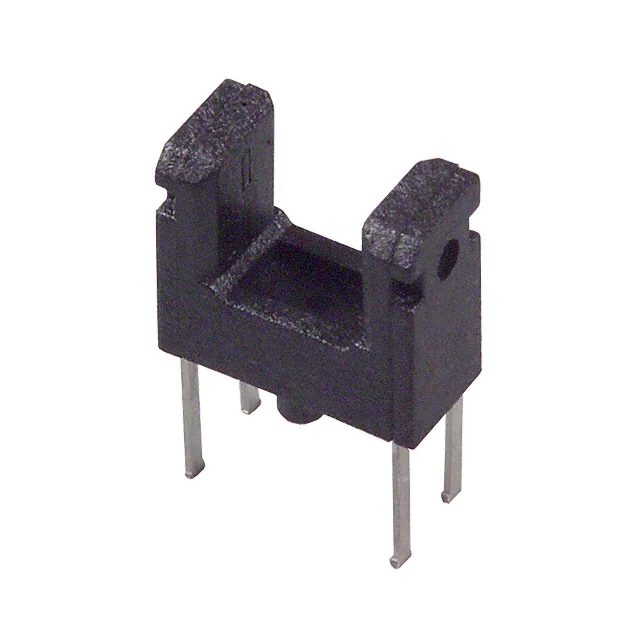
-
GP1S094HCZ0F
SHARP/Socle Technology
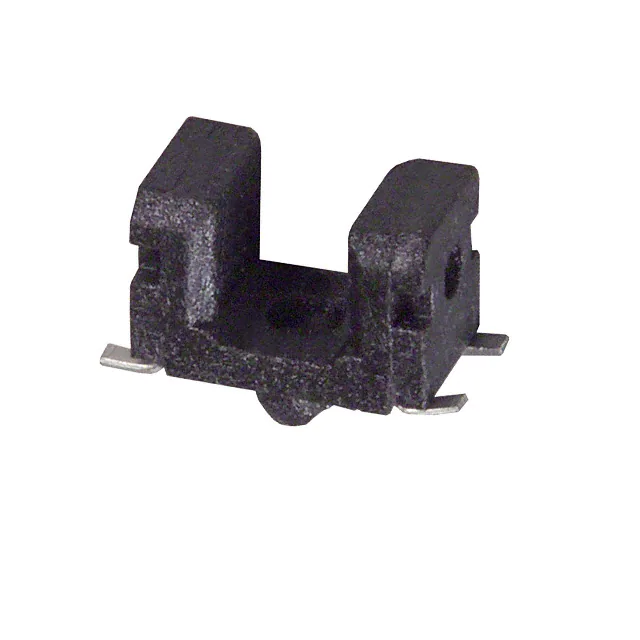
-
GP1S092HCPIF
SHARP/Socle Technology
-
GP1S396HCPSF
SHARP/Socle Technology
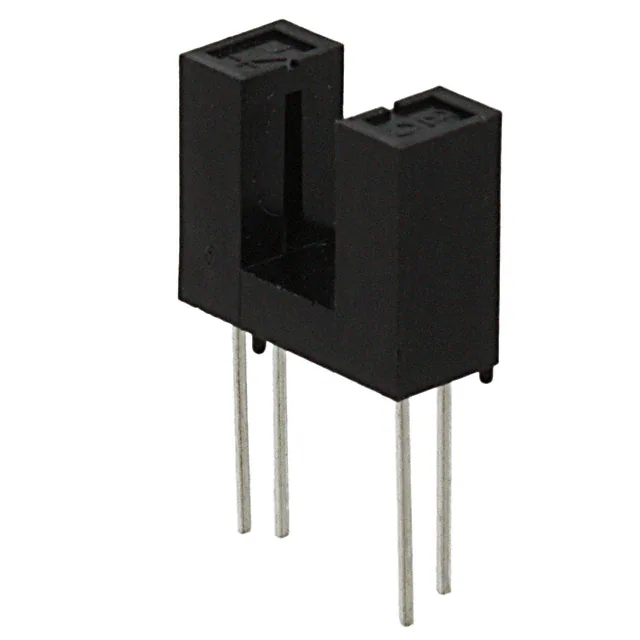
-
LTH-301-07
Lite-On Inc.
-
RPI-352
Rohm Semiconductor
-
RPI-0226
Rohm Semiconductor
-
TCPT1300X01
Vishay Semiconductor Opto Division
-
EE-SX1320
Omron Electronics Inc-EMC Div

-
TCUT1300X01
Vishay Semiconductor Opto Division
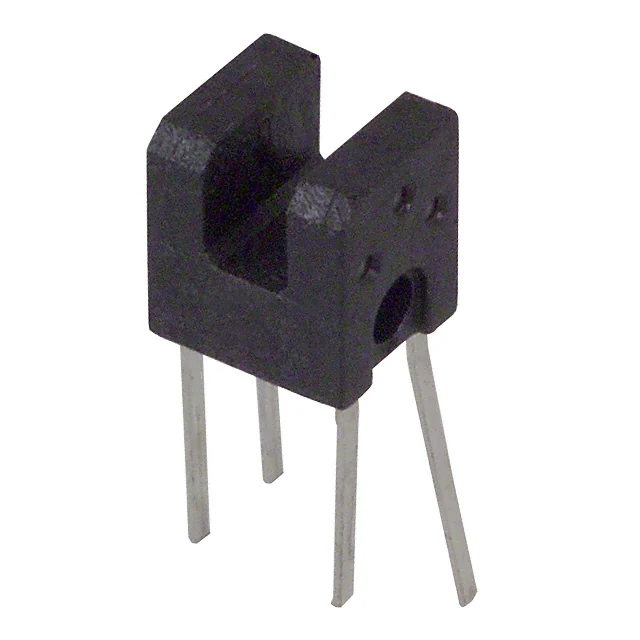
-
EE-SX1103
Omron Electronics Inc-EMC Div
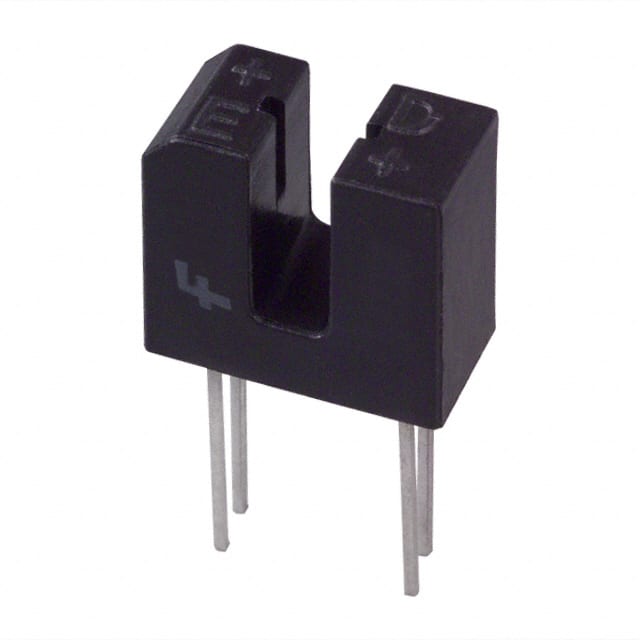
-
H22A1
Isocom Components 2004 LTD
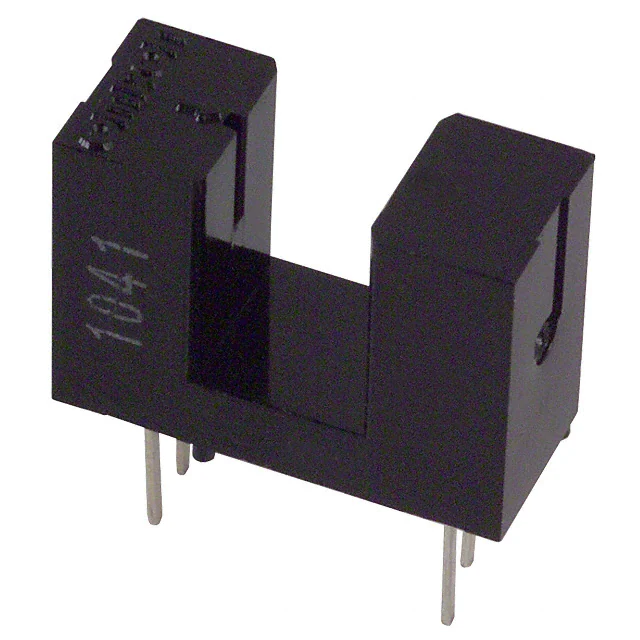
-
EE-SX1041
Omron Electronics Inc-EMC Div
Tech Hub

Counterfeit components can hide behind convincing markings and passing basic function tests. This engineering reference covers source traceability, external inspection, X-ray, XRF, electrical testing, …

A practical engineering and sourcing framework covering lifecycle verification, lifetime-buy calculations, replacement qualification, supplier checks and counterfeit-risk controls.

TTL and CMOS logic families differ in thresholds, loading, output drive, power and timing. This engineering guide compares 74HC and 74HCT, calculates noise margins and checks 3.3 V/5 V compatibility.

A practical engineering guide to 3.3V and 5V logic compatibility, input thresholds, resistor dividers, translator ICs, MOSFET level shifting, I2C pull-ups, timing limits and power-sequencing risks.

The 74HC595 uses push-pull logic outputs, while the TPIC6B595 uses 50 V open-drain DMOS sinks for higher-power loads. This guide compares timing, current limits, 3.3 V interfacing, load wiring, thermal…

The 74HC595 converts serial data into eight stable parallel outputs. This guide covers pin functions, shift and storage timing, OE and MR behavior, drive-current limits, cascading, voltage compatibilit…

A technical comparison of level-sensitive latches and edge-triggered flip-flops, covering timing windows, setup and hold limits, master–slave operation, time borrowing, race-through, HDL inference and…

A D latch stores one bit while Enable controls when data can pass. This reference covers gate-level operation, truth tables, transparency, setup and hold timing, LE versus OE, common ICs and practical …

An SR latch stores one bit through cross-coupled feedback. This engineering reference covers NOR and NAND implementations, truth tables, forbidden-state recovery, gated operation, switch debouncing, fa…

Latch circuits retain one bit through feedback. This technical reference covers SR and D latches, truth tables, transparency, timing limits, latch-versus-flip-flop behavior, applications and common log…


