
 My Inquiry
 My Account


Renesas R5F101PGAFB#10
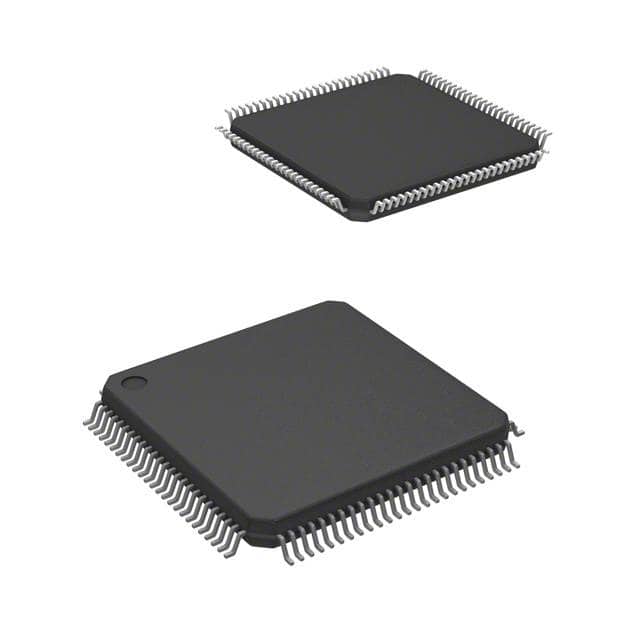
- Part No.:
- R5F101PGAFB#10
- Manufacturer:
- Renesas
- Category:
- Microcontrollers
- Package:
- 100-LQFP
- Datasheet:
-
 R5F101PGAFB#10.pdf
- Description:
- IC MCU 16BIT 128KB FLSH 100LFQFP
- Quantity:
- Payment:

- Shipping:

Inventory:720
Please send an inquiry. Send us your inquiry, and we will respond immediately.
Product details
Overview
R5F101PGAFB#10 from Renesas is a 100-pin, LFQFP-0.5 mm pitch, ultra-low-power 16-bit RL78/G13 microcontroller with 96 KB flash, 8 KB RAM, no data flash, and industrial-grade operation up to +105°C - designed for battery-powered sensor nodes, smart meters, and embedded control requiring RTC, ADC, and multiple serial interfaces.
For engineers reviewing the R5F101PGAFB#10 datasheet, R5F101PGAFB#10 pinout, R5F101PGAFB#10 application, or R5F101PGAFB#10 equivalent, key selection criteria include its 96 KB code flash / 8 KB RAM allocation, absence of on-chip data flash, LFQFP-100 package with 0.5-mm pitch, -40°C to +105°C industrial temperature grade (G suffix), and support for UART/LIN, I²C, CSI, 16-bit timers, and 10-bit ADC across 26 channels.
Technical Context
The R5F101PGAFB#10 implements the RL78 CPU core with CISC architecture, 3-stage pipeline, and configurable instruction timing (0.03125 μs @ 32 MHz to 30.5 μs @ 32.768 kHz). It integrates a 12-bit interval timer, real-time clock with calendar/alarm, watchdog timer, and DMA controller with 4 channels supporting 2-clock transfers between SFR and RAM.
Its analog subsystem includes a 10-bit A/D converter with 26 input channels, internal 1.45 V reference, and integrated temperature sensor (enabled only in HS mode); digital peripherals include up to 10 I²C/Simplified I²C channels, 4 UART/LIN interfaces, and 8 CSI (SPI-compatible) channels - all operating within 1.6–5.5 V supply range.
Key Specifications
| Parameter | Value and Actual Design Meaning |
|---|---|
| Core Architecture | RL78 16-bit CISC CPU with 3-stage pipeline and variable instruction timing |
| Flash Memory | 96 KB code flash (1 KB block size); no data flash - requires external EEPROM/NVM for nonvolatile parameter storage |
| RAM Size | 8 KB on-chip RAM - sufficient for real-time control stacks and moderate buffering in sensor/actuator applications |
| Operating Voltage | 1.6 V to 5.5 V - supports direct Li-ion, coin-cell, or wide-input industrial supplies without external regulators |
| Temperature Range | -40°C to +105°C (G-grade) - qualified for under-hood automotive, industrial motor drives, and outdoor metering |
| Low-Power Modes | HALT (66 μA/MHz), STOP (0.57 μA with RTC+LVD active) - enables multi-year battery life in wake-on-event designs |
| Analog Peripherals | 10-bit ADC with 26 channels, internal 1.45 V reference, and integrated temperature sensor (HS mode only) |
Pinout & Package
Package: 100-pin LFQFP, 14 × 14 mm body, 0.5 mm pitch, exposed pad (PLQP0100KE-A).
| Pin/Terminal | Circuit Role | Design Meaning |
|---|---|---|
| P10/SCK00/SCL00 | SPI Clock / I²C Clock | Shared pin for synchronous serial clock; supports master/slave SPI and I²C bus timing |
| P11/SI00/RxD0/TOOLRxD/SDA00 | SPI Input / UART RX / I²C Data | Multi-function pin enabling debug interface (TOOLRxD), serial comms, and I²C data line sharing |
| P20/ANI0/AVREFP | Analog Input 0 / ADC Reference Positive | Primary analog input channel; doubles as positive reference for ADC measurements |
| P21/ANI1/AVREFM | Analog Input 1 / ADC Reference Negative | Secondary analog input; serves as negative reference to enable differential ADC configurations |
| P22/ANI2 | Analog Input 2 | Dedicated analog input channel - usable for voltage sensing, thermistor, or current shunt monitoring |
| VDD, VSS | Power Supply / Ground | Multiple dedicated power/ground pins ensure stable core and I/O rail decoupling in noise-sensitive applications |
Key Features
| Feature | Design Value |
|---|---|
| Ultra-low-power HALT/STOP modes | Enables sub-μA sleep current with RTC and LVD active - critical for energy harvesting and long-life battery systems |
| On-chip high-accuracy oscillator | +/-1.0% accuracy over 1.8–5.5 V and -20 to +85°C - eliminates need for external crystal in cost-sensitive timing applications |
| Background data flash programming | Not supported - R5F101xx series lacks data flash memory, requiring external NVM for field-updatable parameters |
| Multi-protocol serial interfaces | Simultaneous UART/LIN, I²C, and CSI support enables single-chip communication with sensors, displays, and CAN transceivers (via UART-to-CAN bridge) |
| Real-time clock with calendar | 99-year calendar, alarm, and clock correction - suitable for time-stamped logging and scheduled wake-up in metering and IoT edge devices |
Applications
| Smart Energy Metering | Industrial Motor Control |
|---|---|
|
Use Scenario: Residential/utility electricity meter with tariff switching, tamper detection, and wireless reporting. IC Role / Device Role / Timing Role: Main system controller managing metrology ADC sampling, RTC-based billing cycles, and UART/RS-485 communication to concentrator. Use Value: 96 KB flash accommodates metrology firmware + security stack; 10-bit ADC with 26 channels supports multi-phase voltage/current sensing; G-grade temp rating ensures reliability in outdoor enclosures. |
Use Scenario: Brushless DC motor drive in HVAC blowers or pump controllers with speed regulation and fault protection. IC Role / Device Role / Timing Role: Real-time motion controller executing FOC algorithms, PWM generation, and thermal monitoring via ADC. Use Value: 32 MHz max CPU speed delivers 41 DMIPS for fast PID loops; 16-bit timers with complementary outputs support 3-phase gate driving; -40°C to +105°C operation sustains performance near hot motors. |
| Wireless Sensor Node | Home Appliance Control |
|
Use Scenario: Battery-powered environmental sensor (temp/humidity/pressure) transmitting via BLE or Sub-GHz radio. IC Role / Device Role / Timing Role: System manager handling sensor polling, data preprocessing, low-power scheduling, and host MCU interface. Use Value: 0.57 μA STOP mode extends CR2032 life beyond 5 years; integrated RTC enables precise wake intervals; UART/I²C simplifies connection to radio SoCs. |
Use Scenario: Washing machine main control board managing water valves, heater, drum motor, and user interface. IC Role / Device Role / Timing Role: Central appliance controller coordinating safety interlocks, cycle sequencing, and HMI feedback. Use Value: 8 KB RAM supports multi-tasking OS or state-machine logic; 100-pin LFQFP provides ample GPIO for solenoids, relays, and display drivers; industrial temp grade ensures stability in humid, high-heat environments. |
Equivalent & Alternatives
The following parts are listed as comparable options for similar microcontroller applications.
| Alternative Part | Technical Difference | Application Difference | Selection Advice |
|---|---|---|---|
| R5F100PGAFB#10 | Same package and pinout; includes 4 KB data flash - enables in-field parameter updates without external EEPROM | Preferred where firmware must store calibration data, usage logs, or configuration without external NVM | Select when data flash persistence is required; verify flash library RAM usage (FF300H start address) against available RAM |
| R5F101PJAFB#10 | Same family, 100-pin LFQFP, but with 64 KB flash / 4 KB RAM - smaller memory footprint, lower cost | Suitable for simpler control tasks with reduced code size and buffer requirements | Choose for cost-optimized designs with <64 KB firmware and minimal RAM needs; confirm peripheral count sufficiency |
Compared with R5F100PGAFB#10, the R5F101PGAFB#10 trades data flash for higher code flash and RAM - ideal for complex firmware without runtime NVM writes; versus R5F101PJAFB#10, it offers 32 KB more flash and 4 KB more RAM at identical pin compatibility, justifying premium for feature-rich applications.
Availability
R5F101PGAFB#10 is available at Aetrix Electronics and suitable for smart metering, industrial motor control, and wireless sensor node applications requiring stable component supply, long-term industrial temperature qualification, and Renesas RL78 ecosystem support.
Supply support for R5F101PGAFB#10 includes scheduled delivery planning, volume procurement assistance, BOM continuity management, traceable sourcing, and lifecycle availability coordination for OEM customers, industrial embedded developers, connected-device designers, and electronics production programs.
Manufacturer
Renesas Electronics is a global semiconductor leader specializing in microcontrollers, analog, power, and SoC solutions for automotive, industrial, and IoT markets.
The RL78/G13 product line delivers ultra-low-power 16-bit MCUs optimized for cost-sensitive, battery-operated, and industrial control applications - emphasizing energy efficiency, integrated peripherals, and robust qualification.
FAQ
What is the flash and RAM configuration of the R5F101PGAFB#10?
The R5F101PGAFB#10 features 96 KB of code flash memory and 8 KB of on-chip RAM. It does not include data flash memory - unlike the R5F100xx series - so nonvolatile parameter storage requires external EEPROM or FRAM. This configuration targets applications where firmware size exceeds 64 KB but runtime data logging is handled externally or via backup registers.
Does the R5F101PGAFB#10 support data flash programming during runtime?
No, the R5F101PGAFB#10 does not include data flash memory and therefore lacks background data flash programming (BGO) capability. Its flash library supports only code flash self-programming. For applications requiring field-updatable parameters, designers must integrate external nonvolatile memory and manage write endurance and wear leveling in firmware.
What is the operating temperature range and qualification grade of the R5F101PGAFB#10?
The R5F101PGAFB#10 is rated for -40°C to +105°C operation and carries the 'G' suffix, indicating industrial-grade qualification per Renesas specifications. This makes it suitable for under-hood automotive modules, industrial PLC I/O, and outdoor utility equipment where extended thermal resilience is mandatory.
Which serial communication interfaces are available on the R5F101PGAFB#10?
The R5F101PGAFB#10 supports up to 4 UART/LIN channels, 10 I²C/Simplified I²C channels, and 8 CSI (SPI-compatible) channels. These interfaces can operate concurrently, enabling simultaneous communication with displays, sensors, radio modules, and legacy industrial buses - all while maintaining low-power operation via peripheral clock gating.
Is the R5F101PGAFB#10 pin-compatible with other RL78/G13 100-pin variants?
Yes, the R5F101PGAFB#10 shares identical pinout and package (100-pin LFQFP, 0.5 mm pitch) with all other RL78/G13 devices in the same pin-count group, including R5F100PGAFB#10 and R5F101PJAFB#10. This allows drop-in replacement within the same memory/peripheral subset, provided firmware accounts for differences in flash size, RAM, and data flash presence.
R5F101PGAFB#10 Specifications
- Product attributes
- Attribute value
- Manufacturer:
- Renesas
- Package/Case:
- 100-LQFP
- Series:
- RL78/G13
- Packaging:
- Tray
- Product Status:
- Active
- Programmable:
- Not Verified
- Core Processor:
- RL78
- Core Size:
- 16-Bit
- Speed:
- 32MHz
- Connectivity:
- CSI, I2C, LINbus, UART/USART
- Peripherals:
- DMA, LVD, POR, PWM, WDT
- Number of I/O:
- 82
- Program Memory Size:
- 128KB (128K x 8)
- Program Memory Type:
- FLASH
- EEPROM Size:
- -
- RAM Size:
- 12K x 8
- Voltage - Supply (Vcc/Vdd):
- 1.6V ~ 5.5V
- Data Converters:
- A/D 20x8/10b
- Oscillator Type:
- Internal
- Operating Temperature:
- -40°C ~ 85°C (TA)
- Grade:
- -
- Qualification:
- -
- Mounting Type:
- Surface Mount
- Supplier Device Package:
R5F101PGAFB#10 FAQ
1.How can I place an order for R5F101PGAFB#10 through Aetrix?
Please submit a Request for Quotation (RFQ) for R5F101PGAFB#10 on Aetrix. Our sales agent will provide a competitive quotation and guide you through the order confirmation once you accept the terms.
2.Are the price and stock information for R5F101PGAFB#10 reliable?
The price and inventory of R5F101PGAFB#10 are updated periodically and may fluctuate due to market conditions. Stock and pricing data are typically refreshed every 24 hours. Quotation validity for R5F101PGAFB#10 is usually 5 days.
3.What payment methods are accepted for R5F101PGAFB#10?
We accept Wire Transfer, PayPal, Credit Card, Western Union, MoneyGram, and Escrow for R5F101PGAFB#10 transactions.
Note: Certain payment methods may incur a processing fee.
4.How is shipping managed for R5F101PGAFB#10?
R5F101PGAFB#10 orders can be shipped via leading logistics carriers, including DHL, UPS, FedEx, TNT, or Registered Mail.
Once your R5F101PGAFB#10 order is processed, you will receive an email with the shipment details and tracking number.
Note: Tracking information may take up to 24 hours to appear. Express delivery typically takes 3–5 business days.
5.How can I obtain technical support or documentation for R5F101PGAFB#10?
For technical support, including R5F101PGAFB#10 datasheets, pinout diagrams, or application guidance, please contact our engineering support team. They can provide detailed documentation and assistance for your R5F101PGAFB#10 requirements.
6.How does Aetrix verify that R5F101PGAFB#10 is sourced from the original manufacturer or authorized distributors?
All R5F101PGAFB#10 products on Aetrix are procured from qualified distributors and authorized channels. Our dedicated quality assurance team conducts strict verification, including traceability checks and, if necessary, third-party testing. This ensures that R5F101PGAFB#10 meets industry standards.
7.What is the process for return or replacement of R5F101PGAFB#10?
All R5F101PGAFB#10 units undergo pre-shipment inspection (PSI). If there is an issue with R5F101PGAFB#10, returns or replacements are accepted under the following conditions:
1.Quantity discrepancies, incorrect items, or visible external defects (such as breakage or corrosion), acknowledged by Aetrix.
2.The issue is reported within 90 days of delivery.
3.The R5F101PGAFB#10 part is unused and in its original packaging.
Return procedure for R5F101PGAFB#10:
1.Submit a request within 90 days.
2.Obtain a Return Material Authorization (RMA) from Aetrix.
R5F101PGAFB#10 Tags

-
ATTINY4-TSHR
Microchip Technology
-
ATTINY10-TSHR
Microchip Technology
-
ATTINY10-TS8R
Microchip Technology

-
ATTINY202-SSNR
Microchip Technology
-
ATTINY202-SSFR
Microchip Technology
-
ATTINY402-SSNR
Microchip Technology
-
PIC16F15213T-I/MF
Microchip Technology
-
PIC16F15213-E/MF
Microchip Technology

-
PIC10F200T-I/OT
Microchip Technology
-
ATTINY412-SSNR
Microchip Technology
-
PIC10F202T-I/OT
Microchip Technology
-
ATTINY404-SSNR
Microchip Technology
Tech Hub

TTL and CMOS logic families differ in thresholds, loading, output drive, power and timing. This engineering guide compares 74HC and 74HCT, calculates noise margins and checks 3.3 V/5 V compatibility.

A practical engineering guide to 3.3V and 5V logic compatibility, input thresholds, resistor dividers, translator ICs, MOSFET level shifting, I2C pull-ups, timing limits and power-sequencing risks.

The 74HC595 uses push-pull logic outputs, while the TPIC6B595 uses 50 V open-drain DMOS sinks for higher-power loads. This guide compares timing, current limits, 3.3 V interfacing, load wiring, thermal…

The 74HC595 converts serial data into eight stable parallel outputs. This guide covers pin functions, shift and storage timing, OE and MR behavior, drive-current limits, cascading, voltage compatibilit…

A technical comparison of level-sensitive latches and edge-triggered flip-flops, covering timing windows, setup and hold limits, master–slave operation, time borrowing, race-through, HDL inference and…

A D latch stores one bit while Enable controls when data can pass. This reference covers gate-level operation, truth tables, transparency, setup and hold timing, LE versus OE, common ICs and practical …

An SR latch stores one bit through cross-coupled feedback. This engineering reference covers NOR and NAND implementations, truth tables, forbidden-state recovery, gated operation, switch debouncing, fa…

Latch circuits retain one bit through feedback. This technical reference covers SR and D latches, truth tables, transparency, timing limits, latch-versus-flip-flop behavior, applications and common log…

An engineering guide to LED driver operation, constant-current and constant-voltage outputs, linear and switching topologies, dimming, IC selection, calculations, replacement compatibility, and fault c…

Operational amplifier guide covering op amp basics, feedback, ideal vs real op amps, common configurations, buffer circuits, offset, bias current, gain-bandwidth, slew rate, rail-to-rail limits and sel…


