
 My Inquiry
 My Account


Renesas R5F101PLDFB#V0
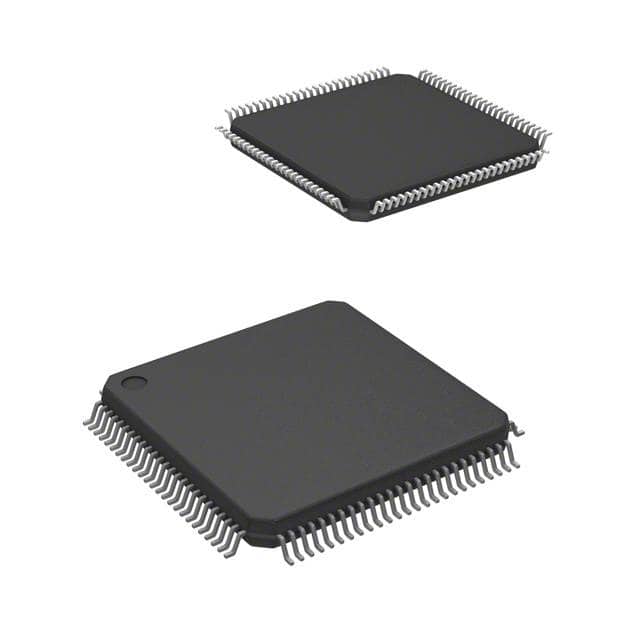
- Part No.:
- R5F101PLDFB#V0
- Manufacturer:
- Renesas
- Category:
- Microcontrollers
- Package:
- 100-LQFP
- Datasheet:
-
 R5F101PLDFB#V0.pdf
- Description:
- IC MCU 16BIT 512KB FLASH 100LQFP
- Quantity:
- Payment:

- Shipping:

Inventory:2,135
Please send an inquiry. Send us your inquiry, and we will respond immediately.
Product details
Overview
R5F101PLDFB#V0 from Renesas is a 100-pin LFQFP, 0.5-mm pitch, industrial-grade RL78/G13 16-bit microcontroller with 128 KB flash memory, 12 KB RAM, and no data flash. It operates from 1.6 V to 5.5 V, delivers 41 DMIPS at 32 MHz, and supports ultra-low-power modes (0.57 μA in RTC+LVD mode), targeting battery-powered industrial control and sensor interface applications.
For engineers reviewing the R5F101PLDFB#V0 datasheet, R5F101PLDFB#V0 pinout, R5F101PLDFB#V0 application, or R5F101PLDFB#V0 equivalent, key selection criteria include its 100-pin LFQFP-0.5mm package, absence of on-chip data flash, -40°C to +85°C industrial temperature grade (D suffix), and integrated peripherals including 16-bit timers, 10-bit ADC (26 channels), UART/LIN, I²C, and CSI interfaces.
Technical Context
The R5F101PLDFB#V0 implements the RL78 CPU core with CISC architecture and 3-stage pipeline, supporting instruction execution times from 0.03125 μs (32 MHz high-speed mode) to 30.5 μs (32.768 kHz subsystem clock). Its memory map spans 1 MB address space, with flash organized in 1 KB blocks and security features including block erase prohibition.
Peripherals include up to 16 channels of 16-bit timer, one real-time clock with calendar and alarm, watchdog timer with dedicated low-speed oscillator, 10-bit A/D converter with internal 1.45 V reference and temperature sensor, and serial interfaces: CSI (SPI-compatible), UART/LIN (up to 4 channels), and I²C/Simplified I²C (up to 10 channels).
Key Specifications
| Parameter | Value and Actual Design Meaning |
|---|---|
| Core Architecture | RL78 16-bit CISC with 3-stage pipeline and 1 MB address space |
| Max Operating Frequency | 32 MHz - delivers 41 DMIPS for deterministic real-time control |
| Flash Memory | 128 KB code flash - supports self-programming with boot swap and flash shield window |
| RAM Size | 12 KB on-chip RAM - sufficient for RTOS stacks, communication buffers, and sensor data processing |
| ADC Resolution & Channels | 10-bit resolution, 26 analog input channels - enables multi-sensor monitoring with internal reference and temperature sensing |
| Low-Power Modes | HALT, STOP, SNOOZE - achieves 0.57 μA in RTC+LVD-only operation for extended battery life |
| Supply Voltage Range | 1.6 V to 5.5 V - supports direct connection to Li-ion, alkaline, or regulated industrial rails without level-shifting |
Pinout & Package
Package: 100-pin LFQFP (14 × 14 mm, 0.5-mm pitch), RoHS-compliant, industrial-grade (D suffix), tray packaging (#V0).
| Pin/Terminal | Circuit Role | Design Meaning |
|---|---|---|
| P10–P17 | General-purpose I/O with SCK00/SCL00, SI00/RxD0, SO00/TxD0 | Primary SPI/I²C/UART channel 0 - supports sensor interfacing and bus communication |
| P20–P27 | Analog inputs ANI0–ANI7 with AVREFP/AVREFM | Dedicated ADC voltage reference and first 8 analog channels - enables precision analog front-end design |
| P30–P37 | General-purpose I/O with TO00–TO03, TIOA00–TIOA03 | Timer output and capture inputs - supports PWM generation, encoder counting, and pulse measurement |
| P40–P47 | I²C/Simplified I²C (SCL10/SDA10), CSI (SCK10/SI10/SO10) | Secondary serial interface bank - allows concurrent I²C sensor hub and SPI peripheral control |
| P50–P57 | UART/LIN (RxD1/TxD1), CSI (SCK20/SI20/SO20) | Dual-protocol serial port - supports LIN automotive diagnostics or robust point-to-point communication |
| VDD, VSS | Power supply and ground pins (multiple) | Distributed power/ground pairs minimize noise and ensure stable operation across full frequency range |
| RESET, P00 | Reset input and NMI input | Asynchronous reset with configurable debounce - ensures reliable recovery from brown-out or fault conditions |
Key Features
| Feature | Design Value |
|---|---|
| Ultra-low-power HALT/STOP modes | Reduces active current to 66 μA/MHz and standby to 0.57 μA - extends battery life in portable industrial devices |
| On-chip RTC with calendar & alarm | 99-year calendar, programmable alarm, and clock correction - eliminates external RTC IC and reduces BOM cost |
| Background Data Flash Operation | Not supported - this variant lacks data flash memory, simplifying firmware update logic and reducing cost for fixed-parameter systems |
| Multi-channel 10-bit ADC with temp sensor | 26-channel sampling with internal 1.45 V reference and calibrated temperature sensor - enables system health monitoring without external components |
| Hardware multiplier/divider/MAC | 16×16→32-bit multiply, 32÷32→32-bit divide, and 16×16+32→32-bit MAC - accelerates motor control algorithms and digital filtering |
Applications
| Industrial Sensor Node | Smart HVAC Controller |
|---|---|
Use Scenario: Battery-powered wireless node collecting temperature, humidity, and CO₂ via analog and I²C sensors. IC Role / Device Role / Timing Role: Main system controller executing sensor fusion, low-power scheduling, and RF packet formatting. Use Value: 0.57 μA RTC+LVD mode enables >5-year battery life; 26-channel ADC and integrated temp sensor reduce external component count. |
Use Scenario: Wall-mounted HVAC unit regulating fan speed, valve position, and ambient climate using feedback loops. IC Role / Device Role / Timing Role: Real-time motion and thermal control processor managing PWM outputs, ADC sampling, and LIN diagnostics. Use Value: 41 DMIPS at 32 MHz ensures sub-millisecond loop timing; LIN support enables OEM-standard service interface. |
| Programmable Logic Relay | Energy Meter Front-End |
Use Scenario: DIN-rail mounted relay module with configurable I/O, timer-based sequencing, and RS-485 Modbus interface. IC Role / Device Role / Timing Role: Deterministic I/O scheduler and protocol stack host with hardware UART and timer capture. Use Value: 16-channel 16-bit timers enable precise pulse-width and interval control; 1.6–5.5 V operation tolerates wide industrial supply variance. |
Use Scenario: Residential electricity meter measuring voltage/current via shunt or CT, computing kWh, and communicating via optical port or RF. IC Role / Device Role / Timing Role: Analog acquisition engine and metrology co-processor handling ADC oversampling, calibration, and time-stamped event logging. Use Value: 10-bit ADC with internal reference and temperature compensation improves accuracy stability over temperature; RTC enables tariff scheduling. |
Equivalent & Alternatives
The following parts are listed as comparable options for similar microcontroller applications.
| Alternative Part | Technical Difference | Application Difference | Selection Advice |
|---|---|---|---|
| R5F101PLAFB#V0 | Same 100-pin LFQFP package and 128 KB flash, but uses LQFP-0.65mm pitch (FA suffix) instead of LFQFP-0.5mm (FB suffix) | Requires PCB layout change due to different pitch and footprint; otherwise identical peripheral set and memory configuration | Select when legacy board designs use 0.65-mm pitch LQFP or when assembly process favors larger pitch tolerance |
| R5F100PLDFB#V0 | Same 100-pin LFQFP-0.5mm package and pinout, but includes 8 KB data flash memory and supports background data flash rewriting | Enables field-upgradable parameter storage and wear-leveling; adds ~1 KB RAM overhead for flash library usage | Select when non-volatile parameter storage, OTA updates, or data logging are required - otherwise R5F101PLDFB#V0 offers lower cost and simpler firmware |
Compared with R5F101PLDFB#V0, R5F101PLAFB#V0 requires PCB redesign for pitch compatibility, while R5F100PLDFB#V0 adds data flash functionality at higher cost and firmware complexity - making R5F101PLDFB#V0 optimal for fixed-parameter, cost-sensitive industrial control where flash reprogramming occurs only during manufacturing.
Availability
R5F101PLDFB#V0 is available at Aetrix Electronics and suitable for industrial sensor nodes, smart HVAC controllers, and programmable logic relays requiring stable component supply, long-term lifecycle support, and RoHS-compliant packaging.
Supply support for R5F101PLDFB#V0 includes scheduled delivery planning, volume procurement assistance, BOM continuity management, traceable sourcing, and lifecycle availability coordination for OEM customers, industrial embedded developers, connected-device designers, and electronics production programs.
Manufacturer
Renesas Electronics is a global semiconductor leader specializing in microcontrollers, analog, and power solutions for industrial, automotive, and IoT markets.
The RL78/G13 product line delivers ultra-low-power 16-bit MCUs optimized for cost-sensitive, battery-operated, and industrial control applications - balancing performance, integration, and energy efficiency without external crystals or regulators.
FAQ
What is the operating temperature range for R5F101PLDFB#V0?
The R5F101PLDFB#V0 is rated for industrial operation from -40°C to +85°C (D-grade), validated across its full voltage range (1.6 V to 5.5 V) and functional specifications - making it suitable for factory automation, outdoor equipment, and uncontrolled-environment deployments where thermal stability is critical.
Does R5F101PLDFB#V0 include on-chip data flash memory?
No, R5F101PLDFB#V0 does not include data flash memory. The "101" in the part number explicitly denotes absence of data flash, distinguishing it from "100" variants like R5F100PLDFB#V0 which integrate 8 KB data flash with background operation and 1 million rewrite cycles.
What debug interface does R5F101PLDFB#V0 support?
R5F101PLDFB#V0 supports on-chip debug via the single-wire debug interface (SWD) using the dedicated TOOLx pins (e.g., TOOLRxD/TOOLTxD), enabling full JTAG-equivalent functionality including breakpoints, watchpoints, and real-time memory inspection without requiring additional debug headers or trace ports.
Can R5F101PLDFB#V0 operate without an external crystal?
Yes, R5F101PLDFB#V0 integrates a high-accuracy on-chip oscillator (±1.0% from -20°C to +85°C) with selectable frequencies from 1 MHz to 32 MHz, eliminating the need for external crystals in most applications - though optional external resonators can be used for higher precision timing requirements.
How many serial communication interfaces are available on R5F101PLDFB#V0?
R5F101PLDFB#V0 provides up to 4 UART/LIN channels, 10 I²C/Simplified I²C channels, and 8 CSI (SPI-compatible) channels - with physical pin allocation depending on port configuration, enabling concurrent sensor buses, diagnostics links, and display interfaces in compact industrial designs.
R5F101PLDFB#V0 Specifications
- Product attributes
- Attribute value
- Manufacturer:
- Renesas
- Package/Case:
- 100-LQFP
- Series:
- RL78/G13
- Packaging:
- Tray
- Product Status:
- Discontinued at Digi-Key
- Programmable:
- Not Verified
- Core Processor:
- RL78
- Core Size:
- 16-Bit
- Speed:
- 32MHz
- Connectivity:
- CSI, I2C, LINbus, UART/USART
- Peripherals:
- DMA, LVD, POR, PWM, WDT
- Number of I/O:
- 82
- Program Memory Size:
- 512KB (512K x 8)
- Program Memory Type:
- FLASH
- EEPROM Size:
- -
- RAM Size:
- 32K x 8
- Voltage - Supply (Vcc/Vdd):
- 1.6V ~ 5.5V
- Data Converters:
- A/D 20x8/10b
- Oscillator Type:
- Internal
- Operating Temperature:
- -40°C ~ 85°C (TA)
- Grade:
- -
- Qualification:
- -
- Mounting Type:
- Surface Mount
- Supplier Device Package:
R5F101PLDFB#V0 FAQ
1.How can I place an order for R5F101PLDFB#V0 through Aetrix?
Please submit a Request for Quotation (RFQ) for R5F101PLDFB#V0 on Aetrix. Our sales agent will provide a competitive quotation and guide you through the order confirmation once you accept the terms.
2.Are the price and stock information for R5F101PLDFB#V0 reliable?
The price and inventory of R5F101PLDFB#V0 are updated periodically and may fluctuate due to market conditions. Stock and pricing data are typically refreshed every 24 hours. Quotation validity for R5F101PLDFB#V0 is usually 5 days.
3.What payment methods are accepted for R5F101PLDFB#V0?
We accept Wire Transfer, PayPal, Credit Card, Western Union, MoneyGram, and Escrow for R5F101PLDFB#V0 transactions.
Note: Certain payment methods may incur a processing fee.
4.How is shipping managed for R5F101PLDFB#V0?
R5F101PLDFB#V0 orders can be shipped via leading logistics carriers, including DHL, UPS, FedEx, TNT, or Registered Mail.
Once your R5F101PLDFB#V0 order is processed, you will receive an email with the shipment details and tracking number.
Note: Tracking information may take up to 24 hours to appear. Express delivery typically takes 3–5 business days.
5.How can I obtain technical support or documentation for R5F101PLDFB#V0?
For technical support, including R5F101PLDFB#V0 datasheets, pinout diagrams, or application guidance, please contact our engineering support team. They can provide detailed documentation and assistance for your R5F101PLDFB#V0 requirements.
6.How does Aetrix verify that R5F101PLDFB#V0 is sourced from the original manufacturer or authorized distributors?
All R5F101PLDFB#V0 products on Aetrix are procured from qualified distributors and authorized channels. Our dedicated quality assurance team conducts strict verification, including traceability checks and, if necessary, third-party testing. This ensures that R5F101PLDFB#V0 meets industry standards.
7.What is the process for return or replacement of R5F101PLDFB#V0?
All R5F101PLDFB#V0 units undergo pre-shipment inspection (PSI). If there is an issue with R5F101PLDFB#V0, returns or replacements are accepted under the following conditions:
1.Quantity discrepancies, incorrect items, or visible external defects (such as breakage or corrosion), acknowledged by Aetrix.
2.The issue is reported within 90 days of delivery.
3.The R5F101PLDFB#V0 part is unused and in its original packaging.
Return procedure for R5F101PLDFB#V0:
1.Submit a request within 90 days.
2.Obtain a Return Material Authorization (RMA) from Aetrix.
R5F101PLDFB#V0 Tags

-
ATTINY4-TSHR
Microchip Technology
-
ATTINY10-TSHR
Microchip Technology
-
ATTINY10-TS8R
Microchip Technology

-
ATTINY202-SSNR
Microchip Technology
-
ATTINY202-SSFR
Microchip Technology
-
ATTINY402-SSNR
Microchip Technology

-
PIC16F15213T-I/MF
Microchip Technology
-
PIC16F15213-E/MF
Microchip Technology

-
PIC10F200T-I/OT
Microchip Technology
-
ATTINY412-SSNR
Microchip Technology
-
PIC10F202T-I/OT
Microchip Technology

-
ATTINY404-SSNR
Microchip Technology
Tech Hub

A practical engineering and sourcing framework covering lifecycle verification, lifetime-buy calculations, replacement qualification, supplier checks and counterfeit-risk controls.

TTL and CMOS logic families differ in thresholds, loading, output drive, power and timing. This engineering guide compares 74HC and 74HCT, calculates noise margins and checks 3.3 V/5 V compatibility.

A practical engineering guide to 3.3V and 5V logic compatibility, input thresholds, resistor dividers, translator ICs, MOSFET level shifting, I2C pull-ups, timing limits and power-sequencing risks.

The 74HC595 uses push-pull logic outputs, while the TPIC6B595 uses 50 V open-drain DMOS sinks for higher-power loads. This guide compares timing, current limits, 3.3 V interfacing, load wiring, thermal…

The 74HC595 converts serial data into eight stable parallel outputs. This guide covers pin functions, shift and storage timing, OE and MR behavior, drive-current limits, cascading, voltage compatibilit…

A technical comparison of level-sensitive latches and edge-triggered flip-flops, covering timing windows, setup and hold limits, master–slave operation, time borrowing, race-through, HDL inference and…

A D latch stores one bit while Enable controls when data can pass. This reference covers gate-level operation, truth tables, transparency, setup and hold timing, LE versus OE, common ICs and practical …

An SR latch stores one bit through cross-coupled feedback. This engineering reference covers NOR and NAND implementations, truth tables, forbidden-state recovery, gated operation, switch debouncing, fa…

Latch circuits retain one bit through feedback. This technical reference covers SR and D latches, truth tables, transparency, timing limits, latch-versus-flip-flop behavior, applications and common log…

An engineering guide to LED driver operation, constant-current and constant-voltage outputs, linear and switching topologies, dimming, IC selection, calculations, replacement compatibility, and fault c…


