
 My Inquiry
 My Account


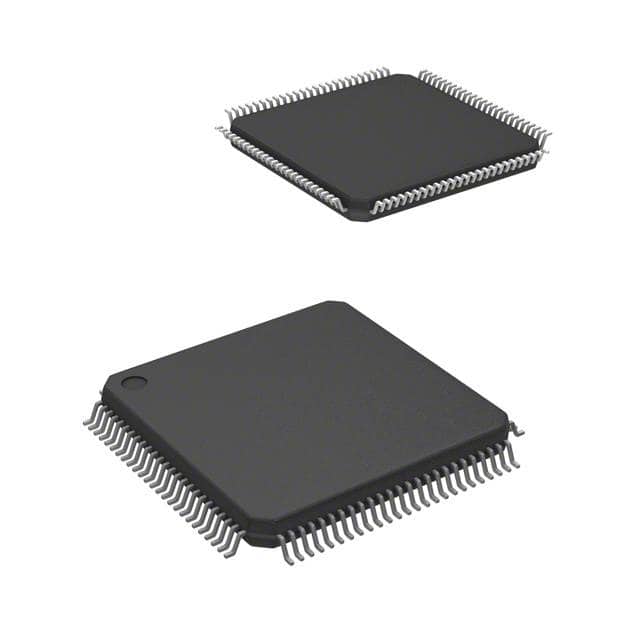
Renesas R5F10NPJDFB#35
- Part No.:
- R5F10NPJDFB#35
- Manufacturer:
- Renesas
- Category:
- Microcontrollers
- Package:
- 100-LQFP
- Datasheet:
-
 R5F10NPJDFB#35.pdf
- Description:
- IC MCU 16BIT 256KB FLSH 100LFQFP
- Quantity:
- Payment:

- Shipping:

Inventory:272
Please send an inquiry. Send us your inquiry, and we will respond immediately.
Product details
Overview
R5F10NPJDFB#35 from Renesas is a 100-pin LFQFP 32-bit RL78/I1C microcontroller with 256 KB flash, 16 KB RAM, hardware AES-128/192/256, independent-power-supply RTC, and 24-bit ΔΣ A/D converter - designed for electric AMI power meter applications requiring secure, ultra-low-power operation across –40°C to +85°C.
For engineers reviewing the R5F10NPJDFB#35 datasheet, R5F10NPJDFB#35 pinout, R5F10NPJDFB#35 application, or R5F10NPJDFB#35 equivalent, key selection considerations include its 100-pin LFQFP package, 256 KB code flash with security lock, dual-voltage domain LCD driver (up to 42 segments), and support for IrDA, LIN, UART, I²C, and CSI interfaces in industrial metering environments.
Technical Context
The R5F10NPJDFB#35 implements the RL78 CISC CPU core with 3-stage pipeline, supporting instruction execution times from 0.03125 µs (32 MHz PLL) to 66.6 µs (15 kHz low-speed oscillator). It integrates a dedicated 24-bit ΔΣ A/D converter with four channels, internal reference (1.45 V), and temperature sensor - all operable under single 1.9–5.5 V supply.
Its peripheral set includes an Event Link Controller (ELC) for 22-event routing, Data Transfer Controller (DTC) with chain transfer, independent-power-supply RTC with calendar/alarm/correction, and hardware AES engine compliant with GCM/ECB/CBC modes - all enabled without external crypto co-processors or RTC backup crystals.
Key Specifications
| Parameter | Value and Actual Design Meaning |
|---|---|
| Core Architecture | RL78 CISC, 3-stage pipeline, 1 MB address space |
| Flash / RAM | 256 KB code flash (1 KB blocks, security lock), 16 KB on-chip RAM (~15 KB usable with self-programming) |
| Operating Voltage | 1.9 V to 5.5 V (VDD); 1.6 V min for VRTC; supports battery backup via VBAT |
| ΔΣ A/D Converter | 24-bit resolution, 4-channel, with internal 1.45 V reference and temperature sensor |
| Clock Sources | 32 MHz PLL, 24 MHz high-speed on-chip oscillator (±1.0% accuracy), 32.768 kHz subclock, 15 kHz low-speed oscillator |
| AES Engine | Hardware-accelerated GCM/ECB/CBC modes with 128/192/256-bit keys - no software overhead or timing side-channel exposure |
| LCD Driver | Supports up to 42 segment × 8 common outputs; configurable voltage boosting, capacitor split, or external resistor division |
Pinout & Package
Package: 100-pin plastic LFQFP (14 × 14 mm, 0.5 mm pitch), industrial temperature grade (–40°C to +85°C), tray packaging (#35 = LFQFP Ver.1.1).
| Pin/Terminal | Circuit Role | Design Meaning |
|---|---|---|
| P02–P07 | Port 0 general-purpose I/O | 6 pins supporting N-ch open-drain (6 V tolerant), TTL input, pull-up; used for UART2, CSI, timer I/O |
| P10–P17 | Port 1 segment/common control | 8 pins driving SEG4–SEG11 and COM0–COM7; shared with SCL00/SDA00/IrDA |
| P20–P25 | Analog input group | 6 pins: ANI0–ANI5 for 10-bit ADC; ANIN0–ANIN3/ANIP0–ANIP3 for ΔΣ ADC inputs and references |
| P70–P77 | Key return & timer I/O | 8 pins: KR0–KR7 for keypad scan; TI00–TI07/TO00–TO07 for TAU timer channels |
| P150–P152 | RTC interface | RTCOUT (1 Hz/64 Hz output), RTCIC0–RTCIC2 for time capture events - enables precise metrology timestamping |
Key Features
| Feature | Design Value |
|---|---|
| Independent Power Supply RTC | Dedicated VRTC rail enables calendar/alarm/correction functions during main power loss - critical for tamper-proof energy logging |
| Hardware AES Acceleration | GCM/ECB/CBC encryption with 128/192/256-bit keys executed in silicon - eliminates software crypto latency and side-channel vulnerabilities |
| Ultra-Low-Power Operation | HALT/STOP/SNOOZE modes with sub-µA current draw; 15 kHz low-speed oscillator enables real-time wake-up without external crystal |
| ΔΣ A/D with Integrated Reference | 24-bit resolution across 4 channels using internal 1.45 V reference and temperature sensor - eliminates external precision references for metrology |
| Multi-Voltage I/O Interface | Supports 1.8 V, 2.5 V, and 3 V logic levels on select ports - enables direct interfacing with legacy metering ICs without level shifters |
Applications
| Smart Electricity Meter | AMI Communication Module |
|---|---|
Use Scenario: Residential/commercial electricity meter measuring active/reactive energy with tariff switching and tamper detection. IC Role / Device Role / Timing Role: Primary metrology controller executing firmware-based energy calculation, AES-secured data upload, and RTC-synchronized billing cycles. Use Value: Hardware AES ensures DLMS/COSEM compliance; independent RTC maintains accurate billing timestamps during mains outage; ΔΣ ADC delivers <0.1% THD error at 50/60 Hz. | Use Scenario: Wireless or PLC-based communication module aggregating meter data for HAN/WAN transmission. IC Role / Device Role / Timing Role: Protocol stack processor handling LIN, UART, IrDA, and I²C interfaces to concentrator, PLC modem, and local display. Use Value: ELC enables deterministic interrupt routing for real-time PLC frame processing; DTC offloads memory transfers during RF burst transmission - freeing CPU for encryption. |
| Prepayment Energy Meter | Grid Monitoring Sensor Node |
Use Scenario: Pay-as-you-go meter validating token-based credit via secure cryptographic verification before enabling load switch. IC Role / Device Role / Timing Role: Secure credential validator using hardware AES-GCM to authenticate encrypted tokens and update EEPROM-based credit counters. Use Value: On-chip AES prevents firmware-level key extraction; data flash endurance (1M rewrites) supports lifetime token logging; battery-backed RTC tracks validity windows. | Use Scenario: DIN-rail mounted sensor node monitoring grid voltage, current harmonics, and frequency stability at distribution substations. IC Role / Device Role / Timing Role: High-precision acquisition engine synchronizing ΔΣ ADC sampling to 50/60 Hz zero-crossings using RTC-triggered timer events. Use Value: Subsystem clock (32.768 kHz) calibrates high-speed oscillator for ±1.0% accuracy; 24-bit ΔΣ ADC resolves harmonic distortion down to –100 dBc. |
Equivalent & Alternatives
The following parts are listed as comparable options for similar microcontroller applications.
| Alternative Part | Technical Difference | Application Difference | Selection Advice |
|---|---|---|---|
| R5F10NPGDFB#35 | 128 KB flash, 8 KB RAM, same 100-pin LFQFP package, identical AES/RTC/ΔΣ ADC peripherals | Targeted at mid-tier meters with reduced firmware footprint and lower BOM cost | Select when full 256 KB flash is unnecessary and cost sensitivity outweighs future firmware scalability needs |
| R5F10NMJDFB#35 | 80-pin LFQFP, 128 KB flash, 8 KB RAM, lacks COM6/COM7 and SEG32–SEG41 - reduces LCD drive capability | Suitable for compact meters with ≤34-segment displays and fewer analog channels | Choose for space-constrained designs where 100-pin footprint is prohibitive but AES/RTC functionality remains mandatory |
Compared with R5F10NPGDFB#35 and R5F10NMJDFB#35, the R5F10NPJDFB#35 provides maximum on-chip resources - 256 KB flash enables complex DLMS stacks and OTA updates, 16 KB RAM supports multi-threaded metering tasks, and full 100-pin I/O allows simultaneous LCD, PLC, RF, and sensor interfaces without multiplexing trade-offs.
Availability
R5F10NPJDFB#35 is available at Aetrix Electronics and suitable for smart electricity meters, AMI communication modules, prepayment energy meters, and grid monitoring sensor nodes requiring stable component supply, long-term lifecycle support, and industrial-grade reliability.
Supply support for R5F10NPJDFB#35 includes scheduled delivery planning, volume procurement assistance, BOM continuity management, traceable sourcing, and lifecycle availability coordination for OEM customers, industrial embedded developers, connected-device designers, and electronics production programs.
Manufacturer
Renesas Electronics Corporation is a Japanese semiconductor manufacturer specializing in microcontrollers, analog, and power devices for industrial, automotive, and IoT markets.
The RL78/I1C product line is engineered specifically for electric utility metering applications - integrating metrology-grade analog front-ends, secure cryptographic acceleration, and ultra-low-power RTC into a single die to replace multi-chip meter SoCs.
FAQ
What is the maximum operating frequency of the R5F10NPJDFB#35 CPU core?
The R5F10NPJDFB#35 CPU core achieves a maximum operating frequency of 32 MHz when using the PLL clock source. This yields a minimum instruction execution time of 0.03125 µs. The high-speed on-chip oscillator supports up to 24 MHz (±1.0% accuracy), and the system also supports 15 kHz low-speed operation for ultra-low-power HALT mode wake-up - all within the 1.9–5.5 V VDD range.
Does the R5F10NPJDFB#35 support hardware AES encryption with Galois/Counter Mode (GCM)?
Yes, the R5F10NPJDFB#35 includes a dedicated hardware AES circuit supporting GCM, ECB, and CBC cipher modes with 128-bit, 192-bit, and 256-bit key lengths. This is confirmed in the datasheet (R01DS0281EJ0231 Rev.2.31, Note 7 and Table 1-1), and applies specifically to the R5F10N series - including R5F10NPJDFB#35 - enabling secure DLMS/COSEM-compliant data transmission without software crypto overhead.
How many channels does the ΔΣ A/D converter on the R5F10NPJDFB#35 support, and what is its resolution?
The R5F10NPJDFB#35 integrates a 24-bit ΔΣ A/D converter with four fully differential input channels (ΔΣ ADC0–ADC3), as specified in the "Outline of Functions" (Page 13) and "Block Diagram" (Page 12) of R01DS0281EJ0231 Rev.2.31. It uses internal reference (1.45 V) and includes temperature sensor - all operational under single 1.9–5.5 V supply without external components.
What is the pin count and package type of the R5F10NPJDFB#35?
The R5F10NPJDFB#35 uses a 100-pin plastic LFQFP package (14 × 14 mm, 0.5 mm pitch), designated by the "P" in the part number (R5F10NPJDFB#35) per Figure 1-1. The "#35" suffix indicates Tray packaging per LFQFP Ver.1.1 specification. Pin configuration is detailed in Section 1.3.3 (Page 8) of the datasheet, including dedicated RTC, LCD, and metrology analog pins.
Is the R5F10NPJDFB#35 qualified for industrial temperature operation?
Yes, the R5F10NPJDFB#35 is rated for industrial temperature operation from –40°C to +85°C, indicated by the "D" in the part number (R5F10NPJDFB#35) per Figure 1-1. This qualification covers all embedded peripherals - including the 24-bit ΔΣ A/D converter, hardware AES engine, and independent-power-supply RTC - ensuring metrology accuracy and cryptographic integrity across the full range.
R5F10NPJDFB#35 Specifications
- Product attributes
- Attribute value
- Manufacturer:
- Renesas
- Package/Case:
- 100-LQFP
- Series:
- RL78/I1C
- Packaging:
- Tray
- Product Status:
- Last Time Buy
- Programmable:
- Not Verified
- Core Processor:
- RL78
- Core Size:
- 16-Bit
- Speed:
- 24MHz
- Connectivity:
- CSI, I2C, IrDA, LINbus, UART/USART
- Peripherals:
- LCD, LVD, POR, PWM, WDT
- Number of I/O:
- 60
- Program Memory Size:
- 256KB (256K x 8)
- Program Memory Type:
- FLASH
- EEPROM Size:
- 2K x 8
- RAM Size:
- 16K x 8
- Voltage - Supply (Vcc/Vdd):
- 1.7V ~ 5.5V
- Data Converters:
- A/D 6x10b, 4x24b Sigma-Delta
- Oscillator Type:
- Internal
- Operating Temperature:
- -40°C ~ 85°C (TA)
- Grade:
- -
- Qualification:
- -
- Mounting Type:
- Surface Mount
- Supplier Device Package:
R5F10NPJDFB#35 FAQ
1.How can I place an order for R5F10NPJDFB#35 through Aetrix?
Please submit a Request for Quotation (RFQ) for R5F10NPJDFB#35 on Aetrix. Our sales agent will provide a competitive quotation and guide you through the order confirmation once you accept the terms.
2.Are the price and stock information for R5F10NPJDFB#35 reliable?
The price and inventory of R5F10NPJDFB#35 are updated periodically and may fluctuate due to market conditions. Stock and pricing data are typically refreshed every 24 hours. Quotation validity for R5F10NPJDFB#35 is usually 5 days.
3.What payment methods are accepted for R5F10NPJDFB#35?
We accept Wire Transfer, PayPal, Credit Card, Western Union, MoneyGram, and Escrow for R5F10NPJDFB#35 transactions.
Note: Certain payment methods may incur a processing fee.
4.How is shipping managed for R5F10NPJDFB#35?
R5F10NPJDFB#35 orders can be shipped via leading logistics carriers, including DHL, UPS, FedEx, TNT, or Registered Mail.
Once your R5F10NPJDFB#35 order is processed, you will receive an email with the shipment details and tracking number.
Note: Tracking information may take up to 24 hours to appear. Express delivery typically takes 3–5 business days.
5.How can I obtain technical support or documentation for R5F10NPJDFB#35?
For technical support, including R5F10NPJDFB#35 datasheets, pinout diagrams, or application guidance, please contact our engineering support team. They can provide detailed documentation and assistance for your R5F10NPJDFB#35 requirements.
6.How does Aetrix verify that R5F10NPJDFB#35 is sourced from the original manufacturer or authorized distributors?
All R5F10NPJDFB#35 products on Aetrix are procured from qualified distributors and authorized channels. Our dedicated quality assurance team conducts strict verification, including traceability checks and, if necessary, third-party testing. This ensures that R5F10NPJDFB#35 meets industry standards.
7.What is the process for return or replacement of R5F10NPJDFB#35?
All R5F10NPJDFB#35 units undergo pre-shipment inspection (PSI). If there is an issue with R5F10NPJDFB#35, returns or replacements are accepted under the following conditions:
1.Quantity discrepancies, incorrect items, or visible external defects (such as breakage or corrosion), acknowledged by Aetrix.
2.The issue is reported within 90 days of delivery.
3.The R5F10NPJDFB#35 part is unused and in its original packaging.
Return procedure for R5F10NPJDFB#35:
1.Submit a request within 90 days.
2.Obtain a Return Material Authorization (RMA) from Aetrix.
R5F10NPJDFB#35 Tags

-
ATTINY4-TSHR
Microchip Technology
-
ATTINY10-TSHR
Microchip Technology
-
ATTINY10-TS8R
Microchip Technology

-
ATTINY202-SSNR
Microchip Technology
-
ATTINY202-SSFR
Microchip Technology
-
ATTINY402-SSNR
Microchip Technology
-
PIC16F15213T-I/MF
Microchip Technology
-
PIC16F15213-E/MF
Microchip Technology

-
PIC10F200T-I/OT
Microchip Technology
-
ATTINY412-SSNR
Microchip Technology
-
PIC10F202T-I/OT
Microchip Technology
-
ATTINY404-SSNR
Microchip Technology
Tech Hub

TTL and CMOS logic families differ in thresholds, loading, output drive, power and timing. This engineering guide compares 74HC and 74HCT, calculates noise margins and checks 3.3 V/5 V compatibility.

A practical engineering guide to 3.3V and 5V logic compatibility, input thresholds, resistor dividers, translator ICs, MOSFET level shifting, I2C pull-ups, timing limits and power-sequencing risks.

The 74HC595 uses push-pull logic outputs, while the TPIC6B595 uses 50 V open-drain DMOS sinks for higher-power loads. This guide compares timing, current limits, 3.3 V interfacing, load wiring, thermal…

The 74HC595 converts serial data into eight stable parallel outputs. This guide covers pin functions, shift and storage timing, OE and MR behavior, drive-current limits, cascading, voltage compatibilit…

A technical comparison of level-sensitive latches and edge-triggered flip-flops, covering timing windows, setup and hold limits, master–slave operation, time borrowing, race-through, HDL inference and…

A D latch stores one bit while Enable controls when data can pass. This reference covers gate-level operation, truth tables, transparency, setup and hold timing, LE versus OE, common ICs and practical …

An SR latch stores one bit through cross-coupled feedback. This engineering reference covers NOR and NAND implementations, truth tables, forbidden-state recovery, gated operation, switch debouncing, fa…

Latch circuits retain one bit through feedback. This technical reference covers SR and D latches, truth tables, transparency, timing limits, latch-versus-flip-flop behavior, applications and common log…

An engineering guide to LED driver operation, constant-current and constant-voltage outputs, linear and switching topologies, dimming, IC selection, calculations, replacement compatibility, and fault c…

Operational amplifier guide covering op amp basics, feedback, ideal vs real op amps, common configurations, buffer circuits, offset, bias current, gain-bandwidth, slew rate, rail-to-rail limits and sel…


