
 My Inquiry
 My Account


Renesas R5F21336TDFP#30
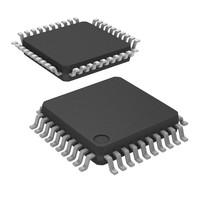
- Part No.:
- R5F21336TDFP#30
- Manufacturer:
- Renesas
- Category:
- Microcontrollers
- Package:
- 32-LQFP
- Datasheet:
-
 R5F21336TDFP#30.pdf
- Description:
- IC MCU 16BIT 32KB FLASH 32LQFP
- Quantity:
- Payment:

- Shipping:

Inventory:4,241
Please send an inquiry. Send us your inquiry, and we will respond immediately.
Product details
Overview
R5F21336TDFP#30 from Renesas Electronics is a 16-bit R8C CPU core MCU with 32 KB flash program ROM, 2.5 KB RAM, and 4 KB data flash (1 KB × 4 blocks) supporting background operation (BGO). It operates at up to 20 MHz (VCC = 2.7–5.5 V), integrates UART0/UART2 (with I²C mode), LIN hardware module, 10-bit × 12-channel ADC, and electrostatic capacitive touch sensing for appliance control interfaces.
For engineers reviewing the R5F21336TDFP#30 datasheet, R5F21336TDFP#30 pinout, R5F21336TDFP#30 application, or R5F21336TDFP#30 equivalent, key selection criteria include its 32-pin LQFP package, integrated LIN transceiver support via Timer RA + UART0, BGO-enabled data flash for firmware updates, and −20°C to +85°C industrial temperature grade.
Technical Context
The R5F21336TDFP#30 implements the R8C CPU core with 89 fundamental instructions, 16×16→32-bit hardware multiplier, and multiply-accumulate capability. Its memory map spans 1 Mbyte (00000h–FFFFFh), with fixed interrupt vector table at FFDCh–FFFFh and data flash at 03000h–03FFFh.
Peripheral integration includes three independent timers (RA: 8-bit, RB: 8-bit PWM-capable, RC: 16-bit with 4 capture/compare registers), dual UARTs with clock sync/I²C/SSU modes, dedicated LIN hardware using TRAO/TRAIO pins, and sensor control unit supporting 18-channel capacitive touch detection with CHxA–CHxC and CH0–CH17 pins.
Key Specifications
| Parameter | Value and Actual Design Meaning |
|---|---|
| CPU Core | R8C 16-bit core with 89 instructions, 50 ns min instruction time at 20 MHz |
| Memory | 32 KB flash program ROM, 2.5 KB RAM, 4 KB data flash (1 KB × 4 blocks) with BGO |
| Operating Voltage | 1.8 V to 5.5 V - supports battery-powered and mains-powered systems |
| ADC | 10-bit resolution × 12 channels with sample-and-hold and sweep mode |
| Timers | Timer RA (8-bit, period/PWM), RB (8-bit, programmable waveform), RC (16-bit, input capture/output compare/PWM2) |
| Serial Interfaces | UART0 (TXD0/RXD0), UART2 (TXD2/RXD2/SCL2/SDA2) with I²C-bus and SSU modes |
| Temperature Range | −20°C to +85°C (N version) - qualified for industrial appliance environments |
Pinout & Package
Package: 32-pin LQFP (PLQP0032GB-A), 7 mm × 7 mm, 0.8 mm pitch, surface-mount.
| Pin/Terminal | Circuit Role | Design Meaning |
|---|---|---|
| P0_0–P0_7, P1_0–P1_7, P2_0–P2_2, P3_1, P3_3–P3_5, P3_7, P4_5–P4_7 | CMOS I/O port | 27 programmable I/O pins with selectable pull-up resistors; all support high-current LED drive |
| P4_2 | Analog input | VREF reference voltage input for A/D converter - critical for ADC accuracy calibration |
| XIN/XOUT (P4_6/P4_7) | Crystal oscillator interface | Supports external crystal (1–20 MHz) or ceramic resonator; enables precise timing for LIN/UART |
| TRAO/TRAIO (P3_7/P3_5) | LIN physical layer | Dedicated pins for LIN bus communication (TX/RX) - no external transceiver required for basic LIN node |
| ADTRG (P4_5) | ADC trigger input | Hardware-synchronized sampling initiation - enables deterministic timing for motor/sensor control loops |
Key Features
| Feature | Design Value |
|---|---|
| Background Operation (BGO) | Data flash erase/write during program execution - enables seamless firmware updates without halting system operation |
| Hardware LIN Module | Integrated LIN protocol support via Timer RA + UART0 - reduces BOM count and software stack complexity in automotive body electronics |
| Electrostatic Capacitive Touch Sensing | 18-channel sensor control unit with CHxA–CHxC and CH0–CH17 - supports robust touch buttons/sliders without external ICs |
| Low-Power Operating Modes | Wait mode (3.5 µA) and stop mode (2.0 µA) at 3.0 V - extends battery life in portable consumer devices |
| On-Chip Oscillators | High-speed (adjustable) and low-speed on-chip oscillators - eliminates need for external crystals in cost-sensitive applications |
Applications
| Home Appliance Control Panel | Industrial Sensor Node |
|---|---|
Use Scenario: Touch-based user interface on washing machine or microwave oven with LED feedback and motor control. IC Role / Device Role / Timing Role: Main controller executing UI logic, driving LEDs, reading capacitive touch inputs, and managing motor driver via PWM outputs. Use Value: Integrated 18-channel capacitive touch sensing and 8-bit PWM timers eliminate external touch controller and reduce component count by ≥3 ICs. | Use Scenario: Battery-powered environmental sensor collecting temperature/humidity data and transmitting via UART to gateway. IC Role / Device Role / Timing Role: Low-power data acquisition node performing ADC sampling, local processing, and serial communication in wait/stop modes. Use Value: 2.0 µA stop-mode current and BGO-enabled firmware updates enable 5+ year battery life with field-upgradable functionality. |
| Automotive Body Control Unit | Audio Equipment Front Panel |
Use Scenario: Door module controlling window lift, mirror adjustment, and interior lighting via LIN bus. IC Role / Device Role / Timing Role: LIN slave node handling command parsing, actuator PWM generation, and fault monitoring. Use Value: Hardware LIN module ensures ISO 17987-compliant communication with <1 µs jitter - meets OEM timing requirements without software overhead. | Use Scenario: Keypad and display interface for AV receiver or amplifier with rotary encoder and status LEDs. IC Role / Device Role / Timing Role: Input processor decoding key presses, encoder rotation, and driving 7-segment/LED indicators. Use Value: 27 CMOS I/O ports with configurable pull-ups and high-current drive simplify PCB layout and eliminate discrete level shifters/drivers. |
Equivalent & Alternatives
The following parts are listed as comparable options for similar microcontroller applications.
| Alternative Part | Technical Difference | Application Difference | Selection Advice |
|---|---|---|---|
| R5F21336TNFP | Same core, memory, peripherals; N version (−20°C to +85°C) vs. D version (−40°C to +85°C) - identical pinout and electrical specs | Targeting commercial-grade ambient conditions only; not rated for extended industrial cold environments | Select R5F21336TDFP#30 when operation below −20°C is required; otherwise R5F21336TNFP offers same functionality at lower cost |
| R5F21335TDFP | Identical package and pinout; reduced memory (24 KB ROM / 2 KB RAM); same peripheral set and BGO/data flash architecture | Suitable for less complex firmware with smaller code footprint; retains full LIN/touch/ADC capability | Choose R5F21335TDFP if application firmware fits within 24 KB and RAM usage stays ≤2 KB - lowers BoM cost without redesign |
Compared with R5F21336TNFP, the R5F21336TDFP#30 adds extended −40°C operation while retaining identical peripherals and memory; versus R5F21335TDFP, it provides 8 KB more ROM and 0.5 KB more RAM for larger firmware or real-time buffers - both alternatives require no PCB changes but differ in temperature rating and memory headroom.
Availability
R5F21336TDFP#30 is available at Aetrix Electronics and suitable for home appliance control panels, industrial sensor nodes, and automotive body electronics requiring stable component supply across extended temperature ranges and long production lifecycles.
Supply support for R5F21336TDFP#30 includes scheduled delivery planning, volume procurement assistance, BOM continuity management, traceable sourcing, and lifecycle availability coordination for OEM customers, industrial embedded developers, connected-device designers, and electronics production programs.
Manufacturer
Renesas Electronics Corporation is a global semiconductor leader delivering microcontrollers, analog, power, and SoC solutions for automotive, industrial, and IoT markets.
The R8C/33T Group, including R5F21336TDFP#30, was designed for cost-sensitive, low-power embedded control in consumer and industrial appliances - emphasizing integrated peripherals (LIN, touch, ADC) to minimize external components and accelerate time-to-market.
FAQ
What is the operating temperature range of the R5F21336TDFP#30?
The R5F21336TDFP#30 is rated for −40°C to +85°C ambient operation (D version), making it suitable for industrial environments where extended cold-start capability is required. This differs from the N version (e.g., R5F21336TNFP), which is limited to −20°C to +85°C. The R5F21336TDFP#30 maintains full functionality across this range, including data flash programming and ADC accuracy.
Does the R5F21336TDFP#30 support hardware LIN communication?
Yes, the R5F21336TDFP#30 integrates a dedicated hardware LIN module using Timer RA and UART0, enabling ISO 17987-compliant communication without external transceivers. Pins TRAO (P3_7) and TRAIO (P3_5) serve as LIN TX/RX, and the MCU handles protocol framing, checksum, and synchronization - reducing software load and improving timing reliability compared to bit-banged implementations.
How much data flash does the R5F21336TDFP#30 include, and what is its endurance?
The R5F21336TDFP#30 includes 4 KB of data flash organized as four 1 KB blocks, supporting background operation (BGO) for concurrent read/erase/write. Its specified endurance is 10,000 erase/write cycles per block, validated under VCC = 2.7–5.5 V. This enables reliable storage of calibration data, device configuration, or field-upgradable firmware segments without requiring external EEPROM.
What are the key low-power features of the R5F21336TDFP#30?
The R5F21336TDFP#30 offers wait mode (typ. 3.5 µA at 3.0 V) and stop mode (typ. 2.0 µA at 3.0 V), both retaining RAM contents and wake-up capability via INT pins or reset. It also includes selectable on-chip oscillators (high-speed adjustable, low-speed fixed) and voltage detection circuits - allowing dynamic clock gating and supply monitoring to extend battery life in portable applications without sacrificing responsiveness.
Can the R5F21336TDFP#30 perform capacitive touch sensing, and how many channels are supported?
Yes, the R5F21336TDFP#30 integrates a Sensor Control Unit supporting electrostatic capacitive touch detection across 18 channels: 3 system channels (CHxA, CHxB, CHxC) and 15 dedicated pins (CH0–CH14, plus CH15–CH17 mapped to P2_0–P2_2). This enables robust touch button, slider, or proximity sensing without external ICs - with built-in noise immunity and auto-calibration features documented in the R8C/33T Group hardware manual.
R5F21336TDFP#30 Specifications
- Product attributes
- Attribute value
- Manufacturer:
- Renesas
- Package/Case:
- 32-LQFP
- Series:
- R8C/3x/33T
- Packaging:
- Tray
- Product Status:
- Not For New Designs
- Programmable:
- Not Verified
- Core Processor:
- R8C
- Core Size:
- 16-Bit
- Speed:
- 20MHz
- Connectivity:
- I2C, LINbus, SIO, SSU, UART/USART
- Peripherals:
- POR, PWM, Voltage Detect, WDT
- Number of I/O:
- 27
- Program Memory Size:
- 32KB (32K x 8)
- Program Memory Type:
- FLASH
- EEPROM Size:
- 4K x 8
- RAM Size:
- 2.5K x 8
- Voltage - Supply (Vcc/Vdd):
- 1.8V ~ 5.5V
- Data Converters:
- A/D 12x10b
- Oscillator Type:
- Internal
- Operating Temperature:
- -40°C ~ 85°C (TA)
- Grade:
- -
- Qualification:
- -
- Mounting Type:
- Surface Mount
- Supplier Device Package:
R5F21336TDFP#30 FAQ
1.How can I place an order for R5F21336TDFP#30 through Aetrix?
Please submit a Request for Quotation (RFQ) for R5F21336TDFP#30 on Aetrix. Our sales agent will provide a competitive quotation and guide you through the order confirmation once you accept the terms.
2.Are the price and stock information for R5F21336TDFP#30 reliable?
The price and inventory of R5F21336TDFP#30 are updated periodically and may fluctuate due to market conditions. Stock and pricing data are typically refreshed every 24 hours. Quotation validity for R5F21336TDFP#30 is usually 5 days.
3.What payment methods are accepted for R5F21336TDFP#30?
We accept Wire Transfer, PayPal, Credit Card, Western Union, MoneyGram, and Escrow for R5F21336TDFP#30 transactions.
Note: Certain payment methods may incur a processing fee.
4.How is shipping managed for R5F21336TDFP#30?
R5F21336TDFP#30 orders can be shipped via leading logistics carriers, including DHL, UPS, FedEx, TNT, or Registered Mail.
Once your R5F21336TDFP#30 order is processed, you will receive an email with the shipment details and tracking number.
Note: Tracking information may take up to 24 hours to appear. Express delivery typically takes 3–5 business days.
5.How can I obtain technical support or documentation for R5F21336TDFP#30?
For technical support, including R5F21336TDFP#30 datasheets, pinout diagrams, or application guidance, please contact our engineering support team. They can provide detailed documentation and assistance for your R5F21336TDFP#30 requirements.
6.How does Aetrix verify that R5F21336TDFP#30 is sourced from the original manufacturer or authorized distributors?
All R5F21336TDFP#30 products on Aetrix are procured from qualified distributors and authorized channels. Our dedicated quality assurance team conducts strict verification, including traceability checks and, if necessary, third-party testing. This ensures that R5F21336TDFP#30 meets industry standards.
7.What is the process for return or replacement of R5F21336TDFP#30?
All R5F21336TDFP#30 units undergo pre-shipment inspection (PSI). If there is an issue with R5F21336TDFP#30, returns or replacements are accepted under the following conditions:
1.Quantity discrepancies, incorrect items, or visible external defects (such as breakage or corrosion), acknowledged by Aetrix.
2.The issue is reported within 90 days of delivery.
3.The R5F21336TDFP#30 part is unused and in its original packaging.
Return procedure for R5F21336TDFP#30:
1.Submit a request within 90 days.
2.Obtain a Return Material Authorization (RMA) from Aetrix.
R5F21336TDFP#30 Tags

-
ATTINY4-TSHR
Microchip Technology
-
ATTINY10-TSHR
Microchip Technology
-
ATTINY10-TS8R
Microchip Technology

-
ATTINY202-SSNR
Microchip Technology
-
ATTINY202-SSFR
Microchip Technology
-
ATTINY402-SSNR
Microchip Technology
-
PIC16F15213T-I/MF
Microchip Technology
-
PIC16F15213-E/MF
Microchip Technology

-
PIC10F200T-I/OT
Microchip Technology
-
ATTINY412-SSNR
Microchip Technology
-
PIC10F202T-I/OT
Microchip Technology
-
ATTINY404-SSNR
Microchip Technology
Tech Hub

TTL and CMOS logic families differ in thresholds, loading, output drive, power and timing. This engineering guide compares 74HC and 74HCT, calculates noise margins and checks 3.3 V/5 V compatibility.

A practical engineering guide to 3.3V and 5V logic compatibility, input thresholds, resistor dividers, translator ICs, MOSFET level shifting, I2C pull-ups, timing limits and power-sequencing risks.

The 74HC595 uses push-pull logic outputs, while the TPIC6B595 uses 50 V open-drain DMOS sinks for higher-power loads. This guide compares timing, current limits, 3.3 V interfacing, load wiring, thermal…

The 74HC595 converts serial data into eight stable parallel outputs. This guide covers pin functions, shift and storage timing, OE and MR behavior, drive-current limits, cascading, voltage compatibilit…

A technical comparison of level-sensitive latches and edge-triggered flip-flops, covering timing windows, setup and hold limits, master–slave operation, time borrowing, race-through, HDL inference and…

A D latch stores one bit while Enable controls when data can pass. This reference covers gate-level operation, truth tables, transparency, setup and hold timing, LE versus OE, common ICs and practical …

An SR latch stores one bit through cross-coupled feedback. This engineering reference covers NOR and NAND implementations, truth tables, forbidden-state recovery, gated operation, switch debouncing, fa…

Latch circuits retain one bit through feedback. This technical reference covers SR and D latches, truth tables, transparency, timing limits, latch-versus-flip-flop behavior, applications and common log…

An engineering guide to LED driver operation, constant-current and constant-voltage outputs, linear and switching topologies, dimming, IC selection, calculations, replacement compatibility, and fault c…

Operational amplifier guide covering op amp basics, feedback, ideal vs real op amps, common configurations, buffer circuits, offset, bias current, gain-bandwidth, slew rate, rail-to-rail limits and sel…


